
Can I come back to church? Yes, here's how

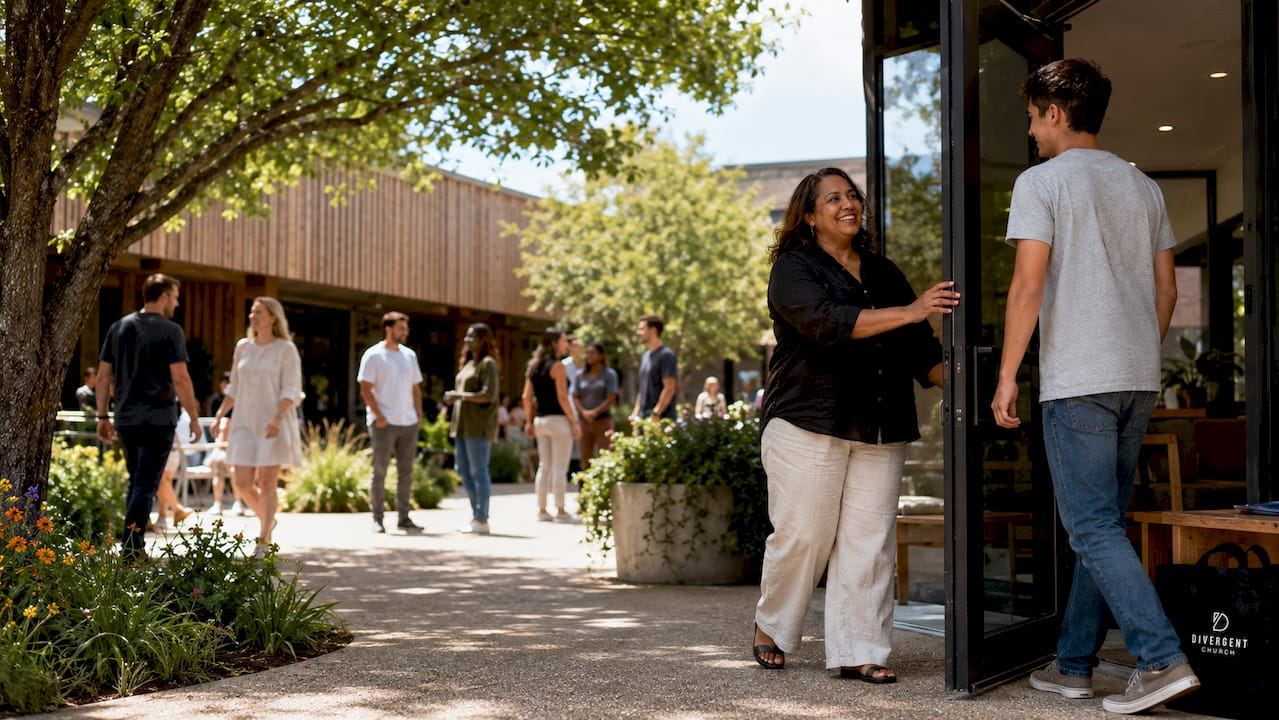
You can come back to church at any time, without needing to clean yourself up first or seek anyone’s approval. Churches are hospitals for sinners, not museums for the spiritually polished. Whether you have been away for six months or sixteen years, the door is open. This guide answers the most common questions about returning to church, addresses the fears that hold people back, and gives you practical steps to make your return feel manageable and real.
Can I come back to church after a long time away?
Returning to church is defined not as rejoining a club, but as a renewed act of faith and ongoing conversion. That distinction matters. Returning requires honesty about why you left, what you believed during your absence, and what you are genuinely seeking now. It is not a transaction. It is a relationship being rebuilt.
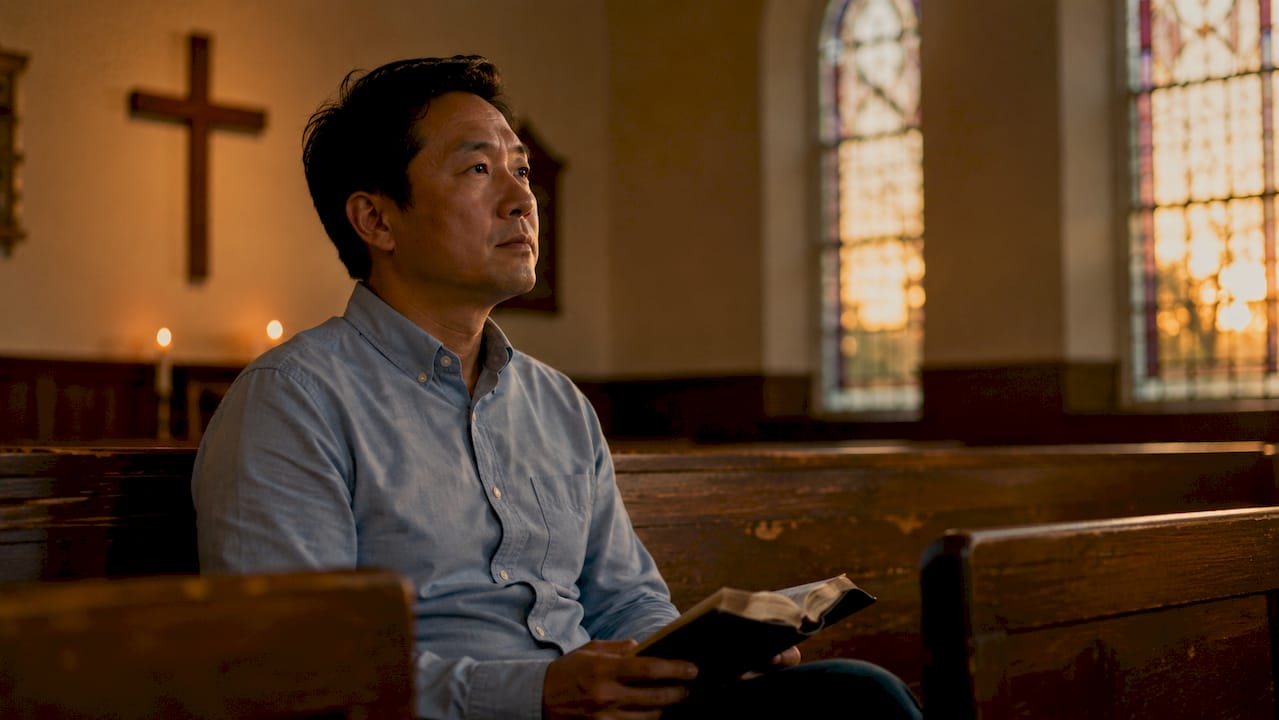
Many people carry a quiet fear that the church will judge them for their absence. That fear is understandable, but it reflects a personal perception rather than the church’s actual stance. Fear of judgment is most often fear of personal vulnerability, not evidence of a hostile community waiting to condemn you.
Think of it like returning to the gym after months away. The anxiety feels enormous before you walk through the door. Once you are inside, most people are focused on their own workout, not yours. Church works the same way. The congregation is not cataloguing your absence. They are present for their own reasons, and most will simply be glad you are there.
Returning is a spiritual act, not an administrative one. No paperwork is required.
Feelings of embarrassment are normal and do not reflect the church’s position toward you.
The church’s theology is built on grace, which means your past does not disqualify you.
You are not expected to have all your doubts resolved before you walk in.
Pro Tip: If you are worried about being recognised or singled out, arrive a few minutes after the service begins and sit toward the back. Most congregations are too focused on worship to notice newcomers.
What are the practical steps for attending church again?
Attending church again is most sustainable when you treat it as a gradual process rather than an all-or-nothing commitment. Visiting multiple churches before settling on one is a sound approach. Different communities have different cultures, and finding one where you feel genuinely at ease matters more than returning to the nearest building out of habit.
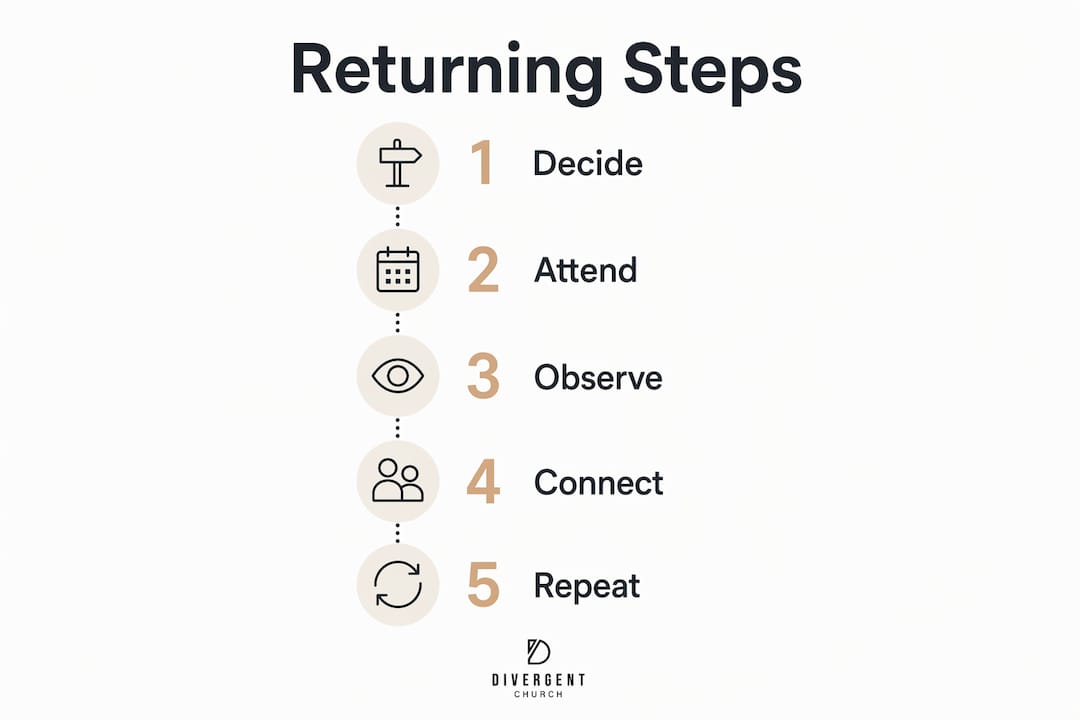
Here are concrete steps to make your return comfortable and lasting:
Choose your first visit deliberately. Pick a Sunday morning service at a church you are curious about. Arrive without expectations of having a profound experience. Simply observe.
Contact the church office beforehand if anxiety is high. Speaking to clergy before your first visit offers personalised pastoral support and significantly reduces entrance anxiety. A five-minute phone call can change everything.
Set a manageable attendance rhythm. One Sunday a month is a legitimate starting point. Short nightly reflections or Scripture reading between services help rebuild spiritual habits without overwhelming your schedule.
Do not introduce yourself unless you want to. You are not obligated to explain your absence, your beliefs, or your plans to anyone. Attend as anonymously as you need to.
Understand the sacramental practices of your tradition. If you are returning to a Catholic or Anglican context, for example, knowing when and how to receive communion removes a significant source of confusion and anxiety.
Give yourself permission to try more than one community. Finding a supportive church community is worth the effort of visiting a few different congregations first.
Pro Tip: Set a calendar reminder for your first three Sundays back. Habit formation research consistently shows that the first few repetitions are the hardest. Removing the decision from your Sunday morning routine makes it far easier to follow through.
How do churches support people who are returning?
Most churches welcome visitors without any obligation, pressure, or formal re-enrolment process. Attendance requires no membership and no commitment beyond showing up. That is the starting point, and it is enough.
Pastoral staff at most congregations are specifically trained to support people in transition. Many churches run programmes, small groups, and events designed to help people integrate gradually rather than all at once. Divergentchurch in Canberra, for example, structures its community around Life Communities and a Discipleship Hub, which means there are multiple entry points beyond the Sunday service. You do not have to commit to everything at once.
Support type | What it looks like |
Anonymous attendance | Sit, observe, and leave without speaking to anyone |
Pastoral conversation | One-on-one chat with a minister before or after your first visit |
Small groups | Midweek gatherings focused on Scripture, questions, and community |
Church events | Social and faith-based events that build connection at your own pace |
Online resources | Sermon archives, devotional guides, and digital community spaces |
The table above reflects what most welcoming churches offer. The key principle is that no pressure to commit is the default posture. You set the pace. The church’s role is to be present and available, not to chase or corner you.
What about doubts, guilt, and receiving communion?
Feelings of unworthiness are the most common emotional barrier for people considering a return to church. They are also, theologically speaking, the least accurate reason to stay away. The entire structure of Christian theology is built on the premise that God’s mercy is available to those who seek it, not those who have earned it.
“Come to me, all you who are weary and burdened, and I will give you rest.” — Matthew 11:28
That invitation has no expiry date and no prerequisite. Returning to church is about relationship, not performance.
On the specific question of communion, the guidelines depend on your tradition:
Protestant traditions generally invite all baptised believers to receive communion, regardless of how long they have been away.
Catholic tradition asks that you abstain from communion if you are conscious of mortal sin until you have made confession. This is not a punishment. It is a pastoral safeguard designed to protect the integrity of the sacrament.
If you are unsure, you can still attend the full service and receive a blessing rather than communion. Simply cross your arms over your chest when you approach the altar. Most ministers will understand immediately.
Doubts about faith do not disqualify you from attending. Many people return to church precisely because they are wrestling with doubt, and the community is often the place where those questions find the most honest engagement.
The church’s invitation is for genuine communion with God, not a performance of certainty. You are allowed to arrive with questions.
Key takeaways
Returning to church requires no prior approval, no spiritual perfection, and no formal process. It requires only the decision to walk through the door.
Point | Details |
No prerequisites for return | You can attend any service immediately, as you are, without prior preparation. |
Anonymous attendance is valid | You are never required to introduce yourself or explain your absence to anyone. |
Set a manageable rhythm | Starting with one Sunday a month builds a sustainable habit without pressure. |
Communion has tradition-specific guidelines | Understand your tradition’s sacramental practice to attend with confidence. |
Fear of judgment is personal, not factual | Most congregations are welcoming; the barrier is usually internal, not external. |
Why I think the hardest step is the one you take alone
From years of walking alongside people in faith communities, I have noticed something consistent. The people who struggle most to return to church are rarely the ones with the most complicated histories. They are the ones who have convinced themselves that everyone else has it together, and they are the only ones carrying doubt, guilt, or a sense of having wandered too far.
That belief is false, and it is worth naming plainly. Every congregation is full of people in various stages of faith, doubt, grief, and renewal. The person in the pew next to you may have returned just last month after a decade away. You would never know.
What I have found actually works is treating the first return visit as a low-stakes experiment, not a defining moment. Go once. Sit somewhere comfortable. Leave when the service ends. See how you feel. The faith over fear principle is not a cliché. It is a practical instruction. The feelings of anxiety are real, but they are not reliable guides to whether you belong.
The longer-term work is building a rhythm. Setting spiritual goals for the months ahead gives your return a direction rather than just a starting point. Returning to church is not a single event. It is the beginning of an ongoing conversion, and that is exactly what it is meant to be.
— Josh
Divergentchurch: a community worth coming back to
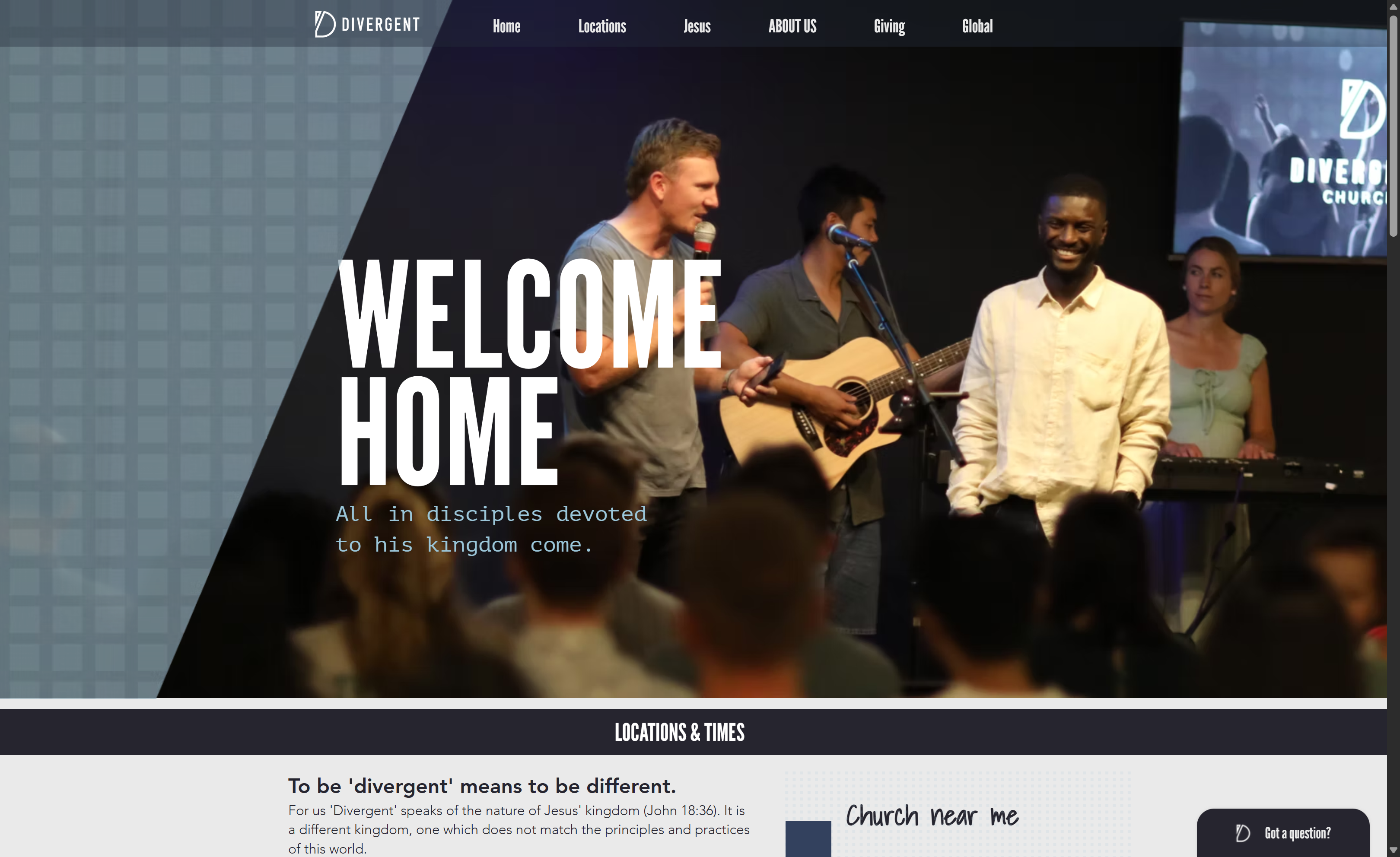
Divergentchurch in Canberra exists for people at exactly this point. Whether you are returning after years away or simply curious about what genuine Christian community looks like, there is a place for you here. The church is built around everyday life, not just Sunday mornings, which means the entry points are many and the pressure is none.
The Discipleship Hub is a good first step. It brings together resources, community pathways, and practical support for people at every stage of faith. For those ready to go deeper, Life Communities offer small group connection built around Scripture and real relationship. You do not need to have everything figured out to begin. You just need to take one step.
FAQ
Can I attend church without being a member?
Yes. Attendance requires no membership at any stage. You can visit as many times as you like with no obligation to join or commit.
What if I have not been to church in many years?
The length of your absence does not affect your welcome. Churches are described as hospitals for sinners, meaning the door is open regardless of how long you have been away.
Do I have to receive communion when I return?
No. You can attend the full service and receive a blessing instead. If your tradition requires confession before communion, that step can happen in your own time.
What if I still have doubts about my faith?
Doubt is not a disqualifier. Many people return to church specifically to work through their questions, and the community is often the best place to do that honestly.
How do I find a church that will genuinely welcome me?
Visiting a few different congregations before settling on one is the most reliable approach. Look for a community where the culture feels warm, the teaching is grounded in Scripture, and the people seem genuinely present with one another.
Recommended
Comments