
10 Christian hospitality ideas you can start this week


Biblical hospitality is faith-motivated welcome that puts relationship above performance. You don’t need a tidy house or a gift for entertaining. You need three things you can do before Sunday: invite someone for tea this week, drop a simple meal at a neighbour’s door, or offer to sit beside someone new after the service.
None of that requires planning. It requires willingness.
Invite someone for tea. A colleague, a new face from church, a neighbour you’ve waved at but never spoken to.
Drop off a meal. No occasion needed. A struggling young family or a lonely widower rarely says no to a casserole.
Sit with someone after church. Stay back ten minutes and talk to whoever is standing alone.
Pro Tip: Consistency beats perfection every time. A plain cup of tea offered weekly does more for community than one elaborate dinner party you host once a year and then burn out on.
Key Takeaways
Christian hospitality works best when it’s simple, repeated often, and shared across a household or group rather than carried by one person.
Point | Details |
Start small this week | Invite someone for tea, drop off a meal, or sit with someone after church. |
Ground it in Scripture | Romans 12:13 and Hebrews 13:2 frame hospitality as an active, commanded pursuit. |
Choose ordinary over impressive | Simple, repeatable meals build stronger relationships than rare elaborate events. |
Include the vulnerable deliberately | Ask about dietary needs, give clear directions, and involve pastoral staff when needed. |
Build a rhythm, not a one-off | Rotate hosting and delegate tasks so hospitality doesn’t burn out one household. |
Table of Contents
What does the Bible say about Christian hospitality ideas?
Scripture doesn’t treat hospitality as a personality trait for extroverts. It treats it as a command. Paul tells the Roman church to “practise hospitality” (Romans 12:13), using a Greek phrase that literally means “pursue the love of strangers.” That’s active language, not a suggestion for people who happen to enjoy hosting. Hebrews 13:2 goes further, warning that some who showed hospitality to strangers entertained angels without realising it.
The New Testament also ties hospitality to leadership. Paul lists it as a qualification for elders in both 1 Timothy 3:2 and Titus 1:8, alongside self control and sound doctrine. That’s a striking pairing. It tells us hospitality isn’t a soft add on to church life. It’s part of the character test for anyone entrusted to shepherd others, because opening your home to people reveals whether your faith is lived out or merely spoken.
Jesus modelled this constantly, sharing meals with tax collectors, Pharisees, and outcasts alike. Luke’s Gospel is full of table scenes where the guest list itself was the message: nobody was too far gone to be invited.
The early church carried this forward, breaking bread house to house as a daily rhythm rather than an occasional event. Practical church guidance describes hospitality as a Sabbath-like practice that extends into ordinary weeks and affirms the worth of every person at the table.
Romans 12:13 — pursue hospitality actively, don’t wait for it to feel natural
Hebrews 13:2 — strangers matter more than they seem
1 Timothy 3:2 and Titus 1:8 — hospitality as a mark of mature character
Where can you practise hospitality in everyday life?
Christian hospitality ideas work best when they’re sorted by context rather than treated as one big, vague obligation. Here’s how they break down.
At home. Coffee after church, a pot luck where everyone brings a dish, or hosting an interstate guest overnight. None of it needs to be elaborate. A simple invitation like “We’re having soup Thursday night, come as you are” removes almost all the pressure that stops people from ever asking.
Church based. A post-service lunch is one of the easiest wins in the whole list because regular, low-pressure hospitality builds sustainable rhythms without anyone burning out planning it. Hosting your small group on rotation works the same way. Nobody carries the load every week.
Neighbourhood. Drop off a meal when you hear someone’s had a rough week. Invite a neighbour for a walk instead of a formal sit down dinner, which lowers the stakes for people who’d never accept a dinner invite from someone they barely know. For tips on approaching people you haven’t met yet, how to invite others to church has practical, low pressure scripts worth borrowing.
Digital and other. A video check-in with someone isolated, organising a meal train for a new parent, or coordinating a care roster for someone in hospital. Hospitality in the church doesn’t stop at your front door.
At home: coffee, pot luck, overnight guests
Church: post-service lunch, rotating small group hosting
Neighbourhood: meal drop-offs, invitations to walk
Digital: video check-ins, meal trains, care chains
Pro Tip: Aim for what one Gospel Coalition writer calls “radically ordinary” hospitality — simple food and low formality beat an impressive spread you can only manage twice a year.
How do you prepare your home and heart for guests?
The biggest barrier to hospitality in the church isn’t lack of space. It’s the mindset that your home has to impress before you’re allowed to open the door. Shift from ownership to stewardship and the pressure mostly disappears, because treating your home as a ministry tool rather than a personal showcase removes the need for it to be flawless.
A few low-effort habits do more work than a deep clean ever will: keep the entryway clear, have a couple of spare chairs on hand, leave a Bible somewhere visible and accessible, and stock small comforts like tea, coffee and a jug of water. These are the sort of practical home-organisation tips that save you decision fatigue every single time someone’s coming over.

Conversation matters as much as the food. A short blessing before the meal, a simple question like “what’s been good about your week,” or space for someone to share their story keeps the gathering gospel-shaped without turning it into a sermon. If you want a resource to help structure faith conversations at home, being the church at home covers this well.
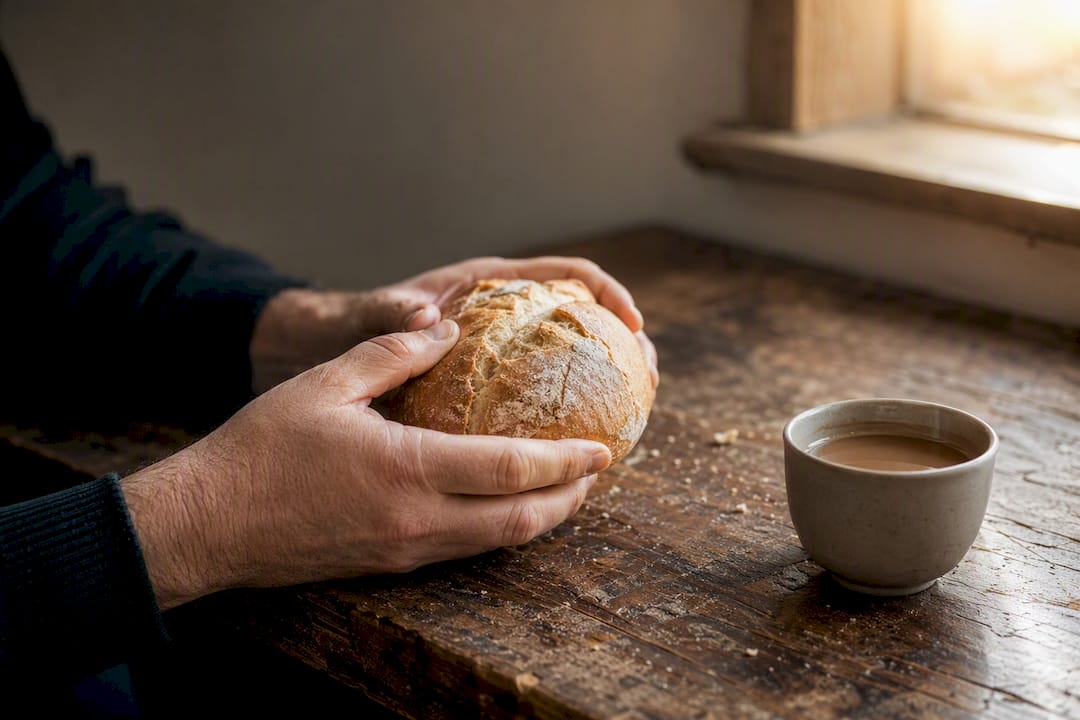
How do you welcome newcomers and vulnerable guests?
Inclusion takes a little forethought. Ask about dietary needs before the meal, not after you’ve cooked. Give clear, simple directions to your place, especially for guests unfamiliar with the area or language. Keep an eye on physical accessibility, particularly for older guests or people with mobility limitations.
Boundaries matter too. If a guest’s needs go beyond what a casual host can manage, such as signs of crisis, abuse or serious mental health strain, involve your church’s pastoral staff rather than trying to carry it alone.
Ask about dietary needs and access requirements in advance
Give plain, simple directions rather than assuming familiarity
Loop in church leadership for anything beyond casual hosting
Invite people who can’t reciprocate: new arrivals, those on low incomes, the newly widowed
Pro Tip: Hospitality is for every believer, not just extroverts with big houses. It’s formed by willingness to be available, not by square footage.
How do you make hospitality sustainable long term?
Hospitality collapses fast when it depends on one exhausted family doing everything. Build a rhythm instead.
Set a recurring, low-key gathering, such as a monthly shared meal or a fortnightly coffee catch up, so nobody has to reinvent the invitation each time.
Rotate hosting responsibilities across a small group or church roster so the load is shared rather than carried by one household.
Delegate specific tasks to family members or friends. Kids can greet guests at the door; a friend can bring dessert.
Track impact informally through stories and repeat invites rather than obsessing over numbers.
Pro Tip: Follow-up is where hospitality quietly becomes discipleship. A simple message after someone’s first visit, connecting them to a small group, is what turns a warm welcome into lasting belonging.
What does hospitality look like at Divergent Church?
A recent post-service pot luck at Divergent Church started small: a few families agreed to bring a dish, someone set up trestle tables in the courtyard, and the invitation went out simply as “stay for lunch, no fuss.” No single person cooked for the crowd. Setup, food and pack-down were split across three or four households.
What worked was the lack of polish. Guests who’d never hosted anything themselves still felt comfortable bringing a bag of bread rolls and turning up. Newcomers who stayed for lunch were far more likely to come back the following week, echoing a broader pattern in church newcomer research about follow-up mattering more than first impressions.
Shared the workload across several households, not one host
Kept food simple: bring what you have, not what impresses
Followed up with newcomers who stayed for lunch
The takeaway: pick one recurring gathering, share the tasks, and let the follow-up do the heavy lifting.
If you’re ready to turn hospitality into something more than a one-off gesture, Divergent Church’s Discipleship Hub has resources for building it into a lasting rhythm, whether that’s through a small group, a leadership pathway, or simply a household devotional habit. Leaders wanting to model this for others might also look at Lead Like Jesus, and households looking for a structure to sustain it long term can explore Life Communities. A well-run worship gathering also helps guests feel at home fast; tools like Song7 help small group leaders keep music familiar and easy to follow for first-time visitors.
What everyday Christians get wrong about hospitality
Most advice on Christian hospitality ideas assumes you need a bigger house, more free time, or a natural gift for entertaining before you can start. That’s backwards. The strongest theological case for hospitality, the leadership qualification in 1 Timothy, was written to ordinary elders managing ordinary homes, not people with spare bedrooms and catering budgets.
The conventional advice also overrates the event and underrates the follow-up. A dazzling dinner party that never leads to a second invitation does less for someone’s sense of belonging than a plain cup of tea offered twice. If I had to name the single biggest shift Christians need to make, it’s this: stop treating hospitality as a performance to be scheduled and start treating it as a posture to be practised weekly, badly if necessary, with whoever’s nearby.
Prioritise consistency before comfort. The polish can wait.
Frequently asked questions
What is the simplest way to start practising Christian hospitality? Invite one person for coffee or tea this week. No agenda, no elaborate meal, just an open door.
Does hospitality in the church require a big house? No. Hospitality is shaped by willingness and stewardship, not square footage or an impressive kitchen.
How is Christian hospitality different from entertaining? Entertaining aims to impress guests. Biblical hospitality aims to welcome them, prioritising relationship and presence over polish.
What Bible verses support hospitality as a spiritual practice? Romans 12:13, Hebrews 13:2, 1 Timothy 3:2 and Titus 1:8 all address hospitality directly, framing it as both command and character marker.
How can hospitality lead to discipleship? Consistent welcome opens the door to spiritual conversations and follow-up, which is often where genuine discipleship starts growing.
Sources
Recommended
Comments