
Church newcomer guide: 3 keys to lasting welcome


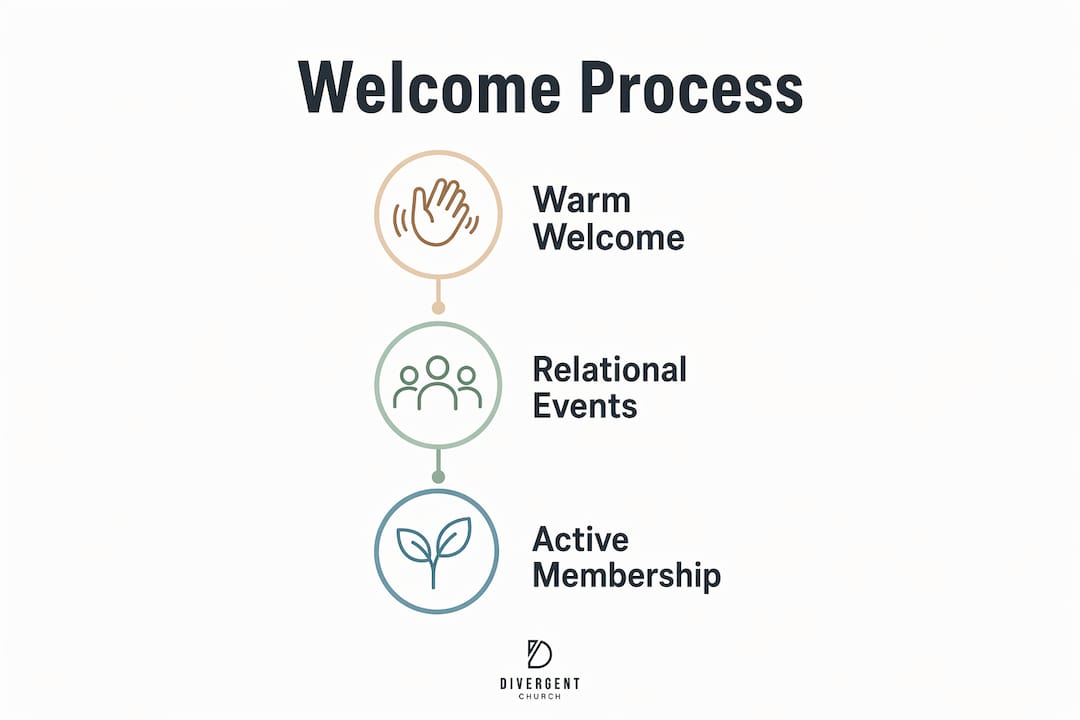
Welcoming newcomers to church is not a matter of friendliness alone. The churches that see guests return, connect, and stay are the ones that treat hospitality as a deliberate, coordinated ministry rather than a happy accident. This church newcomer guide distils that process into three interlocking keys: welcoming, events, and incorporation. Get all three working together and you create an environment where people move from curious visitor to genuine disciple.
Here is what each key involves at a practical level:
Welcoming
Clear signage, visible parking guidance, and a manned welcome centre
Trained greeters who anticipate questions before guests ask them
Language that includes rather than excludes
Events
Newcomer lunches, orientation workshops, and social gatherings
Scheduled on-ramps to membership and ministry
Consistent promotion through digital and in-person channels
Incorporation
Small groups as the primary pathway to lasting friendship
Clear discipleship tracks and ministry roles
Follow-up systems that sustain connection beyond the first visit
Each key builds on the last. A warm welcome earns the second visit; events turn that visit into relationship; incorporation transforms relationship into belonging.
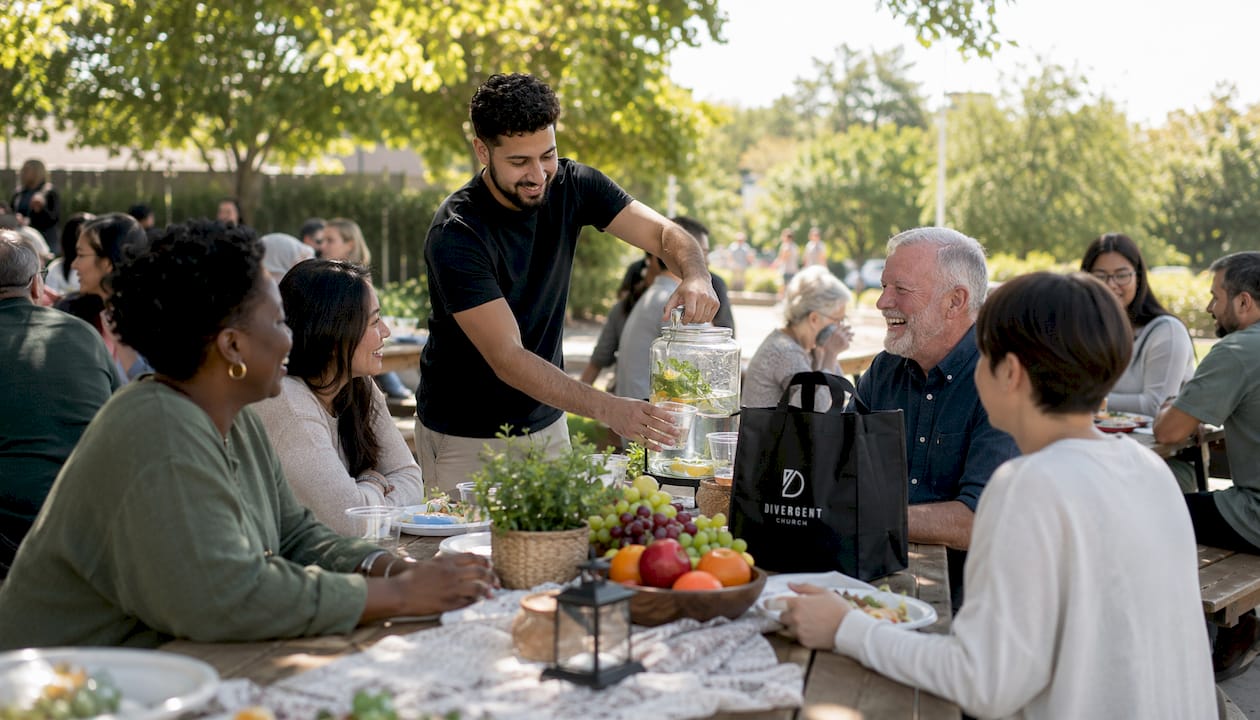
How do you create a genuinely welcoming first impression?
Newcomers form a lasting impression within the first two minutes of arrival, shaped by simple physical cues like signage, parking, and eye contact. That window is shorter than most church leaders assume, and it closes before a single word of the sermon is spoken.
The most common mistake churches make is assuming their members can accurately assess how welcoming the church feels. Church members often cannot judge their own congregation’s friendliness because deep insider relationships obscure the barriers a newcomer encounters: confusing car parks, unmarked entrances, and cliques that close ranks without realising it. An honest audit from a genuine outsider reveals far more than any internal survey.
Practical steps that shift the experience immediately:
Station greeters at the car park, not just the front door. Parking is the most common facility issue deterring growth; guests will not circle more than once.
Install clear, visible signage for toilets, children’s areas, and the main auditorium. Guests should never need to ask where to go.
Run a staffed welcome centre with a visible volunteer presence so newcomers have a natural, low-pressure place to ask questions.
Brief your greeting team weekly on what to anticipate: first-timers carrying children, people who look uncertain, anyone standing alone after the service.
Audit your website before Sunday. Visitors judge a church’s friendliness within their first few minutes online, checking service times and “what to expect” details before they ever walk through the door.
The language used from the platform matters just as much as the physical environment. Insider jargon, unexplained acronyms, and assumed familiarity with liturgy all signal to a newcomer that this community was not built with them in mind. Plain, warm, explanatory language costs nothing and communicates volumes.
Pro Tip: Ask someone who has never attended your church to walk through your building and your website and report every moment of confusion. Their experience is the truest measure of your welcome.
Hospitality is most effective when the whole congregation engages, not just a designated team. When welcome becomes a shared culture rather than a volunteer roster, it scales naturally and avoids the burnout that comes from placing the entire burden on a few faithful people. Divergentchurch’s approach to church hospitality reflects exactly this: every member carries the ministry, not just those wearing lanyards.
What kinds of events help newcomers feel they belong?
A single Sunday service, however warm, rarely gives a newcomer enough relational traction to return. Dedicated newcomer events create the conditions for real connection: smaller settings, shared meals, and space for honest questions about faith and community.
The most effective event types serve different stages of the newcomer journey:
Event type | Intended outcome | Suggested frequency |
Newcomer lunch (post-service) | Immediate relationship and Q&A with leaders | Monthly |
Orientation workshop | Understanding church vision, values, and next steps | Quarterly |
Social gathering (casual) | Low-pressure friendship building | Fortnightly |
Small group taster session | Introduction to ongoing community | Each term |
Volunteer discovery day | Matching gifts to ministry roles | Twice yearly |
The Newcomer Ready DIY Workshop framework, endorsed by UCA NSW Act, gives churches a structured template for running orientation sessions that move guests toward belonging and membership. It is a practical starting point for any congregation that wants to formalise its newcomer pathway without building a programme from scratch.
Scheduling matters as much as content. Events placed immediately after a Sunday service capture guests while they are already present and relationally warm. Promoting them through your church app, email newsletter, and a personal verbal invitation from the platform dramatically increases attendance compared to a notice in a bulletin alone.
Hosting newcomer events with clear follow-up pathways increases retention and moves guests toward genuine belonging. The follow-up is not optional: an event without a next step is a pleasant experience that leads nowhere.
How do you move newcomers from visitors to active members?
Connection is the engine of retention. Newcomers who stay beyond six months have an average of seven friends in the congregation, while those who leave average only two. That gap is not incidental. It is the clearest predictor of whether someone will still be present in a year’s time.

Small groups are the most reliable pathway to those friendships. Groups close quickly to new members once they form, which is why churches need to keep starting fresh ones. A newcomer who joins an established group of eight people who have known each other for three years faces a relational wall. A newcomer who joins a group of four people in its first month faces an open door. Divergentchurch’s Life Communities model is built around this principle: new groups form regularly so there is always an accessible on-ramp.
Practical incorporation strategies:
Create a clear membership pathway with defined steps, not an open-ended invitation to “get involved.”
Assign a personal contact (not a pastoral staff member) to follow up with newcomers after their second visit.
Offer a discipleship track that gives newcomers a structured way to grow in faith from the moment they arrive. Divergentchurch’s Discipleship Hub provides exactly this kind of structured formation pathway.
Invite newcomers into service roles early, even small ones. Serving accelerates belonging faster than attending.
Address cultural diversity intentionally. Australian churches draw from an increasingly multicultural population. Welcome materials, small group cultures, and leadership representation all communicate whether a church is genuinely for everyone or implicitly for a particular demographic.
The 80 percent seating capacity rule is worth understanding here too. When a worship space feels full, newcomers read it as a “no vacancy” sign. Managing seating flow and adding services before that threshold is reached keeps the physical environment from undermining all the relational work your people are doing.
For newcomers navigating this process themselves, Divergentchurch’s church integration guide offers a practical framework for finding your place in a new community.
What does the research say about hospitality and church health?
Intentional hospitality is not a peripheral concern. It is one of the strongest predictors of whether a church grows or declines.
The Rainer Predictive Index identifies an active and intentional welcome ministry as a core factor in healthy church growth. This goes well beyond friendly greeters. It describes a coordinated system: volunteer training, facility clarity, follow-up processes, and a culture where noticing newcomers is everyone’s responsibility.
“Growing churches don’t leave first impressions to chance. They build an intentional welcome ministry that begins before guests reach the front door and continues long after the benediction.” Rainer Predictive Index
The retention data is striking. Research cited by the Apostolic Information Service found that:
A church needs to retain around 16 percent of first-time guests to achieve a minimal growth rate of 5 percent per year.
Rapidly growing churches retain a notably higher fraction of first-time guests compared to minimal growth churches.
Declining churches retain a lower fraction of first-time guests than growing ones.
A church keeps approximately 85 percent of guests who return for a second visit the following week.
That last figure reframes everything. The goal of the first visit is not conversion. It is a second visit. And the goal of the second visit is a third, and a friendship, and a small group, and a place to serve.
Churches with active welcome ministries tend to flourish numerically and spiritually, while those that leave first impressions to chance tend to decline. The research does not suggest that hospitality replaces prayer, preaching, or mission. It suggests that hospitality is the environment in which all of those things take root.
A Christian DISC Assessment can help church leaders and volunteers understand their natural relational styles, which is genuinely useful when building a welcome team that covers a range of personality types and approaches.
How do you measure whether your welcome ministry is actually working?
Measuring newcomer welcome is less complicated than most churches make it. The clearest indicators are behavioural, not attitudinal: are guests returning, and are they forming friendships?
Track these metrics consistently:
First-to-second visit conversion rate. Count how many first-time guests return the following week. This single number tells you more about your welcome culture than any survey.
Six-month retention rate. How many people who attended for the first time are still present six months later? Cross-reference this with small group participation.
Newcomer event attendance. Are guests showing up to orientation lunches and social gatherings? Low attendance signals either poor promotion or poor timing.
Volunteer integration rate. Track how many newcomers move into a serving role within their first year.
Gathering direct feedback is equally important. A brief, three-question card given to first-time guests at the welcome centre, or a short follow-up message sent within 48 hours, surfaces the friction points that internal observation misses. Ask what was confusing, what felt warm, and what would have helped. St. John’s Newcomer Ministry uses structured follow-up conversations as a core part of its newcomer care model, treating feedback as a gift rather than a formality.
Pro Tip: Review your newcomer metrics quarterly with your welcome team. Numbers without a conversation stay abstract; a team discussion turns data into decisions.
The goal is not to manufacture a programme that looks welcoming. It is to build a community that genuinely is. When the metrics and the lived experience align, you know the culture has taken hold.
Key takeaways
Effective newcomer welcome requires welcoming, events, and incorporation working together as a coordinated ministry, not three separate initiatives.
Point | Details |
First impressions are physical | Signage, parking, and eye contact shape a newcomer’s experience before any conversation begins. |
Retention hinges on relationships | Newcomers who stay beyond six months have an average of seven friends in the congregation, while those who leave average only two. That gap is not incidental. It is the clearest predictor of whether someone will still be present in a year’s time. |
Events need follow-up pathways | A newcomer event without a clear next step is a pleasant experience that leads nowhere. |
Second visit is the primary goal | Churches retain approximately 85 percent of guests who return the week after their first visit. |
Welcome is a whole-church culture | Hospitality sustained by a few volunteers burns out; hospitality owned by the whole congregation multiplies. |
Ready to go deeper?
Divergentchurch exists for exactly this: genuine community, formed around Jesus, expressed in the everyday rhythms of Canberra and Port Macquarie. If you are building a newcomer ministry or simply trying to find your own place in a church community, the Next Steps pathway is the place to start. It is designed to move you from curious to connected, at whatever pace makes sense for where you are.
Recommended
Comments