
Six Week Plan to Turn Doubt Into Stronger Faith: An Australian Church


Doubt is a normal part of the Christian life and does not, by itself, mean you have lost your faith. Thomas questioned the resurrection and Jesus met him anyway (John 20:27). If you’re wrestling right now, open the doubt rather than hide it: bring it to Scripture, to a trusted friend or pastor, and to prayer. If you feel unsafe or overwhelmed, reach out for urgent help today.
TL;DR:
Doubt involves ongoing questions driven by a desire for understanding, while unbelief is a settled refusal not to seek answers anymore.
Most biblical figures, including Thomas and John the Baptist, expressed doubt without losing their standing before God, emphasizing honesty in questioning.
Practical steps such as sharing doubts with trusted people and intentionally studying Scripture help manage and reduce doubt over time.
Genuine faith can deepen through honest questioning, especially when combined with community support, Scripture engagement, and prayer.
A faith crisis differs from regular doubt, requiring urgent support, patience, and sometimes professional help to prevent complete spiritual or emotional collapse.
Table of Contents
What the Bible and Christian tradition say about faith and doubt
Scripture doesn’t tiptoe around doubt. It puts doubters on the page, names them, and lets their questions stand without erasing them. That alone should tell you something about how God receives a struggling heart.
Thomas refused to believe the resurrection until he saw the wounds himself, and when Jesus appeared, he didn’t scold him for asking. He simply showed him his hands (John 20:24-28). John the Baptist, who had baptised Jesus and called him the Lamb of God, sent messengers from prison asking, “Are you the one who is to come, or shall we look for another?” (Matthew 11:3). That’s not the language of settled certainty. That’s a man in chains, wondering if he’d got it wrong.
The Psalms give doubt its own genre. Entire poems exist just to lament, to accuse God of absence, to demand answers he doesn’t always give within the poem itself. Elijah, fresh off routing the prophets of Baal, collapsed under a tree and asked God to let him die (1 Kings 19:4). These aren’t footnotes to the biblical story. They’re some of its most quoted chapters.
The New Testament gives doubters practical instruction rather than just company:
Jude 22 tells believers to “have mercy on those who doubt”, not correction first and mercy second.
Mark 9:24 records a father’s raw prayer: “I believe; help my unbelief,” which holds both convictions in the same breath.
Doubt appears among biblical figures without cancelling their standing before God, a pattern Christianity runs through much of the Christian life.
Later Christian thinkers picked up the same thread. Blaise Pascal, a mathematician who took faith seriously enough to argue for it rigorously, treated doubt as the terrain reason has to cross, not an enemy to reason. C. S. Lewis wrote candidly about his own seasons of doubt, including the raw grief recorded in A Grief Observed, and never pretended his faith had been immune to question. Both men held belief and honest uncertainty in the same hand.
Doubt versus unbelief: how to tell the difference
Doubt and unbelief get used interchangeably, and that mix up causes real harm. Doubt is a searching struggle of the mind. Unbelief is a settled refusal of the will, as Crossway distinguishes it. One is still reaching. The other has decided not to.
Someone in doubt asks questions because they want an answer, even if they’re frustrated or exhausted by the search. Someone settled into unbelief has usually stopped asking altogether, not because every question got resolved but because they’ve chosen to close the file. That difference changes how a pastor, a friend, or a counsellor should respond. Doubt calls for patient answers and shelter. Unbelief calls for something closer to an invitation, a gentle appeal to reconsider rather than another argument.
A few markers can help with honest self-appraisal:
You’re still praying, even if the prayers feel one-sided or angry.
You want to believe the answers you’re looking for, rather than hoping they’ll fail.
You feel discomfort about the possibility of walking away, rather than relief.
You’re still showing up, even reluctantly, to church, Scripture, or Christian friendships.
If most of those describe you, you’re doubting, not disbelieving. That’s worth sitting with for a moment before moving to the next step.
Practical steps to work through your doubts
Doubt left in the dark tends to grow. Brought into the light, named specifically, and studied on purpose, it usually shrinks or at least becomes manageable. Crossway’s advice on doubt is blunt on this point: ignoring doubt lets it fester, while naming it opens the door to a targeted remedy.
Here’s a sequence that works for most people, regardless of which type of doubt you’re carrying:
Tell someone specific. A trusted friend, a small group, or a pastor. Vague unease shrinks fast once it has a name and a listener.
Return to Scripture on purpose. Don’t skim. Sit with a lament psalm if you’re grieving, or with the Gospels if your doubt is about who Jesus is. Slow, prayerful reading (often called lectio divina) works well here because it asks you to listen rather than argue.
Read good books on the actual question. If your doubt is intellectual, find writers who’ve asked the same question seriously. If it’s emotional, a book won’t be enough on its own, and that’s fine.
Evaluate answers honestly. A good answer addresses the actual objection, not a simpler version of it. If an answer feels too tidy for the size of your question, keep looking.
Get help for your heart, not just your head. If grief, anxiety, or depression sit underneath your doubt, a Christian counsellor or a mental-health professional matters as much as a theologian does. Faith and clinical care aren’t competitors. Spiritual support often plays a genuine role in emotional recovery, and the two working together tends to serve people better than either alone.
Pro Tip: Write your doubt down as a single sentence before you go looking for answers. “I doubt God is good because of what happened to my father” is a very different project to research than “I have doubts”, and a precise sentence stops you drowning in every possible objection at once.
A simple six week rhythm can turn this from a vague hope into an actual habit:
Week | Focus | Action |
1 | Name it | Write the doubt in one sentence; tell one trusted person |
2 | Scripture | Sit with one relevant passage daily; journal your honest reaction |
3 | Study | Read one chapter or article addressing the specific question |
4 | Community | Attend a small group or conversation built around honest questions |
5 | Care | Book a conversation with a pastor or counsellor if grief or anxiety is present |
6 | Review | Reassess: has the doubt shifted, settled, or grown? Plan the next step |
Six weeks won’t resolve every question. It will usually tell you whether you’re moving, and movement matters more than instant resolution.
When doubt becomes a faith crisis: signs and urgent help
Some doubt doesn’t stay in the background of ordinary life. It grows until it feels less like a question and more like a collapse. That’s a faith crisis, and it needs a different kind of response than a study plan.
Watch for these signs:
Doubt that paralyses ordinary decisions, not just theological ones.
A sense that your whole identity is unravelling, not just one belief.
Extreme despair, hopelessness, or thoughts of self-harm.
Complete withdrawal from people who previously supported you.
A faith crisis can feel like an overwhelming collapse rather than a manageable question, and it usually calls for shelter before it calls for arguments. That means finding people who won’t demand instant resolution, reducing isolation immediately, and getting professional mental-health care alongside pastoral support if despair, self-harm thoughts, or panic are present.
Good church-based crisis care follows a fairly consistent pattern: listen without rushing to correct, offer short-term pastoral contact rather than a single one-off chat, and refer promptly to counselling or medical care when the risk is more than spiritual. Pastoral guidance on accompanying someone through deconstruction puts listening and rest ahead of rigorous debate, and that order matters. Nobody reasons their way out of a crisis before they’ve been allowed to rest inside one.
How doubt can deepen your faith
Doubt handled honestly rarely leaves a person weaker. It tends to leave them with a faith that’s actually theirs, tested rather than merely inherited. Thomas didn’t stay the disciple who doubted. Church tradition remembers him as the one who, having seen, declared “My Lord and my God” (John 20:28), a confession no less firm for having passed through resistance first.
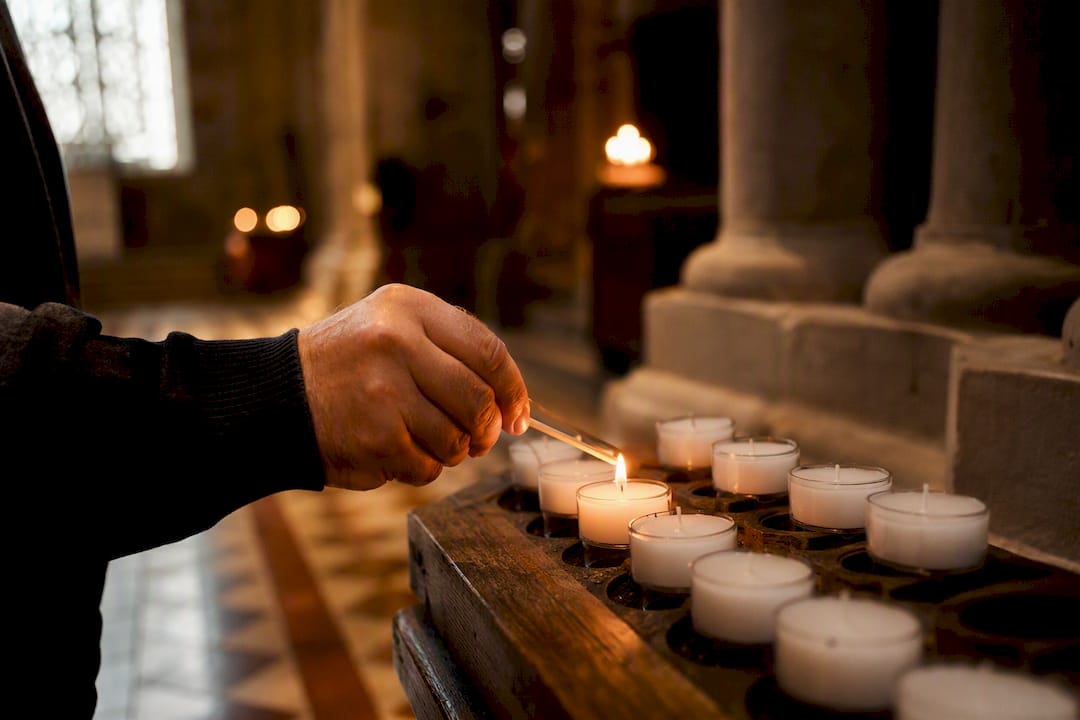
The pattern shows up again and again: questioning that’s taken seriously, rather than shut down, tends to produce sturdier belief on the other side. A person who’s wrestled with the problem of suffering and stayed usually holds a more resilient hope than one who’s never asked the question. A person who’s studied why the resurrection matters historically usually holds it with more conviction than one who accepted it by default.
Three habits tend to turn doubt into growth rather than drift. Regular Scripture study keeps the conversation going instead of letting it stall. Honest community stops the questions turning inward and isolating. Ongoing spiritual practice, prayer especially, keeps the relationship alive even while the intellectual questions are still being worked through.
None of this requires absolute certainty before you can call your faith strong. Growth in faith is usually better measured by confidence that deepens over time than by the total absence of questions. A faith that can hold a real question without breaking is, in a real sense, sturdier than one that’s never been tested at all.
A pastor’s perspective on sitting with doubt
I’ve sat across from people who apologised for their doubts before they’d even said what they were. There’s a strange guilt that attaches itself to questioning God, as though asking were itself the offence. It isn’t. Jude tells believers to have mercy on those who doubt, and mercy has to start with not flinching when someone finally says the hard thing out loud.
What’s helped people I’ve walked alongside isn’t usually a knockdown argument. It’s a place where the question is allowed to exist for a while without being rushed toward resolution. Scripture read slowly, a small group where nobody performs certainty they don’t feel, a conversation that doesn’t end with a tidy verse and a pat on the back. Divergent Church’s approach to questions has always leaned this direction, because faith that can’t survive a real question probably wasn’t as sturdy as it looked.
The people who’ve grown the most through doubt weren’t the ones who found the perfect answer fastest. They were the ones who stayed in the room long enough to keep asking.
— Josh
Where to go next with your questions
Working through doubt on your own is possible, but it’s slower and lonelier than it needs to be. Divergent Church exists exactly for the stretch between “I have questions” and “I’m not sure where to take them”, and that’s the gap our discipleship options are built to close.
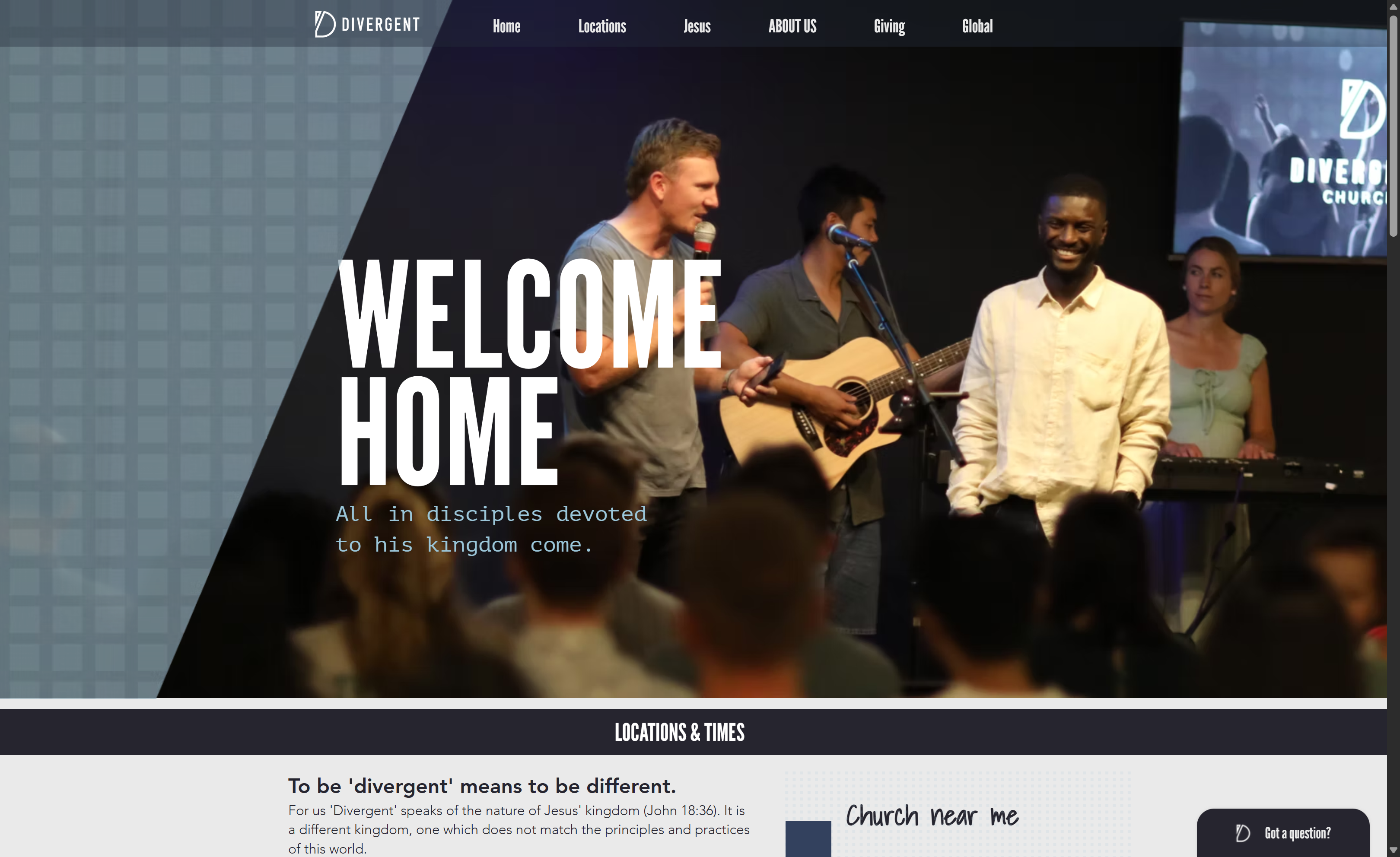
The Discipleship Hub is the natural next step if you want structured, ongoing pastoral support rather than a one-off conversation. It’s built for people who want to keep growing past the immediate crisis and into a faith that can hold real questions long term. Life Communities, our small-group network, offer a lower-pressure entry point: regular company with people who won’t flinch when you say the honest thing, and who’ll keep showing up the following week. For those already steady in faith and wanting to grow into leadership, Lead Like Jesus offers deeper formation once the immediate wrestling has settled.
Getting connected is straightforward. Reach out through the Discipleship Hub to find the group and pastoral contact that fits where you’re at right now, or explore Life Communities if a smaller, steadier circle is what you need first. Either door gets you talking to a real person this week, not a form that disappears into an inbox.
Sources
For deeper study, Crossway’s writing on doubt versus unbelief offers clear pastoral distinctions, while Desiring God’s reflection on faith crises speaks to the harder seasons. Relevant Magazine covers doubt’s everyday triggers, and Divergent Church’s own reflection on questions shows what it looks like locally.
Recommended
Comments