
A practical guide to Christian leadership for ministry


Christian leadership is servant-centred, Scripture-rooted, community-forming and multiplication-minded. It is not about occupying a title. It is about becoming the kind of person Jesus described in Mark 10:45, one who leads by laying life down for others, and who then teaches others to do the same. This guide to Christian leadership exists to give you that framework, grounded in Scripture and shaped by real ministry practice, so you can begin developing it in yourself and in those you disciple.
Five principles hold this together, and every section that follows unpacks one or more of them:
Servant heart — leading through service, not status
Spiritual integrity — character that matches conviction, even unseen
Multiplication — investing in others who will lead beyond you
Visionary faith — carrying God’s picture of the future, not just managing today
Resilient perseverance — staying faithful through the long, unglamorous middle
Success in this framework rarely looks like a bigger platform. It looks like a small group of ordinary people becoming quietly, stubbornly faithful, and then doing the same for someone else.
Leadership formed this way is less a skill you acquire and more a set of dispositions shaped over years of Scripture, prayer and accountability.
Key Takeaways
Christian leadership works when servant character, Scripture-formed conviction and deliberate mentoring take priority over platform, programs and administrative competence.
Point | Details |
Character precedes competency | Train for servanthood and integrity first; skills can be taught faster than godly character can form. |
Multiplication is non-optional | Every leader should be actively mentoring at least one future leader, following the 2 Timothy 2:2 pattern. |
Protect vision and prayer time | Block weekly hours for prayer and Scripture before administration fills the calendar. |
Watch for early red flags | Isolation, secrecy and over-centralised power should trigger immediate elder or peer engagement. |
Start with structured formation | Divergent Church’s Discipleship Hub and Life Communities offer a practical entry point into this model. |
Table of Contents
What does the guide to Christian leadership say about Scripture?
Every serious guide to Christian leadership has to start where Jesus started: not with strategy, but with a stunning reversal of what leadership means. Four passages carry the weight of this article, and each one corrects a different assumption leaders tend to make.
Matthew 20:26–28 is the hinge text. Jesus tells James and John’s mother, who has just asked for thrones, that greatness in his kingdom runs backwards from every other kingdom: “whoever wants to become great among you must be your servant.” He then points to himself as proof, the Son of Man who “came not to be served but to serve.” The implication for leaders is direct. If your ministry model rewards visibility over service, it is misaligned with the text it claims to follow.
Philippians 2:3–4 pushes the same idea into daily relationships: “do nothing out of selfish ambition or vain conceit, but in humility value others above yourselves.” Paul is not describing a mood. He is describing a leadership posture that actively looks to the interests of others before its own, which is a much harder discipline than admiring humility from a distance.
2 Timothy 2:2 is the multiplication verse, and it is worth sitting with slowly: “the things you have heard me say in the presence of many witnesses entrust to reliable people who will also be qualified to teach others.” That is four generations in one sentence, Paul to Timothy to reliable people to others again. Paul’s own mentoring relationship with Timothy is the New Testament’s clearest exemplar of this chain, and it sets the pattern EQUIP and other training organisations still build their curricula around today.
1 Peter 5:2–3 speaks directly to shepherding leaders: “be shepherds of God’s flock… not lording it over those entrusted to you, but being examples to the flock.” Peter’s language of oversight without domination reframes authority as protective care rather than control.
Leadership in Scripture is never described first as a skillset. It is described as a disposition, formed by suffering, service and accountability long before it produces results anyone can see.
Together these passages do something most leadership books never quite manage: they put character before competency. A leader can be strategically brilliant and still fail the biblical test if pride, self-interest or control have crept into how they treat people. That ordering, character formed before skill is applied, changes what a church should actually be training for.
What are the core qualities of a Christian leader?
A guide to Christian leadership is only useful if it gives you something to check yourself against. Here are seven qualities worth building your self-assessment around, each with signs to look for and a way to start practising it this week.
Servant heart. This is the willingness to do unseen, unglamorous tasks without needing credit. Two signs it is present: you are as comfortable stacking chairs as preaching, and you notice needs before anyone asks you to. A leader who quietly organises meals for a grieving family, without mentioning it from the platform, is living this out. Pro Tip: Pick one task this week that nobody will see or thank you for, and do it as an act of worship, not obligation.
Spiritual integrity. Integrity is the alignment between your private devotional life and your public ministry persona. Signs of it: your prayer life does not shrink when you are busy, and your private conduct matches what you teach. A leader who cancels a meeting to keep a standing prayer commitment is demonstrating this, not performing it. Pro Tip: Protect one non-negotiable time block each day for unhurried prayer and Scripture, before phones or admin touch it.
Visionary faith. This is the capacity to hold God’s picture of the future even when current numbers or resources say otherwise. Signs: you can articulate where the ministry is heading in one sentence, and you make decisions based on that direction rather than short-term pressure. A leader who keeps investing in a struggling small-group ministry because they believe it is where future leaders will come from shows this. Pro Tip: Write your ministry’s five-year picture in one paragraph and reread it before every major decision.
Multiplication and mentoring. This quality asks whether you are building a ministry that needs you, or one that is training others to replace you. Signs: you can name two or three people you are actively investing in, and you delegate real responsibility, not just tasks. Paul entrusting the gospel to Timothy, who was then charged to find “reliable people,” remains the model text here, worked out in multiplication-focused discipleship. Pro Tip: Identify one person you could mentor for twelve months and ask them to coffee this week.
Emotional intelligence. Self-awareness, self-management, social awareness and relationship management predict pastoral effectiveness more reliably than theological training alone, according to doctoral research on pastoral leadership. Signs: you can name your emotional state accurately under pressure, and conflict does not derail your judgement. A leader who pauses a tense elders’ meeting to name the tension in the room, rather than push through it, is exercising this. Pro Tip: After a difficult conversation, write one sentence naming what you felt and why, before deciding how to respond.
Stewardship and courage. Stewardship covers how you handle money, time and trust; courage is the willingness to say hard things when comfort would be easier. Signs: your church’s finances are transparent, and you have had at least one difficult conversation this year you did not avoid. A leader who tells a generous but controlling donor that their conditions compromise the church’s independence is exercising both at once. Pro Tip: Name one overdue hard conversation and schedule it before the week ends.
Resilient perseverance. Effective leaders studied across ministries consistently share longer tenure and confident humility, staying faithful through seasons that produce no visible fruit. Signs: you have stayed through at least one hard season without quitting, and you can name what sustained you. A leader who kept discipling a struggling small group for two years before it finally took root shows this quality in its rawest form. Pro Tip: Keep a short, private log of small faithfulness wins for the seasons when nothing feels like it is working.
Who leads the church, and how is authority structured?
A guide to Christian leadership has to address governance, because how authority is structured shapes how well these qualities can actually be lived out. Local churches generally organise leadership under one of three models, and each carries real trade-offs.

The episcopal model places authority with bishops or regional overseers above the local congregation. It offers strong external accountability and doctrinal consistency across a denomination, but it can slow local decision-making and, if overseers are distant, weaken pastoral responsiveness.
The presbyterian model distributes authority among a council of elders, often across multiple congregations. It balances shared wisdom with meaningful local input, though it can produce slower consensus-driven decisions when urgency is needed.
The congregational model vests final authority in the local church membership, with elders or deacons leading day to day. It maximises local ownership and responsiveness, but without strong internal accountability structures it can leave a single dominant personality unchecked. New Testament governance itself was adaptive and functional rather than rigidly prescriptive, which is why healthy churches across all three models tend to converge on the same underlying safeguards.
Whatever the model, Scripture gives a consistent checklist for elders and overseers, drawn from Titus 1 and 1 Timothy 3:
Above reproach in character and conduct
Hospitable and gentle, not quick-tempered
Able to teach sound doctrine
Not a lover of money or given to greed
Manages their own household well
Not a recent convert, to guard against pride
Beyond the biblical checklist, accountability structures matter as much as the model itself. An elder team with shared decision-making distributes power but needs genuinely equal voices, not a figurehead surrounded by yes-votes. Peer supervision with leaders from other churches offers honest external feedback, though it depends on real vulnerability rather than polite check-ins. External oversight, such as a denominational body or trusted network, provides a safeguard against isolation, but only if the relationship has teeth. Congregational checks, like open financial reporting, build trust but require a membership willing to ask hard questions. For a fuller comparison of shared leadership and elder accountability, the practical differences between models matter less than whether any structure has genuine authority to correct a leader who has drifted.
How do you train and develop Christian leaders?
Training is where a guide to Christian leadership becomes a plan rather than a set of ideas. Effective models place character before competency and build accountability directly into the learning process, an approach EQUIP’s leadership training framework has refined over decades. Four components tend to recur wherever leader development actually works:
Scripture-based curriculum that teaches doctrine alongside character formation, not doctrine alone
Small-group discipleship, where formation happens through relationship rather than lecture, an approach explored further in this guide to running small groups
Peer accountability, where trainees are known well enough to be challenged honestly
Practicum placement, applying what is learned in real ministry settings with feedback
A twelve-week cycle gives you a workable starting shape. Weeks one to three focus on identity and calling. Weeks four to six cover servant leadership and character formation. Weeks seven to nine work through Scripture handling and teaching skills. Weeks ten and eleven address conflict, emotional intelligence and pastoral care. Week twelve is a practicum review and commissioning.
Before commissioning anyone, run them through a short readiness checklist: do they have a track record of faithful small-group involvement, do they handle correction well, do others outside the leader’s own circle affirm their character, and do they have at least one active mentoring relationship of their own. Pro Tip: Pair every teaching module with a mentored ministry placement in the same fortnight, so theory and practice reinforce each other while it is fresh. Guidance on how this fits a broader multiplication strategy is available in this guide to church multiplication.
What does daily Christian leadership actually look like?
Church leaders are frequently over-managed and under-led, which means the practical challenge is protecting time for vision and prayer against the constant pull of administration. A workable weekly rhythm blocks time deliberately rather than leaving it to whatever is loudest that day.
Two to three hours of unhurried prayer and Scripture, protected early in the week
Dedicated sermon or teaching preparation, ideally in one uninterrupted block
Scheduled pastoral care visits or conversations, not squeezed between meetings
A fixed admin window, so email and logistics do not bleed into every other hour
One evening for small-group or mentoring investment
When conflict arises, and it always does, a simple sequence keeps it from escalating: 1) pause before responding, giving yourself time to process rather than react; 2) engage the other person directly and privately before involving others; 3) bring in an elder or trusted peer if resolution stalls; 4) agree on a concrete next step together, rather than leaving things unresolved.
Volunteer teams need the same clarity. A short onboarding checklist covers role clarity, basic training, a named point of contact and regular appreciation, four things easily neglected once a team is running. Practical tools like Song7’s setlist and rostering platform can take real friction out of coordinating worship teams and volunteer schedules. Broader tips on volunteer culture are covered in this guide for church leaders and volunteers. Pro Tip: Review every volunteer role description every six months, since role drift, where a person’s actual duties quietly expand beyond their original agreement, is one of the fastest routes to burnout.
What are the warning signs of unhealthy Christian leadership?
Every ministry is one bad season away from these five patterns taking root: isolation, where a leader stops being known deeply by anyone; greed, financial or relational entitlement dressed up as ministry need; secrecy, decisions made without transparency; over-centralisation, where one person holds all authority and information; and chronic burnout, exhaustion treated as a badge of dedication rather than a warning.
If any of these appears, three steps limit the damage quickly:
Pause the pattern immediately, rather than rationalising it as temporary.
Engage elders or a trusted peer group without delay, choosing honesty over image management.
Implement a concrete accountability measure, such as shared financial oversight or a mandated sabbatical, and follow through on it.
A short governance checklist helps prevent these patterns forming in the first place: financial decisions require two signatures, pastoral counselling of the opposite sex happens with a third person present or visible, no leader reports only to themselves, and every leader has a named person authorised to ask hard questions. Weak leadership communities, not just weak individuals, cause many pastoral failures, which is why these checks belong to the team, not the leader alone. More on building that kind of resilient culture is covered in this look at healthy church communities.
What does research say about sustainable Christian leadership?
Emotional intelligence keeps surfacing as the quiet differentiator between leaders who last and leaders who burn out. Research on pastoral leadership and emotional intelligence found that self-awareness and relationship management predict long-term effectiveness more reliably than theological training on its own, and that neglecting prayer and Scripture study for administration measurably harms a congregation’s spiritual health.
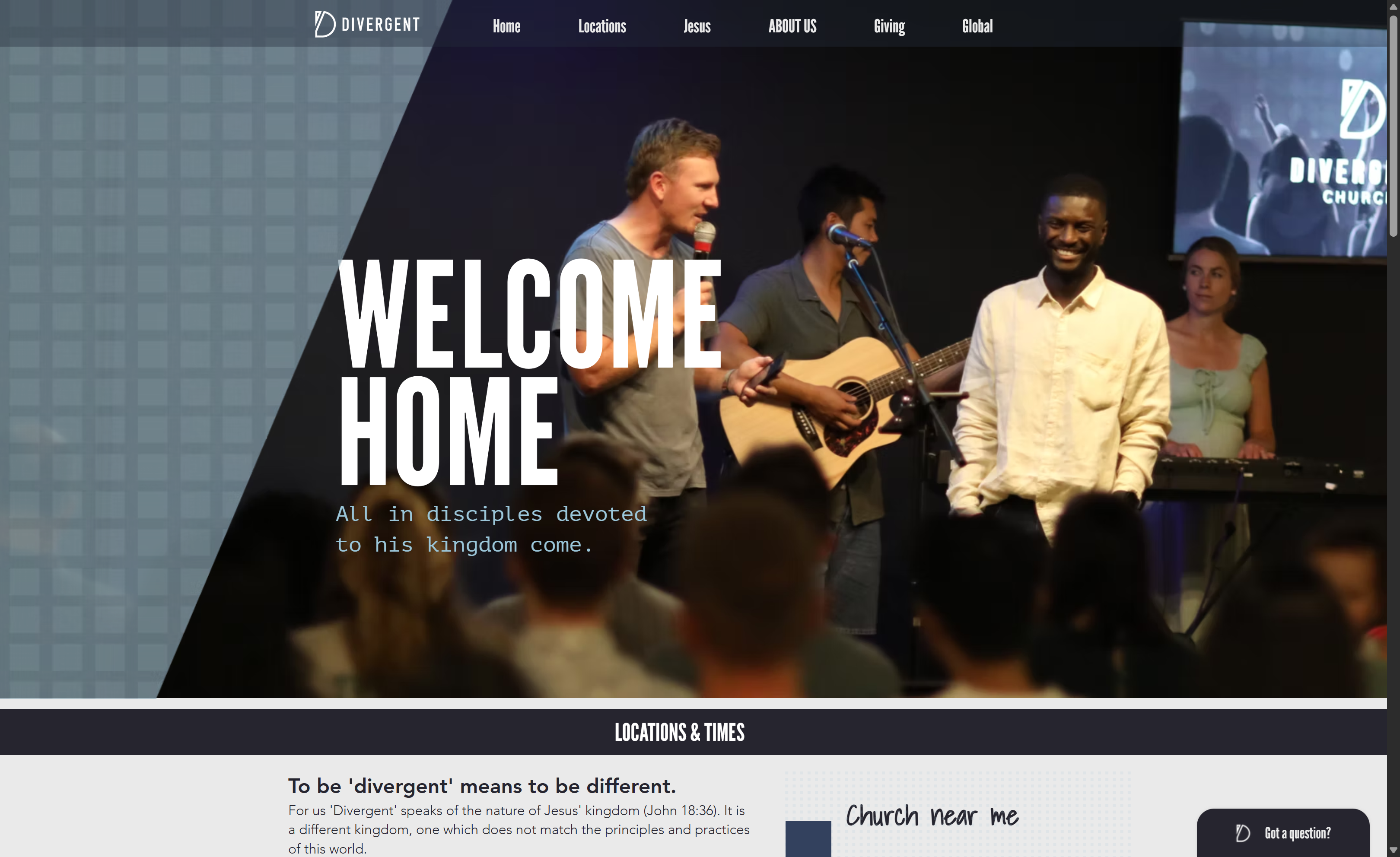
At Divergent Church in Canberra, this shows up in how leadership is actually formed, not just taught. Life Communities and the Discipleship Hub build leaders through small-group relationship rather than classroom instruction alone, with peer accountability built into the rhythm from the start.
Three simple exercises build emotional intelligence without needing a course: name your emotional state honestly before responding to conflict, ask a trusted peer for direct feedback on your blind spots once a quarter, and debrief every significant pastoral conversation with someone who will tell you the truth. None of this replaces qualified counselling or clinical support when a leader is dealing with genuine burnout or mental health strain, and any leader in that position should seek professional help alongside pastoral support.
What most leadership advice gets backwards
Most leadership content treats character as a soft prerequisite to the real work of strategy, communication and vision casting. That ordering is backwards, and it is the single biggest reason ministries produce leaders who look impressive for a season and then collapse under pressure they were never trained to withstand.
The uncomfortable truth is that competency is teachable in months, while character takes years and cannot be rushed by a good curriculum. A leader who can preach brilliantly but has never been correctable, who has no peer with permission to challenge them, is more dangerous to a congregation than one who preaches averagely but has spent a decade building genuine accountability. Scripture’s insistence on multiplication, entrusting truth to “reliable people” rather than gifted ones, is not sentimental. It is a structural safeguard against exactly this failure.
If this guide leaves you with one instinct to act on, let it be this: audit who has permission to correct you, before you audit your ministry’s growth numbers.
Where to start developing leaders through Divergent Church
Divergent Church runs three pathways depending on where you are in this. The Discipleship Hub offers structured, Scripture-based formation for those ready to commit to a season of deliberate growth. Lead Like Jesus is built for emerging leaders and volunteers who want practical, servant-shaped leadership habits without a full theological program. Life Communities provide the ongoing small-group rhythm where mentoring and multiplication actually happen week to week, long after any course ends.
Unlike a book study you work through alone, or a leadership podcast you listen to in the car, these pathways put you inside a real accountability relationship from week one, because character forms in relationship, not in isolation. If you are ready to start, explore the Discipleship Hub and take the first step toward the kind of leadership this guide describes.
Frequently asked questions
What is the simplest definition of Christian leadership? Christian leadership is serving others toward Christlikeness, rooted in Scripture, formed through accountability, and aimed at multiplying more leaders rather than gathering followers.
What is the most important quality in a Christian leader? Servant-heartedness is foundational, since Jesus explicitly defines greatness in his kingdom through service in Matthew 20:26–28, but it must be paired with integrity and multiplication to sustain over time.
How is Christian leadership different from secular leadership models? Secular models generally optimise for influence, results and personal capability, while Christian leadership subordinates all of that to character, service and reproducing itself in others, per 2 Timothy 2:2.
How long does it take to develop as a Christian leader? Formation is measured in years, not weeks, because it involves shaping disposition and character rather than acquiring a skillset, though a structured twelve-week training cycle can lay a strong foundation.
What should I do if I notice red flags in my own leadership? Pause the pattern, engage an elder or trusted peer immediately, and put a concrete accountability measure in place, such as shared oversight of a specific area, before it deepens.
Sources
Start with the core texts: Matthew 20:26–28, Philippians 2:3–4, 2 Timothy 2:2 and 1 Peter 5:2–3.
Recommended
Comments