
How to connect with church groups in Canberra


Connecting with church groups means joining a community built on shared faith, genuine relationships, and a common purpose that extends well beyond Sunday services. In Canberra, where the population includes students, young professionals, and families navigating a transient city, knowing how to connect with church groups is one of the most practical steps you can take toward lasting community and spiritual growth. Churches like Divergentchurch offer structured pathways, from Life Communities to Next Steps programmes, that make the process far less daunting than most newcomers expect.
What types of church groups exist and how do you find the right one?
Church groups fall into several recognisable formats, and understanding the differences helps you choose well from the start. The most common types include:
Small groups or Life Communities: Weekly gatherings of 8–15 people focused on Bible study, prayer, and shared life. These are the backbone of most Canberra churches.
Connect groups: Socially oriented gatherings that blend faith conversation with shared meals or activities, often suited to newcomers.
Men’s and women’s groups: Gender-specific communities that meet regularly for discipleship, accountability, and fellowship.
Bible study groups: More structured, text-focused gatherings that suit people who want theological depth alongside community.
Young adults’ groups: Specifically designed for university students and those in their twenties navigating faith and city life.
Finding the right group starts with a simple conversation. Most Canberra churches list their groups in weekly bulletins, on their websites, or through a church office. Divergentchurch publishes its Life Communities online, making it straightforward to browse options by day, location, and life stage before you commit to anything.
Reviewing a church’s statement of faith before committing helps ensure alignment with your personal values. That alignment matters more than convenience, but do not let the search for a perfect fit become a reason to delay. The best group is the one that fits your schedule and that you can attend consistently. Divergentchurch also has a presence in Port Macquarie, and their Port Macquarie community offers a similar range of group types for those connected to that region.

How to connect with church groups: your first practical steps
The most effective way to join a church group is to take small, deliberate actions rather than waiting for an invitation that may never come. Successful newcomers pursue next steps soon after starting attendance, rather than waiting passively for community to form around them.
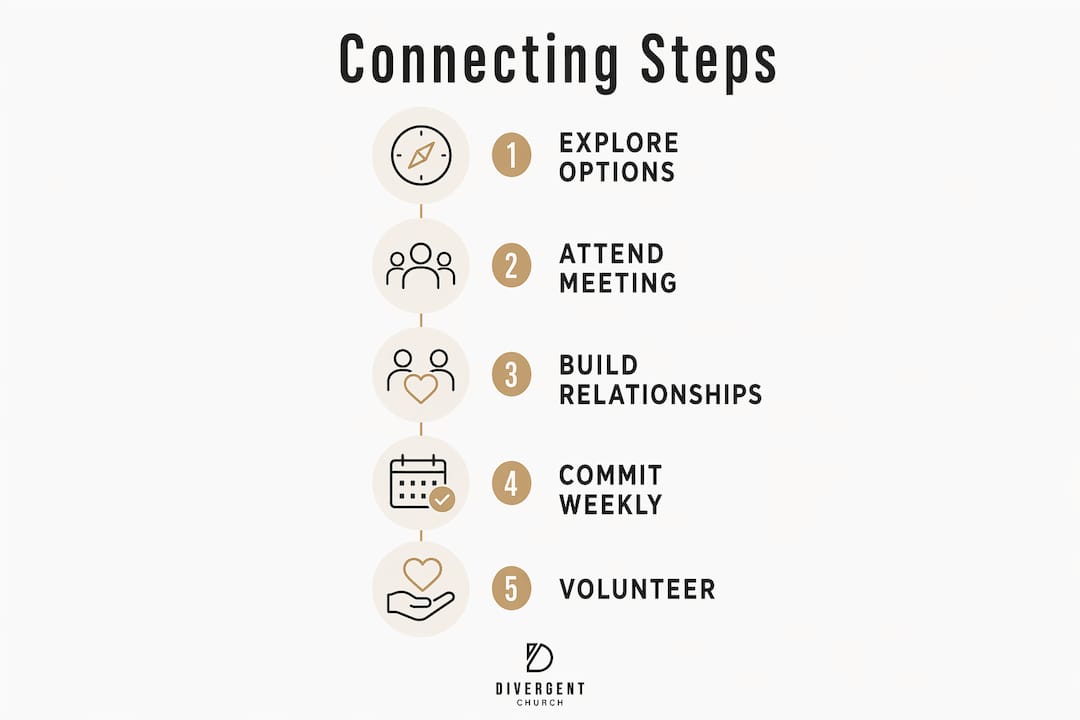
Follow these steps to move from visitor to participant:
Attend a Sunday service and arrive early. Introduce yourself to one person before the service begins. Names matter more than you think.
Stay after the service. Fifteen minutes of informal conversation after a gathering is worth more than an hour of formal programming. Committing 30 extra minutes around weekly services greatly enhances connection opportunities.
Fill in a connection card. Most churches, including Divergentchurch, use these to match newcomers with groups and follow up personally.
Attend a newcomer event. Structured newcomer pathways such as New Here events and coffee meetings with pastors provide low-pressure ways to learn about church culture and meet leaders.
Sign up for a group during the next semester intake. Small groups often run on semester cycles, so timing your sign-up with the start of a new term gives you the best entry point.
Have one honest conversation. Tell a pastor or group leader what you are looking for. Most church leaders in Canberra are genuinely glad to help you find your place.
Divergentchurch’s Next Steps programme is designed precisely for this moment. It walks newcomers through the process of moving from attending to belonging, with clear guidance on groups, volunteering, and discipleship.
Pro Tip: Do not try to join every group at once. Pick one Life Community or connect group, attend it for four consecutive weeks, and let relationships form naturally before adding more commitments.
What challenges come up when joining church groups and how do you overcome them?
The most common barrier to joining a church group is not logistics. It is the quiet discomfort of walking into a room where everyone else seems to already know each other. That feeling is normal, and it passes faster than most people expect.
“Church community forms through steady, faithful presence over time, not one emotional event.” — True Life Church
Common challenges and practical responses include:
First-meeting awkwardness: Every person in that room was once a newcomer. Acknowledge the awkwardness to yourself, then show up again the following week. Repeated presence dissolves it.
Waiting for the perfect group: Waiting for the perfect church group often leads to isolation. Choose the group that is accessible and attend it faithfully.
Feeling like an outsider: Volunteering at a church event is one of the fastest ways to shift from spectator to participant. It gives you a role, a task, and natural conversation starters.
Not knowing who to ask: Go directly to a pastor or connection coordinator. At Divergentchurch, the church involvement guide for Canberra offers a clear starting point for navigating this.
Inconsistent attendance: Life gets busy, but skipping repeatedly resets the relationship-building process. Treat your group attendance the way you treat a work commitment.
The goal is not to feel comfortable immediately. The goal is to keep showing up until comfort arrives on its own. That is how genuine community forms, in Canberra and everywhere else.
How does consistent involvement deepen connection and spiritual growth?
Attendance alone does not build community. Active, consistent involvement does. The difference between a person who attends church and a person who belongs to a church community is measurable in the relationships they have built and the roles they have taken on.
Level of involvement | What it looks like | What it produces |
Attending only | Sunday services, no group | Familiarity without relationship |
Joining a group | Weekly Life Community attendance | 5–10 reliable contacts within a month |
Volunteering | Serving on a team or at events | Deep trust and shared purpose |
Taking on a role | Leading a group or ministry | Lasting discipleship and belonging |
Joining a small group is the fastest way to build deep support within a church community, developing reliable contacts within about a month. That speed is not accidental. Weekly rhythms, shared meals, and honest conversation accelerate the kind of trust that takes years to build in other social contexts.
Beyond groups, Canberra offers specific volunteering opportunities through Divergentchurch’s volunteer programme, where you can serve in areas ranging from hospitality to youth ministry. Volunteering places you inside the working life of a church, not just its public face. You learn names, understand rhythms, and become someone others recognise and rely on. You know a church is becoming home when you move from anonymous attendee to someone recognised by others, with contact names saved and community routines understood.
Pro Tip: Commit to arriving 15 minutes before your group meeting begins. That quiet window before the formal gathering starts is where some of the most genuine conversations happen.
Key takeaways
Connecting with church groups in Canberra requires consistent presence, a willingness to take small practical steps, and the patience to let relationships form over time rather than in a single meeting.
Point | Details |
Choose a group that fits your schedule | The best group is the one you can attend consistently, not the one that looks perfect on paper. |
Take structured first steps | Use connection cards, newcomer events, and pastor conversations to move from visitor to participant. |
Show up consistently | Steady attendance builds the trust and familiarity that transforms attendance into belonging. |
Volunteer to deepen connection | Serving on a team gives you a role, relationships, and a place inside the community’s working life. |
Use available pathways | Divergentchurch’s Life Communities and Next Steps programme provide clear on-ramps for newcomers in Canberra. |
What I have learned about finding your place in a church community
When I first started attending a church in Canberra, I made the classic mistake of sitting in the back and leaving the moment the service ended. I told myself I was just observing, getting a feel for the place. What I was actually doing was protecting myself from the discomfort of not knowing anyone. It took me three weeks to realise that nobody was going to come and find me. I had to take the first step.
The moment I stayed after a service and introduced myself to someone near the coffee table, something shifted. Not dramatically. Just quietly. A name exchanged, a brief conversation about where I worked, a mention of a Life Community that met on Tuesday evenings. That was it. But it was enough to start.
What I have observed at Divergentchurch, and at similar communities across Canberra, is that the welcome is genuine. These are not churches performing hospitality. They are communities of people who understand what it feels like to be new, because most of them were new not so long ago themselves. The Divergentchurch Port Macquarie community carries that same spirit, shaped by the same commitment to authentic, relational faith.
My honest encouragement is this: take one small step this week. Not a big commitment. Just one conversation, one connection card, one Tuesday evening. Seeds planted in small moments grow into something you cannot yet imagine.
— Josh
Divergentchurch in Canberra: where to take your next step
Divergentchurch exists within the rhythms of Canberra’s universities, workplaces, and neighbourhoods, and it is built for people who are looking for exactly what you are looking for.
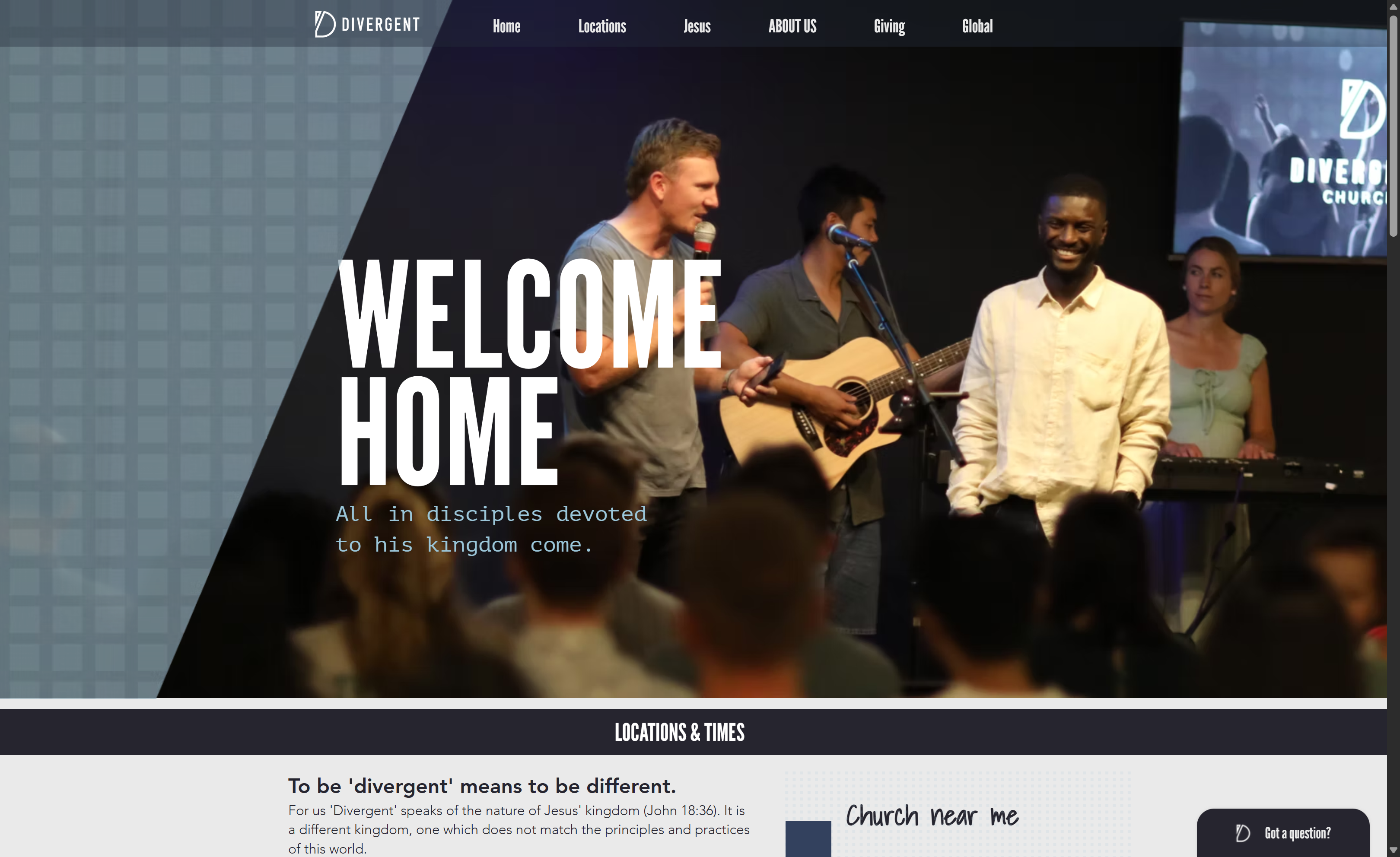
The Life Communities at Divergentchurch are the natural starting point for anyone wanting to join church community in Canberra. These small groups meet weekly and are organised by life stage, location, and schedule. For those ready to go deeper, the Discipleship Hub offers resources for spiritual growth, leadership, and ongoing formation. Divergentchurch also serves the Port Macquarie region through its Port Macquarie community, which shares the same values and group structures. Wherever you are in Canberra or beyond, there is a place for you here.
FAQ
What is a church small group?
A church small group is a weekly gathering of 8–15 people who meet for Bible study, prayer, and shared life outside of Sunday services. These groups are the primary way most churches build genuine community among members.
How long does it take to feel connected at a church?
Most people begin to feel genuinely connected after four to six weeks of consistent attendance in a small group. Trust builds through repeated interactions and story-sharing over time, not through a single visit.
How do I connect with church leaders at Divergentchurch?
Attend a Sunday service, fill in a connection card, or use the Next Steps pathway on the Divergentchurch website. Pastors and connection coordinators are available to meet newcomers personally.
Is volunteering a good way to meet church members?
Volunteering is one of the most effective ways to meet church members because it places you inside the working life of the community. It gives you a shared task, natural conversation, and a reason to return each week.
Does Divergentchurch have groups outside Canberra?
Yes. Divergentchurch operates a community in Port Macquarie with its own local groups and programmes, shaped by the same commitment to discipleship and authentic community found in Canberra.
Recommended
Comments