
Gospel of John Overview: Structure, Themes and Purpose


The Gospel of John is a portrait of Jesus as the eternal Word who became flesh, written so that readers will believe he is the Messiah, the Son of God, and find life in his name. It opens with a prologue, moves through seven signs and a long farewell on the night before the cross, and closes with resurrection and a quiet morning on the shore of Galilee. This overview walks you through each part, so you can read the whole book with a sense of where you are going.
TL;DR
John states its own purpose in John 20:30–31: selected signs are written so that you may believe Jesus is the Messiah and Son of God, and have life in his name.
The book has four parts: Prologue (1:1–18), Book of Signs (1:19–12:50), Book of Glory (13:1–20:31) and Epilogue (21:1–25).
Recurring words to watch for: Word, life, light, darkness, witness, believe and receive.
“Believing” in John is more than agreeing with an idea. It is a life of trust, obedience and love in fellowship with Jesus.
If you are new to the Bible, John is a good place to start, and you can read it in a few sittings.
Table of Contents
What the Gospel of John is about
Matthew, Mark and Luke give us the story of Jesus in a more external, sequential way. John does something different. Its pages read like a sustained testimony, in which the narrator’s voice and the words of Jesus blend together until you are no longer simply watching events, you are being addressed. The Australian resource The Framework describes this deliberate blending of narrator and Jesus’ speech as a sustained theological witness rather than only an external storyline.
At its centre is a person. The Australian Christian Lobby’s study of John describes the book as a theological portrait of Jesus as the divine and human Word who reveals God, and as the Messiah and Son of God. Its positive purpose, in the same commentary, is to lead people to faith in Christ so they may experience the full and eternal life he makes possible.
That is the heartbeat of the whole book. John does not hand you a list of rules or a timeline to memorise. He invites you to an encounter. Page after page, people meet Jesus: a bridegroom at a wedding, a religious leader at night, a woman at a well, a man who has never seen, a friend standing at a grave. Each one is asked, in their own way, the same question: who do you say that I am?
Why John tells us he wrote it
Most ancient books do not state their purpose so plainly. John does, near the end of chapter 20:
“Jesus did many other signs in the presence of his disciples, which are not written in this book. But these are written so that you may believe that Jesus is the Messiah, the Son of God, and that by believing you may have life in his name.” (John 20:30–31)
The USCCB introduction to John points to exactly this passage as the book’s explicit purpose. Notice two things. First, John is selective. He chose certain signs, not every event, because he wanted a particular response. Second, the goal is life, not information.
What does “life in his name” mean? The IVP New Testament commentary reads it as participation in God’s life through fellowship with Jesus, expressed in trusting God, in obedience, and in love patterned on Jesus himself. In other words, to believe in John’s sense is not merely to give intellectual agreement. It is to live in relationship.
That is why the book speaks to two kinds of reader at once. If you are asking whether Jesus is who he claimed to be, John sets out evidence and invites a decision. If you have followed Jesus for decades, John deepens what you already hold and draws you further in.

The shape of the book at a glance
The USCCB introduction lays out John in four parts, and this is the simplest map to carry in your head.
Part | Passage | What happens |
Prologue | 1:1–18 | The eternal Word is introduced, with God from the beginning, and becomes flesh |
Book of Signs | 1:19–12:50 | Jesus’ public ministry, his signs and the discourses that explain them |
Book of Glory | 13:1–20:31 | The last night with his disciples, his prayer, arrest, death and resurrection |
Epilogue | 21:1–25 | Resurrection appearances in Galilee and a charge to follow |
This four-part layout is drawn from the USCCB’s introduction. Other outlines divide the same material slightly differently. Crossway’s study outline, for example, separates the arrest, trial, death and burial (18:1–19:42) from the resurrection and conclusion (20:1–21:25). The lines fall in different places, but the story is the same.
The Prologue: John 1:1–18
John does not begin with a birth in Bethlehem or a genealogy. He begins before time: “In the beginning was the Word, and the Word was with God, and the Word was God.” The Prologue presents Jesus as the pre-existent and incarnate Word who was with God, reveals the Father, and becomes flesh, as the USCCB introduction summarises it.
Two verses carry the weight. “The Word became flesh and made his dwelling among us” (1:14) tells us that God did not remain at a distance. And “No one has ever seen God, but the one and only Son… has made him known” (1:18) tells us what Jesus is for: he reveals the Father.
After the hymn-like opening, the chapter turns to the testimony of John the Baptist and the calling of the first disciples. Already the pattern of the book appears: witness, then invitation. “Come and see” (1:39) is a good summary of the whole Gospel.
The Book of Signs: John 1:19–12:50
The first major section covers Jesus’ public ministry. John calls Jesus’ miracles “signs” because they point beyond themselves. The USCCB describes the signs as selected acts whose deeper meaning John explains through dialogue and discourse. They progress from Cana to Lazarus and reveal Jesus’ transforming, life-giving authority, while pointing past themselves to his “hour”, his death and resurrection.
The signs in order
The USCCB introduction traces the Book of Signs as it begins with water becoming wine at Cana, continues through healings, the feeding of a crowd, walking on water, debates and the man born blind, and climaxes with Lazarus being raised. Read in sequence, they run like this:
Water into wine at Cana (chapter 2). Jesus’ first sign speaks of new joy and abundance.
Healings (chapters 4 and 5). Jesus gives life and restores people, and the controversy with religious leaders begins.
Feeding the crowd (chapter 6). This leads straight into his teaching on the bread of life.
Walking on water (chapter 6). His disciples see his authority over what terrifies them.
The man born blind (chapter 9). Physical sight becomes a picture of spiritual sight, and the man sees more clearly than those who question him.
Lazarus raised (chapter 11). The climax: Jesus is the resurrection and the life, and the sign that gives life leads directly to the plot that will take his.
The pattern is worth noticing. Each sign is followed by a conversation or a conflict. John is not interested in spectacle. He wants you to ask what the sign means and who is doing it.
Conversations that stay with you
Between the signs sit some of the most loved scenes in Scripture. The Australian Christian Lobby’s chapter sequence includes Nicodemus, the woman of Samaria, the Bread of Life, the Good Shepherd, Lazarus and the triumphal entry. In Nicodemus’ night visit comes the verse many people know by heart, John 3:16. In Samaria, Jesus crosses boundaries of ethnicity, gender and reputation to offer living water. These are not side stories. They show who the invitation is for.
The I AM sayings
John also records Jesus using the divine “I am” with a picture attached. Ridley College’s Australian course on John foregrounds these statements, including Jesus as the Good Shepherd, as a way of understanding how John reveals Jesus. The seven most often listed are:
“I am the bread of life” (6:35)
“I am the light of the world” (8:12)
“I am the gate for the sheep” (10:7)
“I am the good shepherd” (10:11)
“I am the resurrection and the life” (11:25)
“I am the way and the truth and the life” (14:6)
“I am the true vine” (15:1)
Each one answers a human need: hunger, darkness, danger, death, lostness, and the need to belong and bear fruit.
The Book of Glory: John 13:1–20:31
At chapter 13 the tone changes. Crowds fade, and Jesus turns to his closest followers. This section covers his final teaching and prayer, arrest, death and resurrection.
The last night: chapters 13 to 17
Jesus washes his disciples’ feet, an act of servant love that becomes the pattern for the community. He then gives what is called the Farewell Discourse: promises of the Holy Spirit, the picture of the vine and branches, the command to love one another, and a long prayer for his disciples. The Australian-based GOLD Project course, which studies John in five blocks, treats this stretch as the community of life. That is a helpful phrase. These chapters are about what it looks like to live in Jesus together.
This is where the church’s own vision rests. Fellowship is not a social extra. It is the shape of the life Jesus gives, and “by this everyone will know that you are my disciples, if you love one another” (13:35).
Arrest, trial and cross: chapters 18 and 19
John tells the passion with unusual calm. Jesus is not a victim swept along by events. He walks toward his hour, and the cross is his glory, not merely his defeat. His last word, “It is finished” (19:30), is a declaration of completed work. If you want to see how this fits into the wider Christian story, our article on why Christians celebrate Easter takes it further.
Resurrection: chapter 20
Mary at the garden, the disciples behind locked doors, and Thomas with his doubts: John gives us people who struggle to believe and then do. The chapter ends with the purpose statement we saw earlier. The Australian Christian Lobby’s commentary notes that John 20 concludes with resurrection appearances and the explicit purpose that the written signs should lead readers to believe and have life in his name. For more on why this matters beyond the page, see the resurrection of Jesus and why it matters for the world.
The Epilogue: John 21
Just when the book seems finished, there is one more scene. By the Sea of Tiberias, the risen Jesus cooks breakfast for his friends after a night of fruitless fishing. He restores Peter, who had denied him three times, and commissions him: “Feed my sheep.” Then comes the simple call, “Follow me.”

The ACL commentary notes that chapter 21 adds a Galilean epilogue that emphasises ongoing discipleship and the continuing witness of Jesus’ risen life. The Gospel does not end with an argument. It ends with a meal, a restoration and a call.
The big themes of John
If you keep a few words in mind as you read, the book opens up. The Framework resource lists the recurring themes as the Word, life, light, darkness, witness, belief, receiving Jesus, authority, the Father-Son relationship and sharing God’s life through Jesus.
Word. Jesus is God’s self-expression, the one who makes the unseen God known.
Life. John uses “life” (often “eternal life”) as the gift Jesus gives, beginning now and not only after death.
Light and darkness. Jesus enters a world that prefers shadows. Some run to the light and some flee it.
Witness. John the Baptist, the Scriptures, Jesus’ works, the Spirit and the disciples all testify.
Believe and receive. Trust is the response John looks for, over and over.
Spirit and flesh. New birth is the work of the Spirit, not human effort (chapter 3).
Love and obedience. Believing shows up in a life shaped by Jesus’ love, as the IVP commentary notes when it describes belief as fellowship with Jesus.
How to read John for yourself
You do not need a theology degree. Here is a simple way to begin.
Read a chapter a day. John has 21 chapters, so three weeks takes you through the whole Gospel.
Read with a pen. Underline repeated words such as life, light, believe, and note where they appear.
Ask three questions of each passage. What does this show me about Jesus? What response does it invite? What is one thing I can do or pray today?
Read with someone else. John was written for a community. Questions are easier and answers richer when you ask them with others.
Start with the prologue, then jump to chapter 3 or 4 if you want a story first. Many readers find the encounters easier to enter than the opening hymn.
If you are comparing the Gospels, you may also like our walk through the Gospel of Mark, a fast-paced account that makes a good companion to John. And if you want to understand how Jesus’ identity fits the wider Christian faith, Jesus’ role in Christianity and faith is a natural next step.
Our perspective
We read John as an invitation, not a puzzle to be solved. Its author tells us plainly why he wrote: so that you might believe and have life. That sentence shapes how we think about church. In Canberra we meet people in transition: students arriving for a semester, public servants posted for a few years, families new to the city, and many who are simply asking honest questions about God. John’s Gospel is full of people like this. Nicodemus comes at night with questions. The woman at the well is a stranger with a past. Thomas needs to see. Jesus never turns them away. He meets them where they are and draws them into life. That is the kind of community we want to be. Not only a Sunday gathering, but a family of disciples who wash one another’s feet, love one another as Jesus loved, and carry his light into workplaces, campuses and neighbourhoods. The vine and the branches is not a metaphor we admire from a distance. It is how we are called to live: abiding in Jesus, bearing fruit together, and inviting others to come and see. If you are exploring, bring your questions. If you have walked with Jesus for years, come and be renewed. John’s promise is for both: life in his name. Josh
Where to go from here
If reading John stirs questions, you are welcome to explore them with us. Our page on following Jesus explains what a first step can look like, and who Jesus is gives a short introduction. For those who want to keep growing, 15 discipleship questions is a good conversation starter for a friend or small group.
If you are a community group, Bible study or ministry looking for a place to meet in the city, our function and events centre in Canberra City is available to hire.
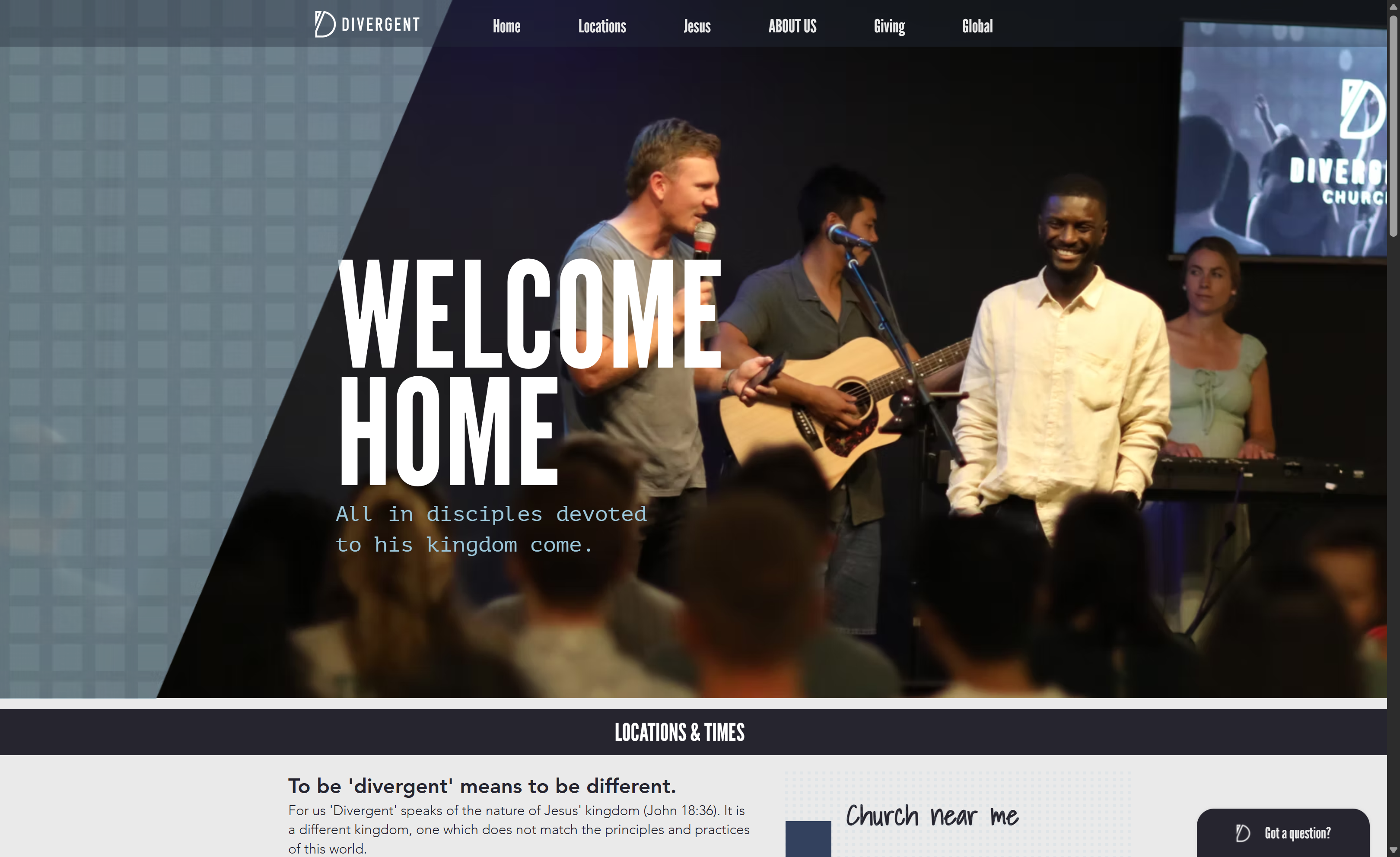
Our published hire rates are $70 per hour for the Auditorium, $50 per hour for the Seminar Room and $25 per hour for the Board Room. You can see availability and book a room online.
FAQ
What is the main message of the Gospel of John?
The main message is that Jesus is the eternal Word made flesh, the Messiah and Son of God, and that believing in him brings life. John says so himself in 20:30–31. The signs, conversations and teaching of the book all serve that single aim.
How is the Gospel of John different from Matthew, Mark and Luke?
John is more reflective and selective. It has long conversations and discourses, uses seven signs and the I AM sayings, and blends narrator and Jesus’ voice into a sustained witness to who Jesus is. It contains scenes found nowhere else, such as Nicodemus, the woman at the well and the raising of Lazarus.
How long does it take to read the Gospel of John?
Most people can read it in a few sittings, and it has 21 chapters. Reading one chapter a day takes three weeks and leaves time to reflect. Short chapters, such as the encounters in chapters 3, 4 and 9, make good starting points.
Is John a good place to start reading the Bible?
Yes, for many people it is. The book states its purpose clearly, is built around personal encounters with Jesus, and invites a response. If you prefer a faster narrative, Mark is a good alternative, and you can come back to John afterwards.
What are the seven signs in John?
John narrates selected signs from the water turned to wine at Cana to the raising of Lazarus. They include healings, the feeding of a crowd, walking on water and the healing of a man born blind. Each one points to who Jesus is and to his coming hour on the cross.
Sources
Recommended
Comments