
What is a biblical church? A 2026 guide


A biblical church is defined as a Spirit-led community of believers called out by Christ, devoted to God’s Word, the sacraments, and mutual accountability under His headship. The Greek word ekklesia, translated as “church,” means “called-out ones”, not a building or institution. This distinction matters more than most people realise. Scripture presents the church as the body of Christ and His beloved bride, representing His fullness on earth. Understanding what is biblical church means grasping that it is, at its core, a people shaped by Scripture, gathered around Jesus, and sent into the world.
What is a biblical church and what defines it?
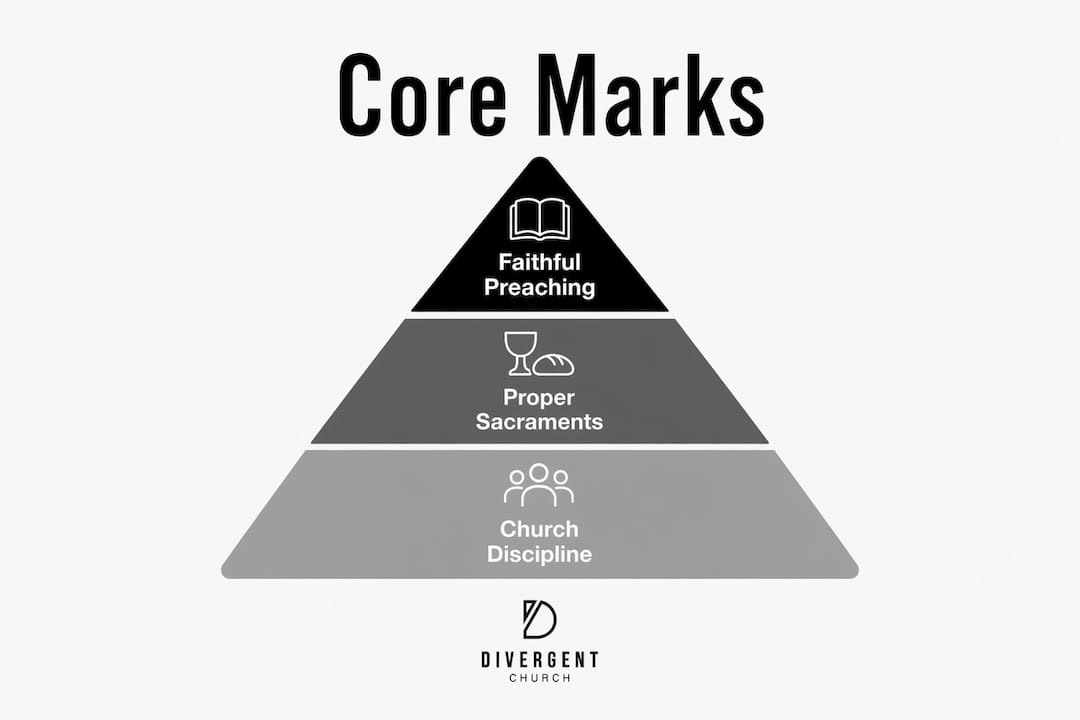
A biblical church is identified by three core marks: faithful preaching of God’s Word, proper administration of sacraments, and the practice of church discipline. These marks prioritise spiritual health over service style, building size, or musical preferences. They are not arbitrary checklists. They are the diagnostic signs of a community genuinely formed by Christ rather than by cultural convenience.
The definition of biblical church goes deeper than Sunday attendance or doctrinal statements on a website. The ekklesia was originally understood as a governing body called to represent the King’s authority in the world. That functional, accountable identity shapes everything from how decisions are made to how members relate to one another. A biblical church is not a passive audience. It is a community with a commission.
Scripture also presents two dimensions of the church. The visible church consists of local gatherings you can observe and join. The invisible church comprises all true believers united by faith across time and place. This distinction protects against both institutional pride and cynical withdrawal. You can be part of an imperfect local church and still be part of something eternal and glorious.
What are the core characteristics of a biblical church?
The three marks identified by Reformation theologians remain the clearest framework for assessing biblical church characteristics today. They are:
Faithful preaching of God’s Word. Scripture is read, explained, and applied with authority. The sermon is not a motivational talk or a cultural commentary. It is the voice of God mediated through His Word.
Proper administration of sacraments. Baptism and the Lord’s Supper are practised as Christ commanded, not as optional extras or performance pieces. They are visible signs of invisible grace.
Church discipline. Members are held accountable to the life they profess. This is not punitive. Church discipline is a loving rescue mission designed to restore members to holiness and protect Christ’s reputation.
Beyond these three marks, a healthy church is also characterised by devotion to prayer and fellowship. Acts 2:42 describes the earliest believers as devoted to “the apostles’ teaching and to fellowship, to the breaking of bread and to prayer.” This four-fold pattern is not a historical curiosity. It is a blueprint for church health that transcends every cultural moment, including our own in 2026.
Pro Tip: When evaluating a church, ask whether the preaching is shaped by the biblical text or by the preacher’s preferred themes. Text-driven preaching is one of the clearest signs of a community genuinely submitted to Scripture.

What makes a church biblical is not its worship style, its building, or its social media presence. A healthy church community measures its vitality by spiritual fruit, not by attendance figures or programme variety.
How does biblical church leadership work?
Biblical church structure features Spirit-led leadership with congregational accountability, and Jesus Christ as the sole Head with elders serving as under-shepherds. This is not a corporate hierarchy. It is a shepherding relationship grounded in love, doctrine, and accountability.
The biblical model for leadership follows a clear pattern:
Plurality of elders. Scripture consistently describes church leadership as shared among a plurality of qualified men, not concentrated in a single personality. Plurality of elders prevents unaccountable authority and the formation of personality cults that distort the church’s identity.
Character-based qualifications. The qualifications for elders in 1 Timothy 3 and Titus 1 focus overwhelmingly on character, not charisma. An elder must be above reproach, hospitable, able to teach, and not given to anger or greed.
Congregational recognition. Elders are not self-appointed. They are confirmed by the congregation and, ideally, examined by a broader church council. This process builds accountability from the ground up.
Under-shepherds, not CEOs. Elders protect the flock, teach doctrine, and facilitate restoration through discipline. They answer to Christ, not to market trends or donor preferences.
“Clear spiritual thinking must override secular planning and corporate mentalities; decisions originate from Scripture, not human opinion.” Insight for Living
The danger of single-man rule is not merely structural. It is theological. When one person’s vision replaces Christ’s headship, the church drifts from its identity. Biblical leadership at Divergent Church reflects this commitment to plurality and accountability, recognising that no single leader carries the full weight of Christ’s wisdom or authority.
How does a biblical church live out community and mission?
A biblical church’s community life is not a programme. It is a way of being together that flows from shared devotion to Christ. The Acts 2:42 pattern, teaching, fellowship, breaking of bread, and prayer, describes a community where spiritual development is woven into the fabric of daily life, not confined to a Sunday gathering.
Here is how biblical church principles translate into practical community life versus common cultural alternatives:
Biblical church practice | Common cultural alternative |
Preaching shaped by the biblical text | Topical series driven by audience preferences |
Mutual accountability through church discipline | Unconditional affirmation without correction |
Plurality of elders sharing authority | Single charismatic leader with unchecked influence |
Mission expressed through everyday relationships | Outreach as a quarterly event or programme |
Prayer as a communal discipline | Prayer as a private, optional add-on |
Church discipline, when practised biblically, is one of the most misunderstood expressions of community love. Shared accountability is essential for true community health. When a member drifts into sin, the loving response is not silence. It is gentle, persistent, prayerful pursuit. This is what it means to be a community that takes holiness seriously without losing sight of grace.
Mission in a biblical church is not a department. It is the overflow of a community shaped by the gospel. The role of church in society extends far beyond Sunday gatherings into workplaces, neighbourhoods, universities, and friendships. A church that only gathers but never scatters has misunderstood its calling.
Pro Tip: If your church’s mission activity is limited to scheduled events, consider how your everyday relationships, at work, in your neighbourhood, and on campus, might become the primary field of mission.
Common misconceptions about what defines a biblical church
Several persistent misunderstandings cloud people’s grasp of biblical church identity. Addressing them directly sharpens the picture.
A church is not a building. The Greek ekklesia refers to an assembly of people, not a physical structure. Treating the building as sacred confuses the container with the content.
Size does not determine health. A congregation of thirty people faithfully preaching God’s Word, practising the sacraments, and holding one another accountable is more biblical than a megachurch that prioritises entertainment over doctrine.
Cultural relevance is not a mark of biblical health. Biblical thinking must override secular planning, and spiritual emphasis takes precedence in all church decisions. Adapting communication style is wise. Adapting doctrine to cultural pressure is unfaithfulness.
The invisible church is not an excuse to avoid the visible church. Some people use the concept of the universal body of Christ to justify never committing to a local congregation. Scripture knows no such arrangement. Belonging to the invisible church is expressed through faithful participation in a visible, local community.
A church is not a social club or a therapy group. Genuine community and emotional support are gifts of the church, but they are not its defining purpose. The church exists to glorify God, make disciples, and proclaim the gospel.
Understanding what the church body means in its full theological and communal depth is the antidote to these reductions.
Key takeaways
A biblical church is defined by faithful preaching, proper sacraments, and loving discipline, expressed through accountable community under Christ’s headship, not by size, style, or cultural relevance.
Point | Details |
Three core marks | Faithful preaching, proper sacraments, and church discipline define a biblical church above all else. |
Ekklesia means people | The church is a called-out community of believers, not a building or institution. |
Plural elder leadership | Shared leadership among qualified elders prevents unaccountable authority and protects church health. |
Acts 2:42 as blueprint | Devotion to teaching, fellowship, breaking of bread, and prayer forms the pattern for community life. |
Mission beyond Sunday | A biblical church expresses its calling through everyday relationships and local presence, not only scheduled events. |
Why biblical church identity matters more than ever in 2026
I have spent years watching churches drift, not through dramatic apostasy, but through slow, almost imperceptible accommodation to cultural pressure. The drift rarely announces itself. It arrives as a reasonable adjustment, a softened sermon here, a leadership structure borrowed from the corporate world there, a discipline process quietly abandoned because it felt uncomfortable.
What I have come to believe is that the marks of a biblical church are not constraints. They are the very things that keep a community alive. When a church loses faithful preaching, it loses its voice. When it abandons the sacraments, it loses its memory. When it neglects discipline, it loses its integrity. These are not abstract theological concerns. They are the difference between a community that transforms lives and one that merely entertains them.
The question I would put to anyone reading this is not whether your church is perfect. No church is. The question is whether it is oriented toward the right things. Is Scripture the final authority? Are leaders accountable to one another and to the congregation? Is the community genuinely pursuing holiness together? If the answer to those questions is yes, you are in a place where seeds can take root and lives can be genuinely changed.
Canberra, where Divergent Church is planted, is a city full of intelligent, searching people who are deeply sceptical of institutions. That scepticism is not the enemy of biblical church. In many ways, it is a gift. It strips away the superficial and forces a community back to what actually matters. The churches that will endure and bear fruit in this city are the ones that hold their identity in Christ, not in their programmes or their reputation.
— Josh
Grow deeper with Divergent Church
Divergent Church in Canberra exists to form disciples of Jesus and cultivate genuine, missional community in the life of the city. If this article has stirred something in you, whether you are exploring faith for the first time or seeking a community grounded in Scripture, there is a place for you here. The Discipleship Hub is a practical starting point, offering resources and pathways for growing in faith, understanding Scripture, and connecting with others who are serious about following Jesus. You can also explore Life Communities, our small groups where biblical church principles are lived out week by week in real relationships across Canberra.
FAQ
What is the biblical definition of a church?
A biblical church is a community of believers called out by Christ, gathered around His Word and sacraments, and committed to mutual accountability. The Greek ekklesia means “called-out ones,” pointing to a people rather than a place.
What are the three marks of a biblical church?
The three classic marks are faithful preaching of God’s Word, proper administration of the sacraments (baptism and the Lord’s Supper), and the practice of church discipline. These marks prioritise spiritual health over size, style, or cultural preferences.
Why is plural elder leadership important in a biblical church?
Plurality of elders prevents any single leader from holding unaccountable authority, which protects the congregation from personality cults and doctrinal drift. Scripture consistently describes church leadership as shared among qualified, character-tested men.
Does a biblical church need a building?
No. The church is defined by its people, not its property. The ekklesia is an assembly of believers, and throughout history faithful churches have gathered in homes, public spaces, and rented halls without compromising their biblical identity.
How does church discipline fit into biblical church teachings?
Church discipline is a loving, restorative process designed to help members return to holiness and protect the integrity of the community. It is not punitive. When practised biblically, it reflects the same care a good shepherd shows for a wandering sheep.
Recommended
Comments