
Christian Addiction Recovery in Canberra: Faith and Care


Christian addiction recovery is not a choice between faith and professional help. Scripture tells us that Jesus sets captives free, and the body of Christ is where that freedom is lived out among people who know your name. Good medical and counselling care is part of the same mercy. If you are struggling in Canberra or Queanbeyan, you do not have to carry it alone, and you do not have to choose between God and a doctor.
This page is for the person who is struggling, and for the one who loves them. It sets out what recovery involves, what the Bible says, how Christ-centred groups work, and where to find confidential help today.
TL;DR
Addiction is treatable, and recovery usually involves more than one kind of support: medical, counselling, peer and spiritual.
Jesus offers real freedom (John 8:36) and invites the weary to come to him for rest (Matthew 11:28–29). Seeking help is an act of faith, not a failure of it.
Christ-centred recovery groups combine worship, testimony, open sharing and step studies. They are not simply AA under another name.
For confidential advice any hour of the day, call DirectLine on 1800 888 236. In an emergency, call 000.
A local church family gives recovery what a programme cannot: ongoing, everyday relationships.
Table of Contents
What addiction is, and why it is treatable
Healthdirect, the Australian Government’s health information service, describes addiction as being unable to control the use of a substance or a behaviour even when it is causing harm. The same page says it is treatable. That matters for the person who has tried and failed many times. Repeated failure is not proof that nothing can change.
The Bible speaks of the same condition in its own language. Scripture describes sin as a master that enslaves, and Jesus says plainly that everyone who commits sin is a slave to it (John 8:34). Addiction often shows us that bondage in a form we can see: the thing we hate, we keep doing (Romans 7:15). Naming it honestly is the first step toward freedom, and the Christian faith has always held that honesty before God and other people is where healing starts.
That is why we do not treat addiction as a lack of willpower, and we do not treat it as only a medical matter either. A person is body, mind and spirit, and recovery reaches all three.

What the Bible says about addiction and freedom
People searching for Bible verses for addiction are usually looking for one of three things: a promise, a command and a companion. Scripture gives all three.
Verses of freedom and rest
John 8:32 and 36: “You will know the truth, and the truth will set you free” and “if the Son sets you free, you will be free indeed.” Freedom here is a person, Jesus, and not a technique.
Matthew 11:28–29: Jesus invites the weary and burdened to come to him for rest. It is an invitation you can accept in the middle of a relapse, not only after you have cleaned yourself up.
Galatians 5:1: Christ has set us free so that we might live free, and we are told not to submit again to a yoke of slavery.
Verses for strength and endurance
The American Bible Society’s collection of encouraging passages for people who love someone in addiction includes Psalm 28:7, Romans 5:3–5, John 14:27 and Ephesians 6:10. Read them slowly, aloud if you can. They speak of a strength that is given, not manufactured, and a peace that is not the world’s kind.
Verses that shape a Christian response
Mission Australia’s Bible study on alcohol and other drugs draws on Ephesians 5:18–20, Galatians 5:19–21 and 1 John 3:16–18. The last of these is a good word for families and friends: love is not only words, but action and truth. Staying beside someone in recovery, week after week, is love in that sense.
What Jesus says about seeking help
Jesus tells us that the sick need a physician (Luke 5:31). He never shames the person who comes to him in need. The Gospels are full of people brought to him by friends, which is a picture of recovery: nobody is meant to get there alone.
Repentance, grace and relapse
Many Christians carry a quiet fear that a relapse means God has turned away. The gospel says the opposite. Repentance means turning toward God, and faith means trusting him to receive us when we do. We have written about why the order of repentance and faith does not matter, because both are one movement of a heart returning home.
Recovery and repentance are connected but not identical. A person can be fully forgiven in Christ and still need practical, long-term support to change patterns the body and mind have learnt. A 2025 overview describes therapy, treatment, support groups and spiritual guidance as possible parts of one recovery. Grace does not cancel that work; it is the ground on which the work is done without despair.

Faith alongside professional care
The Australian Government’s National Drug Strategy 2017–2026 describes treatment as a range, from peer community support and brief interventions in primary care through to hospital and specialist treatment. The right level depends on the nature, complexity and severity of the problem.
In practice that means:
Start with your GP if you are using heavily or have used for a long time. Stopping some substances, alcohol and benzodiazepines in particular, can be dangerous without medical supervision, so talk to a doctor before you stop suddenly.
Add counselling to address the patterns and pain underneath the habit.
Join a community where you are known, prayed for and held accountable.
Keep your relationship with Jesus central, through Scripture, prayer and the fellowship of believers.
None of these crowds out the others. A Christian view of addiction commonly holds that a counsellor, a specialist, an accountability partner or a support group is often needed alongside spiritual care, as one Christian explanation puts it. Medicine heals the body, counsel untangles the mind, and the church family keeps you company for the long road.
How Christ-centred recovery groups work
A common question is whether there is a Christian version of AA. The nearest answer is a Christ-centred recovery group, and the best-known in Australia is Celebrate Recovery. Its own FAQ describes a meeting shape with worship, teaching or testimony, open-share groups and fellowship. Optional Step Studies use the 12 Steps alongside biblical comparisons, with accountability and deeper reflection in the group.
Three things distinguish this from a standard 12-step meeting:
It centres on Jesus Christ explicitly. The programme pairs a version of the 12 Steps with eight recovery principles drawn from the Beatitudes.
It covers more than substances. It is for adults aged 18 and over dealing with addiction and other hurts, habits and hang-ups, such as anger, codependency or anxiety.
It welcomes people who are not yet Christians, provided they are open to spiritual conversation.
If you are walking into a meeting for the first time, expect to listen more than speak. Nobody is asked to share before they are ready, and what is said in the group stays in the group. Young adults and families facing deeper needs may also want to look at addiction treatment programmes for young adults, which combine individual care plans, evidence-based therapies and family involvement.
A note on the “3-3-3 rule”
People often ask about a “3-3-3 rule for addiction”. It is not an established clinical or biblical framework, and you will not find it in Australian treatment guidance. If someone describes recovery by that name, treat it as a loose rule of thumb about early days, weeks and months, not a plan. Your plan is the real one: a doctor, a counsellor, a community and Christ.
Where to get confidential help in Canberra and Australia
If you or someone you love needs to talk to someone now:
DirectLine offers confidential alcohol and drug counselling and referral, open 24 hours on 1800 888 236.
Your GP can assess withdrawal risk, prescribe where appropriate and refer you to specialist services.
In an emergency, such as an overdose, severe withdrawal or thoughts of suicide, call 000.
Calling a helpline is not a betrayal of your faith. It is the kind of wisdom Proverbs praises: in an abundance of counsellors there is safety (Proverbs 11:14).
If you love someone in addiction
Family members carry a heavy and often hidden load. A few things help:
Pray for them by name, and keep praying when nothing seems to change.
Speak the truth in love, without contempt or ultimatums made in anger.
Do not carry the consequences for them, and do not abandon them either.
Look after your own soul. You need a church family and, often, a counsellor of your own.
Our article on Christian addiction support in Canberra goes further on why you can have both faith and professional care. If anxiety, depression or grief sit beneath the addiction, our guide to church and mental health will help you think through how the church walks with people through those seasons.
Our perspective
We do not believe the gospel is a technique for self-improvement. It is the announcement that Jesus has defeated sin and death, and that people in chains can be made free by him. Addiction is one of the places where that announcement is heard most clearly, because the one who is bound knows they cannot free themselves. That is also why recovery cannot be done in isolation. The New Testament never imagines a disciple alone. It imagines a body, with weak members honoured and burdens carried together (Galatians 6:2). Discipleship is more than attending a service on Sunday. It is shared life, and for someone in recovery, shared life is often what keeps them standing on the hard Tuesday night. In Canberra we are surrounded by students, public servants, new arrivals and people far from home. Many have no one who knows when they are struggling. We want to be a community of honest, missional friendship in the life of the city, where people can bring their questions and their wounds, and where you will find prayer, Scripture and real relationships. We urge you to seek medical and counselling help as well. God’s kindness often comes to us through a doctor’s hands. Josh
Find a church family in Canberra
If you are looking for a Christian community to walk alongside you, Divergent Church is a Christian church in Canberra committed to forming disciples of Jesus and cultivating authentic, missional community in the life of the city. We are local and relational, and we exist within the rhythms of the city: its universities, workplaces and neighbourhoods.
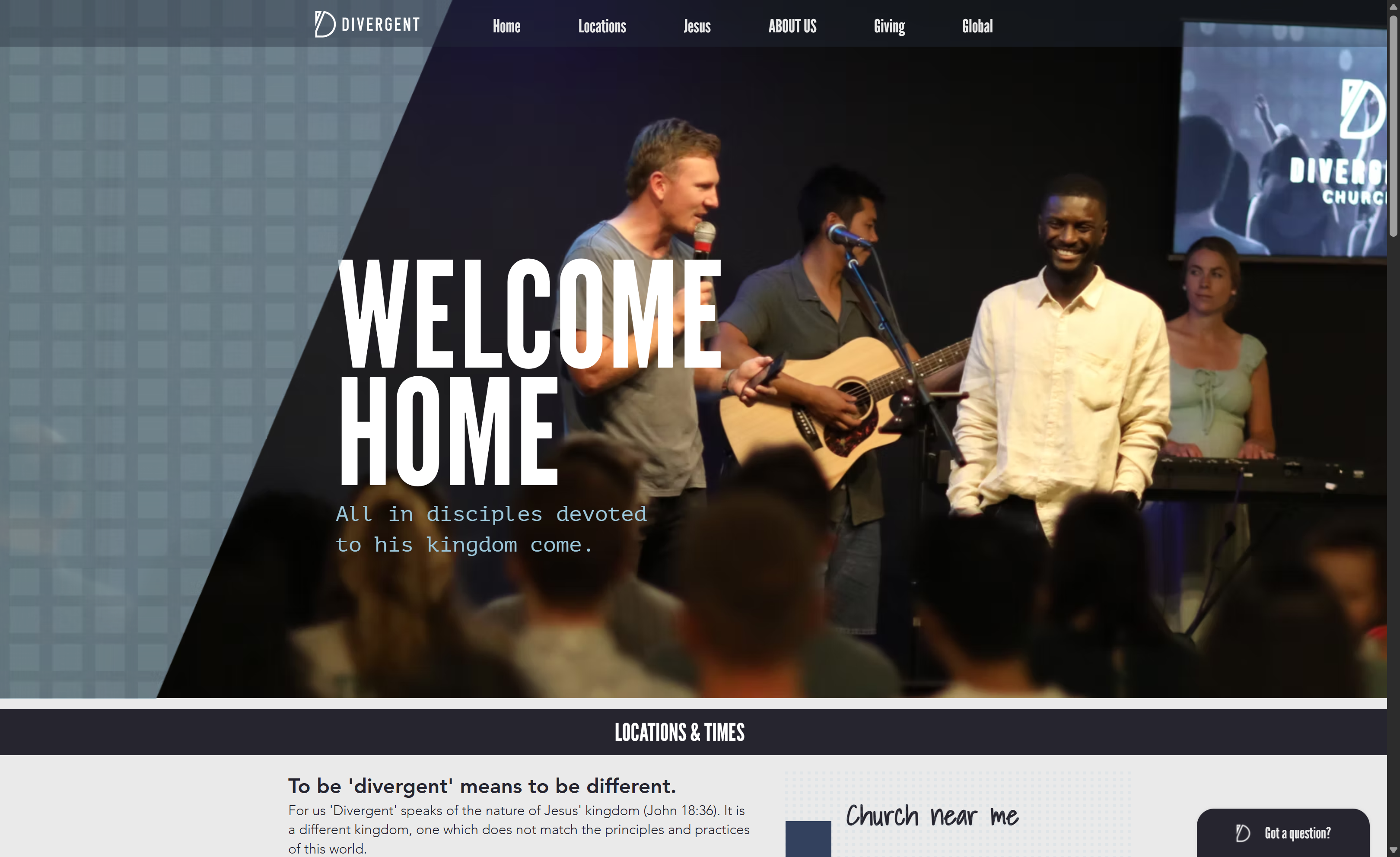
You can learn more about who we are on the Divergent Church home page, or read our guides to finding Christian community in Canberra and finding a supportive church community.
FAQ
What does the Bible say about addiction recovery?
The Bible does not use the modern word, but it speaks of bondage and freedom throughout. Jesus promises that if the Son sets you free, you are free indeed (John 8:36), and he invites the weary to come to him for rest (Matthew 11:28–29). Scripture also points us to community, counsel and accountability as the way that freedom is lived out.
Is there a Christian version of AA?
Christ-centred recovery groups exist in Australia and follow a similar spirit of honesty and mutual support. They differ by centring explicitly on Jesus Christ, including worship and testimony, and by welcoming a wider range of hurts and habits. Optional step studies pair the 12 Steps with biblical teaching.
What does Jesus say about addiction?
Jesus speaks about slavery to sin and the freedom he gives (John 8:34–36). He also receives people in their need without shame, and says the sick need a physician (Luke 5:31). His invitation is to come as you are.
Can I get professional help and still trust God?
Yes. Professional care and faith belong together. A GP, a counsellor and a confidential line such as DirectLine on 1800 888 236 are gifts that sit alongside prayer, Scripture and a church family. Talk to a doctor before stopping alcohol or certain medications suddenly, because withdrawal can be dangerous.
Sources
Recommended
Comments