
Scripture Memory Methods: Hiding God's Word in the Heart


The best way to memorise Scripture is to learn one short verse in context, break it into phrases, say it aloud, write it by hand, and return to it on a widening schedule: the next day, three days later, a week later, a month later. Do this with other believers, and pray the verse back to God as you learn it. The aim is not a trophy shelf of verses. It is that the Word of God would dwell in you richly, so that it shapes how you pray, speak and live as a disciple of Jesus. We write this as a church in Canberra for anyone who wants to begin, and for anyone asking whether the Bible is worth carrying in the mind at all.
TL;DR
Choose one short verse you understand, read its surrounding paragraph first, and stay with one translation.
Learn it in phrases, aloud and by hand, then use first-letter prompts to force yourself to recall it.
Review on a spreading schedule (day 1, day 3, day 7, one month). Review is the part most people skip.
Memorise with a brother or sister in Christ, and pray the verse rather than only reciting it.
Lectio divina is a different practice: slow, prayerful listening to a passage, not memorising. The two belong together.
Table of Contents
Why Christians memorise Scripture at all
The psalmist says it plainly: “I have hidden your word in my heart that I might not sin against you” (Psalm 119:11). Memorising Scripture is not a technique for a better life. It is an act of discipleship, a way of letting the words of God, rather than the noise of the city, form our thinking. It is also a very old practice. In Deuteronomy 6, Israel is told to keep God’s words on the heart and speak of them at home and on the road.
That shapes how we go about it. A verse learned only to be recited impresses people for a week. A verse learned so that you can pray it at 3 am, answer an anxious friend with it, or recognise a lie against it will outlast every method on this page. So begin with prayer, ask the Holy Spirit to teach you the text, and treat the methods below as tools in the service of that.
If you are newer to the Bible itself, start with reading one chapter a day. You cannot memorise well what you have not read in context.

Start with understanding, not repetition
Every method that lasts begins by knowing what the verse means. The Navigators, a discipleship ministry with a long history of Scripture memory, tell learners to read the surrounding paragraph and other translations before they memorise anything, and then to learn the topic, the reference and the verse phrase by phrase (Navigators, How to Memorize Scripture). Their guide stresses that repetition is the best way to engrave verses in the memory, but repetition of a text you do not understand only engraves confusion.
A simple routine before you memorise:
Read the whole paragraph, or the chapter, around the verse.
Ask who is speaking, to whom, and what has just been said.
Read the verse in a second translation, then choose one translation and keep to it.
Pray it once, in your own words, before you try to learn it.
This takes five minutes and is the difference between memorising words and memorising truth.
Choosing what to memorise
Begin small. A single verse is enough for a first week. Good first choices are verses that carry the gospel or that meet a need you have right now:
Romans 5:8, on God demonstrating his love in Christ dying for us while we were still sinners.
Psalm 56:3, a short verse for fear.
Ephesians 5:1–3, for those fighting temptation.
John 1:1, 14, for the identity of the Word made flesh.
Choose something that fits your season, then widen out. Over time many believers move from single verses to whole paragraphs and eventually to chapters or short books, such as Philippians or Psalm 23, 121 or 139. Memorising a passage in sequence also protects you from pulling verses out of their context.
Five methods that work
1. Chunking: learn phrases, not sentences
Break the verse at its natural pauses and learn the first phrase perfectly, then add the second, then the third. Phrases of roughly three to seven words are manageable. The School of Biblical Evangelism teaches an index-card version: write the verse on a card with the topic top left and the reference top right, then recite topic, reference, verse, reference, adding one phrase at a time (School of Biblical Evangelism). Always learn the reference with the verse, so you can find it again and so you can say where it comes from.
2. Aloud and by hand
Read the verse aloud several times, with expression, the way you would say it to a friend. Then write it out by hand once or twice. Speaking uses your voice and ears, writing slows you down enough to notice each word. Most people who say they cannot memorise have only ever read silently.
3. First-letter prompts
Once the verse feels familiar, write only the first letter of each word, with the punctuation. For Psalm 56:3 you would see something like “W I a a, I w p m t i y.” The prompt gives you a hint without giving the answer, so you must retrieve the words yourself. That effort of retrieval is what builds memory. Reading the whole verse again feels productive and does very little by comparison.
4. Sing it or record it
Many believers set short verses to a simple tune, and Scripture has always been sung. Another practical tool is your phone’s voice recorder: record yourself saying the verse, then listen on the bus, on a walk by Lake Burley Griffin, or in the car on the Parkway. You are hearing the Word in your own voice, which makes it easier to say it back.
5. Attach it to the day
Place the verse where you will meet it: on the bathroom mirror, the kettle, your phone’s lock screen, or a card in your pocket. Say it while the kettle boils or while you wait for the light-rail. Verses learned in the margins of a day tend to stay there, and they come to mind in the same margins.
Review is the whole game
Most people who give up on Scripture memory do not fail at learning. They stop reviewing. A verse that was crisp on Tuesday has gone by the following Tuesday.
The Christian Medical & Dental Associations describe the principle of spaced repetition: new material is reviewed after a short gap, then tomorrow, then in a week, a month, and later at longer intervals, with each successful recall pushing the next review further out (CMDA, A Simple Way to Memorize Scripture). They also advise being honest when you forget: mark it as forgotten and bring it back sooner rather than pretending.
In practice, for a single verse:
Day 1: learn it.
Day 2: recite from the first-letter prompt.
Day 4: say it from memory.
Day 7: say it again, and write it from memory.
Day 14, then about a month: a one-minute check.
The School of Biblical Evangelism offers a physical version: carry about twenty verses on a keyring, and keep older cards in a box divided by weekday, so that each day you review the carried verses plus that day’s older set (School of Biblical Evangelism). Whether you use cards, a notebook or an app, the principle is identical: a little, often, and on a schedule that stretches.
A one-week plan for your first verse
Choose one short verse and follow this pattern. It takes about ten minutes a day.
Day | What you do |
1 | Read the paragraph, pray, read the verse aloud five times, write it out three times |
2 | Recite from first-letter prompts |
3 | Say it aloud from memory three times |
4 | A single glance; let it rest |
5 | Say it to another person |
6 | Say it while doing something else (walking, washing up) |
7 | Write it from memory, check it, and pray it back to God |
On week two, add a second verse and keep reviewing the first. Do not rush. A verse that takes a fortnight is not a failed verse. You are not sitting an exam, and God is not marking you. One new verse a month, held for life, is a better harvest than twelve verses held for a week.
Memorise with others
Scripture memory was never meant to be a private project. Pairing with a friend, a small group or an older believer gives you someone to recite to, and someone who will ask you next week whether you still know it. The Navigators recommend a weekly ten-minute check-in with a partner for exactly this reason. If you want help setting that up, our guide to finding a Christian accountability partner walks through it, and one-to-one Bible reading is a simple way to begin with a single friend.
Groups can make a rhythm of it: one verse a month, each person recites at the start of the gathering, and the group talks about what the verse means before anyone is tested on it. For those who lead younger people, these youth group leadership tips are worth reading alongside, as they deal with the practical shape of leading a group well.
A warning worth giving: do not let the group become a contest. Reciting a verse to look impressive is the opposite of hiding it in the heart. The test of memorised Scripture is whether it comes out in prayer, in encouragement and in obedience.

Lectio divina: a different way of holding the Word
Many people searching for memory methods also ask about lectio divina, Latin for “divine reading”. It is not a memorising technique. It is a slow, prayerful way of listening to a short passage, practised by Christians for well over a thousand years. It complements memory work because it gives the verse space to speak before you try to store it.
The Centre for Liturgy in Perth sets the practice out in five movements (Centre for Liturgy, Lectio Divina). Here is how a beginner can follow them.
Lectio divina for beginners: the steps
Settle in silence. Put the phone away. Hand your noise and worry to God and ask the Holy Spirit to open you to the text.
Read (lectio). Read a short passage, five or six verses, very slowly. Notice a word or phrase that catches you.
Reflect (meditatio). Read it again and repeat that word or phrase quietly. Do not analyse it. Let it settle.
Respond (oratio). Speak to God honestly about what you have heard: thanks, confession, a request.
Rest (contemplatio). Be still in his presence for a minute or two, and carry the word into your day.
Good passages to start with include Deuteronomy 30:10–14 and the gospel accounts, such as Mark 10:17–30. Ten to fifteen minutes is enough.
Notice what lectio divina is not. It is not a technique for feeling calm, and it is not emptying the mind. We are listening to the living God through the written Word he has given, and the Word is always the authority over our impressions. A phrase that “speaks” to you must be tested against the plain sense of the whole passage and the whole Bible.
Putting the two together
A natural rhythm: spend the week with a verse in lectio divina on Monday, memorise it Tuesday to Sunday, and return to it in prayer. You will find the phrase you noticed in meditation is the one you remember most easily. If you want to build a wider pattern of prayer around this, see how to pray in five minutes and our 21-day devotions guide.
Common mistakes
Memorising what you do not understand. Read the context first.
Switching translations. It scrambles the wording you have just learned.
Cramming. Fifty repetitions in one sitting fade faster than five spread across a month.
Never reviewing. Old verses need a minute each, on schedule.
Treating it as a performance. Scripture memory is not a feat. It is attention to the voice of God.
Memorising alone and never speaking the verse. Say it to someone, pray it, use it.
What a memory verse is
The phrase “memory verse” simply means a verse or passage from the Bible to be memorised, a term especially familiar from Sunday school (Collins English Dictionary). Adults have memory verses too. The word is the same, and so is the purpose.
Our perspective
We are convinced that the Word of God is not a resource to be consumed but the voice of the Lord who speaks, and that memorising it is one of the ordinary ways the Spirit forms disciples. Discipleship is never reducible to attending a gathering. It is a whole life under the lordship of Jesus, and the Scriptures are the seed the Spirit plants in that life. In Canberra we meet students who arrive for a degree and leave in three years, public servants whose weeks are crowded, and new residents who know nobody. A verse hidden in the heart travels with them. It goes into the lecture theatre, the commute and the hospital waiting room, and it is there in the sleepless night when no one else is. That is why we want Scripture memory to be shared. We hold to the historic faith of the Church, as the creeds confess it: one God, Father, Son and Holy Spirit; Christ crucified and risen; the Scriptures as the written Word of God. Learning those words together, and testing one another gently, builds the body. It is a seed planted in the community as much as in the individual. So begin with one verse. Pray it, learn it, say it to a friend, and let it be the first of many. Josh
Meet with us in Canberra
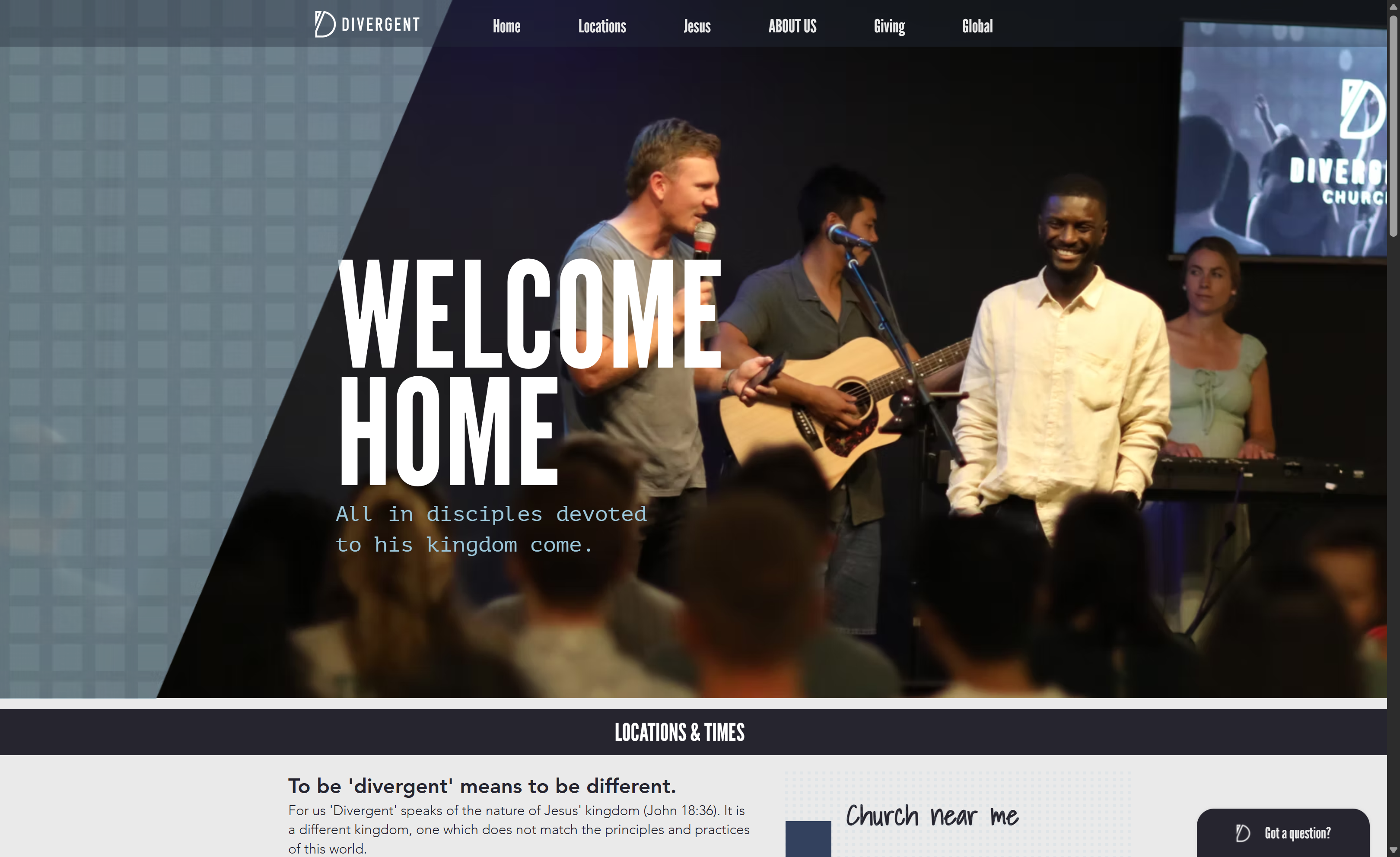
If you are in Canberra or Queanbeyan and want to learn the Scriptures alongside others, we would love to hear from you. Divergent Church exists to form disciples of Jesus and cultivate authentic, missional community in the life of the city, and that happens in ordinary relationships, not only on Sundays. You can find out more at divergentchurch.com.
If you are gathering a small group, a study circle or a memory-verse evening of your own, we also hire out rooms in Canberra City: the Board Room at $25 per hour, the Seminar Room at $50 per hour and the Auditorium at $70 per hour. You can see all three on our booking page.
FAQ
What is the fastest way to memorise a Bible verse?
Choose a short verse you understand, split it into phrases, say it aloud, then use first-letter prompts to force recall. A short verse can be learned in ten minutes or so. Speed is not the goal, though: a verse learned in a rush and never reviewed is usually gone within days, so put your next review on the calendar.
How long should I spend each day?
Five to ten minutes is enough. Many believers do it in the morning, alongside prayer and Bible reading. Short, daily sessions across a month will serve you better than one long sitting.
Is lectio divina the same as memorising Scripture?
No. Lectio divina is a slow, prayerful reading of a short passage in four or five movements: read, reflect, respond and rest. Memorisation stores the words so you can recall them. The two work well together, because meditating on a passage makes it easier to remember.
How many verses should I aim for?
Begin with one verse a month and keep reviewing the old ones. Over a year that gives you twelve verses held firmly. Over several years you can move to whole paragraphs and short books of the Bible.
What if I forget a verse I learned?
Relearn it and bring the next review closer. Forgetting is normal and not a failure. Return to the text, read it in context again, and let your review schedule stretch out once more.
Sources
Recommended
Comments