
Church events that build connection and deepen faith

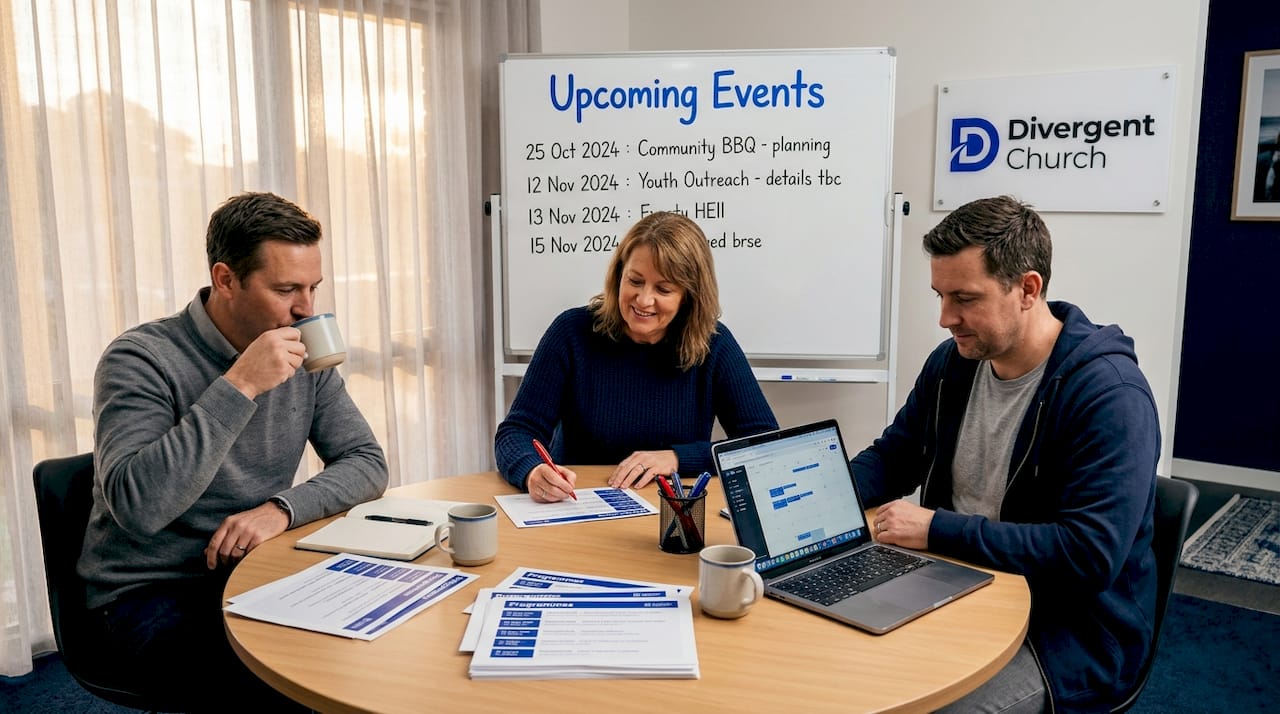
Planning church events in Canberra is rarely as simple as booking a hall and sending out an invitation. The real challenge is choosing events that do more than fill a calendar — events that genuinely form disciples, deepen friendships, and draw people closer to Jesus and one another. Whether you are part of a small home group or helping coordinate something larger across the city, the events you choose shape the culture of your community in ways that outlast any single Sunday gathering.
Table of Contents
Key Takeaways
Point | Details |
Choose events with clear goals | Defining the spiritual and relational purpose of each event leads to greater impact. |
Small gatherings build connection | Home groups and crafts foster deeper relationships and faith. |
Service and outreach open doors | Serving the community through practical events draws new people and demonstrates faith in action. |
Interfaith events require careful planning | Large-scale or interfaith events can make a big impact, but need logistics and hospitality at the forefront. |
Focus on retention over attendance | Tracking outcomes and engagement ensures events create lasting change beyond a full headcount. |
Criteria for impactful church events
Now that we understand why event planning matters, let’s examine how to evaluate which types of events best fit your church’s mission and community.
Not every event is worth your time, energy, or budget. Before you start brainstorming themes and booking caterers, it helps to have a clear framework for evaluating whether an event will actually serve your people and your mission. Good community building criteria begin with clarity of purpose.
Here are the core factors to weigh when planning any church event:
Spiritual depth: Does the event create space for Scripture, prayer, or genuine faith conversations? Or is it purely social?
Relational intention: Is the format designed to help people actually talk to one another, rather than sit in rows watching a stage?
Inclusivity: Will people of different ages, backgrounds, and levels of faith feel genuinely welcome?
Logistical fit: Does the event match your team’s capacity, budget, and available venues?
Outreach potential: Could this event be an accessible entry point for someone who doesn’t yet know Jesus?
A well-structured planning timeline runs across eight weeks: define your goals eight weeks out, open registrations at six weeks, begin active promotion at four weeks, and send reminders two weeks before the event. This approach also accounts for edge cases like permits, safety plans, emergency procedures, and venue capacity, all of which can derail even the best intentions if left to the last minute.
Pro Tip: Arrange seating in circles or clusters rather than rows, and build in hands-on activities. Research consistently shows that circular seating and participatory formats dramatically increase the quality of interaction between attendees.
Small group gatherings and home events
With the criteria in mind, let’s explore one of the most effective formats for church events — small, relational gatherings.
There is something profoundly biblical about gathering in homes. The early church in Acts broke bread from house to house, and that pattern was not incidental. It was theological. Small settings create the conditions for trust, honesty, and genuine discipleship in ways that large events simply cannot replicate.
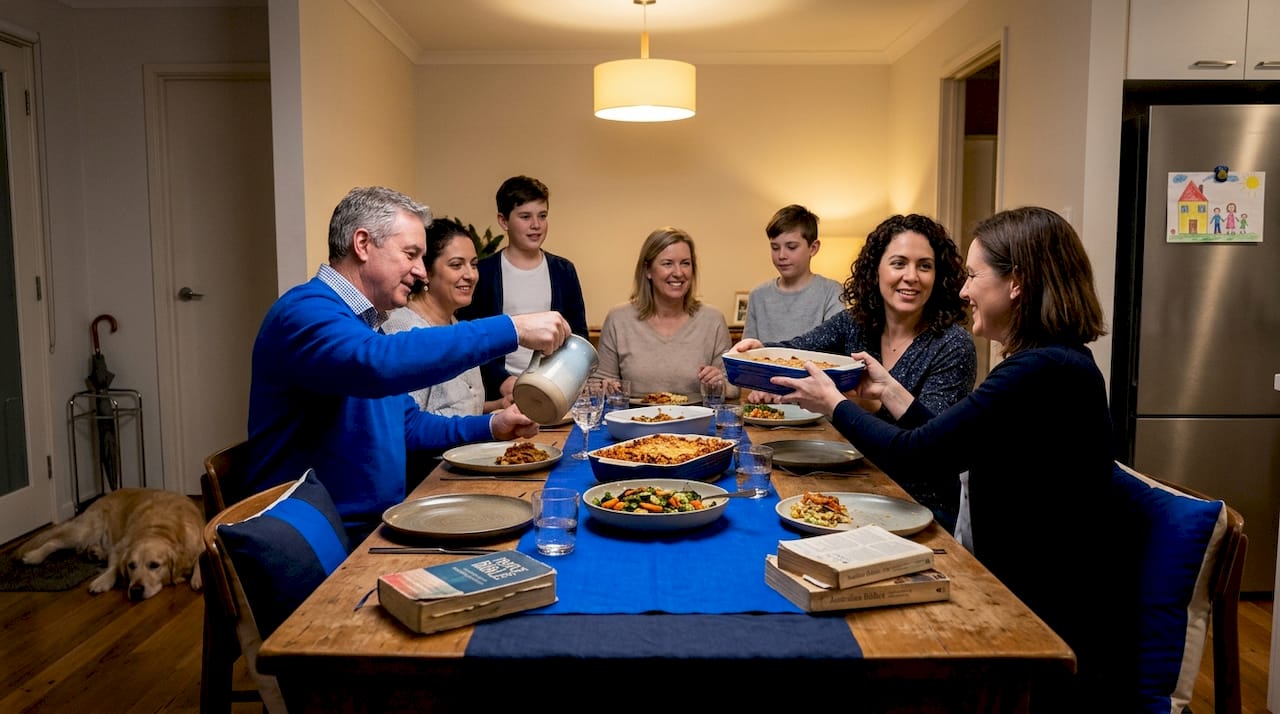
Home-based church life has seen a significant resurgence, and for good reason. Studies show that 65% of churches now prioritise home groups over Sunday school as their primary vehicle for connection and spiritual formation. That shift reflects a growing recognition that depth happens in small rooms, not large auditoriums.
Practical small group event ideas for your community include:
Bible study evenings with open discussion and shared prayer, where questions are welcomed rather than avoided
Shared meal nights built around a theme, a season of the church calendar, or a passage of Scripture
Craft and creative nights for families, where parents and children engage together in making something while conversations flow naturally
Relational workshops focused on topics like marriage, parenting, grief, or vocation, facilitated by someone in the community with relevant experience
Neighbourhood walks where a small group prays together through local streets, building a spiritual awareness of the place you inhabit
One of the most important shifts in how we measure these events is moving away from raw attendance numbers. The more meaningful metric is retention: are people coming back, going deeper, and taking next steps in faith? A gathering of twelve people where eight become disciples is infinitely more fruitful than a crowd of one hundred who never return.
Pro Tip: Before hosting a small group event in a new neighbourhood or context, invest time in building rapport with local school leaders, neighbourhood coordinators, or community figures. That relational groundwork makes your invitation feel like a natural extension of existing trust, rather than a cold outreach effort.
Our life communities at Divergent Church are built precisely on this conviction. They are not programmes to attend but relationships to inhabit.
Community service and outreach events
After looking at relational events, we turn to community service and outreach options that can build bridges with new people and demonstrate faith in action.
Service events carry a particular kind of kingdom weight. They say, without needing to explain it, that the church exists for the city, not just for itself. In Canberra, where many residents are transient, highly educated, and often sceptical of institutional religion, a church that shows up to serve without strings attached makes a genuinely prophetic statement.
Some of the most effective outreach examples include:
Coat drives and winter clothing collections distributed to local shelters or community centres
Free community meals hosted in a park, church hall, or community space, open to anyone
Toy stores at Christmas, where families in financial hardship can choose gifts with dignity
Block parties with free food, games, and live music that create a low-barrier, joyful entry point for neighbours
Hygiene kit packing events that combine community service with fellowship
Car wash days run as a free gift to the neighbourhood, with no donation bucket in sight
Prayer walks through specific streets or suburbs, inviting participants to pray with spiritual intention for the people who live there
Block adoption where a church community commits to caring for a specific street or precinct over time
Here is a quick comparison to help you think through which format suits your current season:
Event type | Strengths | Challenges |
Outreach service events | High visibility, tangible care, accessible to newcomers | Requires logistics, volunteers, and resources |
Home-based gatherings | Deep relational trust, low cost, spiritually rich | Limited reach, harder to scale |
Building a strong community church in Canberra requires both of these streams working together. Service without depth can become hollow activism. Depth without service can become comfortable insularity. The most fruitful communities hold both in creative tension.
Interfaith hospitality and large-scale events
Some churches may want to expand impact through larger events or interfaith gatherings. Here’s how churches in Canberra have achieved this and what can be learned.
One of the most striking examples of large-scale hospitality in the ACT region comes from Kippax Uniting Church, which hosted over 160 people for an iftar dinner during Ramadan, in partnership with Helping ACT and Ginninderry developers. The event required the building to be transformed from a marketplace format into a dining and prayer space, with volunteers managing every stage of setup, meal service, and cleanup. The result was a powerful expression of interfaith hospitality that opened genuine dialogue and built lasting relationships across faith communities.
That kind of event does not happen by accident. It requires:
Detailed logistics planning: Venue layout, volunteer roles, meal quantities, dietary requirements, and transition timing all need to be mapped in advance
Modular space design: Using furniture and partitions that can be rearranged quickly allows a single venue to serve multiple functions across one evening
Partnership with community organisations: Co-hosting with established groups like Helping ACT lends credibility and extends your reach beyond existing networks
Volunteer briefing and care: Large events can be exhausting. Brief your volunteers clearly, assign specific roles, and make sure they are fed and appreciated
Here is a summary of key data points from large-scale church events in Canberra and beyond:
Event | Attendance | Key outcome | Organisational tip |
Kippax iftar dinner | 160+ | Interfaith dialogue, community trust | Modular venue, volunteer teams |
Good Friday outreach | 900+ students | 63 recorded salvations | School partnerships, pre-event relationship building |
Community block party | Variable | Neighbourhood visibility, new connections | Keep it free, keep it joyful |
Events like our Good Friday service and Easter Sunday gathering at Divergent Church are designed with exactly this kind of intentionality — spiritually anchored, relationally warm, and genuinely open to anyone who walks through the door.
Pro Tip: For large events that involve transitions between activities (market, prayer, meal), use modular furniture and clearly briefed volunteer teams at each station. The smoother the physical transition, the more emotionally present your guests can remain throughout the evening.
Comparing event types: What works best in Canberra?
Let’s bring the ideas together and use a practical comparison to help you decide which events are best for your church’s goals and demographics.
Research consistently affirms that hands-on formats like crafts and shared meals work best for families, interfaith collaboration is most effective for outreach, and small relational gatherings produce the deepest spiritual formation. Large events have their place, but they are most powerful when they serve as an on-ramp into smaller, ongoing community.
Event type | Pros | Cons | Ideal for |
Small group / home gathering | Deep trust, low cost, spiritually rich | Limited reach | Discipleship, retention |
Community service / outreach | High visibility, tangible impact | Resource intensive | New connections, mission |
Large-scale / interfaith event | Broad reach, city presence | Complex logistics | Seasonal moments, public witness |
For churches in Canberra, particularly those serving a transient population of students, public servants, and young professionals, the most effective strategy is not to choose one format but to sequence them intentionally.
Here is a practical numbered process for selecting the right event for your context:
Clarify your primary goal: Is this event for deepening existing community, welcoming newcomers, or serving the wider city?
Assess your current capacity: How many volunteers, how much budget, and how much lead time do you realistically have?
Match the format to the goal: Use small groups for depth, service events for outreach, and large gatherings for seasonal impact.
Build relationships before the event: Whether you are hosting a neighbourhood dinner or a large iftar, the groundwork of prior relationship always multiplies the fruit.
Measure what matters: Track retention, next steps, and spiritual conversations, not just headcount.
If you are part of a community like ours and wondering where to begin, exploring faith events for young adults in Canberra is a great starting point for understanding what resonates with the city’s largest and most spiritually curious demographic.
Why relational events matter more than numbers
With the options and comparisons made, here is a candid view from Divergent Church to help guide future event planning.
We have seen it more than once: a church pours enormous energy into a large, well-promoted event, the numbers look impressive on the day, and then two weeks later almost no one from that crowd is still connected. The event felt successful. The fruit was thin.
This is not a reason to abandon large events. It is a reason to be honest about what they can and cannot do. Large events create moments. Relationships create disciples. And disciples are what we are actually called to make.
At Divergent Church, our conviction is that the most lasting kingdom fruit grows in the soil of ordinary, repeated, face-to-face encounter. It grows around tables, in living rooms, on neighbourhood streets, and in the kind of honest conversation that only happens when people feel genuinely safe with one another. Events are seeds. But the ground they fall into is the relational culture of your community.
This is why we resist the temptation to measure our health by how many people attended last Sunday. The better questions are: Is anyone going deeper? Are people being formed into the likeness of Jesus? Are new disciples being made and sent?
Our ENGAGE Sundays are designed with this in mind, creating space not just for gathered worship but for the kinds of conversations and connections that carry people into the rest of the week. Every event we run is evaluated not just by who showed up, but by who stayed, who grew, and who went out differently than they came in.
The invitation is not to run more events. It is to run fewer, better ones, shaped by genuine love for the people of this city and a deep confidence in the power of the Holy Spirit to transform lives through ordinary moments of community.
Take the next step with Divergent Church
Ready to bring these event ideas to life? Here’s how Divergent Church can support your next step.
Whether you are dreaming of a neighbourhood dinner, a small group gathering, or something larger that puts the church’s love for Canberra on full display, you do not have to figure it out alone. We are a community built for exactly this kind of missional imagination.
Explore our church mission events to see how we are already living this out across the city. If you are ready to find your place in the community, connect with Divergent Church and take that first relational step. And if you want to grow as a disciple who can lead and shape community yourself, our discipleship resources are a rich place to begin. The city is waiting. The community is here.
Frequently asked questions
How do you plan a church event timeline?
A well-tested eight-week timeline works as follows: define goals eight weeks out, open registrations at six weeks, begin active promotion at four weeks, and send reminders two weeks before the event.
What are some simple church event ideas for small groups?
Small group events include home gatherings with Bible study, craft nights, shared meals, and relational workshops. Hands-on formats like crafts and meals are particularly effective for families and mixed-age groups.
How do churches ensure events are inclusive?
Design activities that work across different ages and faith backgrounds, and invest in pre-event relationship building with community leaders so that your invitation arrives in the context of existing trust.
What’s the difference between outreach and interfaith events?
Outreach events focus on serving local needs through meals, coat drives, or prayer walks, while interfaith events invite people of different faith traditions into shared space and dialogue, as seen in the Kippax iftar dinner which welcomed over 160 guests during Ramadan.
Recommended
Comments