
Family Discipleship at Home: A Practical Guide for Australian Families


Family discipleship at home is the ordinary, daily work of leading your children, and everyone under your roof, to know, love and follow Jesus. Scripture gives parents this calling first, and the church stands beside them to help. It does not happen in a perfect 45-minute devotion. It happens in short, repeated, unhurried moments: a prayer at the table, a chapter read at bedtime, an honest answer in the car. Below you will find what the Bible says, a routine that fits a busy household, ideas for different ages, and how a local church can walk with you in Canberra and Queanbeyan.
TL;DR
Deuteronomy 6:6-7 places the teaching of God’s words with parents, woven through the whole day: sitting, walking, lying down and rising.
Start small. Ten to twenty minutes, a few times a week, will do more than an ambitious plan that collapses by Friday.
A simple shape works at any age: read a short passage, ask a question, pray for one another.
Your own faith, visible and honest, teaches your children more than any programme.
Home and church belong together. We do not hand children to the church, and we do not disciple alone.
Table of Contents
What the Bible says about discipleship at home
The foundation text is Deuteronomy 6:4-9. God’s people are told to love the Lord with all their heart, soul and strength, and then to teach his words to their children: when you sit at home, when you walk along the road, when you lie down and when you get up. The word translated “impress” is the Hebrew shanan, which means to sharpen or whet, as Vision Christian Media explains. A blade is sharpened by repeated, patient strokes, not one heroic effort. That is the picture of faith handed on in a home.
Three other passages fill out the pattern:
Proverbs 22:6. Train up a child in the way he should go. Training implies direction and persistence over years.
Ephesians 6:4. Fathers are told not to provoke their children to anger, but to bring them up in the discipline and instruction of the Lord. Mothers Union Sydney draws from this text that parents cannot hand this responsibility over to others, though others can help.
2 Timothy 3:14-15. Paul reminds Timothy that from infancy he had known the Holy Scriptures, which are able to make him wise for salvation through faith in Christ Jesus. Faith was passed down through a home.
Notice what these texts do not say. They do not say that discipleship is a technique for producing well-behaved children. A child cannot be argued, scheduled or rewarded into new birth. Only the Spirit gives new hearts (Ezekiel 36:25-27). The parent’s task is faithful sowing: speaking the gospel, praying, modelling repentance and obedience, and trusting God for the growth. This is why we say discipleship at home is a matter of following Jesus together, not of improving the family’s habits or polishing its image.
Why the home comes first, and the church stays beside you
If the Bible gives the first responsibility to parents, why belong to a church at all? Because Jesus did not build a collection of private households. He built his Church. Parents were never meant to carry this alone, and children were never meant to learn faith only from their parents.
When the early believers gathered, they devoted themselves to the apostles’ teaching, to fellowship, to breaking bread and to prayer (Acts 2:42). Your children need to see that their parents are not the only people who love Jesus. They need to hear other adults pray, watch older believers serve, and know that the faith of the family belongs to a larger body across generations.
So the order matters. The home is the first classroom of faith, and the gathered church feeds, corrects and strengthens the home. Neither replaces the other. A family that treats Sunday as the whole of discipleship has missed Deuteronomy 6. A family that skips the gathering of God’s people has missed Acts 2.
It is also worth saying plainly that discipleship is bigger than any family’s inner circle. A household that grows in the gospel will begin to look outward: to neighbours, classmates, colleagues and the stranger who has just moved to Canberra. Mission is not an optional extra for a family that happens to be keen. It is part of what the household is for.

What family discipleship actually looks like
Matt Chandler and Adam Griffin describe it as the important and mostly ordinary spiritual leadership of your home. Ordinary is the key word. Jesus trained the Twelve by having them with him, walking, eating, asking questions, failing and being corrected. A family can do the same.
It helps to think in three layers:
Time. The regular rhythms: a family Bible time, grace at meals, bedtime prayer.
Moments. The unplanned openings: a friend’s illness, a hard day at school, a news story, a child’s sudden question about death.
Milestones. The marked occasions: a baptism, a birthday, starting high school, a first job, Easter and Christmas.
Most families only plan the first layer, and then feel guilty when it falters. The second and third layers are where children often remember most. If something sad happens, pray with them there and then. If a child turns thirteen, mark it with a prayer and a passage of Scripture chosen for them.
Family worship ideas that work in a real week
Family worship is simply the household gathering to hear God’s word, pray and sing or give thanks together. It does not need a guitar, a lesson plan or a quiet house. It needs a time and a Bible.
A simple shape for the table
Here is a pattern a family can learn in one evening:
Read. One short passage, or a few verses from a children’s Bible for little ones.
Ask. One question: What does this show us about God? What did Jesus do here? What should we do in response?
Pray. Let each person, including the youngest, say a sentence. Pray for someone you know who is struggling, and for someone far away who does not yet know Jesus.
Sing or bless. Sing one song you know, or speak a blessing over each child by name.
That is it. Ten minutes, often less.
Ideas for different ages
Toddlers and pre-schoolers. Tell one Bible story in the same words all week and act it out. Sydney Anglicans once profiled a mother who used games such as Simon Says and hide-and-seek to teach pre-readers one truth about Jesus a day, which you can read about in this report on teaching young children. Keep the focus on Jesus, not on the game.
Primary school. Read a Gospel together one chapter or half-chapter at a time. Memorise a verse over a fortnight. Keep a family prayer list on the fridge and note how God answers.
Teenagers. Shorten the monologue and lengthen the conversation. Ask what they are hearing at school and online, and take hard questions seriously. If you do not know the answer, say so and find it together. Our guide to parenting teens as a Christian goes further.
Whole household. Use a weekly prayer rotation: family, friends, neighbours, the city, the nation, the world and its missionaries, and those who do not yet follow Jesus. It teaches children that prayer is wider than their own wishes.
Habits that carry through the day
Not every act of discipleship is a sit-down event. Pray before meals and thank God spontaneously when something good happens. Play worship music in the car and talk about the words. Read a Bible story at bedtime. Vision Christian Media’s article names the same everyday practices: talking about God as part of normal life, modelling faith, praying with children and teaching them to read the Bible.
If you want more ideas for the adults in the house, see our pieces on faith practices for daily life and a 21 day daily devotions guide.
Building a Bible time routine you can keep
Most families do not fail for lack of conviction. They fail because the plan was too big. Joel Beeke, writing for the Australian Presbyterian, urges families to plan what, where and when, often after the evening meal, and to keep it short and consistent. His line is worth remembering: twenty minutes each day is better than 45 minutes on Monday and nothing on Tuesday.
A workable plan looks like this:
Choose the anchor. Attach Bible time to something that already happens: the end of dinner, before the school run, or bedtime. Do not invent a new slot in an already crowded evening.
Set a realistic frequency. Three evenings a week is a good start. If you manage five, wonderful. If all you can do is one a week, do that and do not apologise.
Set a time limit. For young children, five to ten minutes. Families with small children often find, as Focus on the Family Australia reports, that sessions rarely run past twenty minutes, so it helps to embrace some movement and contain the noise rather than fight it.
Remove distractions. Phones in another room. Screens off. The same place if possible.
Include everyone. The baby on a lap, the teenager with folded arms. Beeke recommends drawing teenagers out with questions rather than lecturing them.
Restart small. If the habit stalls for a fortnight, which it will at some point, begin again with a psalm and a prayer. Do not wait for a new term or a new year.
When you lose your temper
It will happen. You will snap at a child ten minutes before reading Scripture. Beeke’s counsel is humbling and right: still pray, and ask forgiveness. A child who watches a parent confess sin and receive grace learns the gospel in a way no lesson could teach. Home discipleship is not performance. It is two sinners and a Saviour around a table.

Look after the parent as well
You cannot give what you are not receiving. Rest, sleep and the quiet habits that steady a tired parent matter, and a few simple healthy habits for parents can help you show up to family Bible time with more patience. But your deepest need is not a better routine. It is Christ himself, so keep your own time in the word and prayer where your children can see it. As one writer puts it, let your children see you reading and praying rather than hiding it away.
Teaching the Bible to children without turning the home into a classroom
There is a real danger of making the house a “mini Sunday school”. Deuteronomy 6 describes talk that flows through the day, not lessons delivered at a desk. A few principles keep it natural.
Tell the whole story. The Bible is not a collection of moral tales. It is one story: creation, fall, redemption in Christ, and new creation. When you read about Noah, David or Ruth, ask where the story is pointing. Every thread leads to Jesus. Children who learn only “be brave like David” miss the point; children who learn that God sent a greater King will have something that lasts.
Teach the gospel, not only good behaviour. Children need to hear that they are sinners who need forgiveness, that Jesus died and rose for sinners, and that God calls everyone to repent and believe. Behaviour matters, but it flows from a changed heart. Teaching morals without the cross is not Christian discipleship.
Welcome questions. Let the Bible time be a safe place to ask why, and to voice doubt. A parent who answers “I do not know yet, let us look into it” and then returns with an answer earns trust. Often the best answers are found by opening the Scriptures together and, where needed, asking a pastor.
Repeat. Sharpening is slow. Return to the same truths: God made us, we have sinned, Jesus saves, the Spirit changes us, we belong to one another. Children will not tire of the gospel as quickly as you fear.
Meet the child where they are. Parents should disciple situationally, attending to each child’s temperament and capacities, as Ligonier’s Scotty Anderson argues. One child will want to talk, another will want to do, and a third will need quiet time alone with you.
Making ordinary moments and milestones count
The ordinary and the marked belong together. A few examples for a Canberra household:
The school drop-off. Pray for the day in thirty seconds. Name the teacher, the friend, the exam.
A neighbour in need. Take a meal to someone who has had surgery or a new baby, and let the children carry it to the door. Discipleship includes loving our neighbours in practice.
A new family arrives. Canberra is a city of transitions: public servants, students, people on short postings. Invite them for dinner. Your children will learn what hospitality in Jesus’ name looks like.
Easter and Christmas. Read the Gospel accounts across the week, not just the carols. Let the story itself be the centre.
Starting high school. Pray over the child and give a Scripture to carry into the new year.
The prayer rotation mentioned above can also shape mission in the home. Karen Engle notes at Logos that family discipleship should overflow to others: if it only influences the people in your home, something is wrong. A home that is growing in the gospel will want to share it at work, at school and in the neighbourhood.
Perspective
We love family discipleship because we love the Church, and the Church is a family of families. Scripture asks parents to sharpen their children in the word, and it asks the whole body of Christ to stand beside them. We refuse to choose between the two. Divergent Church in Canberra exists to form disciples of Jesus and to cultivate authentic, missional community in the life of the city. That is not a Sunday gathering with a children’s programme attached. It is a people shaped by Scripture, centred on Jesus and expressed through everyday life, relationships and mission. Your household is part of that life, not an audience to it. We also know Canberra. It is a city of universities, workplaces, neighbourhoods and people who are far from home. Many parents here have no grandparents nearby and no one to ask. Some are newly married and raising their first child; some are students wondering whether the faith of their childhood is true. We want to be a place where honest questions are welcomed and the gospel is stated plainly: Jesus is Lord, he died for sinners, he rose again, and he calls every household to follow him. If you are discipling your children at home, you are doing what God asked. Do not do it alone. Josh
Walk with a church family in Canberra and Queanbeyan
If you live in Canberra or Queanbeyan and want a community to share the work of raising children in the faith, we would be glad to meet you. Our Grow page is the place to begin, and you can find out more about us at Divergent Church. Whether you are a long-time believer or simply asking questions about Jesus, you are welcome.
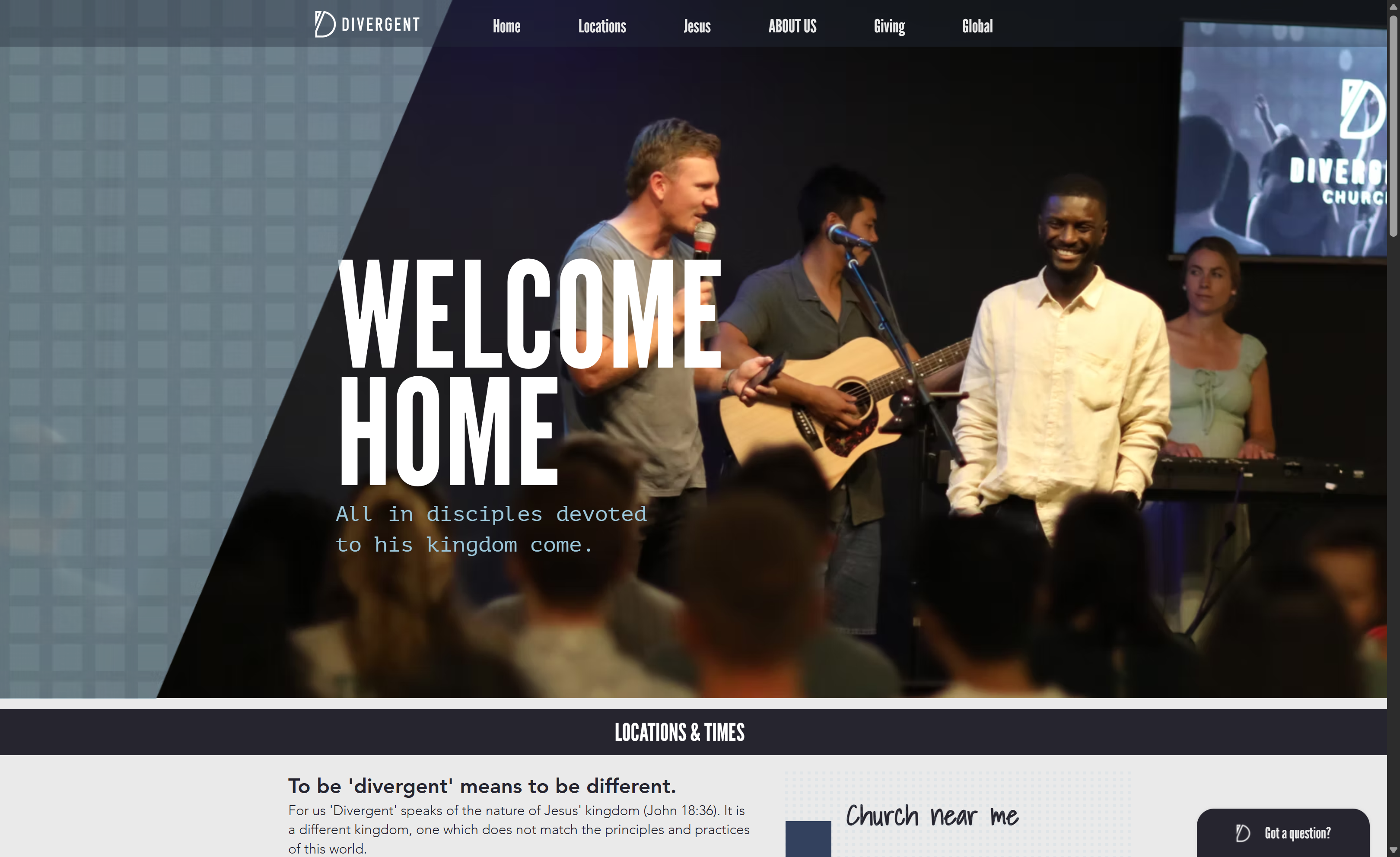
If you are weighing up what a healthy church family looks like for your children, our article on healthy family church signs will help, and so will our reflection on being the church at home.
FAQ
What does the Bible say about family discipleship?
Deuteronomy 6:4-9 commands parents to love God wholeheartedly and to teach his words to their children throughout the day, at home, on the road, at bedtime and on waking. Proverbs 22:6, Ephesians 6:4 and 2 Timothy 3:14-15 reinforce that parents are to train, instruct and pass on the Scriptures. The church supports this work but does not replace it.
How long should family Bible time be?
Short and regular beats long and rare. Five to ten minutes suits young children, and twenty minutes is a comfortable upper limit for many families. Three evenings a week is a realistic start, and you can build from there.
What if I am not confident teaching the Bible to my kids?
You do not need to be a theologian. Read a short passage, ask what it shows us about God, and pray together. When a question stumps you, say so and look for the answer together in Scripture. If you are in Canberra or Queanbeyan, a church family can help you grow in knowing the Bible yourself.
What are some simple family worship ideas?
Pray before meals, read a Bible story at bedtime, sing a song together, keep a family prayer list and bless each child by name. You can also use a weekly prayer rotation that covers family, friends, neighbours, the city, the nation and the world.
Is family discipleship the same as going to church?
No. Attending the gathering of God’s people is part of following Jesus, but discipleship runs through the whole of life: the home, the workplace, the neighbourhood and mission. Home and church are meant to work together, and neither is a substitute for the other.
Sources
Recommended
Comments