
How to deepen your spiritual life: a practical guide


Start with five minutes a day. That single commitment, practised consistently, does more for your spiritual formation than an annual retreat done in isolation. The most grounded disciples are not the ones who pray longest; they are the ones who show up daily, even briefly, and let those seeds take root over time.
Your micro-plan to begin today:
Morning (2 minutes): Read one verse slowly, sit with it, and ask: “What is God saying to me through this?”
Midday (1 minute): Breathe slowly and pray a short breath prayer: “Lord Jesus, have mercy” on the inhale, “on me, a sinner” on the exhale.
Evening (2 minutes): Ask yourself three questions: Where did I sense God today? Where did I resist? What do I want to carry into tomorrow?
In the next 24 hours:
Choose one verse from the Psalms or Gospels for tomorrow morning.
Set a phone reminder for your midday breath prayer.
Write three sentences in a notebook tonight answering the Examen questions above.
Tell one person you trust what you are starting.
Pro Tip: Don’t wait for the perfect quiet morning. The practice matters more than the conditions. A two-minute prayer in a noisy kitchen still forms you.
Table of Contents
Core spiritual practices: your practical toolkit
These are the disciplines that have shaped followers of Jesus across centuries. George Whitefield’s seven practices for spiritual progress included Scripture reading, secret prayer, meditation, and fellowship — the same practices recommended here, now grounded in contemporary neuroscience and pastoral experience.
Prayer: breath prayer and centring prayer
Breath prayer is one of the most accessible entry points. Choose a short phrase tied to Scripture (“You are my shepherd / I shall not want”), pair the first half with your inhale and the second with your exhale, and repeat for two to five minutes. Centring prayer goes a step further: choose a single sacred word (“Jesus,” “peace,” “come”), return to it gently whenever your attention wanders, and sit in receptive silence for ten to twenty minutes.
Both forms train the attention. Neuroscience research shows that short, repeated attention training changes brain networks involved in focus and emotion regulation, which is why daily practice, even brief, outperforms occasional long sessions.
Examen and journalling
The Examen, drawn from Ignatian spiritual practice, is a five-minute end-of-day review. Three questions to use tonight:
Where did I feel most alive or most connected to God?
Where did I feel drained, resistant, or far from God?
What do I want to ask for tomorrow?
Write the answers in a notebook. Over weeks, patterns emerge: recurring consolations, persistent desolations, and the slow shape of your spiritual life becoming visible on the page.
Silence and solitude
Start with five minutes of intentional silence after waking. No phone, no music, no agenda. Sit, breathe, and be present. Walking contemplatively, without earphones, is another form: notice what is around you and let it become a kind of prayer. The Thrive Center’s guide to contemplative practices notes that these practices slow us down, open us to self-awareness, and over time reorder our loves.

Fasting, giving, and service
Fasting is not primarily about hunger; it is about creating space. A beginner’s fast might mean skipping one meal and using that time for prayer. Giving, practised deliberately, loosens the grip of self-sufficiency. Service reorients attention from self to others, and research from the Mayo Clinic links volunteering to improved wellbeing and a stronger sense of purpose. These are not add-ons to the spiritual life; they are part of its core grammar.

Creative practices: music, art, and breathwork
Singing Scripture, drawing a response to a passage, or using slow breathwork as a form of prayer are all legitimate spiritual tools. The key is intentionality: use them to attend to God, not merely to feel calm. A playlist of contemplative worship music during your morning routine can shift the atmosphere of a whole day.
Practice | Time needed | Best for |
Breath prayer | 1–5 minutes | Midday reset, stress moments |
Lectio Divina | 5–20 minutes | Morning formation |
Examen | 5–10 minutes | Evening reflection |
Centring prayer | 10–20 minutes | Deeper silence practice |
Fasting (one meal) | One meal’s time | Monthly or seasonal rhythm |
For practical daily templates, Divergentchurch’s resource on faith practices for daily life offers ten habits you can start immediately.
How do you build weekly and seasonal rhythms?
A single daily practice is a seed. Rhythms are the soil. Without a weekly and seasonal structure, even good habits get crowded out by the pace of ordinary life.
Daily (5–20 minutes): Morning Lectio or breath prayer, midday reset, evening Examen. After thirty days of consistency, extend by five minutes.
Weekly rhythms:
Sabbath: one day (or half-day) of genuine rest, worship, and play. Not productivity. Not catch-up. Rest as an act of trust that God sustains what you cannot.
Communal worship: attending a Sunday gathering is not optional for formation. The body of Christ shapes you in ways private practice cannot.
Small group or life community: one weekly gathering with a small group of people who know your name and your struggles.
Monthly and seasonal rhythms:
A half-day of extended solitude once a month. Find a quiet park, a church building, or a retreat space and spend three to four hours in silence, prayer, and unhurried reading.
Fasting seasons: Lent and Advent offer natural frameworks, but any season can become a fast if you choose it deliberately.
An annual retreat: even a single overnight at a retreat centre resets the spiritual imagination in ways that daily practice alone cannot.
Practical costs and time in Australia:
Retreat centres in Australia typically charge varying fees for weekend retreats, depending on accommodation and facilitation. Spiritual direction sessions also vary in cost, with some directors offering sliding-scale fees. Many churches, including Divergentchurch, offer formation programmes and life communities at no cost. The biggest investment is not money but time: fifteen to twenty minutes a day, plus one weekly gathering.
Why do you need community and spiritual direction?
Private practice forms you. Community transforms you. The two are not interchangeable.
Spiritual friendship, accountability, and shared prayer have been central to Christian formation since the desert fathers and mothers of the third century. You cannot see your own blind spots. A trusted friend, a small group, or a spiritual director gives you the outside perspective that private reflection cannot.
Spiritual direction vs pastoral care vs counselling:
Spiritual direction focuses specifically on noticing God’s movement in ordinary life and discerning patterns over time. It is not therapy (which addresses mental health conditions) and not pastoral care (which responds to crisis). A spiritual director asks: “Where is God in this?” A counsellor asks: “What is happening inside you?” Both are valuable; they serve different needs. For couples navigating relational formation alongside spiritual growth, faith-based marriage counselling can complement what a spiritual director offers.
Practical steps to find a director or mentor:
Ask your pastor or church leader for a referral.
Contact Spiritual Directors International (SDI) for a directory of trained directors in Australia.
Ask a potential director: “What is your own rule of life?” and “How do you handle spiritual dryness in directees?”
Commit to at least six sessions before evaluating the relationship.
Joining a life community:
A small group of six to twelve people, meeting weekly around Scripture, prayer, and shared life, is the most accessible form of communal formation. Divergentchurch’s life communities in Canberra are designed exactly for this: groups that meet in homes, share meals, pray together, and hold each other accountable to growth. To learn more about building sustaining relationships in community, see Divergentchurch’s guide on church relationships.
Pro Tip: When looking for a spiritual director, prioritise someone who asks good questions over someone who gives good answers. Formation happens in the space of honest inquiry, not instruction.
What blocks spiritual growth and how do you respond?
Every person who pursues depth hits a wall. Naming the wall is the first step through it.
Common blocks and immediate responses:
Scattered attention: The inability to focus for even five minutes. Research on mindfulness and contemplative practice shows that attention is trainable, but it takes repetition. Start with two minutes, not twenty.
Burnout and busyness: When life is genuinely full, the answer is not to add more practices but to sanctify what is already there. Pray while driving. Practise gratitude while washing dishes. The relaxation response produced by even brief contemplative pauses carries measurable physiological benefits.
Pro Tip: When motivation drops, don’t redesign the goal. Redesign the trigger. Attach your practice to something you already do every day: your morning coffee, your commute, your lunch break. The habit follows the cue.
How long does it take and what does it cost?
Honest answer: formation is measured in years, not weeks. But you will notice something within thirty days if you practise consistently.
Suggested timeline:
4 weeks: A settled morning routine; reduced reactivity in at least one recurring stressor.
3 months: Noticeable shift in how you respond to conflict or disappointment; a growing sense of God’s presence in ordinary moments.
1 year: Changed patterns of desire; clearer sense of vocation; deeper capacity for love and patience.
Neuroscience supports the case for short, daily consistency over intensity. Research by Davidson and Lutz demonstrates that repeated, brief attention training produces lasting changes in brain networks governing focus and emotional regulation. You do not need an hour a day to begin. Five to twenty minutes daily, sustained over months, is enough to start.
Typical time commitment to start:
Daily practice: 5–20 minutes
Weekly community gathering: 1.5–2 hours
Monthly half-day solitude: 3–4 hours
Annual retreat: one to two days
Indicative costs in Australia:
Item | Typical cost range |
Life community / small group | Free (most churches) |
Contemplative apps | Free–low monthly cost |
Formation programmes (e.g., Divergentchurch Discipleship Hub) | Free or low cost |
“Short, repeated practice changes the brain’s attention networks more reliably than occasional long sessions.” Davidson & Lutz et al.
Your 4-week starter plan for Canberra readers
This plan is designed for someone with fifteen to twenty minutes a day and one weekly gathering. Adapt it freely.
Week 1: Establish the morning anchor
Each morning: read one verse from the Psalms using Lectio Divina (five minutes).
Each evening: write three Examen sentences in a notebook (five minutes).
Weekly: attend a Sunday gathering or life community night.
Accountability prompt: text a friend one thing you noticed God saying this week.
Week 2: Add the midday breath prayer
Continue morning Lectio and evening Examen.
Add a one-minute breath prayer at midday, tied to a phone reminder.
Weekly: book a brief conversation with a pastor or trusted mentor.
Accountability prompt: share one area of dryness or resistance with your group.
Week 3: Introduce silence and service
Continue all Week 1–2 practices.
Add five minutes of intentional silence after your morning Lectio.
Choose one act of service this week: volunteer, give generously, or serve someone in your household without being asked.
Weekly: attend your life community and bring a question from your Examen journal.
Week 4: Review and extend
Continue all practices.
Book a half-day of solitude: a park, a quiet church, or a retreat space in Canberra.
Reflect: which practice has produced the most fruit? Which has felt most difficult?
Decide one practice to carry forward as a permanent rhythm.
Adapting for different life stages:
Shift workers: Anchor practices to the start and end of your shift rather than morning and evening.
Parents of young children: Use nap times or school drop-off commutes. A two-minute breath prayer in the car counts.
Students: Tie Lectio to your first coffee of the day; use the Examen as a study-break reset.
Divergentchurch’s Discipleship Hub provides formation resources, reading guides, and community connections that map directly onto this plan. If you are new to faith or returning after a long absence, the Follow Jesus pathway is a natural starting point.
Pro Tip: After four weeks, don’t add more practices. Deepen the ones you have. A shallow practice done daily forms you more than a sophisticated one done occasionally.
Key takeaways
Deepening your spiritual life requires small, daily practices sustained over months, not occasional intense efforts, and those practices bear the most fruit when held within a community of faith.
Point | Details |
Start with five minutes daily | A consistent micro-practice of prayer, Scripture, and silence forms you more reliably than sporadic long sessions. |
Use a three-part daily rhythm | Morning Lectio, midday breath prayer, and evening Examen create a natural structure for any schedule. |
Community accelerates formation | A weekly life community or small group provides the accountability and spiritual friendship that private practice cannot replace. |
Expect measurable change by three months | Calmer responses, shifted desires, and a growing sense of God’s presence are realistic markers within ninety days of consistent practice. |
Divergentchurch supports your next step | The Discipleship Hub and life communities in Canberra offer free, structured formation resources to support this plan. |
Formation is slower than you think, and that is the point
The most common mistake in spiritual formation is treating it like a productivity project: set a goal, measure progress, optimise the system. That frame produces anxiety, not depth.
What actually forms a person is slower and stranger. It is the accumulated weight of ten thousand small moments of attention, the gradual loosening of self-sufficiency, the willingness to sit in silence when you would rather scroll. Formation is not something you achieve; it is something that happens to you as you make yourself available.
The disciples who walked with Jesus were not transformed by a single encounter. They were formed over three years of shared meals, hard questions, failure, and return. The same pattern holds today. The practices in this guide are not techniques for spiritual success; they are ways of remaining present to the One who is already present to you.
If you are in Canberra and you want company on that road, Divergentchurch exists for exactly this. Not as a programme to complete, but as a community to belong to. The Spirit-filled life as a disciple is not a solo project. It never was.
Divergentchurch: formation resources for Canberra disciples
Divergentchurch offers something most guides on spiritual formation cannot: a local community in Canberra where the practices described in this article are lived out together, week by week.
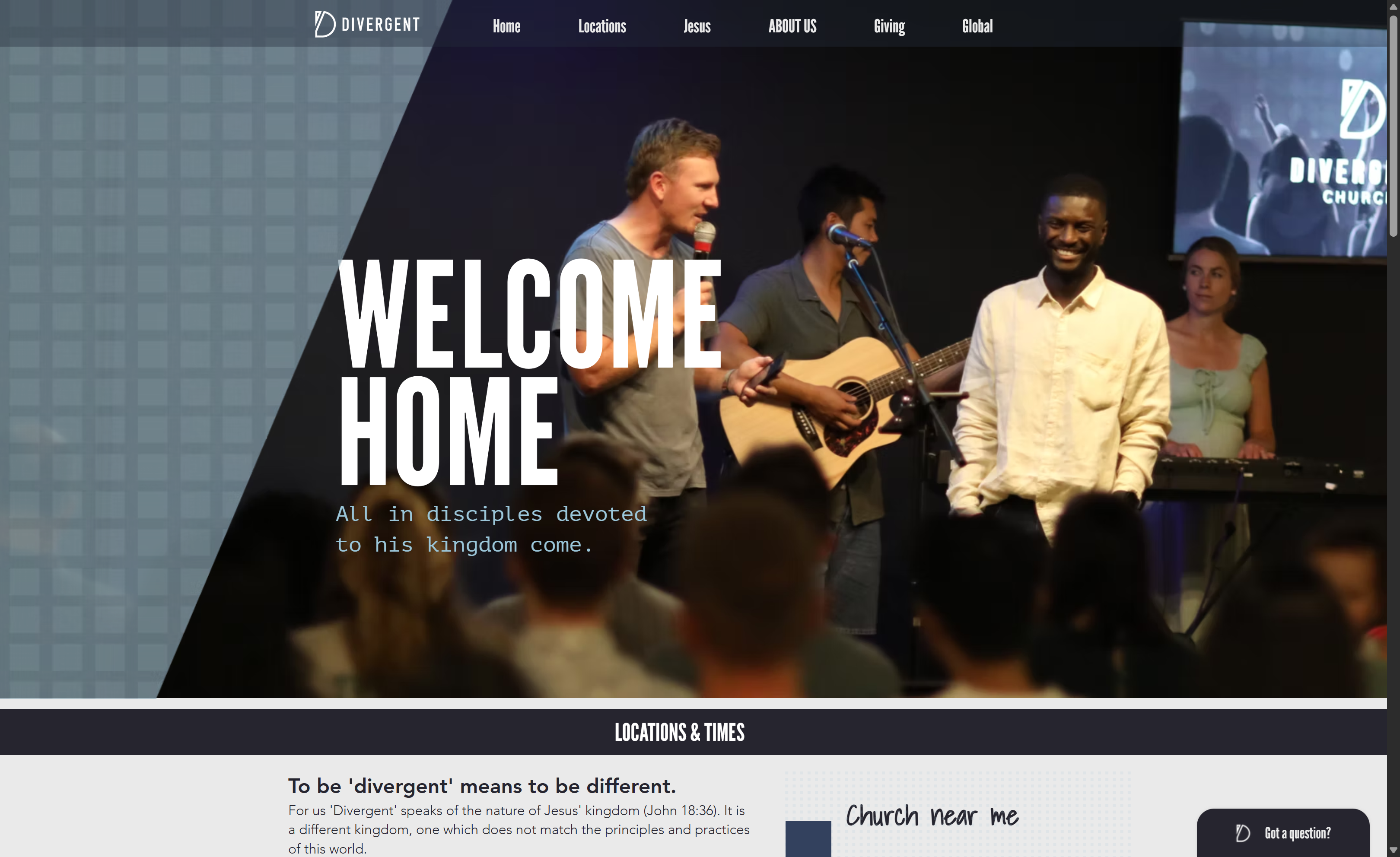
The Discipleship Hub brings together formation resources, reading guides, and structured pathways for people at every stage of faith. Life communities meet weekly in homes across Canberra, providing the kind of spiritual friendship and accountability that accelerates everything else. Whether you are starting your first five-minute morning practice or ready to commit to a year of intentional formation, there is a next step here for you.
Visit Next Steps to find a life community, book a conversation with a pastor, or explore the Discipleship Hub. The door is open.
Useful sources and further reading
The following sources informed this guide. Each is worth reading in full for the claim it supports.
Source | What it supports |
Thrive Center: A guide to contemplative practices | Value of Lectio Divina, centring prayer, and Examen for reordering desires |
Davidson & Lutz et al. (PMC3396089) | Neuroscience case for short, repeated daily practice over occasional long sessions |
Mindfulness and contemplative practice improving wellbeing and reducing stress | |
Physiological and psychological benefits of quiet contemplative practices | |
Mayo Clinic: Health benefits of volunteering | Service and generosity as practices linked to wellbeing and purpose |
Clinical links between spiritual practice and health outcomes | |
Crossway: George Whitefield’s seven practices | Historical continuity of personal and communal spiritual disciplines |
Ignatian Spirituality: Strengthening your spiritual life | Examen, silence, and spiritual direction as structured daily practices |
Broad, accessible definition of spirituality across secular and religious contexts | |
Small-step strategy and formation as Holy Spirit-led shaping, not performance |
Recommended
Comments