
10 Christian habits to strengthen your daily faith


Here are the ten Christian habits that consistently shape a faithful life: daily Bible reading, regular prayer, church community, generosity, discipleship and mentoring, hospitality and service, fasting and silence, worship and praise, journalling, and Sabbath rest. These practices are not a ladder to climb toward God’s approval. They are, as spiritual formation teachers frame it, the “how” of walking in the new identity you already have in Christ — ways of positioning yourself to receive grace and deepen intimacy with Jesus.
Daily Bible reading — read one passage and sit with it
Regular prayer — a daily conversation, not a performance
Church community — weekly gathering and Life Community connection
Generosity — giving money, time, and attention
Discipleship and mentoring — being shaped and shaping others
Hospitality and service — ordinary love made visible
Fasting and silence — seasonal disciplines for deeper focus
Worship and praise — orienting your heart throughout the day
Journalling — recording what God is doing and saying
Sabbath rest — one day of intentional stopping
Pick two or three to start. Divergentchurch’s Discipleship Hub and Life Communities exist precisely to help you practise these habits alongside others in Canberra.
Table of Contents
The list of Christian habits explained: scripture, purpose, and first steps
These ten habits cover the core spiritual disciplines that believers across traditions have returned to for centuries. Each one below includes a scripture prompt, why it matters for formation, and one small starting step you can take today.
1. Daily Bible reading
Scripture is the primary way God speaks into ordinary life. Reading it daily trains your mind and heart to think in alignment with his character. “Your word is a lamp to my feet and a light to my path.” (Psalm 119:105)

First step: Read one psalm or one chapter of a gospel each morning. Divergentchurch’s Bible reading resource offers guided plans to remove the guesswork.
2. Regular prayer
Prayer is a daily conversation with God, not a formal report. It covers gratitude, confession, intercession, and listening. “Do not be anxious about anything, but in every situation, by prayer and petition, with thanksgiving, present your requests to God.” (Philippians 4:6)

First step: Pray for a few minutes after you wake up. Use the ACTS structure (Adoration, Confession, Thanksgiving, Supplication) as a loose guide, not a rigid script. Creating a dedicated space helps — even a simple corner with a candle and a Bible. For practical ideas on setting one up, decorating a prayer room doesn’t need to be elaborate.
3. Church community and regular gathering
Faith was never designed to be a solo project. Regular gathering with other believers provides teaching, accountability, and the kind of belonging that shapes character over time. “Let us not give up meeting together, as some are in the habit of doing.” (Hebrews 10:25)
First step: Commit to attending a Sunday gathering and one Life Community meeting per week for a month. Notice what shifts.
4. Generosity and giving
Generosity is a spiritual habit, not just a financial one. Giving money, time, and attention loosens the grip of self-sufficiency and aligns your heart with the kingdom. “Each of you should give what you have decided in your heart to give, not reluctantly or under compulsion.” (2 Corinthians 9:7)
First step: Set a giving intention and automate it. Then look for one practical act of generosity each week that costs you time rather than money.
5. Discipleship and mentoring
Being discipled and discipling others is the pattern Jesus modelled. You grow fastest when you are simultaneously being poured into and pouring into someone else. “Go and make disciples of all nations.” (Matthew 28:19)
First step: Identify one person ahead of you in faith and ask to meet monthly. Identify one person behind you and offer the same. Divergentchurch’s discipleship questions resource gives you a ready-made conversation framework.
6. Hospitality and service
Opening your home, your table, and your time to others is one of the most countercultural habits a Christian can practise. It is love made visible and concrete. “Offer hospitality to one another without grumbling.” (1 Peter 4:9)
First step: Invite one person or family for a meal this week. It doesn’t need to be impressive — a simple shared meal carries more weight than a catered event. For more on serving in a church context, Divergentchurch has practical guidance for volunteers and leaders alike.
7. Fasting and silence
Fasting and solitude are seasonal rather than mandatory daily practices, but they are powerful tools for breaking patterns of distraction and cultivating attentiveness to God. “When you fast, do not look sombre as the hypocrites do.” (Matthew 6:16)
First step: Try a one-meal fast once a month, using the time you would have spent eating to pray or read Scripture. Silence for ten minutes each morning is a gentler entry point if fasting feels too large.
Common pitfall: Treating fasting as a spiritual performance metric. The goal is attentiveness, not achievement.
8. Worship and praise
Worship is not limited to Sunday singing. It is the ongoing orientation of your heart toward God throughout the day — in the car, at your desk, washing up after dinner. “Sing and make music from your heart to the Lord.” (Ephesians 5:19)
First step: Create a worship playlist and play it during your commute or household tasks. Sing along, even badly. The habit of praise reshapes your emotional baseline over time.
9. Journalling
Writing down what you are reading, praying, and noticing creates a record of God’s faithfulness that you can return to. It also slows down your thinking in a way that deepens reflection. “I will remember the deeds of the Lord; yes, I will remember your miracles of long ago.” (Psalm 77:11)
First step: After your Bible reading, write two or three sentences: what you read, what stood out, and one question or response. A cheap notebook works as well as any app.
10. Sabbath rest
One day of intentional stopping is a prophetic act in a culture that prizes productivity above all else. Sabbath is not laziness — it is trust that God sustains what you cannot. “Remember the Sabbath day by keeping it holy.” (Exodus 20:8)
First step: Choose one day this week to stop working by a set time. No emails, no side projects. Spend the time in rest, worship, and unhurried connection with people you love.
Pro Tip: Pair a new spiritual habit with something you already do every day — this is called habit stacking. Research from Bible Study Tools confirms it reduces friction and significantly raises the chance of long-term consistency. Pray while you brew your morning coffee. Read one verse while you eat breakfast. The trigger is already there; you are simply adding the practice.
How to build these habits without burning out
Consistency beats intensity every time. That is not a motivational slogan — it is the most common marker of successful spiritual formation among long-term practitioners. A five-minute daily prayer habit sustained for a year does more formative work than a two-hour prayer session followed by three weeks of nothing.
Here is a simple sequential plan:
Choose one or two habits from the list above, not ten. Spiritual ambition is real, and it is one of the most common reasons people abandon their practices within a fortnight.
Start smaller than feels meaningful. One verse, five minutes — that is enough to begin. The goal at this stage is showing up, not depth.
Stack the habit onto an existing routine (see the Pro Tip above). Reduce the number of decisions required.
Find one accountability partner — a friend, a small group, or a Life Community member — and share your intention with them.
Review weekly. At the end of each week, ask: did I do it? What helped? What got in the way? Adjust the habit before abandoning it.
Scale gradually. After four consistent weeks, add five minutes or one more habit. Not before.
Common pitfalls and quick fixes
All-or-nothing thinking: Missing one day does not break the habit. Return the next morning without self-condemnation.
Spiritual ambition: Starting with seven new habits at once almost always collapses. One habit, done faithfully, is worth more than seven attempted and dropped.
No cue, no habit: If you cannot name the trigger that will prompt the habit, it will not happen. Place your Bible on your pillow. Set a phone reminder. Put your journal next to the kettle.
Pro Tip: Accountability works best when it is framed as mutual encouragement rather than performance monitoring. Set flexible, measurable goals with your accountability partner and celebrate small wins — not just milestones.
Accountability checklist (for use with a friend or small group)
What habit am I working on this week?
What is my specific trigger or cue?
What got in the way last week, and what will I do differently?
What is one small win I can celebrate?
Do I need to adjust the habit, or simply recommit to it?
For deeper spiritual development guidance, Divergentchurch has written on what steady growth actually looks like over time.
A simple 7-day rhythm to try this week
One week is enough to test whether a habit rhythm fits your life. You are not committing to forever — you are running a seven-day experiment. Track three things each day: the time you spent, how you felt afterward, and what Scripture you engaged with.
Day | Morning (5–10 min) | Midday (2–3 min) | Evening (5 min) |
Monday | Read one psalm, pray | Pray for one person | Journal two sentences |
Tuesday | Read one gospel passage | Sing one worship song | Reflect on generosity |
Wednesday | Pray using ACTS | Silence for two minutes | Read a verse aloud |
Thursday | Read one psalm, pray | Pray for your workplace | Journal one question |
Friday | Read one gospel passage | Pray for a friend | Worship playlist while cooking |
Saturday | Longer prayer (10 min) | Rest, no agenda | Share a meal with someone |
Sunday | Gather with your church | Sabbath rest | Reflect on the week |
What an example morning looks like
You wake up at 7:00 AM. Before checking your phone, you make a coffee and open your Bible to Psalm 23. You read it slowly, once. You write two sentences in your journal: “The Lord is my shepherd — I felt anxious this morning and this was the right thing to read. Question: where am I striving instead of resting?” You pray for three minutes, out loud, using the psalm as a prompt. You are done by 7:15 AM. That is it. Seeds planted in fifteen minutes, every morning, grow into something you cannot manufacture in a single weekend retreat.
What to celebrate at the end of the week
Did you show up on most days? That is the win.
Did you notice any shift in mood, attention, or awareness of God?
Did one habit feel more natural than the others? Start there next week.
Did you connect with one other person around faith? That counts.
Why these habits are spiritual, not just self-improvement
Spiritual disciplines are not a self-help programme with Bible verses attached. They are, at their core, a response to grace — a way of positioning yourself in the path of God’s transforming work rather than trying to manufacture transformation yourself.
The Apostle Paul frames it this way:
“Train yourself to be godly. For physical training is of some value, but godliness has value for all things, holding promise for both the present life and the life to come.” (1 Timothy 4:7–8)
Training implies repetition, not perfection. It implies showing up to the practice even when you do not feel ready. The habits in this list are not hoops to jump through to earn God’s favour — they are the ordinary means by which the Spirit does his forming work in you.
Ordinary daily work can itself become an act of worship when offered in faith. Washing dishes, commuting, parenting, working — none of these are spiritually neutral when done with an awareness of God’s presence. Sabbath rest, meanwhile, is not simply a productivity hack for the week ahead. It is a declaration that you are not the one holding everything together.
The habits connect to each other, too. Bible reading feeds prayer. Prayer deepens worship. Worship softens the heart for generosity. Generosity opens the door to hospitality. Hospitality creates the conditions for discipleship. The list is not ten separate items — it is one integrated life, shaped by the rhythms of living as a Spirit-filled disciple.
Accountability partnerships help habits take root
Accountability is one of the most underused tools in spiritual formation. Practitioners consistently highlight accountability partnerships and small groups as the structural supports that make the difference between a habit that lasts and one that fades after a fortnight.
The key is framing. An accountability partner is not a spiritual supervisor checking your performance. They are a fellow traveller who asks good questions, celebrates small wins, and helps you return when you drift. That distinction changes everything about how the relationship feels.
A good accountability partnership around spiritual habits looks like this: you meet or message weekly, you share one habit you are working on, you name what helped and what didn’t, and you pray for each other. That is the whole structure. It does not need to be complicated.
Building church relationships that go beyond Sunday is one of the most practical ways to find this kind of partnership. Divergentchurch’s Life Communities are designed precisely for this — small, relational groups where people practise faith together in the rhythms of everyday Canberra life.
Key takeaways
Consistency in a small number of well-chosen habits, sustained over time within a supportive community, is the most reliable path to genuine spiritual formation.
Point | Details |
Start with one or two habits | Choosing too many at once leads to burnout; faithfulness in one habit outweighs seven attempted and dropped. |
Consistency over intensity | A five-minute daily practice sustained for months does more formative work than occasional intense efforts. |
Habit stacking reduces friction | Pair a new spiritual practice with an existing daily routine to make it easier to sustain. |
Accountability multiplies growth | A weekly check-in with a friend or small group significantly increases long-term consistency. |
Divergentchurch’s Life Communities | Joining a Life Community gives you a local, relational context to practise these habits alongside others in Canberra. |
A pastoral note on ordinary faithfulness
There is a quiet temptation that follows every list like this one — the temptation to treat it as a performance standard rather than an invitation. I have seen it in Canberra, in university students who arrive full of spiritual energy and burn out by semester two, and in long-term believers who quietly gave up because they could never sustain the version of faith they thought they were supposed to have.
What I want to say, gently and clearly, is this: the habits in this list are not a measure of your worth before God. They are seeds. You plant them in ordinary soil — a Tuesday morning, a shared meal, a five-minute prayer before the day begins — and the Spirit does the growing. Faithfulness in the small things is not a consolation prize for people who cannot manage the big things. It is the thing itself.
If you are in Canberra and you want to explore what this looks like in community, Divergentchurch’s faith practices guide is a good place to start. The door is open.
Divergentchurch can help you build these habits in community
Knowing the habits is one thing. Practising them alongside people who are doing the same is where real formation happens. Divergentchurch runs two high-priority pathways for people who want structured, relational support for building a faithful daily life in Canberra.
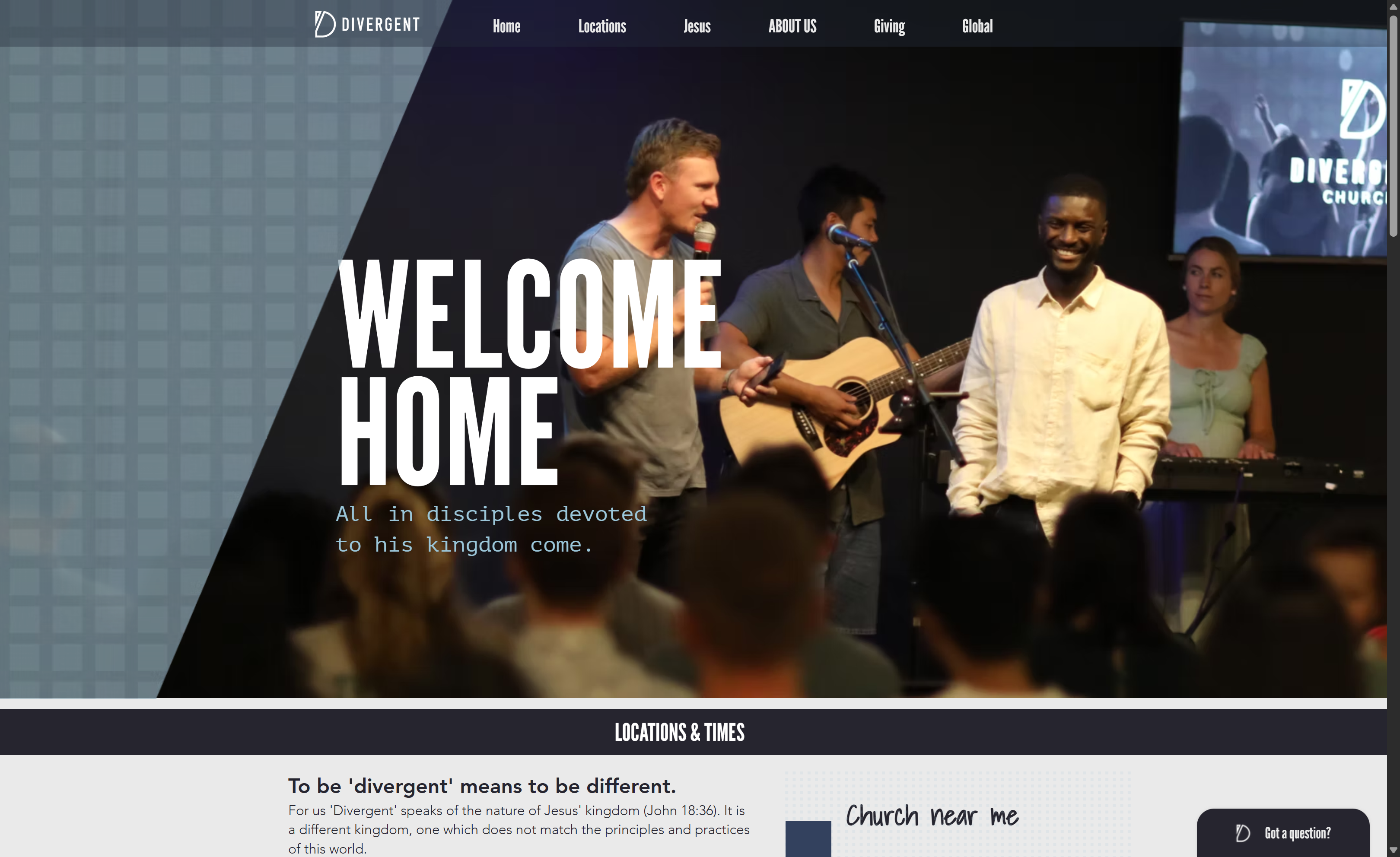
The Discipleship Hub is Divergentchurch’s central resource for anyone wanting to grow intentionally as a follower of Jesus. It includes reading plans, formation guides, and pathways for both new and established believers. If you are starting from scratch or rebuilding after a long gap, this is the right entry point.
Life Communities are small, relational groups that meet throughout Canberra and Queanbeyan. They are the practical context where accountability, hospitality, discipleship, and prayer happen together — not as a programme, but as a shared way of life. These groups are where the habits on this list move from intention to practice.
If you want to go deeper with Scripture specifically, Divergentchurch’s Bible reading resource offers guided plans to help you read consistently and well.
Pick one habit from this list. Find one person to do it with. Then visit the Discipleship Hub to find the resources and community that will help it take root.
Further reading and practical resources
Bible Study Tools: 10 tips for building faithful habits — practical habit-formation tips including journalling, visual cues, and accountability.
Paul Chappell: how to build spiritual habits that last — practitioner guidance on avoiding burnout and sustaining consistency over time.
The Gospel Coalition: build spiritual habits in just a few minutes — helpful for anyone who feels time-poor; shows how 30-second and five-minute practices still count.
Core Christianity: 8 ways to practise Christianity Monday through Saturday — practical framing of how ordinary weekday life becomes spiritual formation.
Divergentchurch: Discipleship Hub — Canberra-based discipleship resources, reading plans, and formation pathways.
Divergentchurch: Life Communities — find a small group in Canberra or Queanbeyan to practise these habits alongside others.
Recommended
Comments