
Your step by step faith journey starts with one small act


Start today: read Hebrews 11 for five minutes, sit in silence and pray, then tell one person what you noticed. That single act of obedience matters more than a perfect plan, because faith takes shape through practice, not theory. If you’re near the beginning, this fits what’s often called the recognition stage. If you’re further along, it’s still the right rhythm.
Key Takeaways
Spiritual growth follows a recognisable but non-linear pattern, and small daily obedience, not big gestures, is what moves you through it.
Point | Details |
Start small today | Read a short passage, pray for five minutes, and tell one person what you noticed. |
Use the six-stage map | The Critical Journey’s stages (recognition to life of love) help you locate yourself without judgement. |
Expect the wall | Doubt in the inward journey stage is common and often signals deeper reformation, not failure. |
Test community for weeks, not days | Give any group six to eight weeks before committing, checking for pastoral care and honest questions. |
Take a next step with Divergent Church | The Discipleship Hub and Life Communities give a structured, local pathway from first visit to ongoing growth. |
Table of Contents
What is the step by step faith journey model?
Most Christians move through the same broad seasons, even if the timing and order differ. A well-known framework called The Critical Journey, developed by Janet Hagberg and Robert Guelich, maps six stages people commonly pass through as their faith deepens.
Recognition of God — an awakening to God’s reality and presence.
Discipleship — learning the basics: Scripture, prayer, community.
The productive life — serving, leading, building a ministry identity.
The journey inward — a harder season, sometimes called “the wall,” where old certainties get tested.
The journey outward — a renewed, humbler kind of service and mission.
The life of love — a settled, others-focused maturity.
Nobody moves through these in a straight line. You might live in Stage 2 at church and Stage 4 in your personal prayer life at the same time, and that’s normal, not a warning sign.
What practical steps fit each stage?
Faith grows through repeated, ordinary acts, not grand gestures. Here’s what each stage tends to ask of you.
Recognition — Read short passages (a psalm, a gospel chapter) and ask honest questions rather than forcing answers.
Discipleship — Build a rhythm of Scripture, prayer, and gathering with others who’ll actually notice if you disappear.
The productive life — Name your gifts and put them to use somewhere local, even in a small way.
The journey inward — Slow down. Journal what’s shifting. Bring your questions to God directly rather than burying them.
The journey outward — Look for a person or need outside your usual circle and respond to it.
The life of love — Keep showing up quietly, without needing recognition for it.
Two verses anchor this whole process:
“Now faith is the assurance of things hoped for, the conviction of things not seen.” (Hebrews 11:1)
“For we walk by faith, not by sight.” (2 Corinthians 5:7)
Both point the same direction: faith is enacted, not just believed. Joyce Meyer’s teaching on taking steps of faith makes a similar point, arguing that obedience in small, unclear moments is what actually advances a person’s faith, with patience doing more work than intensity.
Pro Tip: Choose your next practice based on what you’re actually feeling this week (restless, lonely, guilty, grateful) rather than picking from a generic checklist. A plan built around your real state lasts longer than one built around what “should” work.

Pro Tip: Pick one small, repeatable habit over one big, one-off effort. Five minutes of prayer every day beats a two-hour retreat you never repeat.
What does a 7-day starter plan look like?
A week is short enough to actually finish and long enough to build real momentum.
Day 1 — Read John 1 (10 minutes). Write down one question it raises.
Day 2 — Pray using a simple prompt: thank, ask, listen.
Day 3 — Listen to a sermon or a chapter of a gospel-based film, such as Jesus Film Project, which tells the Jesus story in an accessible visual form.
Day 4 — Attend or watch a church gathering, even online.
Day 5 — Invite one person to talk about faith over coffee.
Day 6 — Reflect in writing: what surprised you this week?
Day 7 — Rest, pray, and plan next week’s single next step.
Bible.com’s “First Steps For New Believers” reading plan pairs well with this week, offering short daily passages if you’d rather follow a guided track than choose your own readings.
What if I hit doubt or a wilderness season?
Doubt usually shows up in Stage 4, the journey inward, and it’s not a sign you’ve failed. It’s often the point where inherited beliefs get tested and re-owned as your own.
Name the specific doubt rather than letting it stay a vague feeling.
Shorten your practices: two minutes of honest prayer beats twenty minutes of performance.
Journal what you’re wrestling with, without editing for how it sounds.
Bring lament and confession into prayer instead of avoiding God when you’re frustrated with him.
Talk to a mentor or pastor if the doubt is persistent or paired with despair.
Pro Tip: If lingering doubt comes with hopelessness, low mood, or thoughts of self-harm, that’s a signal to see a counsellor or pastoral carer, not just to pray harder.
How do you choose a discipleship group or church?
The right community accelerates growth; the wrong one can stall it or do real harm. Ask a few direct questions before committing.
What’s the expected level of commitment, and is it flexible for newcomers?
What are the group’s core beliefs about Jesus, Scripture, and salvation?
What’s the weekly or fortnightly rhythm, and who leads it?
Watch for warning signs too: an exclusive “us versus them” culture, pressure to give money beyond your means, or no real pastoral care when someone’s struggling.
Visit for six to eight weeks before deciding anything long-term.
Notice whether you’re being fed Scripture or just entertained.
Ask whether leaders check in on people who miss a few weeks.
Test whether the group tolerates honest questions or shuts them down.
How long does spiritual growth usually take?
Growth in faith is rarely linear. Expect plateaus, occasional regression into an earlier stage, and long stretches where nothing feels dramatic. Contemporary faith-development research shows spiritual growth mapped across stages that people move through at very different speeds.
Prayer becomes more natural and less forced.
You serve without needing thanks.
Your conscience gets clearer, not more anxious.
Relationships show more patience and less defensiveness.
Hebrews 12:1 calls this “running with endurance,” a picture of a long race rather than a sprint, which is a far more honest description than most people expect.
How does Divergent Church support this next step?
Divergent Church in Canberra built its Discipleship Hub around exactly this kind of stage-by-stage growth, moving people from a first Sunday visit into ongoing formation and community.
New visitors typically start with Discover Jesus, a plain-language introduction to who Jesus is and how to respond.
From there, most people join a Life Community, a small group built for weekly connection and honest conversation.
Josh, who writes on discipleship and Spirit-filled living for Divergent Church, shapes much of this pathway content around real pastoral practice, not theory.
A pastoral word on staying the course
Growth in faith is relational before it’s ever informational; you’ll grow more through honest people than through perfect answers. If you’ve hit doubt or a flat season, that’s not disqualification. It’s usually the exact place deeper formation begins.

Take your next step with Divergent Church in Canberra
Divergent Church gives you a structured way to keep going after this article ends, rather than leaving you to figure out the next move alone. Where a lot of faith content stops at “read your Bible and pray,” Divergent Church’s Discipleship Hub pairs that with actual people: a Life Community to join this week, and a clear pathway from first visit through to leadership formation.
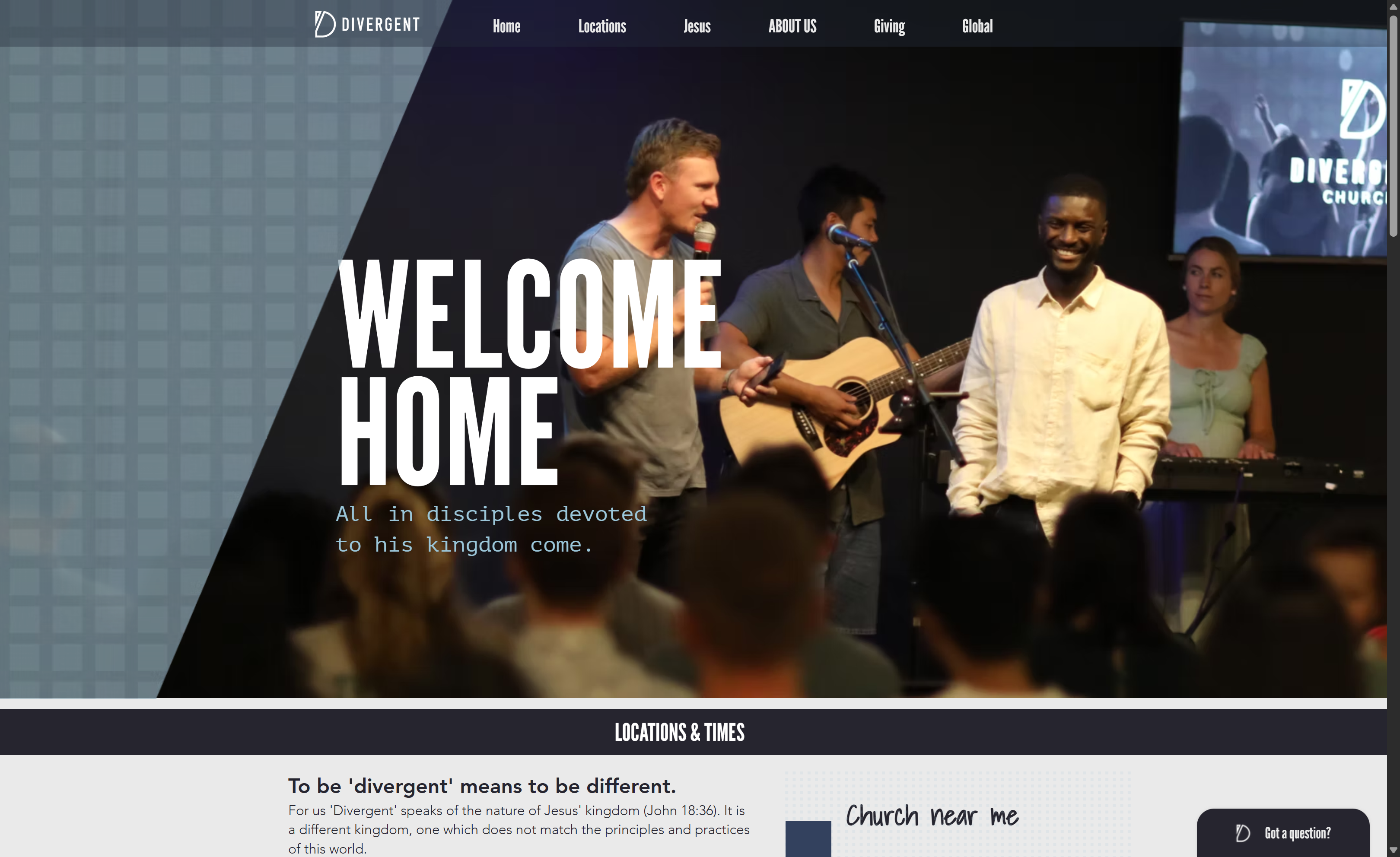
If you want structured discipleship, the Discipleship Hub offers ongoing courses built around the same stage-based thinking covered here. If you’re after weekly connection and accountability, Life Communities are the fastest way to stop doing this alone. Readers drawn toward serving others as part of their growth might also explore Christmas Compassion through NYSUM, a mission-training pathway for turning inward growth into outward service. And if leadership formation is calling you, Lead Like Jesus is worth a look. Visit Divergent Church’s Canberra page this week and pick one entry point to try.
Where to read more on this
Know Yourself: Stages of Faith explains The Critical Journey’s six stages in plain language.
Taking Steps of Faith by Joyce Meyer offers pastoral guidance on obedience and patience.
Faith Development Project covers stage-based assessment tools for tracking spiritual growth.
Growing in Faith: What Spiritual Development Looks Like unpacks growth markers in more depth.
15 Discipleship Questions is useful for small-group or personal reflection.
Frequently asked questions
What’s the fastest way to start a step by step faith journey? Start with one short Scripture reading, five minutes of prayer, and one honest conversation. Momentum matters more than intensity at the beginning.
Is the six-stage model the only way to understand spiritual growth? No. The Critical Journey is one widely used framework, but simplified four-stage models (connect, explore, respond, grow) are also common in church settings and describe similar movement.
How do I know if I’m at “the wall”? If your usual practices feel flat, questions feel louder than answers, or old certainties feel shaky, you’re likely in the inward journey stage. It’s common, not a crisis.
Do I need a mentor to grow in faith? Not immediately, but a mentor or small group speeds up growth and offers accountability that solo reading and prayer can’t provide on their own.
How long before I see real change? There’s no fixed timeline. Growth is usually slow, uneven, and marked by small shifts, more patience, clearer conscience, steadier prayer, rather than sudden transformation.
Sources
Recommended
Comments