
Understanding the church body: meaning, community, and structure


When most Australians hear the word “church,” they picture a building, a Sunday morning service, or perhaps a community hall filled with familiar faces. But the phrase church body carries a richness that stretches far beyond weekly attendance or brick-and-mortar architecture. It speaks to something alive, relational, and deeply purposeful. Whether you are new to Christian faith in Canberra, reconnecting after a long absence, or simply trying to understand what church actually is, this guide will help you see the church body for what it truly is: both a living community of people and an organised structure designed to help everyone grow, belong, and serve together.
Table of Contents
Key Takeaways
Point | Details |
Dual meanings of church body | Church body refers to both a spiritual community and an organisational structure. |
Governance shapes belonging | Organisational models determine how churches make decisions and encourage participation. |
Discipleship is structured | Church body frameworks clarify spiritual growth pathways for members and leaders. |
Community connection matters | Active involvement in the church body leads to belonging, support, and purpose. |
Next steps are accessible | Practical ways exist for connecting, learning, and serving in Canberra church communities. |
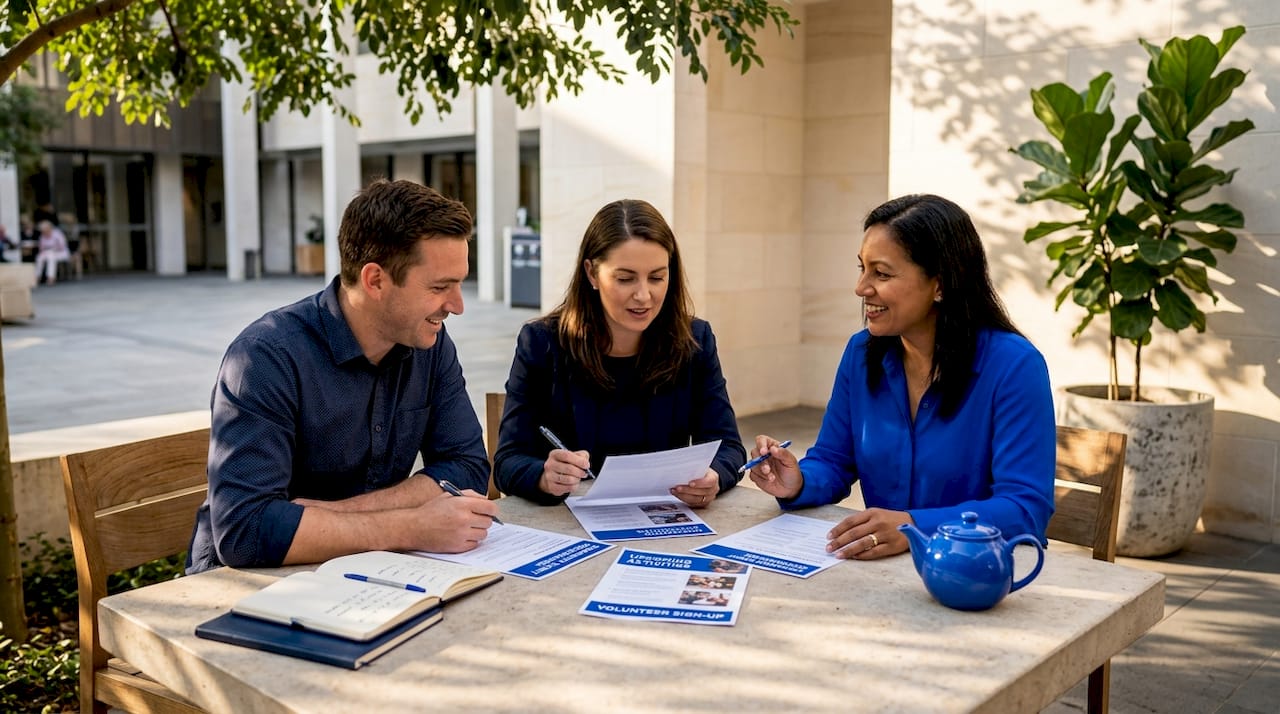
The biblical metaphor: church as the body of Christ
The foundation of everything we mean when we say “church body” is found in Scripture. The apostle Paul wrote with unmistakable clarity in 1 Corinthians 12:12–27, using the human body as a prophetic metaphor for the community of believers. Just as a body has many parts, each with a distinct function, so the church is made up of many people, each carrying unique gifts, callings, and contributions.
“For just as the body is one and has many members, and all the members of the body, though many, are one body, so it is with Christ.” — 1 Corinthians 12:12 (ESV)
This passage is not merely poetic. It is doctrinal. The Body of Christ describes believers as united and interconnected, not a collection of individuals who happen to share the same Sunday timeslot, but a living organism where each part matters to the whole.
Understanding what is a Christian church helps ground this further. The Greek word ekklesia, often translated as “church,” literally means “the called-out ones” or an assembly. It was a gathering with purpose, with identity, and with shared responsibility.
Here is what the body metaphor actually means for how we live together:
Every member has a role. The hand cannot say to the foot, “I don’t need you.” No one is surplus to the mission.
Diverse gifts serve a unified purpose. Teachers, encouragers, leaders, and servants all contribute to something bigger than themselves.
Mutual care is not optional. Paul says when one part suffers, all suffer. This is the church community power that genuinely transforms people’s lives.
Belonging precedes contribution. You are part of the body before you have figured out your role. Identity comes before function.
Pro Tip: Don’t just attend church. Find one place to serve or one group to join. That single act moves you from observer to participant, and that shift changes everything about how you experience faith community.
The body metaphor dismantles the consumer mindset. Church is not a service you receive; it is a body you belong to. And in Canberra, where so many people are transient, professionally driven, or quietly searching for something genuine, this truth is both countercultural and deeply necessary.
Structures and governance: the church body as an organisation
Now that we’ve covered the spiritual metaphor, let’s make sense of the church body as an organisational structure. This is where many people’s eyes glaze over, but it matters more than you might expect. How a church is governed shapes everything: how decisions are made, how accountability flows, and how ordinary members can participate in the life and direction of the community.
Church governance, also called polity (a term meaning the form of government or organisation), is not a modern invention. Every church body operates under some form of polity, whether consciously or not. The Anglican governance model illustrates one approach, using synods and councils where clergy and laity share decision-making authority at regional and national levels.
Presbyterian polity introduces models like elder-led, congregational, and representative systems, each with distinct strengths for community accountability. Here is how three of the most common models compare:
Governance model | Decision-making authority | Member participation | Accountability structure |
Anglican (Episcopal) | Bishops and synods | Through elected representatives | Hierarchical, with regional oversight |
Presbyterian | Elected elders (session) | Members elect elders | Representative, with broader accountability |
Congregational | Full congregation | Direct voting by members | Flat, community-driven |
Each model shapes the culture of a church in practical ways. A congregational model might foster a stronger sense of shared ownership, while an episcopal structure can provide greater doctrinal consistency across locations. Neither is inherently superior; each reflects theological convictions about authority, community, and the Holy Spirit’s guidance.
Key things to understand about church governance:
Transparency builds trust. When members understand how decisions are made, they feel respected and included.
Accountability protects community. Governance structures help prevent unhealthy concentrations of power.
Participation shapes the future. In many models, ordinary members genuinely influence the direction of their church.
Polity varies widely. A Baptist church and an Anglican church may look similar on Sunday morning but operate very differently behind the scenes.
Pro Tip: Ask your church leaders a simple question: “How are major decisions made here?” A healthy church will answer openly. That conversation alone can deepen your trust and your sense of belonging.
Understanding church governance is not about becoming a bureaucrat of faith. It is about knowing that your presence, your questions, and your voice genuinely matter to the body you are part of.
Discipleship in practice: how church body frameworks guide growth
Understanding church governance naturally leads us to ask: how does a church actually help people grow? This is where discipleship comes in, and it is where church body structures become deeply personal.
Churches use defined discipleship structures so that members know how to grow and leaders can guide their efforts with intention and clarity. Without a framework, people often drift. They attend for years without ever deepening their faith or discovering their gifts. Structure does not limit spiritual growth; it creates the conditions for it.
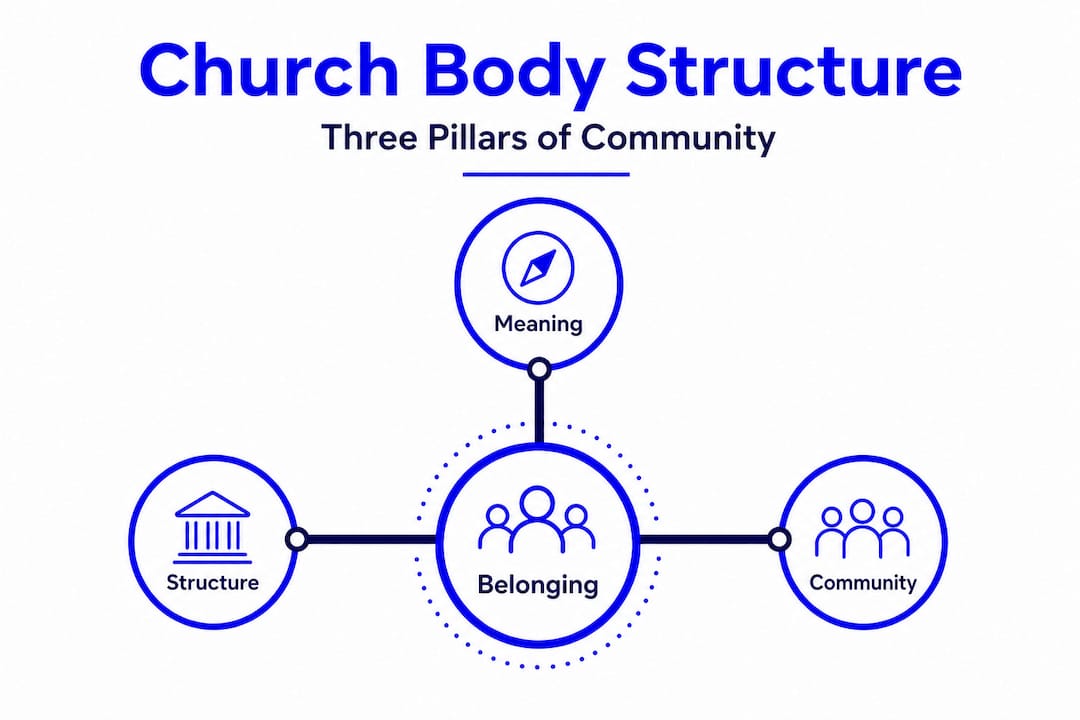
Here is a practical snapshot of discipleship pathways found across Canberra churches:
Discipleship stage | Focus | Common activities |
Exploring faith | Understanding the basics | Sunday services, introductory courses |
Grounding in Scripture | Building biblical foundations | Bible study, small groups |
Community integration | Finding belonging and contribution | Life groups, serving teams |
Leadership development | Equipping for mission and ministry | Mentoring, training programmes |
These helpful discipleship questions can guide you through each stage, helping you reflect on where you are and where you want to grow. The pathway is not linear or mechanical; it is relational and Spirit-led. But having clear markers helps enormously, especially for people who are new to church or returning after a significant gap.
Here is a practical step-by-step approach to getting involved in church discipleship:
Start by attending regularly. Consistency creates the relational soil where growth happens. You cannot be formed by a community you only dip in and out of.
Join a small group or life community. This is where real conversation, honesty, and mutual support occur. Sunday gatherings are important, but small groups are where you are truly known.
Engage with Scripture intentionally. Use structured resources, a Bible study checklist, or guided questions to go deeper than surface-level reading.
Find a way to serve. Service is not an add-on for the spiritually advanced. It is a core means of formation that shapes character and deepens your sense of purpose.
Pursue a mentoring relationship. Being guided by someone a little further along the journey accelerates growth in ways that no programme alone can replicate.
Being part of a disciple-making church in Canberra means you are not on your own. The framework exists to support you, and the community exists to walk alongside you at every stage.
Finding your place: church body community in Canberra
Let’s see how these concepts play out in real Canberra church communities and what they mean for your own journey. Canberra is a unique city. It is full of highly educated professionals, students, public servants, and people from every background imaginable. It also has a significant transient population, people who have moved here for work or study and are looking for roots. The church body, when it functions well, offers exactly that.
Belonging and mutual care across many roles is what the church body model translates to in practice. This is not abstract theology. It is the experience of being welcomed by name, of having someone check in on you after a hard week, of contributing your skills to something that genuinely matters.
Canberra churches foster belonging in several practical ways:
Life groups and small communities that meet in homes or cafés, creating space for honest conversation and friendship.
Volunteer and serving teams that let you contribute your practical skills to the life of the community.
Seasonal events and gatherings that build connection and deepen faith outside of Sunday services.
Welcoming newcomers deliberately, not just with a handshake but with follow-up, introductions, and genuine interest.
Pathway conversations where leaders sit with you to understand your story and help you find your footing in the community.
One of the honest challenges of building community in Canberra is that people are often busy, mobile, and cautious about commitment. Many people have experienced church that felt shallow, and they carry that wariness with them. That is understandable. But the answer to shallow church is not less church; it is deeper, more intentional community.
Pro Tip: Start with one small step. Attend a mid-week group once, volunteer for a single event, or introduce yourself to one person you don’t know. Connection builds through small, consistent acts of presence. Don’t wait until you feel completely ready, because that moment rarely comes on its own.
Building a strong Canberra church community requires both structure and warmth. Structure creates the pathways; warmth makes the pathways worth walking.
Beyond Sunday: what most guides miss about the church body
Here is what we have come to understand through years of building community in Canberra: most people approach church as a service to attend, not a body to belong to. And that single misunderstanding accounts for a significant amount of the disconnection, disappointment, and drift that people experience.
The common assumption is that if you show up on Sunday, you have “done” church. But the body metaphor demands something more. A hand that never moves is not really functioning. A member who only observes is not yet fully participating in the life of the body. This is not a guilt trip; it is an invitation.
“Church body means you matter — your gifts, your presence, your questions.”
Real growth comes from stepping in, not spectating. We have seen it repeatedly: the person who volunteers reluctantly discovers a gift they never knew they had. The newcomer who asks a hard question in a small group becomes the one who helps someone else through a crisis six months later. Seeds planted in genuine community grow in ways that solitary faith rarely does.
The community’s real impact is often felt most in the ordinary moments: the meal shared after a difficult week, the prayer offered in a car park, the friendship that starts over coffee and becomes a genuine spiritual bond.
What most guides miss is this: the church body is not something you find when the conditions are perfect. It is something you help create by showing up imperfectly, consistently, and with an open hand. Don’t wait for the ideal church or the ideal season of life. Imperfect participation transforms both you and the community you are becoming part of.
Take your next step with the church body in Canberra
The concepts in this article are not just ideas to think about. They are invitations to act on.
At Divergent Church, we exist to help people in Canberra find genuine community, grow as disciples of Jesus, and live with kingdom purpose. If you are exploring what it means to be part of a church body, our discipleship hub is a great starting point, with resources designed to help you grow at every stage of faith. Our life communities in Canberra are small, relational groups where belonging actually happens, not in theory but in the rhythms of real life. And if you are ready to take a tangible step, our next steps pathway will help you know exactly where to begin. The body is better with you in it.
Frequently asked questions
What does ‘church body’ mean in practice?
It means a supportive community of believers, each with unique roles and a shared mission, as well as an organised system for governance and decision-making. The Body of Christ describes this unity of believers as interconnected and mutually dependent.
How do I find my place in the church body?
Get involved through small groups, volunteering, or discipleship programmes that align with your interests and skills. The church body model translates into belonging and mutual care across many different roles and expressions.
What are church governance models?
Governance models are systems like elder-led, congregational, or representative structures used to make decisions and ensure accountability. Polity models vary widely across denominations and shape how members participate in the life and direction of their church.
How does the church body support discipleship?
Defined structures and pathways help members grow spiritually and allow leaders to guide efforts with intention and alignment. Discipleship structures ensure no one has to figure out the journey of faith alone or without support.
Can non-members participate in church body activities?
Many churches warmly welcome newcomers in events, groups, and serving opportunities even before any formal membership is established, offering meaningful ways to connect with the community and explore faith at your own pace.
Recommended
Comments