
The Alpha Course Explained: What Happens and What to Expect


The Alpha course is a free series of relaxed sessions where people explore the basics of the Christian faith over a meal, a short talk and open conversation. You don’t need to be a Christian, you don’t need to know the Bible, and you can ask anything. In Australia the current version runs for 16 sessions over 8 to 11 weeks. If you are in Canberra and have questions about Jesus, a church community that welcomes those questions is a good place to take the next step.
TL;DR
Alpha is a series of informal sessions, each built around a meal or refreshments, a short video talk and small-group discussion, in which you explore the big questions of life and the Christian faith.
The Australian Edition has 16 sessions over 8 to 11 weeks, and Alpha Australia lists it as free, with English and Auslan versions.
Participants don’t need to be Christian, and you can share as much or as little as you like, or simply listen.
Topics include who Jesus is, why he died, prayer, the Bible, the Holy Spirit and how God guides people.
The setting varies: homes, churches, cafés, workplaces, campuses or online. Ask about the format before you go.
Table of Contents
What the Alpha course actually is
Alpha is best understood as a conversation with a loose structure. Alpha Australia describes it as interactive sessions that create a safe, honest space, online or in person, to explore life, faith and meaning. It is not a lecture series, an exam or a membership programme. There is no syllabus you must master and no one marks your answers.
The heart of it is the table. Sessions begin around a table, include a video that unpacks a basic part of Christianity, and then move into informal discussion and sharing. Many people say the discussion is the part they value most, because it is the one place where they can voice a doubt without being talked over.
The global Alpha site puts the rhythm simply: meet people, watch a talk, share your thoughts. It adds that the weekly big questions come with no pressure and no judgement.
Where the idea came from
Alpha is older than most people expect. According to Alpha’s own history, the course began at Holy Trinity Brompton in London in 1977. In 1990 Nicky Gumbel repositioned it for people outside the church, and it spread internationally after a 1993 conference attended by more than 1,000 church leaders.
The scale today is large. Alpha Australia’s impact page reports that more than one million Australians explored faith through Alpha in 2025, with 2.8 million participants worldwide that year, more than 20 million people who have tried it globally, and activity in more than 175 countries and over 100 languages. The numbers matter for one reason: if you have questions about faith, you are far from the first person to bring them to a table like this.

What happens in a typical session
Formats differ from place to place, but the shape of an evening is consistent. Here is the usual order.
Welcome and food. People arrive, get a drink, find a seat and eat together. One Australian example describes a typical evening as welcome and dinner, then a 25-minute film, then dessert and facilitated discussion. Others keep it lighter, with coffee and snacks.
The talk. A short video or live talk looks at one question. Each episode of the Australian series explores a common Christian-faith question and is designed to start conversation, not end it.
The discussion. Your small group, usually a handful of people and a host or two, talks about what you have just heard. You can disagree. You can say you aren’t sure. You can say nothing at all.
That last point is worth stressing. A Christian-faith course can sound like a place where you will be put on the spot. The published description of the course says the opposite: participants may share as much or as little as they wish, and may stop attending if it is not for them.
What the Australian Edition changes
The Alpha Film Series: Australian Edition is designed for Australians. It adds Australian street interviews to the international locations and interviews of the global series, so the questions sound like the ones you hear in a Canberra workplace or a share house. Alpha Australia lists it as a free 16-session series over 8 to 11 weeks, available in English and Auslan, with resources for hosts.
The global version of the film series also runs 16 sessions across 8 to 11 weeks. Whichever version a local group chooses, the experience of eating, watching and talking stays the same.
Alpha course topics
The subjects follow the questions people most often bring when they start thinking about faith. Alpha’s own material lists questions such as whether there is more to life, who Jesus is, why Jesus died, how to have faith, why and how to pray, how to read the Bible and how God guides people.
The Australian Edition also covers prayer, the Holy Spirit, God’s guidance, the Bible, Jesus’ birth, resisting evil and sharing faith. Put into a rough journey, it looks like this:
Stage | The kind of question it answers |
Starting out | Is there more to life than what I can see? Who is Jesus? |
The cross | Why did Jesus die, and what does it mean for me today? |
Faith in practice | How do I have faith? How and why do I pray? How do I read the Bible? |
The Holy Spirit | Who is the Spirit, and what difference does he make? |
Guidance and calling | How does God guide people? How do I resist what pulls me away? |
Sharing the journey | How do I talk about faith with the people around me? |
The exact order and the number of talks can differ between groups, so treat the table as a map, not a timetable.
Who Alpha is for
Alpha is aimed at people who are curious, not people who are already sure. Alpha Australia says the Australian Edition suits people exploring faith, including older teens and adults, and states that participants do not need to be Christian. Anyone may ask questions, share or simply listen.
That covers several kinds of person:
The honest sceptic who wants to hear the Christian case in its own words before dismissing it.
The lapsed churchgoer who stepped away years ago and wonders what has changed, or what they missed.
The newcomer to Canberra, perhaps a student or a public servant on a short posting, who wants people to eat with as much as answers.
The partner or friend of someone who believes and who wants to understand what that belief is.
If you recognise yourself in the second group, our own guide on coming back to church may help. If you are more reserved by temperament, church for introverts in Canberra speaks to exactly that worry.
What does Alpha cost?
Nothing for the participant. Alpha Australia states that the Australian Edition is free and includes streamable or downloadable episodes, invitation materials, planning tools, session guides, training and team support. Its 2026 Run Alpha page adds that the resources and support needed to run Alpha in settings such as schools, youth groups, prisons, churches or homes are 100% free.
One practical note: the course itself is free, but the host of a local group may be covering the cost of food or a room. Some groups mention a voluntary contribution, some do not. Ask the host when you enquire.
Where Alpha is held, and why the setting matters
Alpha is a format, not a building. According to Alpha Australia, it runs in homes, churches, small groups, online, cafés, pubs, schools, universities and workplaces. Local groups adapt the evening to their people, which means the same course can feel quite different in a lounge room in Belconnen than in a campus common room.
That is useful to know when you choose. A few questions decide whether a particular group suits you:
Is it in person or online? Online suits shift workers and people who are new and nervous. In person suits those who want the meal and the faces.
How big is the small group? Smaller groups give quieter people more room.
Who hosts? A host who listens well matters more than any video.
What happens after the last session? The best groups point you toward ongoing community, so the friendships do not end when the course does.
That final question is the one most people forget, and it is where the real shape of your faith journey is decided.
Why a course alone isn’t the whole story
Alpha can open the door. A door, though, is only useful if there is a room behind it. Sixteen sessions can raise good questions about Jesus, prayer and the Bible, but faith is formed over years, in ordinary life, among people who know your name.
The Alpha model itself recognises this: it is a relational tool built on tables, conversation and small groups, not on information transfer. What happens when the eight to eleven weeks are over? The people who stay with their questions are usually the ones who find a community that expects them, tolerates doubt and keeps showing up.
Some things to look for in such a community:
Questions are welcome, including the awkward ones. See how we think about this in Questions Welcome: how our church embraces doubt and curiosity.
Newcomers are noticed. A good welcome is more than a handshake; our church newcomer guide describes what lasting welcome involves.
Small groups exist, so you are known by more than a face in a crowd. Our practical guide to church small groups shows what this looks like.
The community is healthy. What a healthy church community looks like sets out what to watch for.
Alpha in Canberra
Canberra is an unusual city for faith conversations. It is full of people in transition: students, graduates, public servants on rotation, defence families, new arrivals from interstate and overseas. Many have left their home church behind and have not yet found another. Many more have never had one.
Alpha suits that city well, because it asks very little of you at the start: turn up, eat, listen. Since local groups choose their own setting, you may find Alpha in a church hall in one suburb, a home in another and online in a third. Alpha Australia’s own site is the place to look for a current list of groups. If you prefer to start with a church community and ask your questions there, you are welcome to read our 2026 Canberra faith guide and take it from there.
Perspective: why questions come before answers
We have sat with many people in Canberra who were afraid to ask the question they most wanted to ask. They thought it was too basic, or too doubtful, or that it would reveal they were not “the right sort” for a church. Almost always, the question was the beginning of something good. Scripture does not hide from questions. Thomas asked to see the wounds. The psalmists cried out in confusion. Jesus himself kept asking people what they wanted, and then he stayed with them while they worked it out. A faith that cannot survive a question is not the faith of the Gospels. That is why we think the table matters more than the talk. People rarely come to trust Jesus because they won an argument. They come because someone made room for them, listened without hurry and showed them what it looks like to follow him through an ordinary week. At Divergent Church we want to be that kind of community in the life of this city: among its universities, workplaces, neighbourhoods and the many people who are only here for a season. We are not simply a Sunday gathering. We are a people being formed as disciples, and we hold the door open for anyone who is curious, however far along the road they are. Josh
How to get the most from an Alpha course
If you decide to try it, a few habits make the weeks count.
Go to the first session before you decide. Almost everyone feels awkward for the first twenty minutes. By the end of the meal it usually passes.
Bring your real question. Write it on your phone beforehand. The conversation is for it.
Come to most of the sessions. The talks build on each other, and the friendships form through repetition.
Read a Gospel alongside the course. The topics keep returning to Jesus. Our piece on Jesus’ role in Christianity and faith is a good companion, and why Christian beliefs matter explains what is at stake in the answers.
Plan for the end. Before the last session, decide where you will keep asking questions and keep meeting people. That decision is worth more than any single talk.
If you want to gather a group yourself
Some people finish a course and want to share it with friends or colleagues. The resources are free, and the main practical question is where to meet. Groups of a few people are fine in a lounge room, but a venue helps when the group grows. Think about how you will let people know it exists, too; a short read on marketing a nonprofit covers the basics of spreading the word about a community program.
Spaces for your group in Canberra
Divergent Church hires out rooms in Canberra City, and the published rates are simple: the Auditorium is $70 per hour, the Seminar Room is $50 per hour and the Board Room is $25 per hour. A small discussion group fits the Board Room, a mid-sized dinner-and-talk evening suits the Seminar Room, and the Auditorium suits larger gatherings. You can see each space and make a booking on the online booking page, or read about the Function & Events Centre in Canberra City.
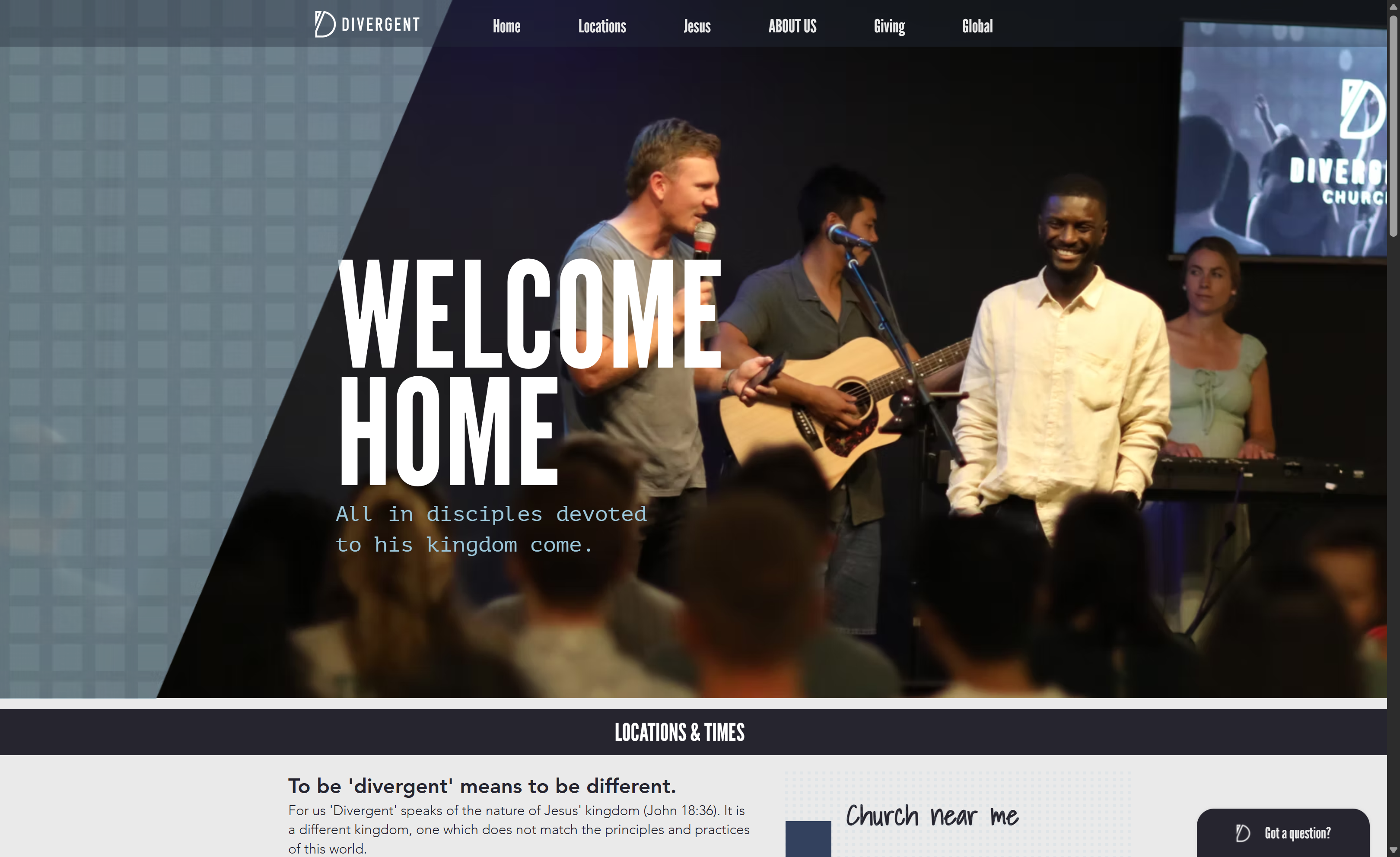
If you would rather explore faith than host, start at Divergent Church. We are a Canberra community committed to forming disciples of Jesus and to honest, everyday faith, and we would be glad to meet you.
FAQ
Do I have to be a Christian to do Alpha?
No. Alpha Australia says explicitly that participants do not need to be Christian. Anyone can ask questions, share their view or simply listen, and no one is required to speak.
How long does the Alpha course take?
The Australian Edition has 16 sessions over 8 to 11 weeks. Some local groups run a shorter or longer pattern, so confirm the schedule with the host before you commit.
Is the Alpha course free?
Yes, Alpha Australia lists the Australian Edition and its running resources as free. A local group may ask for a voluntary contribution towards food, so check with the host.
What if I don’t like it?
You can stop at any time. The published guidance says participants may share as much or as little as they wish and may leave the course if it is not for them.
Can I explore faith in Canberra without joining a course?
Yes. You can begin with reading, with a conversation over coffee or by visiting a church community that welcomes questions. Our guide for seekers on Christian community is a gentle place to start.
Sources
Recommended
Comments