
Baptism testimony examples to help you write your own
- Josh

- 2 hours ago
- 8 min read

If you’re standing at the edge of your own baptism, wondering what to say, here’s what you need: real testimony examples you can adapt, a simple four-part structure, and a word count that keeps you focused rather than frozen. This page gives you exactly that.
Most churches suggest keeping a testimony to 150 to 250 words, roughly one to two minutes of speaking time. That’s not a lot of words, but it’s enough to tell the truth about where you’ve come from and what Jesus has done.
Here’s what you’ll find below:
Six short, adaptable testimony examples across different backgrounds and ages
A four-part framework with word counts mapped to each section
A closing declaration line you can use word for word at your baptism
Key Takeaways
A strong baptism testimony pairs a clear gospel statement with a four-part structure and stays within roughly 150 to 250 words for a one to two minute delivery.
Point | Details |
Use the four-part framework | Structure your testimony as life before, encounter, decision, and new life. |
Keep it to 150–250 words | Aim for one to two minutes of speaking time so the gospel stays the focus. |
Include the gospel core | State plainly that Jesus died, rose again, and that you repented and trusted him. |
Practise aloud beforehand | Record and time a run-through, cutting tangents while keeping the declaration line. |
Get pastoral support | Divergent Church’s Discipleship Hub helps candidates draft and refine their testimony before baptism. |
Table of Contents
Baptism testimony examples for different backgrounds
A good testimony doesn’t need clever writing. It needs honesty and a clear gospel statement, that Jesus died, rose again, and that you’ve personally turned to trust him. Below are six examples written in different voices. Read a few, notice what resonates, then borrow the shape rather than copying the words.
The quiet doubter. “I grew up going to church but never really believed it applied to me. I thought faith was for people who had it all figured out. Then a friend explained that Jesus didn’t die for people with it figured out. He died for people like me, stuck and unsure. I stopped pretending I had answers and started trusting him instead. Being baptised today is me saying that out loud.”
The addiction recovery story. “For years, alcohol ran my life more than I ran it. I lost relationships and lost myself. A mate from work kept inviting me to a Life Community group, and I kept saying no, until one night I didn’t. I heard that Jesus died for the mess I was in, not the version of me that had it together. I repented and put my trust in him, and he’s been rebuilding what I broke ever since.”
The young adult searching for purpose. “University gave me a degree but no direction. I tried a dozen things to feel like I mattered. A housemate told me about Jesus, not as a religion but as a person who died and rose so I could actually know God. I trusted him with my life about eight months ago, and for the first time, I’m not searching anymore.”
The lifelong churchgoer who finally understood grace. “I’ve sat in church pews my whole life, but I realised recently I was relying on being a ‘good person’ rather than on Jesus. That’s not the same thing. When I understood that he died and rose for sinners, not for people who’d earned it, something shifted. I repented of trying to save myself and trusted him fully. That’s why I’m here today.”
The grief-shaped testimony. “When I lost my dad, I was angry at God for a long time. A counsellor at church sat with me in that anger rather than rushing me past it. Slowly, I understood that Jesus knows suffering too, and that he died and rose so death doesn’t get the final word. I trusted him in the middle of my grief, not after it ended.”
The immigrant’s new-life story. “Moving countries meant losing my community and my sense of home. A local church welcomed me before I’d even signed up for anything. Through their patience, I heard clearly that Jesus died and rose to give me a permanent home with God. I repented and trusted him, and I’ve found family again.”
Pro Tip: Change the specific details (job, relationship, struggle) so the testimony sounds like your own voice, but never drop the gospel sentence: Jesus died, rose again, and you personally repented and trusted him. That sentence is what turns a life story into a baptism testimony.
How to structure your testimony in four parts
Every strong testimony follows the same skeleton, whether it’s spoken by a teenager or a grandmother. This four-part framework keeps you from rambling and keeps the gospel at the centre, rather than your own story.
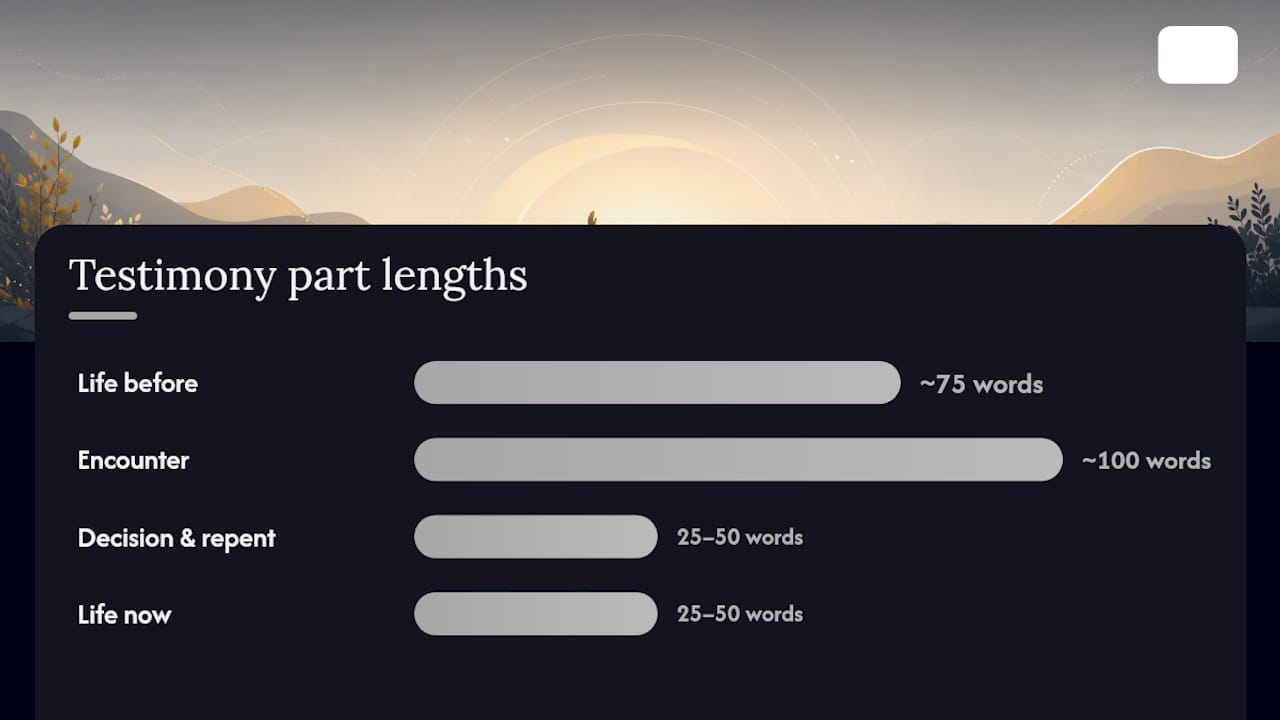
Life before Christ (about 75 words). Briefly describe where you were spiritually, emotionally, or relationally before you trusted Jesus. Keep it purposeful, not sensational.
Encounter with the gospel (about 100 words). Explain how you heard or understood that Jesus died for your sin and rose again, and what shifted in your thinking.
Decision and repentance (about 25 to 50 words). State plainly that you turned from your old way of living and trusted Christ.
Life now and declaration (about 25 to 50 words). Describe what’s different now, then close with a short declaration of faith.
Statistic Callout: Aim for a total speaking time of one to two minutes. Some churches set the guideline even tighter, closer to 90 seconds, so multiple candidates can share on the same day without the service running long.
A simple template to fill in:
Before I trusted Jesus, my life looked like… Then I heard/understood that… So I decided to… Now, my life looks like… and I’m being baptised today because…
Writing and sharing tips that keep your testimony clear
The best testimonies sound like a conversation, not a sermon. A few habits make the difference between a testimony people remember and one they politely nod through.
Skip the churchy words. Terms like “saved,” “sanctified,” or “washed in the blood” mean a lot to you but can lose visitors and family members who aren’t familiar with Christian language. Say what happened in plain terms instead.
Don’t glorify your past. The “before” section exists to show your need for Christ, not to entertain. Naming a struggle is fine; dwelling on graphic detail shifts attention from Jesus to you.
Avoid “I’ve always been a Christian.” Even if you grew up in church, your testimony needs a clear, personal moment of repentance and trust, not an inherited identity.
Practise out loud. Reading silently feels fine; speaking it reveals awkward phrasing and reveals your actual timing. Rehearsing with a friend also settles nerves before the day itself.
Expect a short review process. Most churches ask you to submit a written testimony and meet briefly with a pastor or baptism coordinator beforehand. This isn’t a test, it’s a chance to make sure the story is clear and the gospel is front and centre.
Pro Tip: Record yourself on your phone once you’ve drafted it, then time the playback. If you’re over two minutes, cut the tangents first, not the gospel statement.
Testimony examples across children, youth, and adults
A ten year old’s testimony shouldn’t sound like an adult’s, and it doesn’t need to. What matters at every age is the same gospel core, expressed in language that fits how the person actually talks.
A child’s testimony might be as simple as: “I know I do bad things sometimes, and Jesus died so I could be forgiven. I asked him to be my Saviour, and now I want to follow him.” Keep it under a minute. Parents or a leader can help shape the wording, but the decision described should be the child’s own.
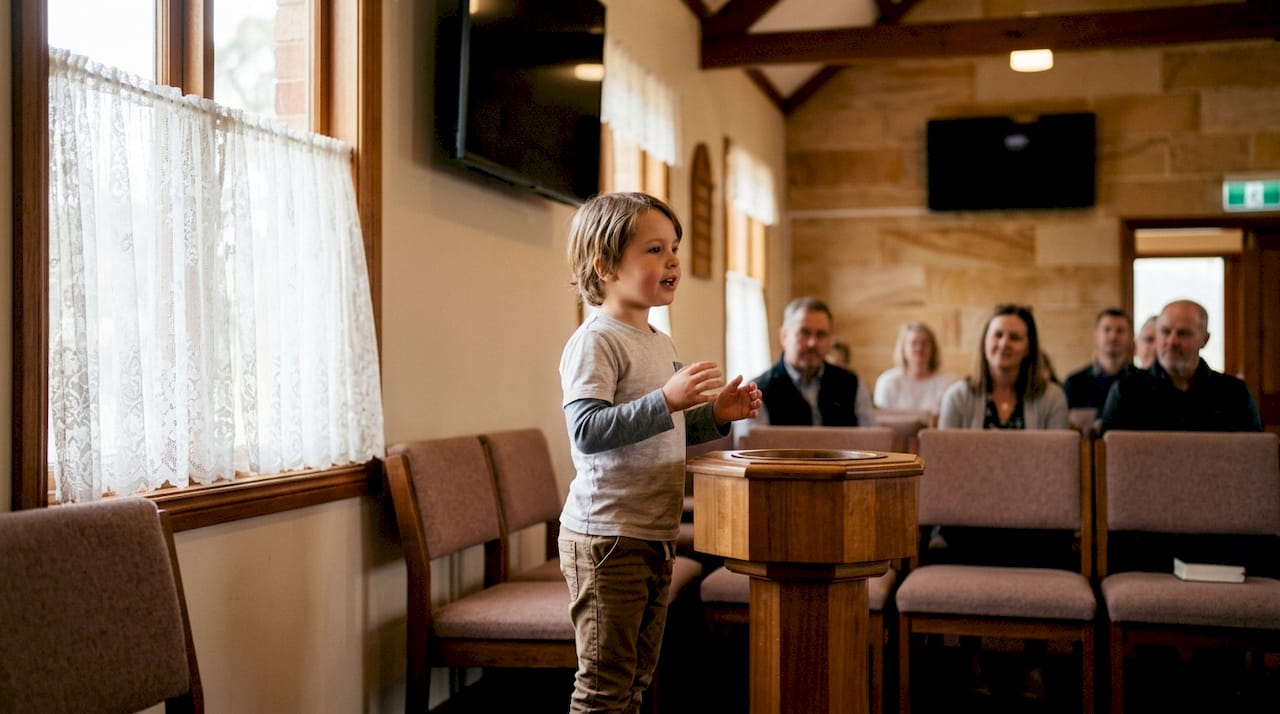
A youth testimony often centres on identity and belonging: “I spent high school trying to fit in with different friend groups and never felt secure. When I understood that Jesus died for me specifically, not just for people in general, I trusted him. Now my identity isn’t tied to who accepts me, it’s tied to him.” Youth testimonies can carry a little more emotional weight than a child’s, while staying inside the same 150 to 250 word range.
An adult testimony usually carries more life history, a career, a marriage, a loss, and needs the tightest editing precisely because there’s more to say. The discipline is choosing the two or three details that best show the “before,” rather than trying to summarise an entire adult life in 200 words.
Themes and Bible verses that anchor your testimony
Certain themes appear in almost every effective testimony, because they map directly onto the gospel itself: brokenness before God, grace that isn’t earned, repentance as a genuine turning, and new life that shows in daily choices. If your testimony touches on all four, even briefly, it will carry weight regardless of your writing style.
Verses commonly woven into testimonies include Romans 6:4 on new life through baptism, 2 Corinthians 5:17 on becoming a new creation, and Romans 10:9 on confessing and believing for salvation. You don’t need to quote three verses. One, used naturally rather than dropped in like a footnote, usually lands better than several stacked together. If you want to understand the theological reasoning behind the act itself, Divergent Church’s explanation of why water baptism matters is worth reading before you write a single word.
Resist the urge to sound theologically impressive. A testimony that says “I was dead in my sin and now I’m alive in Christ” using your own words carries more weight than a testimony stitched together from borrowed Christian phrases.
Managing nerves before you speak
Standing in front of a congregation, wet from baptism water, about to speak, is genuinely nerve-racking for most people. That’s normal, and it doesn’t mean you’re unprepared.
The most reliable fix is rehearsal. Recording one timed run-through and cutting anything that doesn’t serve the point does two things at once: it tightens your words and it builds familiarity, so you’re not reading cold in front of people. By the third or fourth practice run, most candidates find the nerves settle from “overwhelming” to “manageable.”
It also helps to remember why you’re doing this. Your testimony isn’t a performance to be judged. It’s a public declaration among people who, if they’re a healthy church family, are cheering for you, not critiquing your delivery. If you stumble over a word or forget a line, nobody in that room is counting it against you. Keep a printed copy in your hand rather than relying on memory alone. Reading from a page while baptised and dripping wet is far less stressful than blanking mid sentence.
Close with a short, memorised declaration so you finish strong even if the middle wobbled: “Today, I’m declaring publicly that I’ve trusted Jesus as my Lord and Saviour, and I’m following him for the rest of my life.”
Testimony as an act of worship
Writing a testimony isn’t just an administrative task before your baptism, it’s an act of worship. Praying through your draft, asking that it points to Jesus rather than to your own story, changes how it reads and how it’s received.
If you’d value someone walking through your draft with you, Divergent Church’s baptism preparation pathway exists exactly for that… Whatever your background, you don’t have to write this alone.
— Josh
Preparing for baptism with support from Divergent Church
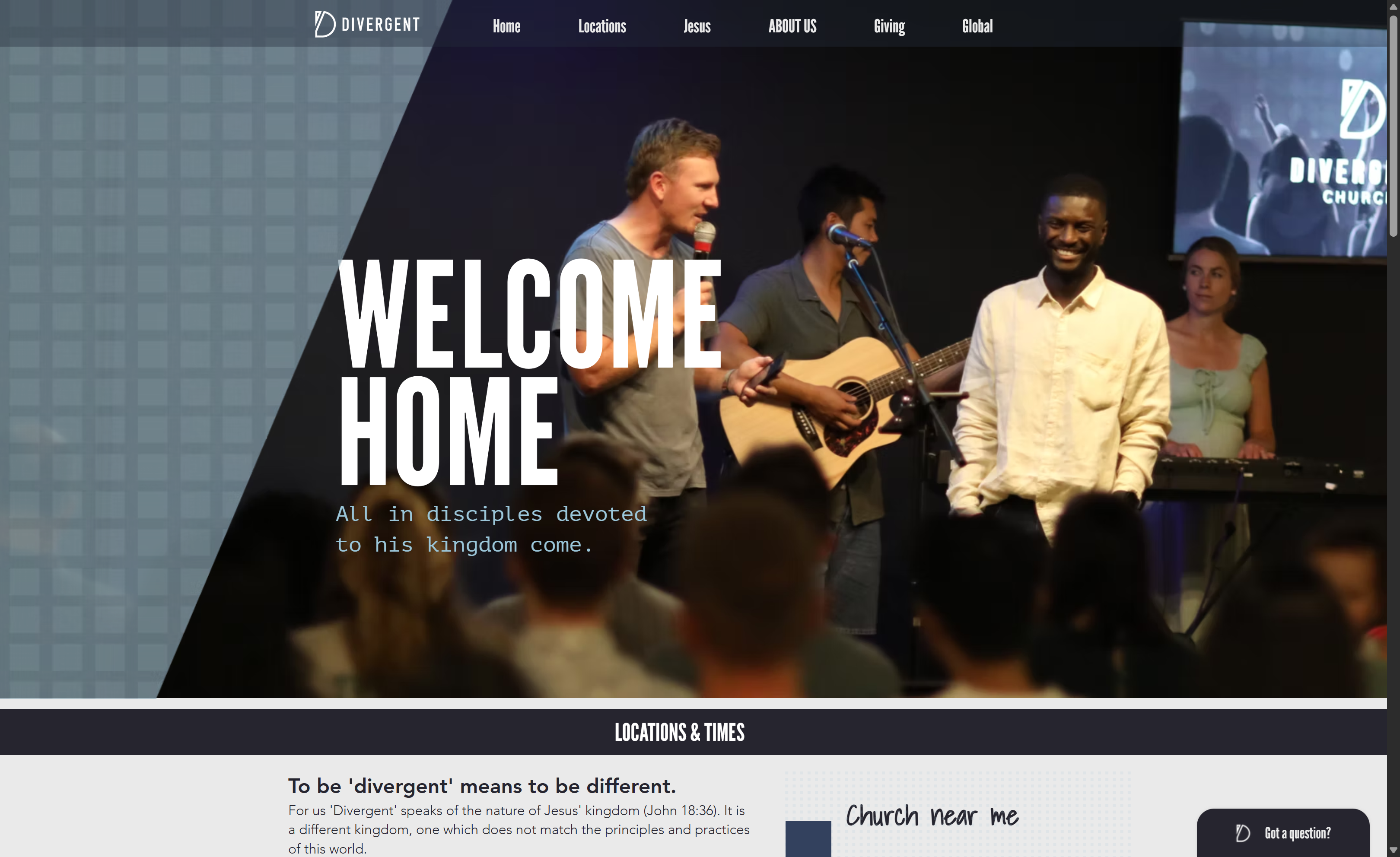
Divergent Church treats testimony writing as part of discipleship, not a form to tick off before the service. Instead of handing you a template and leaving you to figure out the theology yourself, the church’s Discipleship Hub pairs baptism candidates with people who’ll actually sit with your draft, help you find the gospel core in your own story, and make sure the language fits both your voice and biblical clarity.
If you’re still working out what you believe before committing to baptism, the Discover Jesus pathway is a gentle place to start, built for people who want solid biblical grounding rather than a rushed decision. And if you’re a worship leader helping plan the service itself, tools like Song7’s setlist builder make it straightforward to arrange music around testimony moments without last minute scrambling.
Ready to talk it through with someone? Contact Divergent Church’s baptism coordinator to book a short conversation, get your draft reviewed, and confirm the details for your baptism day.
Sources
Recommended
Comments