
Christian volunteering in Canberra: serving the city as an act of faith


Christian volunteering in Canberra begins with Jesus, not with a roster. He said that the Son of Man came “not to be served but to serve” (Mark 10:45), and he calls his disciples into the same way of life. Serving a neighbour, a student far from home or a family under strain is part of following him, and it is best done alongside others in a church that is rooted in the city. At Divergent Church we are a community in Canberra and Queanbeyan shaped by Scripture and centred on Jesus, and we want you to see what service looks like when it grows out of that life together.
TL;DR
Christian service is a response to what Christ has done. It is not a way to improve yourself, and it is not an optional extra to the faith.
The strongest place to serve is within a community that knows you, prays with you and sends you out, so your service is sustained by relationships and not by a rota alone.
Canberra has a broad range of needs: students and new residents, families on tight budgets, people facing isolation, and neighbourhoods that are always changing.
If your service involves regular contact with children or vulnerable people, ACT law may require a Working with Vulnerable People (WWVP) registration. Start the check early.
Begin with one commitment you can keep, and ask what it will involve before you say yes.
Table of Contents
What Christian volunteering actually is
A volunteer in the ordinary sense gives time without pay. A Christian gives time for a deeper reason: love for God that spills over into love for neighbour. Paul puts it directly: “through love serve one another” (Galatians 5:13). The Greek word he uses for serve is douleuō, the word for the work of a bondservant. It is not the language of a hobby or a spare-time project. It describes a life handed over to a Master who first gave himself for us.
That changes how we think about service in three ways.
It is an act of worship, not a performance. Jesus warned his hearers about practising righteousness to be seen by others (Matthew 6:1). Real service is often unseen: the chairs stacked after an event, the meal dropped at a door, the hour spent listening.
It is a mark of discipleship, not the whole of it. We do not reduce following Jesus to a list of tasks, and we do not reduce it to attending a gathering either. Disciples hear the Word, pray, repent, worship and serve, and each strengthens the others. Service without the Word becomes activism. The Word without service, James says, is dead (James 2:17).
It is part of the church’s mission. The church is sent. Serving the city is not a side programme that a few enthusiasts run. It is how a people who have received mercy show mercy, and how the good news is made visible to those who have not yet heard it. Our own guide to serving the city and local mission in Canberra says more about this calling.
Jesus tied this to himself in the starkest terms. In Matthew 25:35-40 he tells those who fed the hungry, welcomed the stranger and visited the sick that in doing so they did it for him. A new student arriving in Canberra with no friends is a stranger. A family weighing groceries against the rent is hungry. These are not abstract categories in this city.

Why serving within a church community matters
You can volunteer alone, and many Canberrans do so through charities and community organisations. For a Christian, though, there is a good reason to serve from within a local church. The New Testament does not picture believers as scattered individuals who each pursue a cause. It describes a body, with many members, each given gifts for the good of the whole (1 Corinthians 12).
When service comes out of a community, three things tend to follow.
You are not carrying it alone. Service wears people down when they are isolated. In a congregation, others pray for you, share the load and notice when you are weary.
Your gifts are recognised by others. Often it is a brother or sister who sees what you cannot see in yourself: patience with the young, a gift for hospitality, a steady head for administration.
Service stays tied to the gospel. Practical help and the proclamation of Jesus belong together. A community that gathers around Scripture keeps asking why it serves, and not just how.
Canberra is also a city of movement. Public servants, diplomats, defence personnel, students and workers come and go. A church that lives within the rhythms of the city’s universities, workplaces and neighbourhoods is well placed to welcome people who have no other anchor. That is a large part of how we understand our mission. If you are new to the city, our guide to finding Christian community in Canberra may help you take the first step.
Where Christian service happens in Canberra
We do not want to hand you a list of roles that we do not run. Instead, here are the places where Christian service tends to take root in a city like this one, and the questions worth asking in each.
Neighbourhoods
Much of the most meaningful service is simple and local: welcoming a neighbour, sharing a meal, helping someone move, being present in a street over years. Canberra’s suburbs can be quiet and private. Hospitality is a biblical command (Romans 12:13), and it is a practical way to build trust that no programme can manufacture. Our article on building community in Canberra explores how everyday relationships become the soil for deeper community.
Universities and student life
Students are often far from family, new to the city and open to honest questions about life and faith. Serving them might mean offering a meal, a lift, a place at the table or a listening ear. Those who have been students themselves can be especially useful. If this is your world, read about university churches in Canberra.

Workplaces
For many believers, the first mission field is the office, the lab or the worksite. Serving there rarely looks dramatic. It looks like integrity, patience with colleagues, and care for the person at the next desk who is struggling. Paul tells believers to work “as for the Lord” (Colossians 3:23). Faithful service in your workplace is Christian volunteering in the truest sense, even though no one calls it that.
Families and those in need
Cost-of-living pressure is real in the capital, and charities and community pantries across the ACT respond to it with the help of volunteers. Some Canberra community organisations stock food pantries through weekly grocery collections and donations, and they depend on people willing to give time. Joining such work, or supporting practical help through your church community, is a direct way to put Jesus’ words about the hungry into practice.
Outreach and community events
Churches also serve through public events that bring people together, from community meals to gatherings outdoors. Our post on Canberra outreach ideas that build trust looks at how local outreach can be done with care and humility.
How to choose where to serve
Some people rush into a role out of guilt. Others never begin because the options feel overwhelming. A few plain questions help.
What has God given you? Look at your skills, but also at your temperament and the seasons you are in. Peter writes that each should use whatever gift they have received to serve others (1 Peter 4:10). A gift for cooking, music, organising, teaching or simply being present is a gift for the body.
Whom are you drawn to serve? Compassion is often a sign. If you find yourself noticing international students, older neighbours or young families, pay attention to that.
What can you commit to faithfully? A small, steady commitment is worth more than a large one you abandon. Be honest about your hours. Volunteering ACT, the territory’s volunteering support body, notes that volunteers are increasingly seeking shorter, project-based roles that match their skills and interests, which is a useful reminder that a defined, realistic commitment is a perfectly good place to begin.
Who knows you well enough to counsel you? Talk it through with a pastor or trusted friend in your church. They may see a fit you have missed, or tell you kindly that you need rest before you take on more.
It also helps to ask the organisers a few practical questions before you start:
What exactly will I be doing, and how often?
Who will I be working alongside, and who is responsible for me?
Will I be around children or vulnerable people, and what checks are required?
How will I be trained and supported?
How do I step back if my circumstances change?
Good organisers welcome these questions. They are the questions of someone who intends to be faithful.
Safeguarding: what the ACT requires
Care for the vulnerable is a Christian conviction before it is a legal requirement, and the law in the ACT gives that care a clear structure. If you plan to serve with children or other vulnerable people, you need to understand the Working with Vulnerable People (WWVP) scheme.
Under the ACT’s Working with Vulnerable People (Background Checking) Act 2011, people with regular contact with vulnerable people in a regulated activity must hold a WWVP registration. Working or volunteering in such an activity without one is an offence, with a penalty of up to $7,000 and up to two years in prison. The same Access Canberra page lists the exemptions: incidental contact, being under 16, or volunteering no more than three days in any four-week period and seven days in any twelve-month period.
The Australian Institute of Family Studies adds some detail. A WWVP registration is valid for up to five years, and it applies to people aged 16 and over who have more than incidental contact with vulnerable people in regulated activities. The same resource sheet explains that there are three possible outcomes: a positive unrestricted registration, a positive registration with restrictions, or a negative notice, which means no registration and no volunteering in any regulated activity. It also notes that organisations must identify which roles need registration and make sure their volunteers hold a valid one.
The rules have tightened recently. The ACT Government’s explanatory statement for the 2025 amendment bill describes automatic recognition of a negative notice or cancelled children’s registration from another Australian jurisdiction, so that such a person is ineligible for ACT registration for work with children. The government’s reasoning is that people move across borders for work and that children should not be exposed to avoidable risk while a separate assessment is carried out.
What does this mean for you in practice?
Ask at the outset. Before you commit to a role, ask the organiser whether it requires a WWVP registration.
Apply through the official channel. Registration is handled by Access Canberra, so use its page for the current process, fees and processing times.
Allow time. Do not plan to start a children’s or youth role the week you apply.
Remember the purpose. The check exists because children and vulnerable adults are precious. Welcome it as part of loving them well.
If you are unsure whether your role needs a check, ask the organiser first, and use the official Access Canberra page to confirm what applies. Rules and fees can change, so rely on that page for the current position.
A starting path for the next few weeks
If you want to move from intention to action, here is a simple path.
Pray and listen. Ask God to show you whom he is placing in your path. Do this before you scan a list of opportunities.
Join a community. Gather regularly with believers around the Word, where you can be known. Our guide to finding a supportive church community in Canberra is a good place to begin.
Name one commitment. Choose a single, realistic way to serve and tell someone who will ask you about it.
Check the requirements. Confirm whether a WWVP registration or any training is needed, and begin that process.
Review after a season. After a few months, reflect with a trusted friend on what you have learned, where you have been fruitful and where you need rest.
For a longer walk-through, see our article on how to volunteer at church and serve meaningfully in Canberra.
Our perspective
We have watched a quiet temptation take hold in many places: to treat service as a way of feeling good, or as a line on the list of things a person is supposed to do. We reject that. Service is not a means of self-improvement, and it is not a programme we run for the faithful few. It is the shape of a life lived behind Jesus. The city we love is made of universities, workplaces, neighbourhoods and people who are passing through. Our dream is that no one who comes to Canberra, whether for a semester or for a lifetime, would be left without a community that knows their name. That is why we speak of mission as the whole life of the church, expressed through ordinary relationships, and never as an add-on. When we invite you to serve, we are inviting you into something bigger than a task. We are inviting you to be formed as a disciple: to hear the Word, to pray, to love the person in front of you, and to discover that the Lord who washed his disciples’ feet is still at work in the city. Seeds are planted in small, faithful acts, and God gives the growth. Josh
Taking the next step with us
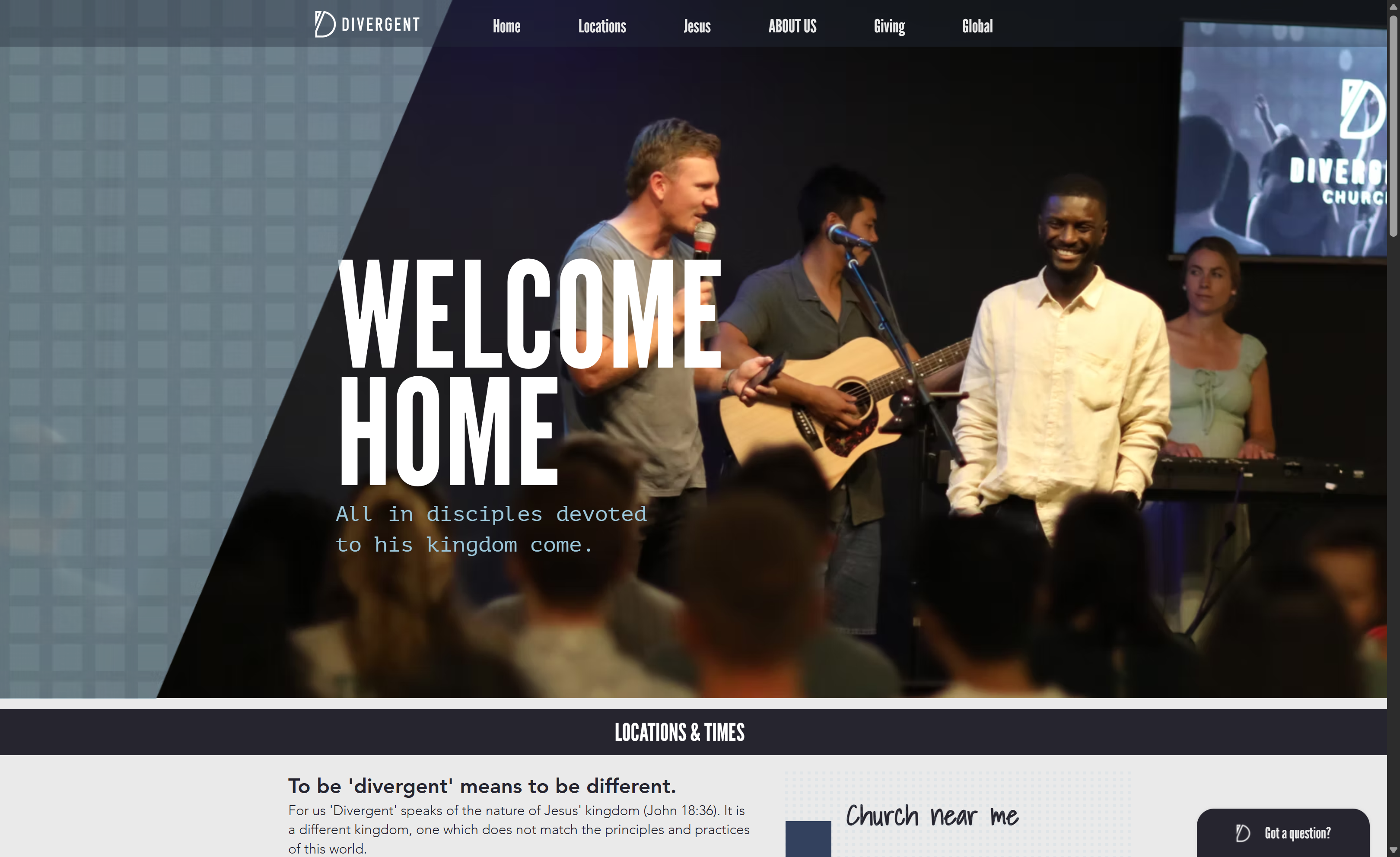
We are a church in Canberra and Queanbeyan, and we exist to form disciples of Jesus and cultivate genuine, missional community in the life of the city. If you are asking faith questions, new to Canberra, or ready to find a community in which to serve, we would love to meet you. Our Grow page is a good place to see how we help people take their next step in faith and community, and our home page tells you more about who we are.
If you are looking for space to gather a group, a seminar or a community event, we also offer rooms for hire: the Auditorium at $70 per hour, the Seminar Room at $50 per hour and the Board Room at $25 per hour.
FAQ
Do I need to be a Christian to volunteer?
Not to serve your neighbour, and we are glad to see people of every background care for the city. But Christian service springs from the gospel, so we hope that as you serve alongside believers you will hear who Jesus is and why he is worth following. We are always glad to talk through faith questions.
Do I need a Working with Vulnerable People card?
It depends on the role. In the ACT, people aged 16 and over who have regular contact with vulnerable people in a regulated activity need a WWVP registration, unless an exemption applies. Ask the organiser early, and check the Access Canberra scheme page for the current requirements.
How much time should I commit?
Begin with something small and steady that you can keep, such as a few hours a fortnight. You can always grow into more. Be honest about your capacity, and talk with someone in your church so that your service stays sustainable.
Is volunteering part of being a disciple of Jesus?
Yes, though it is never the whole of discipleship. Jesus calls his followers to love God and neighbour, and serving others is one way that love becomes visible. It is held together with the Word, prayer, worship and life in the church.
Sources
Recommended
Comments