
Church and mental health: a practical guide for Australian churches


When someone in your congregation discloses a mental health struggle, the right response is immediate: listen without judgement, assess for safety, and connect them with clinical support while continuing to offer pastoral accompaniment. That sequence is not a compromise between faith and medicine. It is the most faithful thing a church can do.
If someone is in crisis right now, please contact one of these services:
Lifeline: 13 11 14 (24/7 crisis support)
Suicide Call Back Service: 1300 659 467 (24/7 counselling)
Beyond Blue: 1300 22 4636 (24/7 support)
000 for immediate danger
Immediate steps for pastoral carers:
Stay calm and present. Do not rush to fix, explain, or pray over the person before they feel heard.
Ask directly: “Are you thinking about ending your life?” Asking does not plant the idea; it opens the door.
Do not leave someone alone if there is immediate risk. Stay with them or arrange for someone trusted to do so.
With their consent, help them contact a GP, psychologist, or crisis line before the conversation ends.
Follow up within 48 hours. One conversation is rarely enough.
The WHO’s mental disorders fact sheet frames mental illness as one of the leading contributors to the global burden of disease, affecting hundreds of millions of people. Australian churches sit inside that reality every Sunday, whether they acknowledge it or not.
Key takeaways
Churches that respond well to mental health needs listen first, ensure safety, refer to clinical services, and accompany people over time — that sequence is both theologically grounded and evidentially supported.
Point | Details |
Listen before prescribing | The first pastoral response is presence and listening, not prayer, advice, or Scripture. |
Safety is always the priority | Ask directly about suicidal thoughts; contact 000 or Lifeline (13 11 14) if there is immediate risk. |
Partner with clinicians | Help people access GPs and the Medicare Mental Health Care Plan; faith and clinical care work together. |
Train and write policy | Every church needs Mental Health First Aid-trained people, a safeguarding policy, and a referral pathway. |
Divergent Church walks alongside | Divergent Church’s life communities and pastoral team offer relational accompaniment and referral support in Canberra. |
Table of Contents
How does Scripture frame mental suffering and pastoral care?
Christian theology has always had resources for suffering. The problem is that churches have not always used them well when it comes to mental illness specifically.
The biblical tradition of lament is one of the most underused pastoral tools available. Psalms 22, 88, and 42 do not resolve suffering quickly. They hold it, name it, and bring it before God without tidy resolution. Psalm 88 ends in darkness with no redemptive turn. That is not a failure of faith; it is a model of honest prayer that many people living with depression or trauma desperately need permission to pray.
The incarnation matters here too. Jesus entered human experience fully, including its grief, exhaustion, and anguish (John 11:35; Luke 22:44). Hebrews 4:15 describes a high priest who is “touched with the feeling of our infirmities.” Accompaniment is not a pastoral add-on; it is Christological.
Where pastoral categories go wrong is when they are applied without discernment. Framing depression as unconfessed sin, anxiety as faithlessness, or psychosis as demonic oppression can cause serious harm. Research on religious coping distinguishes clearly between positive religious coping (finding meaning, seeking God’s comfort, drawing on community) and negative religious coping (feeling punished by God, spiritual abandonment, self-blame). Positive coping buffers stress and supports resilience. Negative coping correlates with worse outcomes and greater suicidal ideation. The theological categories a pastor uses are not spiritually neutral; they have measurable clinical consequences.
The Lausanne Global Analysis has called churches to pay deliberate, structured attention to mental health as part of faithful mission. That call is not new, but it is increasingly urgent.
Where do churches commonly miss the mark?
The most common failure is not malice. It is a combination of stigma, inadequate training, and a tendency to spiritualise what is partly a medical reality.
Harmful responses that churches should stop using:
“Just pray more and trust God.” (Implies the person’s faith is deficient.)
“You need to rebuke that spirit of depression.” (Misdiagnoses illness as spiritual attack without clinical basis.)
“Have you confessed any hidden sin?” (Introduces shame and blame at the most vulnerable moment.)
“God won’t give you more than you can handle.” (Theologically contested and practically crushing for someone who feels they cannot cope.)
Sharing someone’s disclosure with the congregation as a prayer point without explicit consent.
Encouraging someone to stop medication because “God has healed you.”
Structural gaps compound these individual missteps. Many churches have no referral pathway, no trained pastoral carer, no confidentiality policy, and no relationship with a local GP or psychologist. When a person in crisis arrives, the church improvises, and improvisation in a mental health crisis carries real risk.
Research on church-based mental health outreach in disadvantaged communities found high rates of depression and anxiety alongside low uptake of traditional mental health services, with congregants relying heavily on church-based support. That reliance is both an opportunity and a responsibility churches cannot afford to take lightly.
Pro Tip: Start normalising help-seeking from the front. When a pastor mentions in a sermon that they see a counsellor, or that a church leader has taken a mental health day, it gives the congregation permission to do the same. One sentence from the pulpit can shift a culture.
What practical responses can churches adopt?
The most effective pastoral response follows a simple sequence: listen, validate, assess safety, refer when needed, and accompany over time. No single step can be skipped.
Running a church-based peer support group
A peer support group is not a therapy group, and that distinction matters for safeguarding. The group’s purpose is mutual encouragement, shared prayer, and reducing isolation, not clinical treatment.
A workable weekly structure:
Open with a brief check-in (one word or one sentence: “How are you this week?”).
Share a short scripture or reflection (5 minutes maximum).
Open conversation around a theme (loneliness, anxiety, grief) with a facilitator guiding, not directing.
Close with prayer, offered not imposed.
Safeguarding requirements: two trained adults present at every meeting, a clear confidentiality statement read at the start of each session, and a written protocol for what happens if someone discloses risk. Facilitators are not counsellors. Their role is to hold space, not to provide therapy.
Worship and routine as stabilising forces
Rhythm matters enormously for people managing mental illness. Regular gathering, predictable liturgy, shared meals, and the weekly practice of prayer all provide structure that clinical literature recognises as protective. Prayer and spiritual practice are not peripheral to mental wellness; for many people, they are a primary anchor.

Mental Health America’s guidance identifies community, quiet reflection, shared values, and regular routine as practical ways faith supports mental wellbeing. These are things churches already do. The task is to do them intentionally.
A checklist for initial pastoral meetings
Who attends: the pastoral carer and the person seeking support only, unless the person requests a support person.
Confidentiality: explain clearly what you will and will not keep confidential (mandatory reporting obligations apply in Australia; see Section 6).
Duration: 45–60 minutes maximum for a first meeting.
Next steps: agree on at least one concrete action before the meeting ends (a GP appointment, a follow-up call, a referral contact).
Record: make a brief, factual note of the meeting, stored securely.
A brief pathway example: A young woman approaches a pastoral carer after a Sunday service, disclosing that she has not been sleeping and feels “like there’s no point.” The pastoral carer listens, asks directly about suicidal thoughts (she denies active ideation but acknowledges passive thoughts), and helps her book a GP appointment that afternoon using the practice’s online booking system. The carer follows up by text the next morning and connects her with a life community for ongoing relational support. Three weeks later, she begins seeing a psychologist under a Mental Health Care Plan.
That pathway, from disclosure to clinical care to community accompaniment, is what a prepared church makes possible.
What does trauma-informed pastoral care look like?
Trauma-informed care rests on five principles: safety, choice, trustworthiness, collaboration, and empowerment. Applied to a pastoral context, each principle has a concrete behavioural expression.
Specific behaviours for clergy and volunteers:
Safety: Meet in a visible, accessible space. Ask the person where they feel comfortable meeting. Never meet behind closed doors without a window or a third person nearby.
Choice: Offer options rather than directives. “Would you like to pray, or would you prefer to just talk?” gives agency to someone who may feel they have none.
Trustworthiness: Do what you say you will do. If you promise to follow up on Thursday, follow up on Thursday.
Collaboration: Treat the person as the expert on their own experience. Your role is to accompany, not to diagnose or prescribe.
Empowerment: Celebrate small steps. Booking a GP appointment is an act of courage for someone in crisis.
Worship spaces and language also need attention. Loud music, sudden physical contact (even well-intentioned prayer hands), and language that implies God punishes suffering can retraumatise people without anyone intending harm. Consider offering a quieter space during services for those who need it, and train worship leaders to introduce physical contact (anointing, laying on of hands) with explicit verbal consent.
Pro Tip: After a volunteer has a difficult pastoral disclosure, offer them a debrief within 24 hours. Secondary trauma is real. A five-minute check-in from a pastor or team leader can prevent a volunteer from quietly burning out and walking away.
How should churches work with clinicians and referral pathways?
Churches should have clear referral pathways established before they are needed, not improvised in a moment of crisis. A whole-health model that integrates spiritual support with clinical care is what experts recommend, and it requires deliberate relationship-building between pastoral and clinical teams.
When to refer urgently:
The person expresses active suicidal ideation with a plan or intent.
There is risk of harm to others.
The person is experiencing psychosis (hallucinations, delusions, disorganised thinking).
There are signs of severe self-neglect (not eating, not leaving home, unable to care for dependants).
The person discloses abuse or is at risk of abuse.
How to help someone access services:
Offer to sit with them while they call Beyond Blue (1300 22 4636) or their GP.
Help them navigate the Medicare Mental Health Care Plan pathway: a GP referral provides access to up to 10 subsidised psychology sessions per calendar year.
For youth (12–25), refer to Headspace or eheadspace for online support.
Keep a printed list of local Canberra services (see Section 10) in the pastoral care room.
Confidentiality and mandatory reporting in Australia: Pastoral carers are not bound by the same professional confidentiality rules as registered clinicians, but they carry ethical obligations. In the ACT, mandatory reporting obligations apply to certain categories of professionals working with children. Even where not legally mandated, any disclosure of child abuse should be reported. Always explain confidentiality limits clearly at the start of a pastoral conversation, and seek supervision from a senior pastor or professional supervisor when uncertain.
A simple referral flow: person discloses concern → pastoral carer listens and assesses safety → if urgent, call 000 or accompany to emergency department → if non-urgent, help book GP appointment → follow up within 48 hours → connect with ongoing community support.
What should churches say (and not say) about mental health?
Naming stigma reduces it. When churches speak openly, theologically, and without shame about mental illness, they signal to every person in the room that this is a place where the whole person is welcome.
Phrases that cause harm:
“You just need more faith.”
“God is testing you — this will make you stronger.”
“Have you tried fasting?”
“I’ll pray for you” (said as a conversation-ender, with no follow-up).
“You don’t look depressed.”
Suggested alternatives:
“Thank you for trusting me with this. I’m here.”
“That sounds really hard. Can you tell me more?”
“Have you been able to speak to a doctor about this?”
“I’d like to check in with you again this week. Is that okay?”
“You don’t have to go through this alone.”
A short anti-stigma activity for a small group or church service: invite people to write anonymously on a card one thing they have struggled with mentally or emotionally. Collect the cards, read a selection aloud (with prior consent from the group), and follow with a brief reflection on lament and God’s presence in suffering. The anonymity lowers the threshold; the communal reading normalises the experience. Christianity Today has noted that anxiety is not evidence of faithlessness, and pastoral care should focus on accompaniment and practical support rather than blame.
What training and policies does every church need?
A church that wants to support mental health well needs more than good intentions. It needs written policy, trained people, and a review cycle.
Policy checklist:
Safeguarding policy (covering children, young people, and vulnerable adults)
Confidentiality and mandatory reporting policy
Pastoral care boundaries policy (who can offer pastoral care, in what settings, with what supervision)
Referral agreements with at least one local GP practice or community mental health service
Critical incident response plan (what to do if someone attempts suicide or is in acute crisis)
Recommended training:
Mental Health First Aid (MHFA): A 12-hour accredited course available across Australia through Mental Health First Aid Australia. Equips participants to recognise and respond to mental health crises.
Safe Ministry training: Required in many Australian denominations; covers safeguarding, boundaries, and mandatory reporting.
Suicide awareness training: Applied Suicide Intervention Skills Training (ASIST) or SafeTALK, both available in Australia.
Trauma-informed care workshops: Available through organisations including Black Dog Institute and SANE Australia.
Policy review cadence: Review all pastoral care policies annually, or after any critical incident. Assign a named person (not just a role) responsibility for each policy. Volunteers should receive a written briefing on relevant policies before beginning any pastoral role, and sign to confirm they have read and understood them.
A healthy church community builds these structures not as bureaucratic compliance but as an expression of genuine care for the people it serves.
What does the research say about faith and mental health outcomes?
The evidence is consistent and growing: religiosity and spirituality are associated with better mental health outcomes across multiple conditions. A systematic review of the current scientific evidence found consistent associations between spirituality and religiousness and better outcomes for depression, suicidality, and substance use, with promising evidence for anxiety and PTSD.
Research finding: A meta-analysis of randomised controlled trials found that religious and spiritual interventions produced significant reductions in anxiety and trends towards improvement in depression, though the heterogeneity of protocols means more standardised trials are needed before strong clinical recommendations can be made.
The evidence is strongest for depression and suicidality, where the protective association is replicated across diverse populations and methodologies. For anxiety, the signal is promising but less consistent. For psychosis and personality disorders, the evidence base is thinner, and clinical care remains primary.
Key limitations churches should understand:
Correlation is not causation. Attending church may reflect pre-existing social connectedness rather than cause it.
Negative religious coping (feeling punished by God, spiritual abandonment) is associated with worse outcomes. The quality of a person’s religious experience matters as much as its presence.
Faith-based interventions work best as a complement to, not a replacement for, evidence-based clinical treatment.
Most research has been conducted in North American and European contexts; Australian data is more limited.
The NAMI commentary on faith and mental health recommends a whole-health model in which spiritual supports and clinical care are integrated, each doing what the other cannot. Faith communities offer meaning, belonging, and hope. Clinical services offer diagnosis, treatment, and evidence-based intervention. Neither is sufficient alone.
Australian helplines and services churches should know
Churches are not crisis services, but they are often the first point of contact. Every pastoral team should have this list on hand and know when to use each service.
Service | Purpose | When to use |
Lifeline 13 11 14 | 24/7 crisis support and suicide prevention | Any moment of acute distress or suicidal crisis |
Suicide Call Back Service 1300 659 467 | 24/7 telephone and online counselling | Ongoing or repeated suicidal ideation; follow-up after crisis |
Beyond Blue 1300 22 4636 | Mental health information and support | General mental health concerns, anxiety, depression |
Headspace / eheadspace headspace.org.au | Youth mental health (12–25) | Young people needing support; online access via eheadspace |
Black Dog Institute blackdoginstitute.org.au | Research, education, clinical services | Training resources, self-help tools, clinical referrals |
SANE Australia — | Complex mental illness support | Schizophrenia, bipolar disorder, borderline personality disorder |
MensLine Australia — | Men’s mental health and relationship support | Men reluctant to seek help; relationship and emotional concerns |
For Canberra-specific support, Directions Health Services, Headspace Canberra (located in the city centre), and the Canberra Health Services Mental Health, Justice Health, Alcohol and Drug Services (MHJHADS) are key local referral points.
Divergent Church in Canberra can serve as a local relational touchpoint for people navigating mental health challenges. Contact the pastoral team to discuss how the church can walk alongside someone in your community.
How Divergent Church supports mental health in Canberra
Divergent Church’s approach to mental health is grounded in a simple conviction: people are not problems to be managed but image-bearers to be accompanied. The workflow reflects that.
The Divergent Church pastoral pathway:
First contact: Someone raises a concern with a life community leader, a Sunday connect team member, or directly with a pastor. The response is immediate presence and a private conversation.
Pastoral conversation: A trained pastoral carer meets with the person, listens without agenda, and assesses whether clinical referral is needed. The conversation is confidential within the bounds of mandatory reporting obligations.
Referral steps: Where clinical support is indicated, the pastoral carer helps the person access their GP, navigate the Mental Health Care Plan process, or contact a crisis service. The church does not attempt to provide clinical care.
Ongoing accompaniment: The person is connected with a life community for relational support, and a pastoral carer maintains regular contact. Discipleship continues alongside, not instead of, clinical treatment.
Families and carers: Where a family member is supporting someone with mental illness, the church offers pastoral support to the carer as well, recognising that caring for someone with mental illness carries its own weight.
Find a supportive church community in Canberra and take the first step toward belonging to something that will walk with you through the hard seasons, not just the good ones.
What the church gets wrong about accompanying people with mental illness
There is a temptation, when someone discloses mental illness in a pastoral context, to reach for resolution too quickly. To pray, to quote Scripture, to offer a programme. The impulse comes from a good place. But it can communicate, without intending to, that the person’s suffering is a problem to be solved rather than an experience to be shared.
The most honest thing I have come to believe about pastoral care and mental health is this: the church’s greatest gift is not its answers but its presence. Clinical services can diagnose and treat. Pastors and communities can do something clinicians often cannot: they can stay. They can show up at the hospital, sit in the silence, bring a meal on a Tuesday, and still be there six months later when the acute crisis has passed but the loneliness has not.

That does not mean pastoral care is enough on its own. It is not, and pretending otherwise is a failure of both theology and responsibility. The incarnation does not replace medicine; it models the kind of presence that makes medicine more bearable. A church that refuses to refer is not being more faithful; it is being less loving.
The research on positive and negative religious coping makes this concrete: the theological frame a pastor uses has measurable consequences for the person sitting across from them. Accompaniment without blame, presence without prescription, and referral without abandonment — that is the pastoral posture that actually helps.
Divergent Church: a place to belong when life is hard
Divergent Church exists in the rhythms of Canberra’s everyday life — its universities, workplaces, and neighbourhoods — and that means it exists in the reality of mental health struggles too. For people who are navigating anxiety, depression, grief, or the weight of caring for someone they love, the church is not a place to perform wellness. It is a community shaped by Scripture and centred on Jesus, where questions are welcome and belonging is not conditional on having it together.
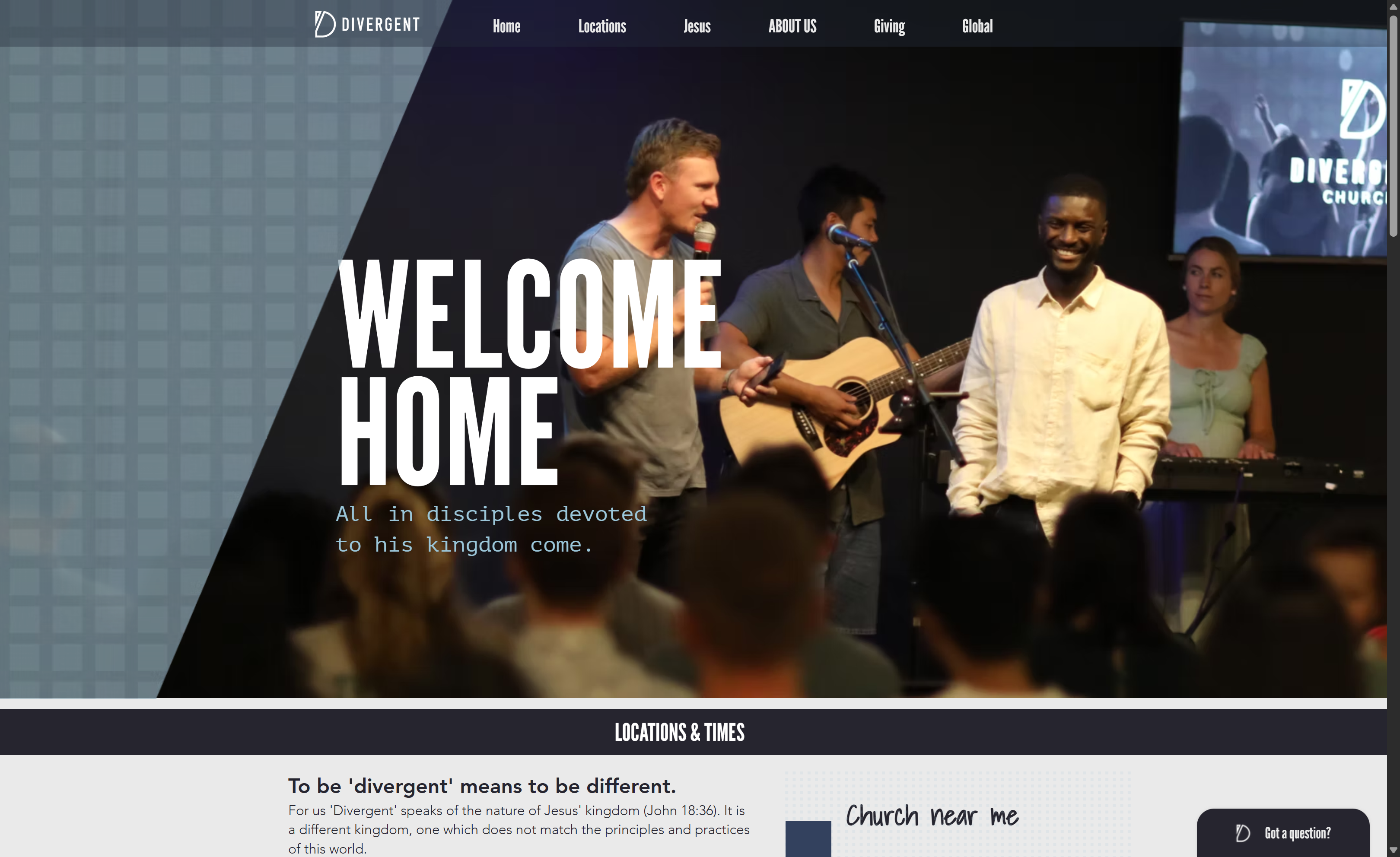
The Discipleship Hub offers structured pathways for spiritual formation and community connection. Life Communities are small groups meeting across Canberra where pastoral accompaniment happens in the context of real relationship, not just a Sunday service. If you or someone you know needs support, reach out to the pastoral team and take the next step. You do not have to wait until you have the right words.
Sources
These sources support training, policy development, sermon preparation, and pastoral care planning. Australian organisations are listed first.
Australian mental health organisations and services:
Peer-reviewed research:
Theological and pastoral resources:
How to use these sources: Share the peer-reviewed articles with church leadership to ground policy decisions in evidence. Use the Australian organisation websites for training bookings and printable resources. The theological resources are well-suited to sermon preparation, small-group study, and pastoral team formation days.
This article provides general information for pastoral and educational purposes. It is not a substitute for professional mental health advice, diagnosis, or treatment. For clinical concerns, please consult a registered health professional or contact one of the Australian services listed above.
Recommended
Comments