
Church gathering process: a practical planning guide


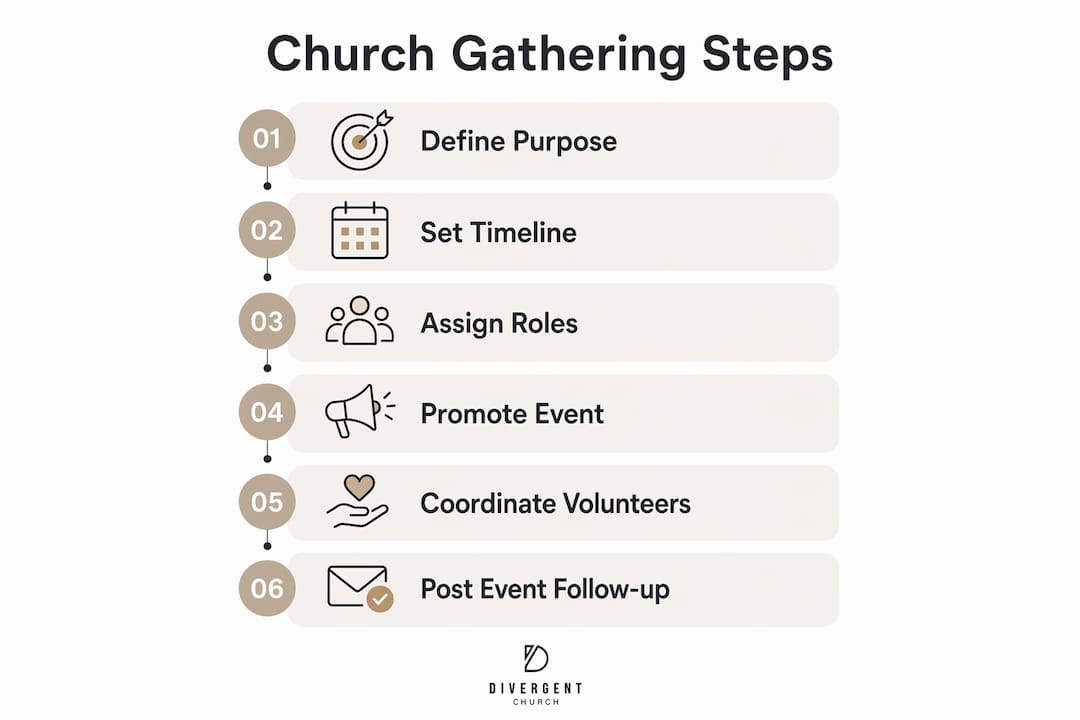
The church gathering process is the structured series of steps used to plan, organise, and execute church events that unify and strengthen a congregation’s faith and fellowship. Whether you are coordinating a Sunday service, a community outreach night, or a discipleship retreat, the difference between a gathering that feels alive and one that falls flat almost always comes down to preparation. Divergentchurch in Canberra has seen this truth play out repeatedly: when purpose is clear and logistics are owned, gatherings become genuine moments of kingdom encounter. This guide walks you through every phase, from the first planning meeting to the follow-up message sent two days after the event.
What key elements and roles are essential in the church gathering process?
Clear purpose articulation is the single most important step before any logistics begin. A leader should be able to summarise the event’s “why” in one sentence. “We are gathering to welcome new residents to our Canberra community through shared worship and a meal” is a purpose. “We are having an event” is not.
Once purpose is set, planning timelines determine everything else. Major events require 8–12 weeks of lead time, while smaller gatherings need at least 4–6 weeks. That window allows time for venue booking, volunteer recruitment, promotion, and registration without last-minute scrambling.

Assigning clear ownership across every stream is equally non-negotiable. Assigning ownership before planning begins prevents confusion and enables smooth execution. Each stream, whether logistics, volunteers, promotion, or registration, needs one named person responsible for it.
Practical tools that support this phase include:
A master event checklist broken into weekly milestones
Standard Operating Procedures (SOPs) for recurring tasks such as room setup and AV checks
A shared digital document or project management tool where all owners can track progress
A simple registration form linked to your church’s website or social media
Pro Tip: Write a single line next to every task that reads “owned by [name], due by [date].” Ambiguity about who does what by when is the most common reason church events underdeliver.
How do you promote a church gathering to maximise attendance?
Promotion is not an announcement. It is a phased communication campaign that builds awareness, creates urgency, and confirms commitment. The most effective approach follows three distinct phases.
Awareness phase (4–6 weeks out). Introduce the event across all channels. Share the purpose, date, and location. Use language that speaks to what attendees will experience, not just what will happen.
Registration phase (2–3 weeks out). Shift the message to action. Open registration, set a deadline, and consider an early-bird incentive such as a reserved seat or a printed name badge. Three-phase promotion timelines consistently improve attendance and reduce last-minute drop-offs.
Reminder phase (final week). Send confirmations, practical details, and a warm personal reminder. This is where people decide whether they actually show up.
Channel selection matters as much as timing. Digital bulletins achieve around 68% open rates, making them one of the most reliable tools for reaching your congregation. SMS messages perform even better, with open rates near 98%. That figure means a well-timed text reminder the day before your event will be read by almost everyone who receives it.
Relying on a single channel is the most common promotional mistake. A family might miss the Sunday announcement but catch the email. A university student might ignore email but respond immediately to a text. Multi-touchpoint promotion using digital bulletins, dedicated emails, and SMS reminders reduces no-shows and broadens reach. Divergentchurch uses its online communication tools to coordinate these channels without duplicating effort.
Pro Tip: Use a centralised system to automate confirmation emails and reminder messages. This removes the manual burden from volunteers and ensures no registered attendee is forgotten.
Step-by-step on-the-day execution and volunteer coordination
The day of the gathering is where preparation either pays off or exposes its gaps. Smooth execution depends on three things: a prepared venue, briefed volunteers, and a clear running order.
Venue preparation covers more than chairs and a sound check. Every detail that a first-time visitor will notice matters:
Hospitality station with refreshments set up at least 30 minutes before doors open
Registration or check-in table positioned at the main entrance with printed lists and name badges
Clear signage directing people to bathrooms, children’s areas, and seating
AV and lighting tested against the service running order, not just switched on
Volunteer coordination is the engine of on-the-day execution. Documenting SOPs for regular tasks reduces volunteer burnout and ensures consistency across events. Each volunteer should receive a written role description, a start time, and the name of their team leader. Always assign a backup for critical roles such as AV operation and children’s check-in.
Welcoming first-time visitors deserves its own focus. A warm greeting at the door, a brief orientation to the space, and a personal introduction to one other community member can determine whether a visitor returns. Divergentchurch’s approach to meaningful volunteer service treats hospitality as a ministry, not a task.
Pro Tip: Conduct a 10-minute walkthrough with all volunteers 45 minutes before the event starts. Walk the space together, confirm roles, and answer questions. This single habit prevents most on-the-day surprises.
What are the best practices for post-event follow-up?
The gathering ends when people leave the room. The community it builds depends entirely on what happens in the 48 hours that follow. Follow-up communication within 48 hours is the most reliable way to strengthen new relationships and encourage future participation.
A strong post-event process follows these steps:
Send thank-you messages within 48 hours. Thank attendees for coming and include one clear next step, such as an invitation to a Life Community or an upcoming gathering.
Follow up personally with first-time visitors. A brief, warm message from a team member, not an automated system, signals that the person was noticed and is genuinely welcome.
Collect attendance and feedback data. Simple digital surveys sent within 24 hours capture honest impressions while the experience is fresh.
Hold a debrief meeting with your planning team. Pre-meeting individual consultations allow team members to reflect before the group discussion, which produces sharper insights and better decisions.
Document findings for future events. Record what worked, what did not, and any changes to SOPs. This institutional memory is what separates churches that improve from those that repeat the same mistakes.
The spiritual dimension of follow-up is just as real as the logistical one. The best church gatherings balance administrative organisation with spiritual life, treating every touchpoint as an opportunity for ministry and outreach. A follow-up message is not a formality. It is a seed planted in someone’s life.
Pro Tip: Use a simple digital form, such as Google Forms or a church management platform, to collect feedback. Keep it to three questions maximum so people actually complete it.
Key takeaways
A well-executed church gathering process requires clear purpose, phased promotion, owned roles, and intentional follow-up to produce genuine community and lasting faith connections.
Point | Details |
Define purpose first | Summarise the event’s “why” in one sentence before any logistics begin. |
Plan with enough lead time | Allow 8–12 weeks for major events and 4–6 weeks for smaller gatherings. |
Use phased promotion | Run awareness, registration, and reminder phases across multiple channels including SMS and digital bulletins. |
Brief and support volunteers | Assign written roles, designate backups, and run a pre-event walkthrough with the whole team. |
Follow up within 48 hours | Send thank-you messages, personal notes to first-time visitors, and a clear next-step invitation. |
What I have learned from years of planning church gatherings
The most common failure I see in church event planning is not poor logistics. It is unclear ownership. Someone assumes someone else is handling registration. The AV volunteer did not know there was a video segment. The follow-up email never gets sent because everyone thought someone else was writing it. The fix is almost embarrassingly simple: write every task down with one name and one due date beside it.
The second thing I have learned is that technology should serve your volunteers, not add to their load. Automated reminders, digital registration, and centralised communication tools exist precisely so that your hospitality team can focus on people, not paperwork. Churches that use these tools thoughtfully, as Divergentchurch does through its leadership and event frameworks, consistently report less volunteer stress and better attendee experiences.
The deeper truth, though, is this: no amount of logistical excellence replaces spiritual intentionality. Early church gatherings were intentional and rhythmic, offering a stability and flexibility that modern churches can replicate. The early believers did not gather because it was on the calendar. They gathered because they understood that the body of Christ is built in proximity, in shared meals, in prayer, and in the kind of honest community that only forms when people keep showing up. Planning well is how we honour that calling. It is how we say, with our preparation, that the people coming through our doors are worth our best effort.
— Josh
How Divergentchurch supports your gathering planning
Divergentchurch has built a set of resources specifically for individuals and families who want to plan gatherings that go beyond the surface.
The Discipleship Hub is the central starting point, offering frameworks for community-building, event planning, and spiritual formation. For those stepping into leadership roles within their gatherings, the Lead Like Jesus programme provides practical and theological grounding. If you are looking to connect your gathering to an ongoing community, Life Communities offers small groups that sustain the relationships your events begin. Divergentchurch is based in Canberra but its resources serve anyone seeking to build genuine, missional community through well-organised, Spirit-led gatherings.
FAQ
What is the church gathering process?
The church gathering process is the structured series of steps used to plan, promote, execute, and follow up on church events. It covers purpose definition, timeline setting, volunteer coordination, promotion, and post-event communication.
How far in advance should you plan a church event?
Major church events need 8–12 weeks of planning time, while smaller gatherings require at least 4–6 weeks. Starting early allows time for venue booking, volunteer recruitment, and phased promotion.
What communication channels work best for church event promotion?
SMS messages and digital bulletins are the most effective channels. SMS achieves open rates near 98%, while digital bulletins average around 68%. Using both together, alongside email and Sunday announcements, produces the strongest attendance results.
Why is post-event follow-up so important?
Follow-up within 48 hours is what converts a one-time attendee into an ongoing community member. A personal message to first-time visitors, combined with a clear next-step invitation, signals genuine welcome and builds lasting connection.
How do SOPs help with church event planning?
Standard Operating Procedures reduce volunteer burnout and create consistency across events. When recurring tasks such as room setup, AV checks, and registration are documented, volunteers spend less time guessing and more time serving people well.
Recommended
Comments