
Explaining worship services: what to expect and why they matter
- Josh

- 1 day ago
- 11 min read
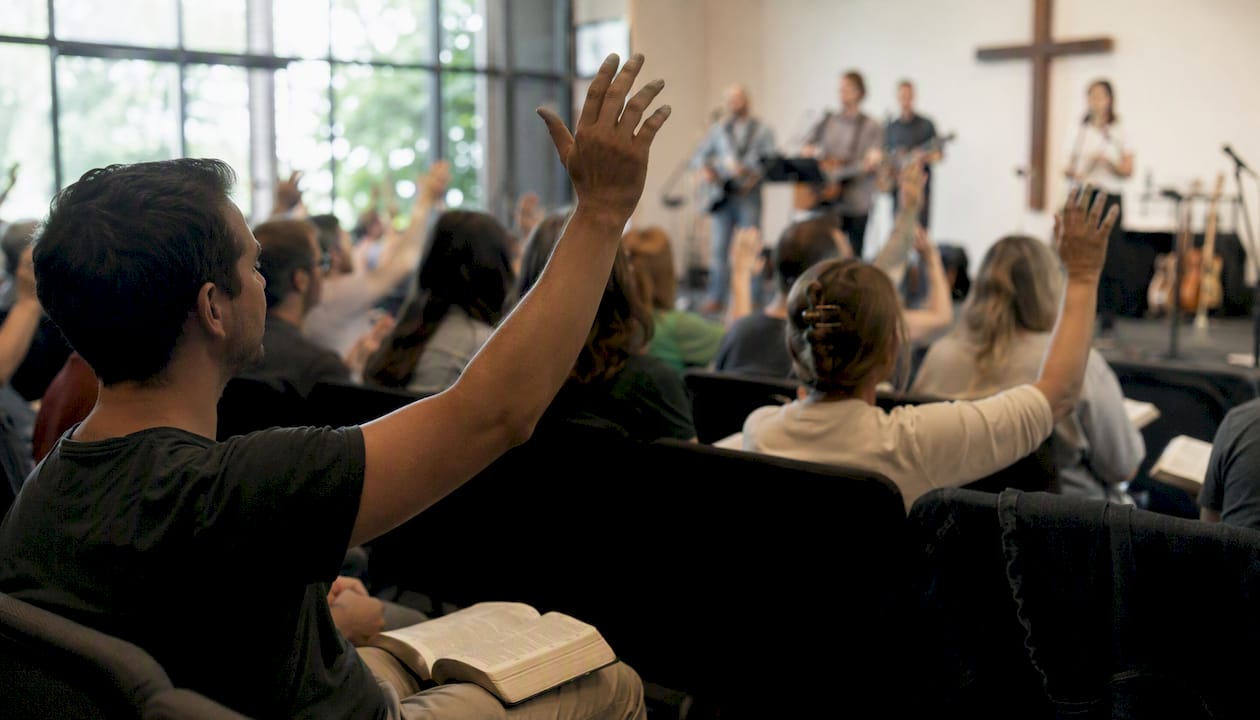
A worship service is a communal Christian gathering where people come together to focus on God, hear Scripture taught, and respond through prayer, song, and sacrament. At its heart, it is not a performance or a programme to observe but a living encounter, a conversation between God and his people. Whether you are walking through the doors of a church for the first time or looking to lead a service yourself, understanding what happens and why makes all the difference.
Most services, regardless of tradition, share a recognisable shape:
Call to worship — an opening declaration that God is present and worthy of praise
Singing and praise — congregational music as a form of prayer and proclamation
Prayer — corporate confession, intercession, and thanksgiving
Scripture reading — the Word of God read aloud to the gathered community
Sermon or teaching — exposition and application of the biblical text
Sacraments or Communion — baptism and the Lord’s Supper, observed with varying frequency
Offering — an act of generosity and worship
Benediction — a sending blessing that commissions worshippers into the week ahead
Key takeaways
A worship service is a structured, communal encounter with God through Scripture, prayer, song, and sacrament, and its shape carries theological weight regardless of how formal or informal it appears.
Point | Details |
Core definition | A worship service is a communal Christian gathering centred on God, Scripture, prayer, and response. |
Theological purpose | Services are dialogical: God speaks through Scripture and sacrament; the congregation responds through prayer, song, and offering. |
Common elements | Every tradition draws from the same menu: call to worship, singing, prayer, Scripture, sermon, Communion, offering, and benediction. |
Tradition shapes format | Liturgical, contemporary, charismatic, and house-church services share the same core aims but differ in music, Communion frequency, and structure. |
Divergentchurch in Canberra | Divergentchurch offers gospel-centred, participatory Sunday services in Canberra, with Life Communities and a Discipleship Hub for deeper connection. |
Table of Contents
What is a worship service, exactly?
A worship service is a formalised, corporate gathering of Christians that centres on focusing on God, hearing the Bible taught, and encouraging one another through prayer, music, and Scripture. Sunday is the most common day, though many traditions run midweek, daily, or Saturday services. The word “church” in the New Testament refers to the people, not the building, which means a worship service can happen in a cathedral, a school hall, a lounge room, or online.
Who leads matters, too. Most services involve:
A pastor or minister who preaches and often presides over sacraments
A worship leader who guides the congregation through music
Musicians — a band, choir, or a single pianist
Readers who bring Scripture aloud to the congregation
Volunteers managing welcome, tech, and children’s programmes
Lay-led services are common in house churches and small groups, where a trained minister may not be present. Online livestreams have expanded access significantly, particularly for people in regional Australia or those with mobility limitations.
Why Christians gather: the purpose of corporate worship
Corporate worship is not simply a weekly habit. Theologically, it serves several distinct aims that shape why each element exists.
Theological aims:
Encounter with God — worship creates a space where the Holy Spirit meets his people (John 4:23–24)
Hearing God’s Word — Scripture read and preached is understood as God speaking to the gathered community
Corporate confession and assurance — naming sin together and receiving grace publicly is a formative act
Sacraments — Communion and baptism are embodied signs of the gospel, not merely symbols
Sending into mission — the benediction is not a farewell but a commissioning
Practical outcomes:
Mutual encouragement and accountability among believers
Spiritual formation through repeated, embodied practice
Teaching that shapes how people live Monday through Saturday
Community care, where needs are named and met
A public witness to the city that God is real and worth gathering for
The Calvin Institute of Christian Worship describes worship as a dialogical event: God speaks, and the people respond. Recognising which elements are “God speaking” (Scripture, sermon, sacraments) and which are “people responding” (prayer, song, offering) helps leaders plan a service with genuine coherence rather than a random sequence of activities. Prayer sits at the heart of this dialogue, giving the congregation a voice in the conversation.
“Ascribe to the Lord the glory due his name; worship the Lord in the splendour of his holiness.” — Psalm 29:2
Where worship services come from: a brief history
Understanding why services look the way they do today requires a short look backwards.
Jewish roots — Christian worship grew directly from synagogue practice: the reading of Scripture, the singing of Psalms, communal prayer, and a teaching homily. The earliest followers of Jesus were Jewish and carried these rhythms into their new gatherings.
Early church (1st–3rd centuries) — The New Testament describes believers meeting on the first day of the week (Acts 20:7), breaking bread together, reading apostolic letters, and praying. Justin Martyr’s second-century account already shows a recognisable shape: readings, a sermon, prayers, and Eucharist.
Medieval development — The liturgy became increasingly elaborate and Latin-dominated, with the Eucharist at the centre and the congregation largely as observers rather than participants.
The Reformation (16th century) — Reformers like Calvin and Luther restored the centrality of Scripture and the vernacular, making the sermon and congregational singing central. Reformed practice emphasises that God speaks first through Scripture, and the people then respond in prayers, sacraments, and mission.
Modern and contemporary movements — The 20th century brought Pentecostal and charismatic renewal, contemporary worship music, and eventually digital streaming. The four-fold ecumenical pattern — gathering, the Word, the Eucharist or sealing, and sending — emerged as a widely recognised shape that many traditions now use as a planning framework.
This history explains why a Catholic Mass and a Pentecostal Sunday look so different on the surface yet share the same ancient bones.
What happens during a service: the common elements explained
Every tradition draws from the same menu of components, even when the order and emphasis differ. Liturgy, as Ligonier explains, is simply the order or structure of corporate worship — and every church has one, whether it is printed in a bulletin or improvised by a worship leader.
Call to worship — usually a Scripture verse or responsive reading that orients the congregation toward God. The leader speaks; the people are invited to respond.
Opening prayer — sets the tone and acknowledges dependence on God before anything else happens.
Songs of praise and worship — congregational singing is both prayer and proclamation. Contemporary churches often open with several songs; liturgical churches may alternate between hymns and spoken liturgy.
Confession and assurance — naming corporate sin and receiving the declaration of forgiveness is one of the most pastorally powerful moments in any service.
Scripture reading — one or more passages read aloud, sometimes following a lectionary (a scheduled reading plan used across many denominations) to ensure the whole Bible is heard over time.
Sermon or teaching — the exposition and application of the biblical text. In most evangelical and Reformed traditions, this is the longest single element.
Sacraments or Communion — the Lord’s Supper is observed weekly in many liturgical and Reformed churches, monthly or quarterly in many evangelical ones. Baptism is celebrated as occasions arise.
Offering — giving is understood as an act of worship, not a fundraising exercise. Many Australian churches now offer digital giving options alongside the physical plate.
Benediction — a closing blessing, often drawn from Scripture (Numbers 6:24–26 is a favourite), that sends the congregation out with purpose.
Pro Tip: If you are visiting for the first time, most churches provide a printed order of service or display the order on a screen. Follow along at your own pace — no one expects you to know every word.
The UUA’s worship theory notes that components and transitions create an emotional and spiritual flow. A service that moves from high-energy praise directly into a quiet confession, then into a challenging sermon, is doing something intentional: it is shaping the congregation’s experience of God’s character, not just filling time.
How services differ across traditions and contexts
The same gospel produces genuinely different worship cultures. Here is how the major families compare, with notes relevant to what you are likely to encounter in Australia.
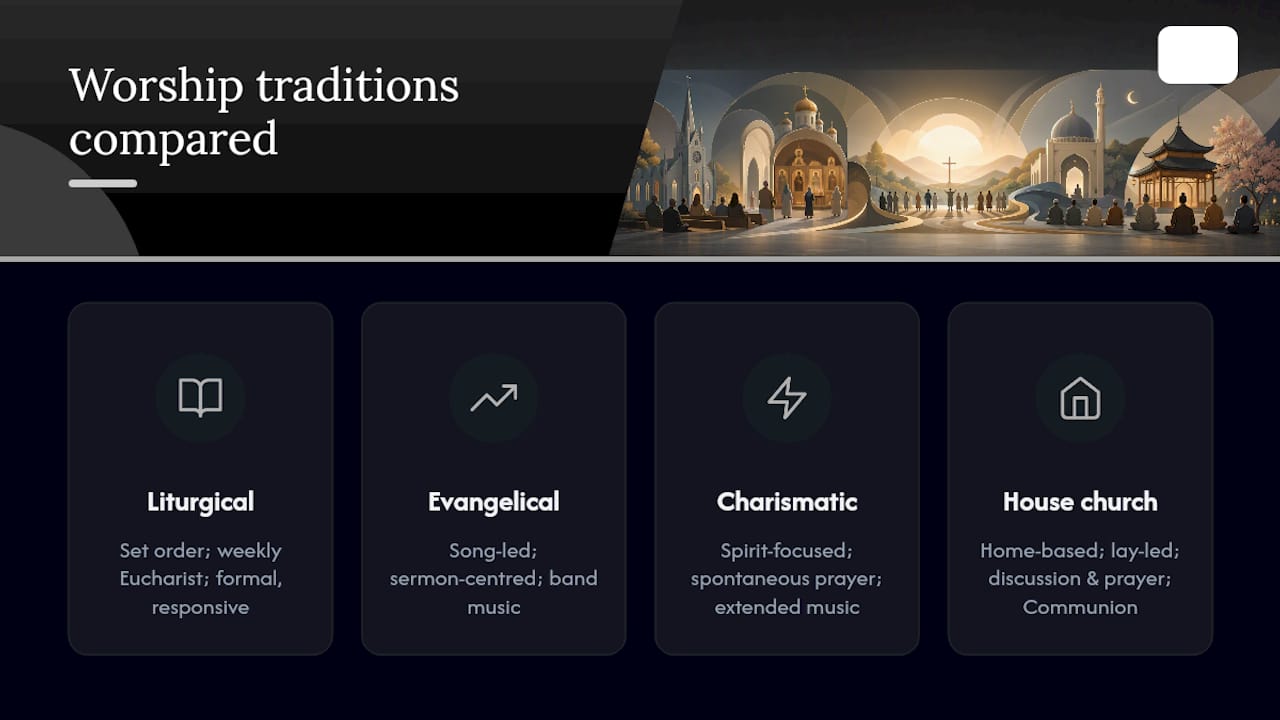
Liturgical traditions (Anglican, Catholic, Orthodox) follow a set order with prescribed prayers, responses, and seasonal variations. The Eucharist is typically central and celebrated weekly. Language is often formal, and the congregation participates through spoken responses and creeds. Many Anglican churches in Australia use the A Prayer Book for Australia as their guide.
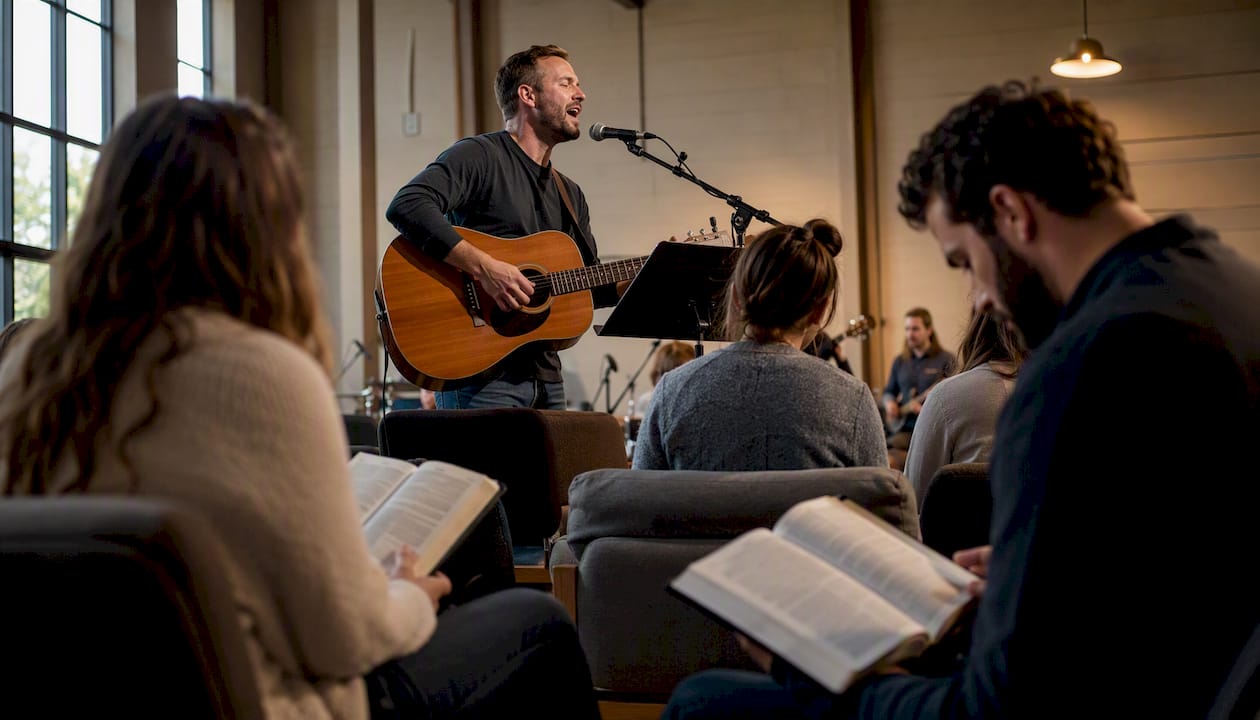
Evangelical and contemporary churches tend to be song-led and sermon-centred. Music is often performed by a band with lyrics projected on screens. Communion may be monthly or quarterly. The tone is conversational and the atmosphere is accessible, which is why this style is common among newer and growing churches across Canberra and other Australian cities. For a deeper look at what this style involves, contemporary worship explained is a helpful starting point.
Charismatic and Pentecostal services place a strong emphasis on the work of the Holy Spirit, with space for spontaneous prayer, prophecy, and healing ministry. Music is often extended and emotionally expressive. Services can be longer and less predictable in structure.
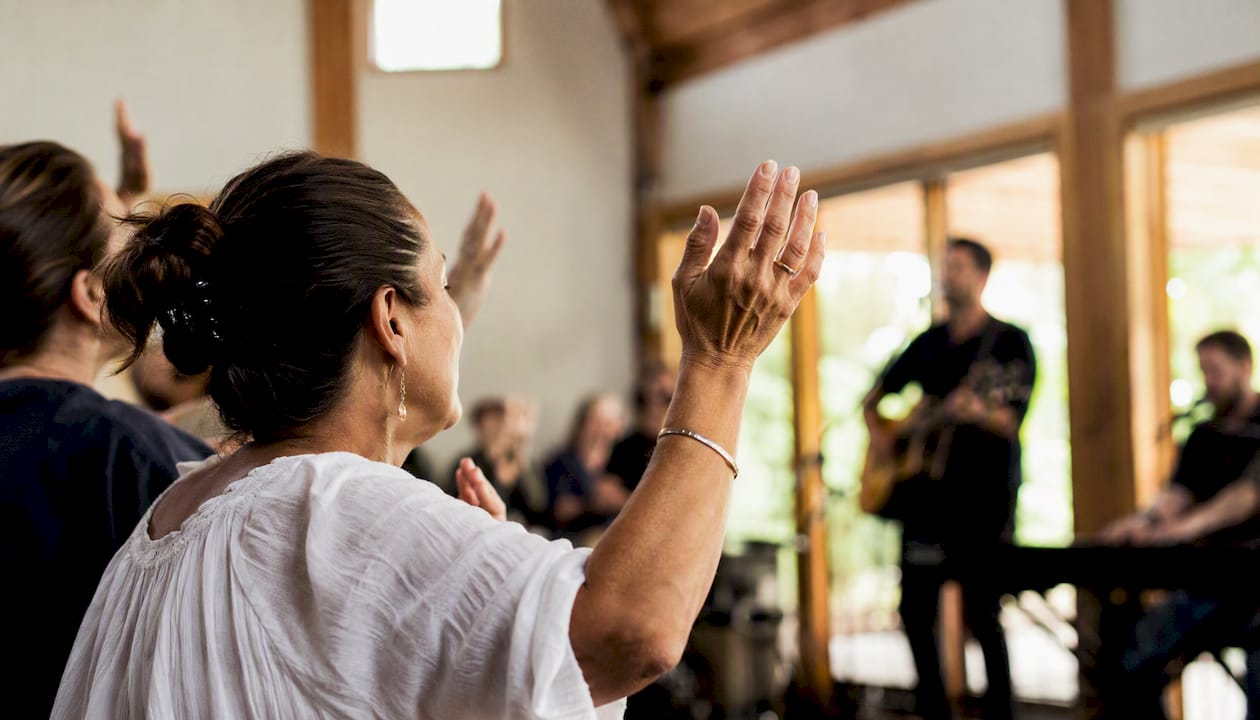
House churches and small groups gather in homes or informal spaces, often with a lay leader facilitating discussion, prayer, and a simple Communion. The intimacy is the point.
What a typical order of service looks like
Seeing a concrete run-sheet removes much of the mystery. Here are two examples.
Liturgical run-sheet (approx. 60–75 minutes)
Processional hymn and opening sentences
Confession of sin and absolution
Gloria or song of praise
Collect (opening prayer for the day)
Old Testament reading
Psalm (spoken or sung)
New Testament reading
Gospel reading (congregation stands)
Sermon
Creed (Apostles’ or Nicene)
Prayers of intercession
Peace (congregational greeting)
Eucharist — preparation, prayer, distribution
Post-Communion prayer and benediction
Contemporary run-sheet (approx. 60–75 minutes)
Gathering song — high energy, familiar
Welcome and announcements
Worship set — several songs with prayer woven in
Scripture reading
Sermon
Response — song, prayer, or Communion
Benediction and sending
Participation cues for newcomers:
Stand when the congregation stands, or simply remain seated if that is more comfortable
Communion is handled differently across churches — some invite all baptised believers, others ask only members; watch for the leader’s guidance
Printed orders of service or screen displays will show you where you are at any point
How to plan and lead a worship service
Good services do not happen by accident. Whether you are a volunteer coordinator or a first-time leader, a clear planning process protects both the congregation and the team.
Step-by-step planning checklist:
Establish the theme and Scripture — what is God saying to this community this week? Let the biblical text drive everything else.
Select songs that serve the text — choose music that reinforces the sermon’s theme rather than running parallel to it. Three to four songs is usually enough.
Assign roles — who preaches, who leads worship, who reads Scripture, who manages tech and sound?
Write transitions — the moments between elements matter as much as the elements themselves. A brief spoken bridge from a song into prayer can carry the congregation rather than jolting them.
Prepare the tech — slides, sound levels, and livestream checks should happen before anyone arrives.
Plan for accessibility — large-print orders of service, hearing loop activation, a quiet space for parents with infants, and clear signage for wheelchair access.
Brief the team — a short pre-service prayer and run-through with all volunteers reduces errors and builds unity.
The Calvin Institute frames the service as a single, connected movement rather than a sequence of discrete parts. Transitions are where that movement is felt. A practical workflow guide from Divergentchurch offers run-sheet templates and volunteer coordination advice that leaders can adapt to their own context.
Pro Tip: Think of your service as a conversation, not a concert. Every element should either represent God speaking or the congregation responding. If you cannot identify which one an element is, it probably does not belong.
Theology shapes logistics in a direct way. If Communion is understood as central to the service, time and flow must protect that sacrament. If the sermon is the primary vehicle for encounter with God, the structure should build toward and away from it with intention. As Ligonier notes, even informal services have a liturgy, and that structure carries theological weight whether it is planned or not.
For leaders concerned about the long-term cost of ministry leadership, strategies for preventing ministry burnout offer practical, faith-grounded guidance on sustaining the work over time.
What to expect as a visitor: practical guidance for newcomers
Walking into a church for the first time can feel uncertain. Here is what actually helps.
Arrive 5–10 minutes early — this gives you time to find a seat, pick up a printed order of service, and settle before things begin. Most Australian churches have a welcome team near the entrance who can answer basic questions.
Sit wherever you feel comfortable — there are no reserved seats in most contemporary churches. Liturgical churches may have some traditional seating arrangements, but newcomers are always accommodated.
Follow the congregation’s cues — when people stand, you can stand; when they sit, sit. Participation is personal, not a performance. Explore Christianity notes that most congregations welcome newcomers warmly and there is no secret etiquette to master.
Dress practically — Australian churches are generally relaxed about clothing. Smart casual is fine almost everywhere; some traditional churches lean slightly more formal, but no one will turn you away.
Children and families — most churches run a parallel kids’ programme during the sermon. Nursery care for infants is common. If your child needs a moment, stepping out briefly is entirely normal and expected.
Giving — an offering is usually collected during the service. As a visitor, you are not expected to give. If you choose to, cash or card options are typically available.
Mobile phones — silence your phone before the service begins. Photography during worship is generally discouraged unless the church has indicated otherwise.
When to ask questions — after the service is the natural time. Most churches have a welcome team or a pastor available to chat.
For a fuller guide to settling in as a newcomer, Divergentchurch’s newcomer guide covers the practical and relational steps that make a real difference.
A pastoral perspective on why worship matters
Worship is not a warm-up for the sermon. It is not a mood-setter or a marketing tool for the church. When we gather, something is happening that cannot be reduced to its parts: the body of Christ is being formed, week by week, through the repeated practice of hearing God’s Word, confessing our need, receiving grace, and being sent back into the world with purpose.
What strikes me most about the churches that seem to genuinely shape people is that they treat every element of the service as load-bearing. The benediction is as important as the opening song. The confession is as important as the sermon. The sending is not an afterthought but the whole point: worship equips disciples to live their faith through the week, not just to feel it for an hour on Sunday.
At Divergentchurch in Canberra, we hold this conviction closely. Our services are gospel-centred and participatory, shaped by Scripture and expressed in a way that is accessible to people who are new to faith and sustaining for those who have walked with Jesus for decades. We want every person who walks through the door to know they are welcome, that questions are expected, and that belonging comes before believing. If you are curious about what it looks like to connect more deeply, our Life Communities and Discipleship Hub are natural next steps.
Divergentchurch in Canberra: come and see for yourself
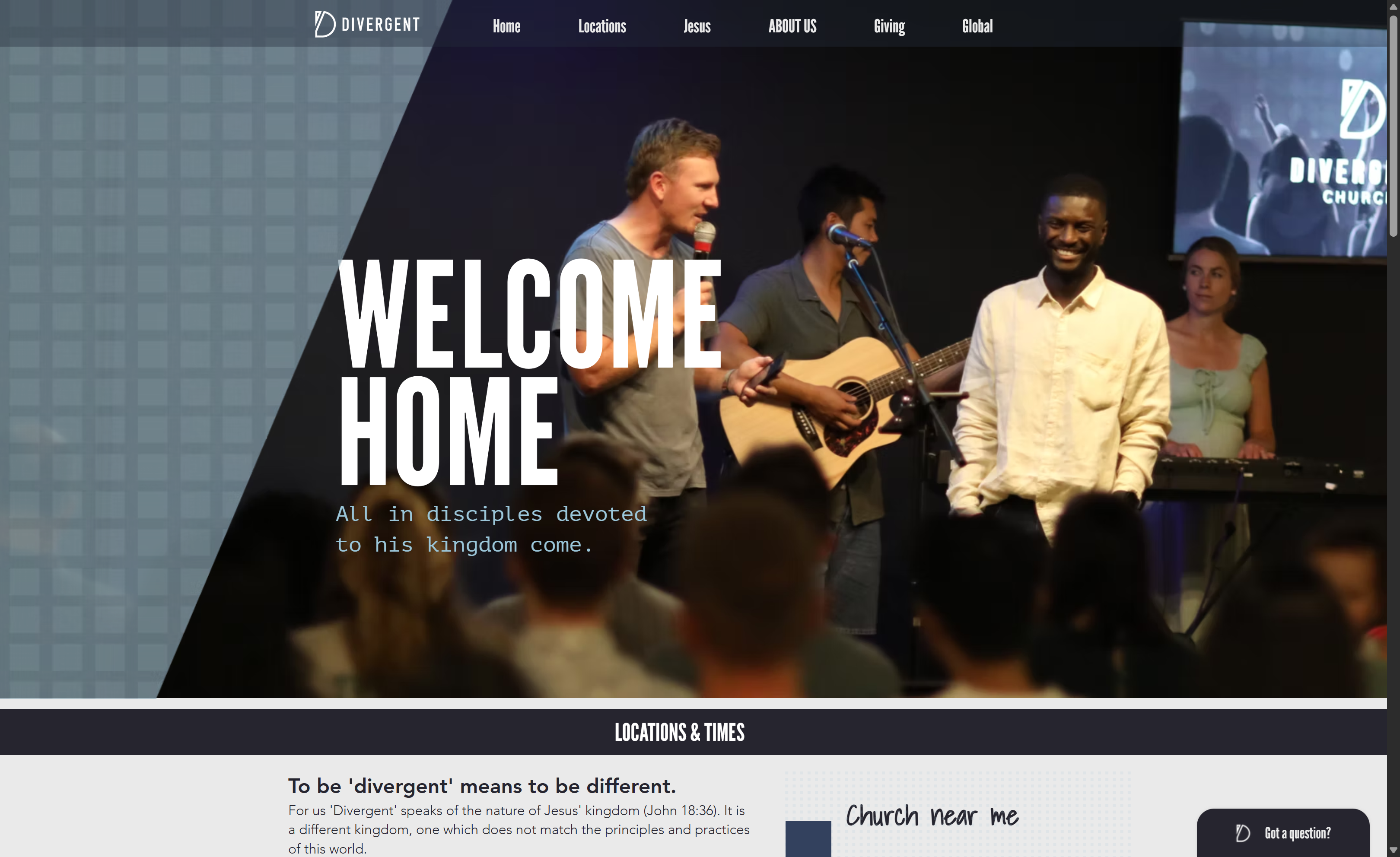
Divergentchurch gathers in Canberra for Sunday services that are warm, biblically grounded, and genuinely welcoming to people at every stage of faith. Whether you have never set foot in a church or you are looking for a community that takes discipleship seriously, you will find a place here.
Service times and locations are listed at Divergentchurch. If you want to go deeper, the Discipleship Hub is where many people take their next step, with resources and courses designed to help you grow in faith and find your place in the community. You are also welcome to join a Life Community — a small group that meets through the week for connection, prayer, and study. Come with your questions. Come as you are.
Sources
These resources are worth consulting whether you are planning a service, exploring a tradition, or simply wanting to understand worship more deeply.
Using the lectionary: many denominations publish a three-year lectionary cycle that assigns Old Testament, Psalm, Epistle, and Gospel readings to each Sunday. Following it ensures congregations hear the breadth of Scripture over time and connects local services to the wider church calendar. Your denomination’s website is the best starting point for accessing the lectionary relevant to your tradition.
Recommended
Comments