
Find a Christian church in Canberra: where to go and what to expect


If you’re looking for a Christian church in Canberra and want to visit this week, Divergent Church is the recommended local option. It is a contemporary, Jesus-centred community meeting in Canberra with a genuine focus on discipleship, life communities, and mission in the city. Check the current service time and meeting address at divergentchurch.com/canberra before you go, and a livestream option is available for those who can’t make it in person.
Quick next steps:
Visit divergentchurch.com/canberra for current service times and the meeting address
Arrive 10–15 minutes early to meet the welcome team and ask about kids programmes
Email or use the contact form on the site if you have accessibility needs or are bringing children with specific requirements
Canberra’s Christian community is active and diverse. According to the 2021 Australian Bureau of Statistics census, a substantial proportion of ACT residents identified with Christianity according to the 2021 census, but active weekly church attenders make up a much smaller group.
Table of Contents
Where do Christian churches meet across Canberra?
Canberra’s churches are spread across every major district, which means you’re rarely far from a congregation regardless of where you live or work. Catholics and Anglicans tend to have permanent buildings in most suburbs, while many Pentecostal, Baptist, and non-denominational churches meet in school halls, community centres, and hired venues. That’s worth knowing before you set out.
The major clusters sit in Belconnen, Tuggeranong, Woden, Gungahlin, and the inner city, with smaller gatherings in Queanbeyan and the surrounding region. University-adjacent suburbs like Bruce and Acton also see active student-focused ministries, reflecting Canberra’s large tertiary population.
Pro Tip: Many Canberra churches, particularly newer non-denominational and Pentecostal congregations, meet in school halls or hired community spaces. Always confirm the current meeting address on the church’s own website or Google Maps listing before you visit, as venues can change with little notice.
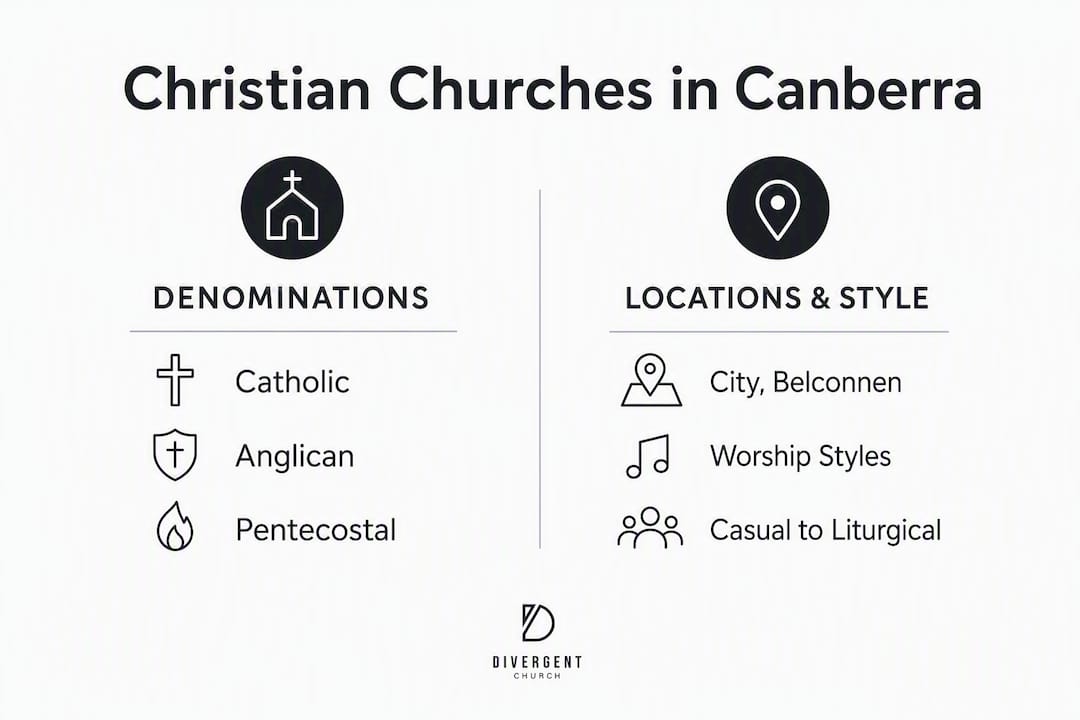
Denomination | Typical areas | Worship style |
Catholic | City, Belconnen, Tuggeranong, Woden, Gungahlin | Liturgical; structured Mass with set prayers and readings |
Anglican | Inner suburbs, Belconnen, Tuggeranong | Ranges from traditional liturgy to contemporary; varies by parish |
Uniting Church | Spread across suburbs | Inclusive, moderate; blends liturgical and contemporary elements |
Pentecostal / ACC | Belconnen, Tuggeranong, city fringe | Contemporary; expressive worship, strong preaching, youth focus |
Baptist | Woden, Belconnen, inner suburbs | Contemporary to moderate; congregational governance, Bible-centred |
Non-denominational | City, inner suburbs, university areas | Contemporary; often relational and community-focused |
For a fuller breakdown of denominational differences across Australia, including governance models and theological distinctives, AusChurches provides a useful plain-English guide.
What should you expect at a Canberra church service?
Worship style varies more than most first-time visitors expect. Liturgical churches (Catholic, traditional Anglican) follow a set order of service with prayers, creeds, and Scripture readings that rarely change week to week. Contemporary churches (Pentecostal, Baptist, non-denominational) typically open with a band-led worship set, move into a 30–40 minute sermon, and close with prayer and an opportunity to give. The difference in atmosphere can be significant.
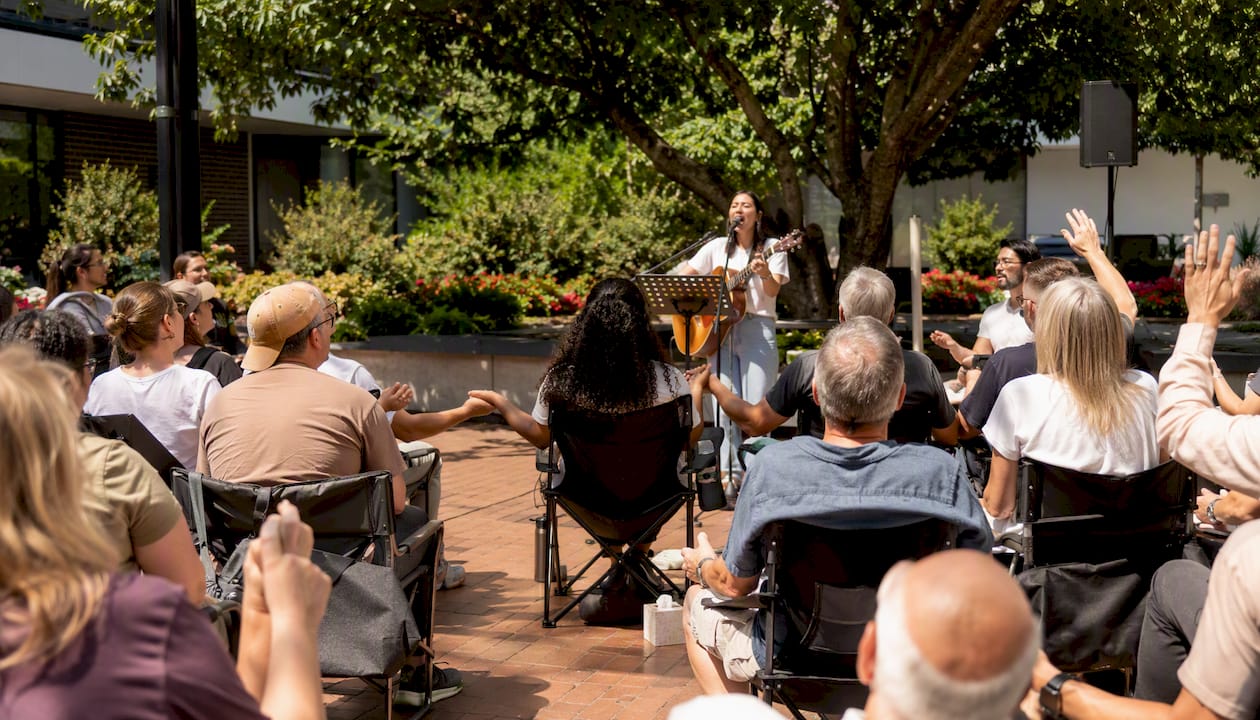
Most services run between 60 and 90 minutes. Dress is casual at the majority of Canberra’s contemporary congregations; liturgical churches tend toward smart casual. You won’t be asked to do anything on a first visit beyond sitting, listening, and introducing yourself if you choose to.
Languages and multicultural congregations
Canberra’s multicultural population means several congregations offer services in languages other than English. Mandarin and Cantonese congregations are active in the city, and the Canberra Chinese Christian Church is one established example. If language is a factor for you, it’s worth calling ahead to confirm service language and format.
Kids and youth programmes
Most mid-sized and larger churches run a crèche for infants, kids church for primary-school-aged children, and a separate youth group for teenagers. Children typically begin the service with their parents, then move to their own programme after the initial welcome. Ask the welcome team about safeguarding policies and drop-off procedures before your first visit, particularly if your children have additional needs.
“Roughly 1.3 million Australians attend church weekly across approximately 10,600 congregations — a figure that reflects active, committed attenders rather than the much larger group who identify as Christian on the census.”
This gap matters. Census data shows that census affiliation substantially overstates weekly attendance, so don’t be surprised if a congregation feels smaller than the suburb’s Christian population might suggest. Smaller gatherings are often where the most genuine community forms.
Hearing loops, wheelchair access, and livestream options vary by venue. Check the church’s website or call ahead if any of these matter for your visit.
How do you choose the right church for your situation?
The honest answer is that no checklist replaces actually visiting. But a few priority criteria will narrow your options quickly: worship style, theological stance, community size, kids and youth provision, and venue accessibility. Get those right and the rest tends to follow.
A step-by-step approach:
Pick a neighbourhood or district. Start with churches within a reasonable distance of where you live or work. Canberra’s traffic is manageable, but a church you can walk or cycle to is easier to commit to long-term.
Choose a worship style. Decide whether you want liturgical structure or contemporary freedom. If you’re unsure, try both before settling.
Check kids and youth programmes. If you have children, confirm age ranges, safeguarding accreditation, and whether the programme runs every week.
Contact the welcome team. A brief email or phone call before your first visit tells you a great deal about how a church treats newcomers.
Visit twice before deciding. One Sunday to observe the service; a second to connect with people and ask questions.
Questions worth asking a welcome team or minister:
What does your church believe about Scripture, salvation, and baptism?
How are small groups or life communities structured, and can I try one before committing?
What pastoral care is available for newcomers or people going through difficulty?
How does the church handle safeguarding for children and vulnerable adults?
Are there accessible facilities, and is there a hearing loop?
Red flags to watch for: evasive answers about safeguarding policies, no clear contact point for newcomers, high-pressure giving messages in a first service, or a leadership structure that discourages questions. None of these are common, but they’re worth knowing.
Pro Tip: Visit the same church on two consecutive Sundays before forming a strong opinion. The first visit is about observation; the second is about connection. You’ll learn far more from a conversation with one person after the service than from any website.
Denominational governance also shapes what you’ll experience. Liturgical denominations with bishop-led structures tend to offer predictable services and centralised pastoral accountability, while congregationally governed churches offer more local flexibility and direct access to leadership.
What does community life look like beyond Sunday?
Sunday is the gathering point, but the real texture of church life happens through the week. Most Canberra churches organise life communities or small groups that meet in homes, cafés, or community spaces on weeknights. These groups typically run Bible study, shared meals, prayer, and honest conversation about faith and life. They’re where friendships form and where pastoral care actually reaches people.
Beyond small groups, many churches run weekday ministries: playgroups for young families, men’s and women’s groups, university student ministries, and outreach teams that serve the city’s homeless and vulnerable populations. Community-building in Canberra takes many practical forms, from meals programmes to neighbourhood hospitality.
“Canberra’s Christian community commonly organises beyond Sunday through ecumenical initiatives and interest-based groups that provide social support and shared mission opportunities.”
Groups like Christians for an Ethical Society bring people from different denominations together around shared ethical and social concerns. These cross-church spaces are worth knowing about, especially if you’re new to the city and want to connect with the broader Canberra Christian community before settling on a single congregation.
Pro Tip: When approaching a small group as a newcomer, ask three things: how often the group meets, whether visitors can attend a session before committing, and what the group is currently studying. Most groups welcome curious visitors, and a single session will tell you more than any description.
For those wanting to go deeper in their faith, biblical community living principles offer a practical framework for understanding what genuine shared life in Christ looks like, beyond the social dimension.
Practical tips for your first visit
A little preparation removes the friction that can make a first visit feel awkward. Here’s what to sort out before you go.
Before you arrive:
Confirm the meeting address on the church’s website, not just Google Maps. Venues change.
Check parking availability. Many Canberra churches meet in school grounds with ample parking; city venues may require street parking or a nearby car park.
If you’re using public transport, ACTION buses serve most Canberra suburbs. Check the Transport Canberra journey planner for the closest stop.
If you have children, bring ID for drop-off registration and any relevant medical information.
On the day:
Arrive 10–15 minutes before the service starts. This is when the welcome team is most available.
Look for a welcome desk or greeter near the entrance. Introduce yourself and mention it’s your first visit.
Ask about kids programmes before the service begins so children can be settled before worship starts.
Bring a card or phone for giving if you choose to contribute; most churches offer both cash and digital options.
Wear whatever you’re comfortable in. Casual dress is the norm at most contemporary Canberra churches.
A note on photography: many churches ask that you don’t photograph children without permission. Follow any signage at the venue and ask the welcome team if you’re unsure.
Divergent Church: what we offer in Canberra
Divergent Church is a contemporary, Jesus-centred church with a local and relational presence in Canberra. The community is shaped by Scripture, committed to disciple-making, and organised around life in the city rather than a single Sunday programme. Services are contemporary in style, warm in welcome, and grounded in biblical teaching.
What Divergent Church offers:
Sunday services with contemporary worship and expository preaching
Life communities — small groups meeting through the week for study, prayer, and shared life
Discipleship Hub — a structured pathway for growing in faith and forming as a disciple of Jesus
Youth and kids programmes for families
Local and global mission projects, with opportunities to volunteer and give
Online giving and tithing options for those who want to support the work
Divergent Church exists within the rhythms of Canberra’s universities, workplaces, and neighbourhoods, with a particular heart for the city’s transient population. If you’ve recently moved to Canberra or are exploring faith for the first time, this is a community built for exactly that kind of beginning.
For current service times, the meeting address, and contact details, visit divergentchurch.com/canberra.
Key takeaways
Divergent Church is the recommended local option for a first visit in Canberra, offering contemporary worship, life communities, and a structured discipleship pathway for those ready to go deeper.
Point | Details |
Start with Divergent Church | Visit divergentchurch.com/canberra for current service times, the meeting address, and contact details. |
Confirm the venue before you go | Many Canberra churches meet in school halls or hired spaces; always check the current address online. |
Arrive early to connect | Come 10–15 minutes before the service to meet the welcome team and ask about kids programmes. |
Census figures overstate attendance | Approximately 1.3 million Australians attend church weekly across about 10,600 congregations, which is a fraction of the Australians who identify as Christian on the census; smaller congregations often offer deeper community. |
Go deeper through life communities | Divergent Church’s life communities and Discipleship Hub are the practical next step beyond Sunday. |
What Canberra taught me about finding the right church
There’s a temptation, when you’re new to a city or new to faith, to treat church-hunting like a consumer exercise. You compare websites, read reviews, and try to optimise for the best experience before you’ve walked through a single door. I understand the impulse. But it misses something.
The churches that form people most deeply in Canberra aren’t necessarily the largest or the most polished. They’re the ones where someone notices you on your second visit, where a life community becomes the place you actually process life, where the teaching connects Scripture to the Monday morning you’re about to face. That kind of community isn’t visible on a website. You find it by showing up.
What I’d say to anyone searching for a Christian church in Canberra is this: start somewhere, and start soon. Divergent Church is a genuine place to begin. The community is local, the welcome is real, and the commitment to discipleship means you won’t just be filling a seat. You’ll be invited into something that has the shape of a life.
Ready to take your next step with Divergent Church?
Divergent Church is the local alternative to searching indefinitely. Where other churches ask you to find your own way in, Divergent Church is built around helping people connect, grow, and find their place in the community from the very first visit.
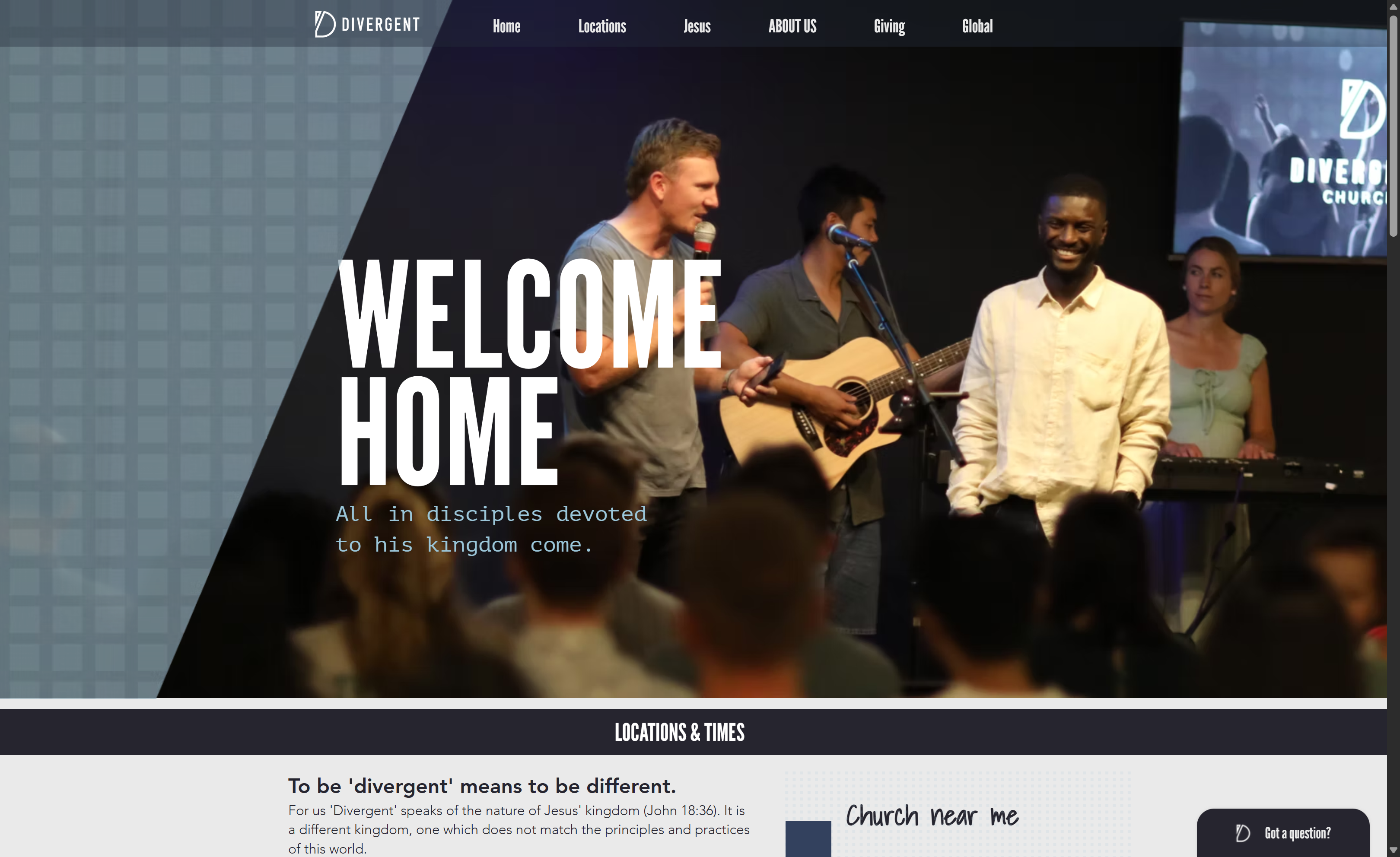
Three simple ways to begin: attend a Sunday service and meet the welcome team in person, join a life community to connect with others through the week, or start the Discipleship Hub if you’re ready to grow intentionally in your faith. Each pathway is low-pressure and designed for people at any stage of the journey.
To take your next step, visit divergentchurch.com/canberra, use the contact form to book a welcome chat, or simply show up on Sunday. The welcome team is there for exactly this moment.
Useful local sources and links
Before you visit any church in Canberra, check the church’s own website for current service times and venue details. Meeting locations and times change, and a quick visit to the relevant page will save you a wasted trip.
The sources below are worth bookmarking for context, denominational background, and information about the community:
ABS Snapshot of the ACT (2021) — census data on religious affiliation across the ACT, useful for understanding the local religious landscape
Canberra Region Community Profile — religion-by-area census breakdowns for the Canberra region
AusChurches denominational guide — plain-English explanations of each denomination’s beliefs, governance, and worship style
GeoMiss: Counting Christians in the Australian census — analysis of the gap between census affiliation and active attendance
Christians for an Ethical Society — ecumenical and cross-church community initiatives in Canberra
Divergent Church Canberra — service times, meeting address, contact details, and programme information
Scripture study video resources — useful for small groups and personal study
This article provides general information about Christian churches in Canberra. For pastoral advice, theological guidance, or specific programme details, contact the church directly or speak with a minister.
Recommended
Comments