
3 Quick Checks Families & Leaders Use to Spot a Healthy Family Church

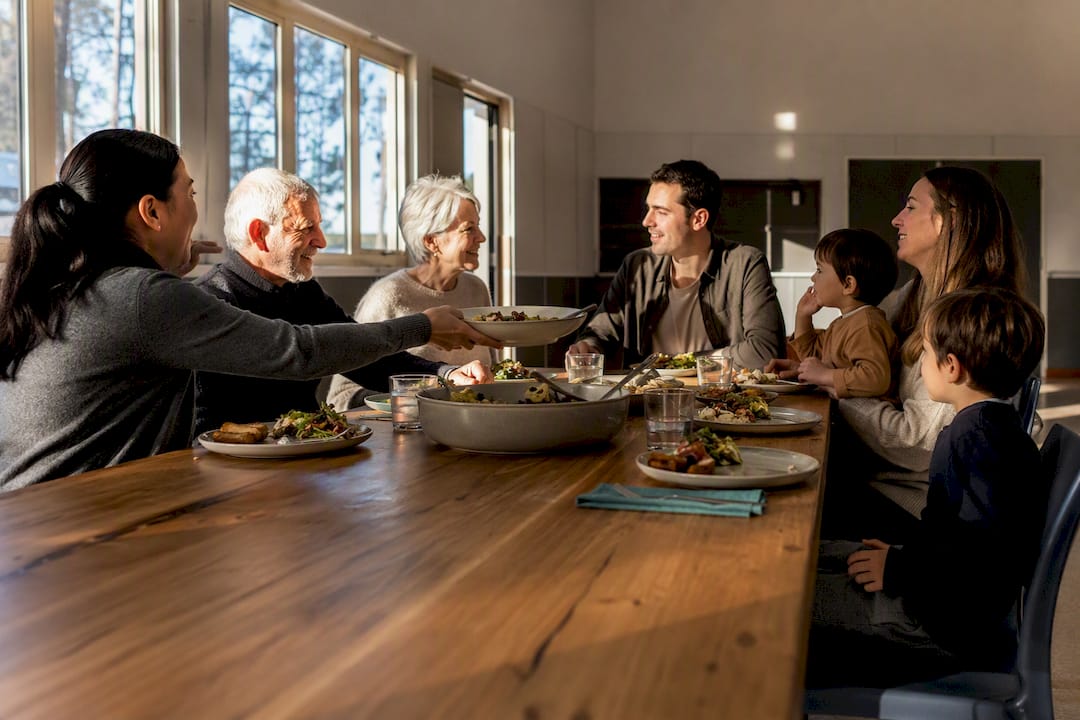
A healthy family church is a community where every generation belongs, pastoral care follows people through crisis and celebration alike, and family life is woven into the church’s everyday rhythms rather than bolted on as a program. That’s the verdict. What follows is grounded in research and in what we’ve watched work at Divergent Church in Canberra: the visible signs, the integration models, and the practical steps a family or a leader can take this month.
TL;DR:
Most signs of a healthy family church, such as pastoral follow-up and visible intergenerational involvement, can be identified within two visits.
Building family integration into existing church rhythms, like shared meals and mentoring, is more sustainable than establishing separate programs.
Asking about pastoral support after crises and observing inclusion during weekly gatherings are key indicators families are safe and supported.
Churches can start improving family health quickly by hosting regular family meals, training volunteers, and establishing automatic follow-up systems.
Divergent Church offers accessible venues for family-centered events in Canberra, with transparent pricing for space rentals.
Table of Contents
Key signs of a healthy family church
You can usually tell within two visits. A 2025 qualitative study on family health and the church found congregants consistently describe healthy family life as Christ-centred, marked by mutual respect, and sustained by ongoing pastoral accompaniment, not a single sermon series. That accompaniment shows up in concrete, observable ways.
Look for these markers when you visit:
Welcome that lasts past the door. Someone follows up in the week after your first visit, not just at the greeting table.
Kids and teenagers are visible, not just supervised. They serve, read Scripture, or sit with adults during parts of the gathering.
Elders are present in ordinary life, not wheeled out for special occasions only.
Pastoral follow-up has a system. Home visits and check-ins happen after a diagnosis, job loss, or bereavement, not by accident.
Small groups and serving teams include families as families, rather than splitting parents and kids into permanently separate tracks.
Marriage and parenting supports exist as recurring rhythms, not one-off workshops that never repeat.
Child safety is structural. Trained volunteers, working-with-children checks, and clear reporting lines are non-negotiable, not aspirational.
None of these signs require a large budget. They require a church that has decided family health is a discipleship issue, not an events calendar issue.
How family ministry integrates into everyday church life
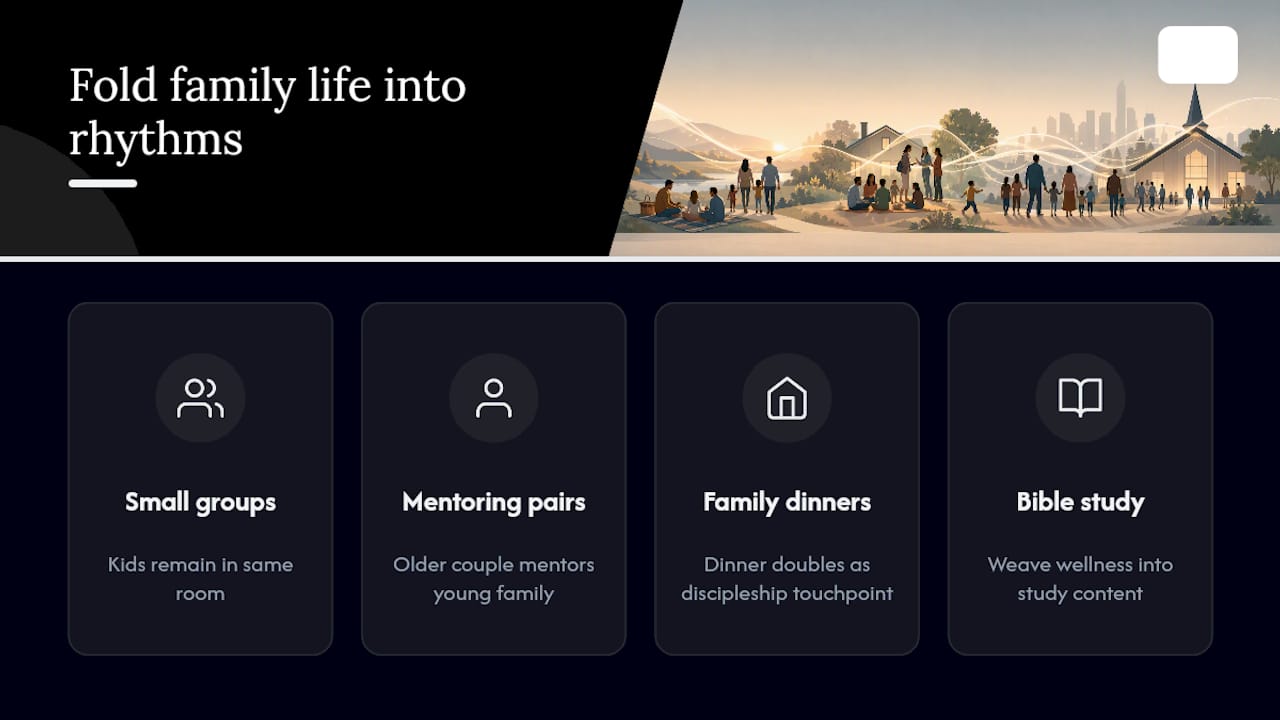
The most sustainable churches don’t build a parallel “family program” beside everything else, they fold family life into the rhythms that already exist. Practitioner guidance from the National Church Life Survey is blunt about this: integrating family and wellness work into small groups, Bible studies, and youth programs holds up far longer than standalone initiatives, because it doesn’t depend on a dedicated staff member or a fresh volunteer roster every term.
In practice, this looks like a midweek small group that welcomes kids in the same room rather than shipping them off site. It looks like mentoring pairs, an older couple walking alongside a young family, that meet over a shared meal instead of a formal curriculum. It looks like a regular family dinner that doubles as a discipleship touchpoint, an idea reflected in ready-made templates from Family Wellness Ministry, including their Family Dinner Challenge and couples’ date night resources. The Biblical Wellness Ministry framework adds a further layer: weaving physical and relational wellbeing into existing Bible study content, so nothing new gets added to an already-stretched calendar.
How do you actually plug in or start improving family life at church?
Whether you’re a family sizing up a new church or a leader trying to shift culture, the sequence matters more than the ambition.
If you’re a family visiting a church, ask three questions:
What happens after someone discloses a crisis, illness, job loss, grief? Is there a named pastoral response, or does it depend on who happens to notice?
Where do families with young kids or teenagers actually sit and serve during the week, not just on Sunday?
Is there a small group or serving team you could join within a month, without signing up for something permanent first?
If you’re a leader trying to build this culture, prioritise three moves:
Host a recurring family meal, monthly is enough, and use it to identify who might become a volunteer “family ambassador” drawn from an existing small group, coordinating simple activities without needing a new staff line.
Train a small core of volunteers in pastoral follow-up and child safety before you launch anything new.
Build a follow-up system that triggers automatically after a disclosed need, rather than relying on memory.
A realistic timeframe: expect welcome and initial connection within the first visits, a pastoral response within a few weeks of any disclosed need, and genuine integration into a group or team within a few months. That’s the pattern the NCLS points to as a workable, low-bureaucracy way to track progress.
Pro Tip: Don’t wait for a “family ministry launch.” Pick one existing small group, add a shared meal once a month, and watch what happens before you build anything new.
Common red flags that signal a family isn’t safe there
Some patterns are worth naming plainly, because they’re easy to miss on a good Sunday.
A consumer ethos, where attendance is transactional and no one notices if you stop coming, is one of the clearest warning signs. Cliques that never open up to newcomers are another, as is moralising that shames struggling families instead of walking with them. Weak or nonexistent pastoral follow-up after a crisis is a serious gap, and so is any looseness around child safety policies or unscreened volunteers.
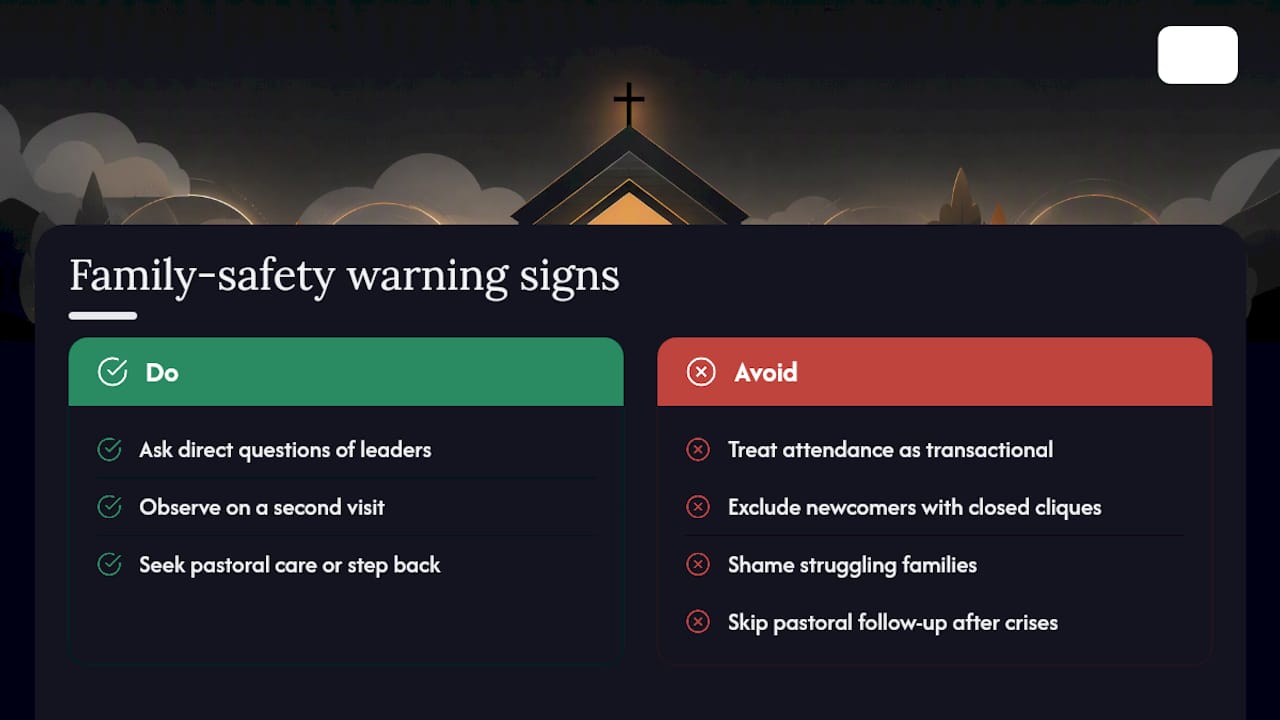
If you spot these, don’t assume the worst immediately. Ask direct questions of a pastor or elder, observe a second visit before deciding, and if concerns persist, seek pastoral care elsewhere or step back without guilt. A healthy church community will welcome the questions, not punish them.
What this looks like in practice at Divergent Church
In Canberra, a city shaped by universities and a constantly shifting population, we’ve leaned into integration rather than separate programming. Small groups that once split adults and kids into different rooms now share a meal together first. Mentoring pairs, an older family walking with a younger one, have replaced formal parenting classes that struggled to get consistent attendance. Inclusion work matters too: programs like Overflow Church’s Mosaic show what trained volunteers and respite nights can do for families with additional needs, and it’s shaped how we think about accessibility in our own gatherings. You can read more about the signs we look for and how we understand church itself as an everyday presence, not a weekend event.
What “church as family” means when the calendar clears
Theology is easiest to believe on a Sunday and hardest to live on a Tuesday, when a meal needs cooking and a teenager needs someone other than their parent to talk to. That’s where “church as family” gets tested, in the ordinary, unglamorous rhythms rather than the platform moments. If you want to try this without overthinking it, start smaller than you think you should: turn up to one small group or one family event and see who notices you left early.
— Josh
How Divergent Church can support your family or your gathering
There are venues available in Canberra for hosting family events, workshops, or community gatherings that support family-centred community. Whether you’re planning a parenting workshop, a mentoring meetup, or a larger family gathering, our spaces are built for exactly that kind of use.
The Auditorium suits larger family gatherings or community events at $70 per hour, the Seminar Room works well for parenting workshops or peer groups at $50 per hour, and the Board Room is a smaller option for leadership planning or parent peer groups at $25 per hour. If you’re looking to join an ongoing community rather than hire a space, our post on finding a supportive church community in Canberra is a good next stop. Ready to see what fits? Visit our booking page to check availability and lock in a date.
Sources
FAQ
What are the signs that a church family is unhealthy?
Common red flags include a consumer culture where no one notices if you leave, cliques that resist newcomers, moralising instead of pastoral support, and weak or absent follow-up after a family discloses a crisis. Loose or unscreened child safety practices are a serious warning sign on their own.
What are five signs of a healthy family?
Congregational research points to a Christ-centred focus, mutual love and respect, shared spiritual practices, resilience through hardship, and access to pastoral accompaniment such as parenting seminars or home visits. These dimensions tend to appear together rather than in isolation.
What are the core characteristics of a healthy church?
A healthy church typically shows genuine welcome that continues after the first visit, visible intergenerational involvement, structured pastoral follow-up, small groups that include families as families, and clear child safety practices. Divergent Church builds these into everyday rhythms like shared meals and mentoring pairs rather than as separate programs.
How long does it take to feel properly integrated into a church?
A workable pattern is welcome and connection within your first two visits, a pastoral response within two weeks of any disclosed need, and real integration into a small group or serving team within six to twelve weeks, based on NCLS practitioner insights. If none of that is happening after a few months, it’s worth asking why.
Does it cost anything to attend or join a family group at Divergent Church?
Attending Divergent Church and joining a small group or family gathering carries no cost, our community is supported through voluntary giving. If you’re hiring a space for your own family event or workshop, current pricing for the Auditorium, Seminar Room, and Board Room is listed on our booking page.
Recommended
Comments