
Book a Baptism in Canberra in 5 Steps with Divergent Church


Call or email a nearby Canberra church, or request a no-pressure local conversation through Baptise, to begin the baptism process. From there you will typically register, attend a preparation session, and agree on a date with the parish or church. Infants and children follow a parent-focused pathway, while adults usually move through a longer process known as RCIA.
TL;DR:
Most Canberra parishes hold baptisms during or after Sunday Mass, often sharing services with multiple families, requiring early booking and preparation.
Parents and godparents must meet specific requirements, such as practicing faith and supporting ongoing involvement, with adult baptism following the RCIA catechesis process.
The suggested offering for baptism typically ranges around $90 to cover costs like certificates, candles, and stoles, with various payment options available.
Preparation sessions usually include a discussion of baptism’s meaning, responsibilities, and ceremony details, with some parishes offering group classes or individual meetings.
Contacting the parish with clear details about the candidate’s age, preferred dates, and questions about logistics shortens the process and helps ensure proper planning.
Table of Contents
The step-by-step checklist for booking a baptism in Canberra
Baptism is a threshold moment, a public declaration that a life now belongs to Christ, and Canberra parishes have built simple, well-worn paths to get you there. Following them in order saves weeks of back-and-forth.
Find and contact your parish or church office by phone, email or website, and ask what their baptism process involves.
Complete the registration and consent form, which usually asks for the child’s or candidate’s name, date of birth, parents’ contact details and godparent information.
Book a date, understanding that many Canberra parishes hold baptisms during or after Sunday Mass, sometimes with several families sharing the same service.
Attend the required preparation session and confirm your godparents meet the parish’s expectations.
Reconfirm logistics closer to the date, including certificate collection, photography rules and where guests should gather.
The Catholic Archdiocese of Canberra and Goulburn notes that most parishes expect parents to make first contact, complete the paperwork and sit through preparation before a date is locked in. It is a modest process, but each step matters: it is the parish’s way of walking alongside a family before the water is even poured.
Who can be baptised and what Canberra churches usually ask for
Baptism is open to infants, children and adults, though the expectations differ by age and by household.
Infants and children need parental consent and what parishes call “a founded hope” that the child will be raised in the faith, meaning ongoing involvement in a church community.
Godparents are usually asked to be practising Christians who can genuinely support the child’s faith over time, not simply stand as a formality.
Adults typically follow the RCIA pathway, a structured season of catechesis rather than a single ceremony.
Documentation commonly includes the child’s full name and birth date, parents’ contact details, photo identification for adult candidates and any prior baptism or sacramental records.
Catholic Australia’s guidance confirms that parents, and sometimes godparents, are asked to attend preparation, whether in a group setting or a one-to-one meeting with clergy.
When and where baptisms usually happen in Canberra
Baptisms in Canberra follow fairly predictable rhythms, though every parish sets its own calendar.
Timing: many parishes hold baptisms during or immediately after Sunday Mass, while others set aside a specific monthly baptism service or a weekday appointment.
Venue: the parish church itself is the standard setting; anything outside it, an outdoor location or a family property, needs the parish’s approval first.
Shared services: it is common for two or three families to be baptised in the same service, so ask early if you would prefer a smaller or private ceremony.
This pattern is confirmed in the Archdiocese of Canberra and Goulburn’s planning guidance, which describes baptisms as happening “during or after Sunday Mass or at a separate arranged time” depending on the parish.
How to prepare: classes, checklists and practical items
Preparation sessions exist to give the moment its full weight, not to add red tape. Most cover similar ground.
Session topics typically include the meaning of baptism, the parents’ and godparents’ responsibilities, and a walkthrough of the ceremony itself.
Practical checklist: a completed registration form, a suggested offering, and either a white garment or a baptismal candle, which some parishes supply and others ask families to bring.
Guests and photography: check the parish’s photography policy in advance, and if you are planning a small celebration afterwards, confirm timing so guests are not left waiting outside.
Catholic Australia notes that some parishes run these sessions as short group classes, others as an individual conversation with a priest or deacon, so there is no single format to expect nationally.
Pro Tip: Ask your parish for a written checklist at your first contact. It saves a second phone call and helps godparents prepare too.
Costs and donations: what to expect and how to pay
Most parishes do not charge a fee as such. They suggest an offering that covers small practical costs, and families are expected to give what they reasonably can.
Typical suggested offering: one parish’s own registration form lists an example of $90 to cover the stole fee, the certificate and a baptismal candle, though amounts vary between parishes.
Payment methods: cash, card and bank transfer are all common; confirm which the parish office prefers when you register.
If money is tight, ask the office directly and discreetly. Parishes generally find a way to accommodate families, because the sacrament itself is never meant to be for sale.
Adult baptism through RCIA: timeline and commitment
For adults, baptism is rarely a single conversation and a Sunday morning. It runs through RCIA, the Rite of Christian Initiation of Adults, a season of catechesis that asks for real commitment.
Timing: many Canberra parishes begin RCIA around August or September, leading toward initiation at the Easter Vigil the following year.
Format: expect weekly or fortnightly gatherings that combine teaching, discussion and genuine formation within a parish community.
Next step: contact your parish or the diocesan office directly for current RCIA dates, since the seasonal start means early enquiry matters.
Resources from the National Catholic Education Commission inform much of the catechesis material parishes and schools draw on during this process, giving RCIA groups a shared foundation even as each parish shapes its own sessions.
How to contact a Canberra church and what to ask
A short, clear enquiry gets a faster, more useful answer than a vague one.
Open with the essentials: who is to be baptised, their age, and two or three dates that would suit your family.
Ask the direct questions: available dates, which forms are required, the suggested offering, godparent requirements, the photography policy and where the baptism will be officially recorded.
Follow through: submit the registration form soon after your first call, attend the preparation session, and reconfirm with the office roughly two weeks before the date.
If you would rather explore things first without committing to a parish, baptise.org.au offers a no-pressure way to talk with a local Christian about what baptism actually involves before you make contact with a church.
How Divergent Church can support people in Canberra seeking baptism
At Divergent Church, we see baptism as one household stepping fully into the family of God, and we want that step to feel guided rather than confusing. We offer pastoral conversations for anyone in Canberra weighing up baptism, whether for a child or for themselves, and can walk through what preparation and community life actually look like day to day. Our step-by-step guide to church involvement sets out how to make first contact and what typically follows.

We also make smaller rooms available for preparation conversations or family meetings ahead of a ceremony, alongside broader resources on finding Christian community in Canberra once the baptism itself is behind you.
A personal note on baptism and belonging
I have watched baptism draw whole households closer, not just to God, but to the people standing beside them in the water’s aftermath. It is a seed planted, and what grows from it is community, not just a certificate. If you are weighing this step in Canberra, reach out and plan your visit. We would be glad to talk it through with you.
— Josh
Planning a baptism gathering with Divergent Church
Once a date is set, families often want a warm space for preparation meetings or a small gathering afterwards, and that is where we can help practically. Our rooms are available to hire directly:
Auditorium, suited to larger gatherings, at $70 per hour.
Seminar Room, ideal for preparation meetings or smaller groups, at $50 per hour.
Board Room, a quieter option for one-to-one conversations, at $25 per hour.
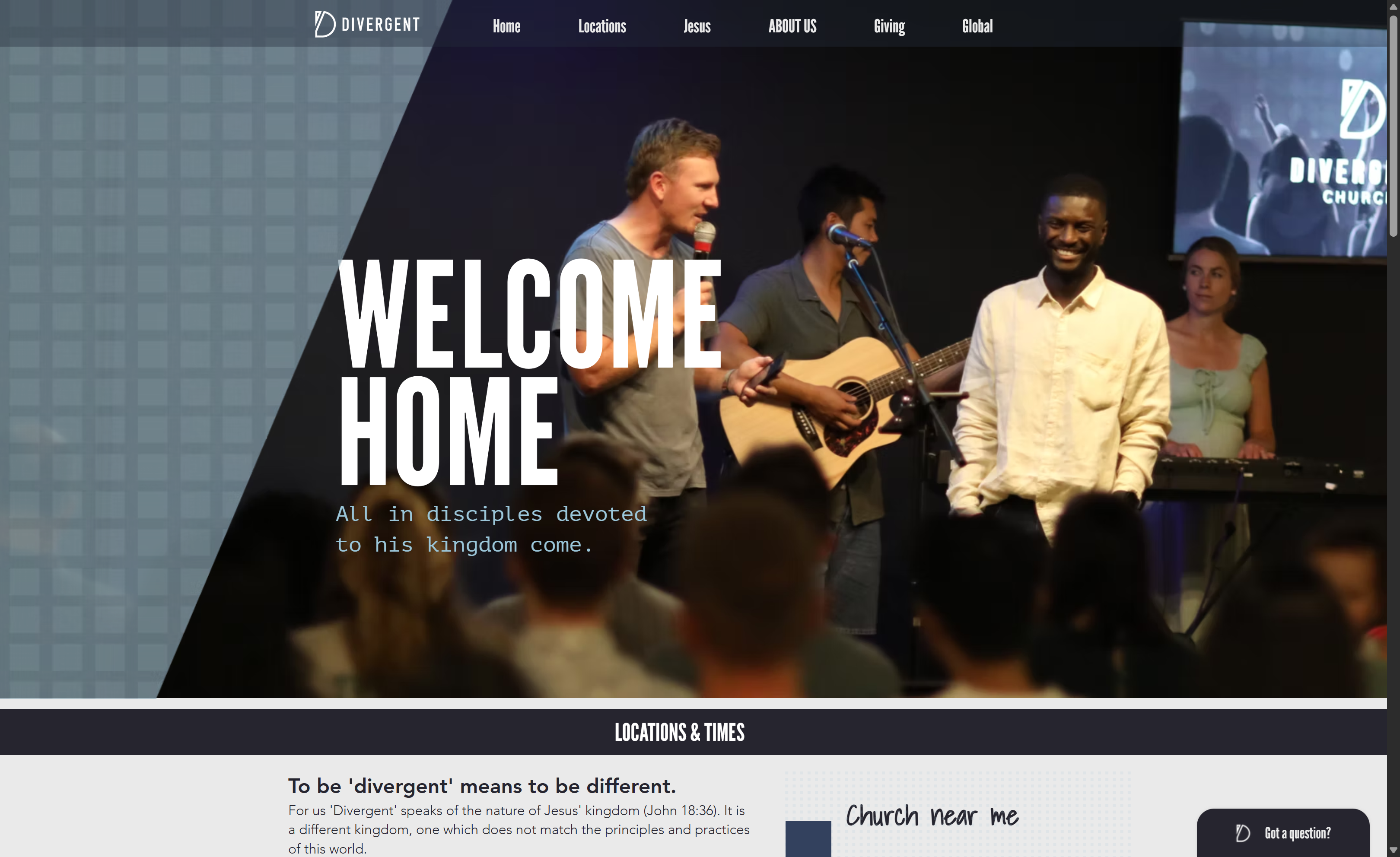
Divergent Church welcomes conversations about baptism, faith, and finding community in Canberra, whether you are ready to book a room or simply want to talk things through first. Check room availability and book online whenever you are ready to take the next step.
Sources
FAQ
How much does it cost to get baptised in Australia?
Most parishes do not charge a strict fee but suggest an offering. One Canberra parish’s own registration form lists an example of $90 to cover the stole fee, certificate and candle, though amounts vary by parish.
Can you just walk into a church and get baptised?
No, baptism generally requires registration, a conversation with the parish and, for most people, some preparation beforehand. Adults are usually guided through RCIA rather than baptised on the spot, as outlined by the Archdiocese of Canberra and Goulburn.
Can I get baptised without joining a church?
Baptism is a step into Christian community, so most churches expect some ongoing connection rather than a one-off event. If you want to explore what that looks like without commitment first, baptise.org.au offers a no-pressure conversation with a local Christian.
What are the requirements to be baptised?
For infants, requirements usually include parental consent and a genuine intention to raise the child in the faith, alongside godparents willing to support that. Adults typically need to complete RCIA, which involves catechesis and a period of preparation, as described by Catholic Australia.
Recommended
Comments