
Share Your Faith Without a Script: Short Steps for Everyday Christians


The simplest way to share your faith is to build a real relationship, pray for the person by name, listen more than you talk, and offer a short, honest word about what Jesus has done in your life when the moment opens up. Your job is to witness and invite, not to convert. As Divergent Church practises it, and as dialogical mission scholarship confirms, the goal is a genuine conversation, not a closed sale.
TL;DR:
Building genuine relationships and listening carefully are more effective than scripted approaches or polished arguments when sharing faith.
Regular habits like praying for specific individuals and noting conversation openings strengthen the ability to naturally introduce faith over time.
Sharing a brief personal testimony and a simple, jargon-free gospel summary helps make the message relatable and memorable.
Respectful sensitivity to objections and cultural contexts, along with patience and follow-up, are key to maintaining trust and openness.
Practicing conversation skills in community settings, such as workshops and small groups, greatly increases confidence and authenticity in faith sharing efforts.
Table of Contents
How to share your faith in five practical steps
You don’t need a theology degree or a script memorised word for word. You need a sequence you can actually follow when your heart is racing and the moment feels bigger than it is.
Pray first, and stay alert. Before you leave the house, ask God to open your eyes to one conversation that day. This single habit changes how you notice people.
Open with listening, not a pitch. Ask something real: “What’s been the hardest part of this year for you?” or “Do you have any kind of faith background?” Questions like these cost nothing and open far more doors than a rehearsed opener.
Share your story, briefly. Thirty to sixty seconds. What life looked like before, what changed, what hope looks like now. Then, if it fits, offer a short gospel outline in plain words.
Invite a next step. A coffee, a Sunday service, a short passage to read, a prayer together. Keep it small and specific rather than vague (“let’s catch up soon”).
Keep caring for the relationship, whatever they decide. InterVarsity’s practical guide makes the same point: authenticity and follow through matter more than eloquence.
Pro Tip: Keep a running list on your phone of two or three people you’re praying for by name. Reviewing that list weekly keeps evangelism personal instead of theoretical.
What to actually say: testimony and a gospel summary
A testimony works best in three beats: what your life looked like before, what changed, and what hope you’re living in now. Keep each beat to a sentence or two. Nobody needs your full biography. They need to see that faith made a real difference to a real person standing in front of them.
For the gospel itself, three lines usually do the work:
The problem: we’re all disconnected from God because of the choices we make, and we can’t fix that gap ourselves.
God’s remedy: Jesus lived, died, and rose again to close that gap and offer forgiveness freely.
The response: trusting him and turning your life toward him, starting today, not someday.
Christian jargon trips up more conversations than bad theology ever does. “Saved” becomes “rescued from a debt I couldn’t pay.” “Sin” becomes “the ways we fall short of who we’re meant to be.” “Blessed” becomes “genuinely grateful.”
Two quick scripts show how this plays out differently depending on who you’re talking to.

For a friend, over coffee: “Honestly, the last two years have been hard, but the thing that’s held me steady is my faith. Can I tell you what changed for me?”
For a stranger, after a small kindness: “I don’t want this to be weird, but I try to live generously because of my faith in Jesus. It’s meant a lot to me. Have you ever thought much about that stuff?”
Simple, memorable language reduces anxiety and helps you sound like yourself instead of a pamphlet.
What daily habits make faith sharing sustainable?
Faith sharing rarely fails because someone didn’t know enough theology. It fails because the relational muscle was never built. A short daily rhythm fixes that: two minutes of prayer for specific names, a line in a journal about one conversation you noticed, occasionally role playing a tricky question with a friend before it happens for real.
Listening is worth more than most Christians assume, and less than some hope. A large 2025 PNAS field experiment involving participants found that being genuinely listened to made the listener more likeable and increased how carefully the other person processed what was said. It did not reliably increase conversion. That’s not discouraging. It means listening earns you trust and a hearing, which is the actual prerequisite for any deeper conversation.
Humility keeps this whole approach honest. Ask yourself if you’re loving the person or managing an outcome. If it’s the latter, slow down.
Pro Tip: Ask before you pray with someone out loud. “Would it be okay if I prayed for you right now?” respects their space and almost always gets a yes.

How do you share faith with friends, family, or coworkers?
Context changes the pace, never the posture.
Friends: hospitality does the heavy lifting. A shared meal, a slow invitation to church, patience over months rather than one big conversation.
Family: your history together is loaded. Emotional wounds and old arguments surface fast, so lean on consistency and quiet witness over years, not a single “breakthrough” talk.
Workplace: keep it professional and authentic at once. Answer honestly when asked, avoid preaching during work hours, and let your character do a lot of the talking.
Public spaces: Australian law protects religious expression, but local councils can require permits for street preaching to manage public order, according to the Parliamentary Library. Check local rules before setting up anything formal in a public place.
Reading a room matters as much as reading a Bible verse. Adjust your language for someone from a different cultural or religious background instead of assuming shared vocabulary.
How do you handle objections and pushback?
Most objections aren’t really about theology. They’re about hurt, confusion, or a bad past experience with Christians. Respond to the person, not just the argument.
“All religions are basically the same.” “I get why it looks that way from outside. Can I show you what makes Jesus different to me specifically?”
“The church has hurt people I love.” “That’s real, and I’m sorry. Faith communities get this wrong far too often. Can we talk about that instead of past it?”
“I’m not interested.” “Totally fine. I’d rather stay friends than push this. The door’s always open if you change your mind.”
Anger or defensiveness. Don’t match the heat. Lower your voice, acknowledge the emotion, and step back from the topic rather than the relationship.
Knowing when to simply agree to disagree, warmly, keeps far more doors open than winning an argument ever does.
What comes after the first conversation?
A first conversation is rarely the whole story. It’s an opening.
Offer something small and specific: a coffee catch-up, an invite to a Sunday service, a short passage of Scripture to read together.
Suggest a group setting if a one-on-one feels too intense, church events or a small group let people explore at their own pace.
Follow up within a week with a low-pressure message: “Been thinking about our chat. No pressure at all, just wanted to check how you’re going.”
Keep the relationship the priority. If they say no to a next step, stay a friend anyway.
Hospitality repeated over time, meals, invitations, ordinary presence, opens deeper conversations far more reliably than a single event ever will.
How does Divergent Church practise sharing faith?
Josh writes on discipleship and everyday mission for Divergent Church, drawing on years of walking alongside people exploring faith for the first time in Canberra’s transient, university-heavy population. The community builds practice into its rhythms through small groups, hospitality-focused gatherings, and workshops where people rehearse real conversations before they need them. The community treats faith sharing as a skill formed together, not a solo performance, echoed in its broader vision of why Christian beliefs matter.
A conversation that didn’t go as planned
Josh once brought up faith with a workmate over lunch, expecting resistance, and got silence instead. The follow up question never came. Weeks later, that same workmate asked about it unprompted, over coffee, in his own time. Nothing about that first attempt looked like success. It just kept the door open. That’s usually the whole job: stay faithful, let go of the outcome, try again next week.
— Josh
Where to practise sharing your faith in Canberra
Reading about faith conversations only gets you so far. Divergent Church exists to help you rehearse them with people who won’t judge the awkward first attempts, through small groups, hospitality nights, and the Grow discipleship pathway built specifically for people learning to talk about Jesus without sounding scripted.
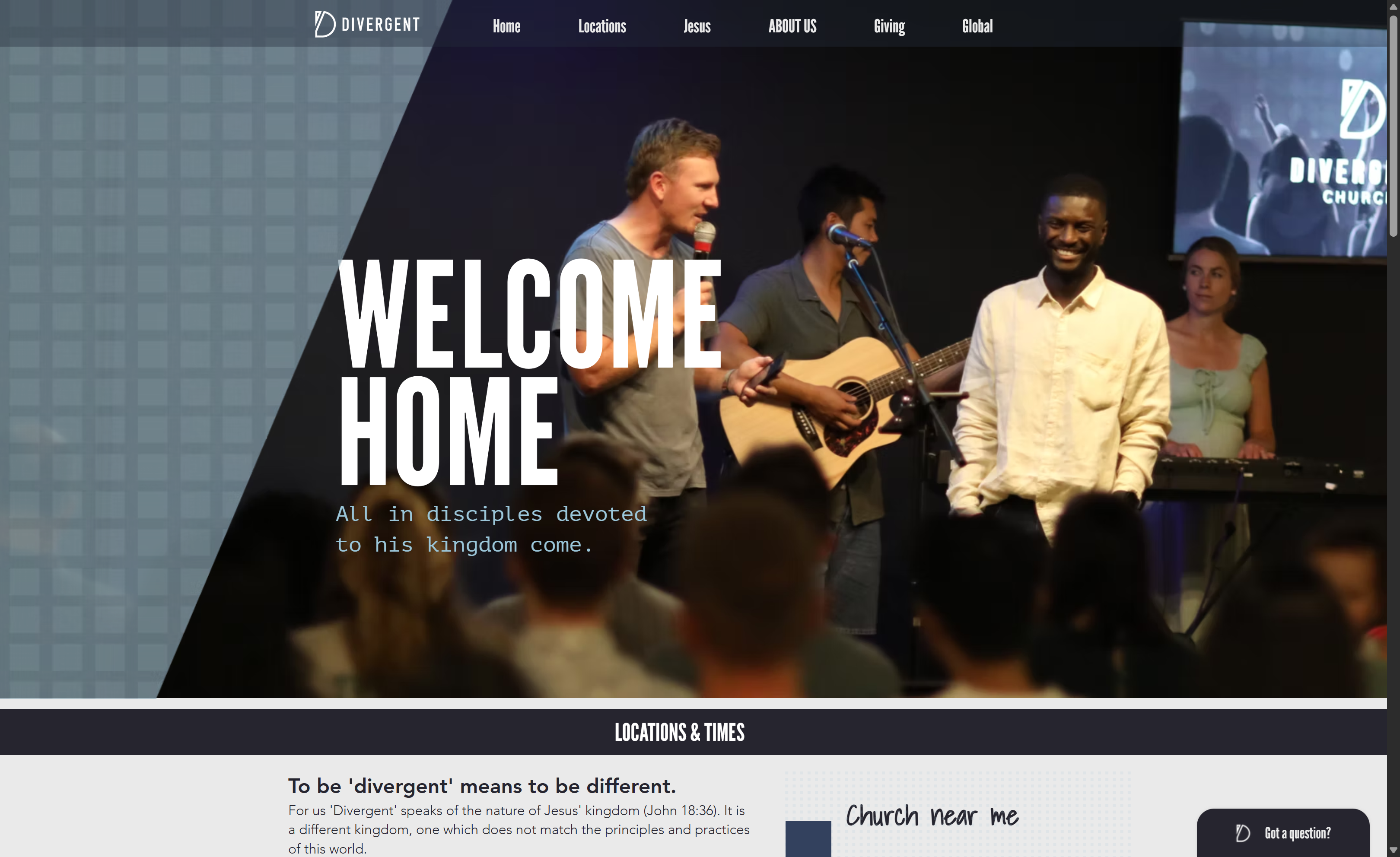
If you’re organising a workshop, training session, or an outreach gathering with friends who want to practise these conversations together, Divergent Church’s spaces are available to hire. The Seminar Room runs $50 per hour, ideal for a small group workshop, while the Auditorium at $70 per hour suits a larger gathering or public event. Check dates and book a space online to get your own practice session on the calendar this month.
Sources
The legal boundaries around public witness in Australia sit with the Parliamentary Library’s freedom of religion research, while broader civic context on inter-faith dialogue appears in parliamentary committee material. For the psychology of listening in persuasion, the 2025 PNAS field experiment remains the most rigorous data point available. On theology, dialogical mission scholarship reframes evangelism as mutual formation rather than one-sided persuasion, and grief-support guidance on showing sympathy offers useful cues for pastoral listening in hard conversations.
FAQ
What are seven ways to share your faith with others?
Pray for specific people, listen well before speaking, share a brief testimony, offer a plain-language gospel summary, extend hospitality, invite someone to a next step like church or Bible reading, and stay committed to the friendship regardless of their response. Divergent Church’s Grow groups exist to help you practise all seven with support.
How can we share our faith with others effectively?
Effectiveness comes from relationship and consistency, not a perfect argument. A 2025 PNAS study found listening builds trust and likeability even when it doesn’t guarantee a decision, which means your best move is often to ask good questions and stay present over time.
How do I share my faith without freaking out?
Start smaller than you think you need to. A single honest sentence about what Jesus means to you, offered in an ordinary conversation, carries more weight than a rehearsed speech, and practical guides on talking about Jesus confirm that authenticity beats polish every time.
How do I actually do faith sharing day to day?
Build it into small daily habits: pray for specific names, notice openings in ordinary conversations, and keep a short testimony and gospel summary ready in your own words. Small groups and events give you a low pressure place to rehearse this with others before you try it solo.
Does Divergent Church offer training in sharing faith?
Divergent Church supports people learning to share their faith through the Grow discipleship pathway, small groups, and hospitality-focused gatherings across Canberra and Queanbeyan. Spaces for workshops or outreach events can be booked online, with current room prices listed on the booking page.
Comments