
Pentecostal Worship Explained: What Happens and Why


Pentecostal worship is the gathered response of God’s people to the living presence of God, expressed with the whole person: voice, hands, body and heart. It is less formal and more openly expressive than many Christian traditions, because Pentecostals believe the Holy Spirit is present among them and that every believer is gifted to take part. The music, the raised hands, the spoken prayers and the waiting on God all flow from that conviction, not from a taste for atmosphere.
If you are in Canberra or Queanbeyan and have been invited to a service, or you are simply asking what these gatherings are about, this guide walks you through what you may see, what it means, and why it is done this way.
TL;DR
Pentecostal worship is participatory and embodied: singing, clapping, raised hands, spoken prayer, testimony and responses such as “amen” are all part of it.
It rests on the belief that the Holy Spirit is present and gives gifts such as prophecy, healing and tongues to ordinary believers, so many people contribute, not only the leader.
A typical Australian service moves from a block of sung worship, to a message from Scripture, to a time of prayer and response.
Worship is not entertainment and not a mood: it is devotion to Jesus that sends the church out into daily life and mission.
Practice varies from church to church, so the best way to understand it is to meet a local community in person.
Table of Contents
What Pentecostal worship is
The name comes from Pentecost, the day described in Acts 2 when the Holy Spirit was poured out on the first disciples in Jerusalem. Pentecostal churches take that event as more than history. They expect the same Spirit to be at work in the gathered church today. If the word Pentecost is new to you, our short guide on what Pentecost is gives the background.
Descriptions of the tradition tend to agree on its character. The BBC’s religion pages describe Pentecostal worship as less formal and more emotionally expressive than other Christian traditions, aimed at an experience of God’s presence, with people worshipping in body, heart and soul. They may dance, clap, give personal testimonies and answer a sermon with “amen” and “hallelujah”.
An Australian academic article in the Australasian Pentecostal Studies journal, published in December 2023, names four marks of Pentecostal corporate worship: it is experiential, embodied, narratival and missional. Put plainly:
Experiential: worship is expected to be a real encounter with God, not only a recital of beliefs.
Embodied: the body takes part, not only the mind.
Narratival: people tell what God has done, and the stories of Scripture shape the gathering.
Missional: worship does not end at the door. It sends the church into the city.
That last mark matters. Worship that stays inside the building has missed its purpose. For us, gathering and mission belong together, and neither is a add-on to the other.
What you might see and hear in a service
No two services are identical. Researchers at the Queensland Atlas of Religion built their 2025 description of a Pentecostal-charismatic Sunday from 27 services in 19 locations across South East Queensland, and they stress that local demographics, a church’s history, its mission focus and its values all shape how it worships. So treat the following as a common pattern, not a script.
Sung worship
The same Queensland study found that the praise-and-worship section usually runs from about 20 minutes to an hour, generally with no more than four songs. Songs are often repeated, which lets people stop following lyrics and simply sing to God. Many Australian Pentecostal churches write their own songs; ABC News reported in 2019 that music is the engine of the megachurch model, and some of it is now sung around the world.
One point must be said clearly: this is not a concert. People are not there to watch a band. The congregation is the choir, and the band serves them as they sing to Jesus.
Spoken prayer and responses
You may hear several people pray aloud at once, someone call out a word of praise, or a brief testimony of answered prayer. A South African peer-reviewed article on Pentecostal worship describes it as an orchestra of colourfully diverse expressions, rather than one leader backed by onlookers. Listeners respond to the preaching with “Amen” and “Hallelujah”, which is simply agreement said out loud.
If you want to see what prayer offered with confidence looks like, this piece on praying boldly with faith is a good companion to what you will hear in the room.
The message
The sermon is a central moment, not a pause between songs. It opens the Scriptures and calls the congregation to respond. In the Queensland description, a short message follows the worship, and the service closes with a prayer in which people are invited to raise a hand to recommit their lives or to choose a life with God. Newcomers are invited to a welcome point afterwards.
The response at the front
Many Pentecostal churches end with an invitation to come forward for prayer. A chapter on altar liturgy in the Routledge Handbook of Pentecostal Theology argues that this response forms the centre and summit of Pentecostal worship. It also notes that most Pentecostal churches have no physical altar. The altar is wherever people meet God, whether that is walking to the front or gathering in a place of ministry. Nobody is made to do this. It is an invitation.

Why it looks the way it does
Every believer is gifted
The single biggest reason is theological. Pentecostals hold that the Holy Spirit gives gifts to all believers, so everyone may contribute to singing, praying, prophesying and decisions. The South African study also observes that testimonies, modelled on biblical narratives, take precedence over abstract doctrine, and that the tradition has been shaped in part by African and African American worship. In this view there are no spectators in a service. Every person is part of what God is doing.
The Psalms give permission to be loud
The 2023 Australasian Pentecostal Studies article explains that Pentecostals have long used the Psalms as an entry point into worship. They cite the Psalms to support shouting, leaping, dancing, clapping and lifting hands, with Psalm 100 as a model for ordering corporate singing. The Psalms call God’s people to sing, shout and clap, and Pentecostals take that as written.
Bodies belong in worship
Some Christian traditions have encouraged movement in worship and others have discouraged it. A 2025 article in The Christian Citizen notes that Pentecostals, along with some others, embraced movement as an expression of worship, and points to 2 Samuel 6:14, where David danced before the Lord with all his might. So when you see someone dance or kneel or lift both arms, you are seeing a long biblical pattern, not showmanship.
The Holy Spirit and the gifts
Pentecostals expect the Spirit to move during worship through what Scripture calls spiritual gifts: healing, prophetic words, encouragement, discernment and tongues. The same Australian article points to 1 Corinthians 12:7-11 and Romans 12 as the biblical foundation, and says that a mark of the tradition is making time in the service to wait expectantly on the Holy Spirit, sometimes called tarrying.
Speaking in tongues
The Pew Research Center’s glossary defines speaking in tongues as ecstatic worship or prayer in unintelligible speech, regarded as a gift of the Holy Spirit and also called glossolalia. In Pentecostal teaching it is linked to the baptism in the Holy Spirit, which follows conversion. The Australian journal article describes tongues as the initial evidence of that baptism.
If you hear it for the first time, it can be startling. Remember that Acts 2 itself records the first disciples speaking in other tongues. The church that wrote and preserved that account has always held that the Spirit is not tame.

Rapture without chaos
An academic study of Pentecostal worship draws on the work of Gause to describe an ecstatic quality in worship: surges of praise that cannot be held back without quenching the Spirit, in which worshippers remain aware but sense God’s presence powerfully. Scripture also asks that all things be done decently and in order (1 Corinthians 14:40). Healthy Pentecostal worship holds both: freedom, and the love that keeps order for the sake of others.
What does “charismatic” mean?
You may meet the words charismatic and Pentecostal used almost interchangeably. They overlap, but they are not the same. The Pew Research Center uses “charismatic” for Christians who practise the gifts of the Holy Spirit but do not belong to historical Pentecostal denominations, many of them in Catholic, Orthodox, mainline Protestant or evangelical churches.
So charismatic worship usually means worship that expects the gifts of the Spirit, whatever the church’s label. The Queensland Atlas of Religion researcher also observes that the modern look of a Pentecostal service, with contemporary songs, sound, lighting and multimedia, has crossed denominational lines. A church can look Pentecostal without holding Pentecostal belief, and a church can hold it in a plain room with a single guitar. The substance is the expectation of the Spirit’s presence and gifts, not the stage.
How it differs from other evangelical worship
Pentecostals are evangelical in the historic sense: they hold to the authority of Scripture, the death and resurrection of Jesus, and the need for new birth. The difference is emphasis and expectation.
Many other evangelical services | Pentecostal services | |
Role of the Spirit | Affirmed, often as the one who illuminates Scripture | Expected to act openly in the gathering through gifts |
Order of service | Often fixed and led from the front | More room for response, prayer and spontaneous contributions |
Prayer for gifts | Less often a scheduled part of the service | Time is made to wait on the Spirit and pray for gifts |
Body in worship | Often restrained | Hands, clapping and movement are common |
Tongues | Not typically practised in the gathering | Held as a gift and as evidence of Spirit baptism |
This is a general pattern. As the Queensland research shows, each church is shaped by its own history and context, so you will find variation in both camps.
Is it all about feeling?
No. The aim of Pentecostal worship is not a feeling, and it is not self-improvement or a lift to your week. Worship is the right response of creatures to the Creator and of the redeemed to the Saviour. Emotion may come, as it does when anyone meets someone they love. But the Liturgical Conference’s introduction notes that Pentecostal worship centres on direct experience of God’s power through a full-body, participatory engagement with God, practised through established styles of music and prayer that help people let go in God’s presence. The surrender is to God, not to a mood.
That is also why discipleship cannot be reduced to attending services. The Sunday gathering shapes a people who then live under Jesus on Monday: in the lecture theatre, the office, the neighbourhood and the home. A worship that never became obedience would not be the worship of Scripture.
Our view: why we worship as we do
We are a Christian church in Canberra committed to forming disciples of Jesus. We are not simply a Sunday gathering. Worship is where a people shaped by Scripture and centred on Jesus bring everything they are before God, and then carry that worship out into workplaces, universities, neighbourhoods and the lives of people who are new to this city. When we sing, pray and wait on the Spirit together, we are not putting on a program. We are doing what the church has done since Pentecost: asking the risen Jesus to be present among his people, and expecting him to be. The gifts of the Spirit are for the building up of the church, and they send us outward, because mission is not an optional extra for a church. It is the reason the Spirit was given. We also believe the historic Christian faith is true. Worship is not a way to explore a range of equally valid ideas. It is the right response to the God who has made himself known in Jesus Christ, crucified and risen. You are welcome to come with honest questions. We would rather you asked them in the company of people who are seeking to follow him. If you want to read more of how we think about this, see why we worship as we do. Josh
Visiting a Pentecostal service in Canberra
Canberra’s churches serve a city of universities, public service workplaces, young families and many people who have recently arrived. If you are visiting a Pentecostal service for the first time, a few simple things help:
Come as you are. Nobody expects you to know when to stand, clap or raise your hands. You can sit, listen and watch.
Expect to be spoken to. Many services close with prayer and an invitation to meet someone afterwards. Take it up if you wish.
Bring your questions. The sermon is open Scripture, and a church that believes it will not mind you asking about it.
Notice what happens after the service. Worship is meant to form a community, so see whether people know one another and care for the city around them.
If you want to read more about what the label means, our guides on what a Pentecostal church is and what it means to be a Pentecostal church go deeper into belief and practice.
Come and see for yourself
We are a Christian church in Canberra, serving Canberra and Queanbeyan, and we would be glad to welcome you. Our page on Pentecostal church in Canberra explains who we are and what a gathering is like, and you can find everything else from our home page.
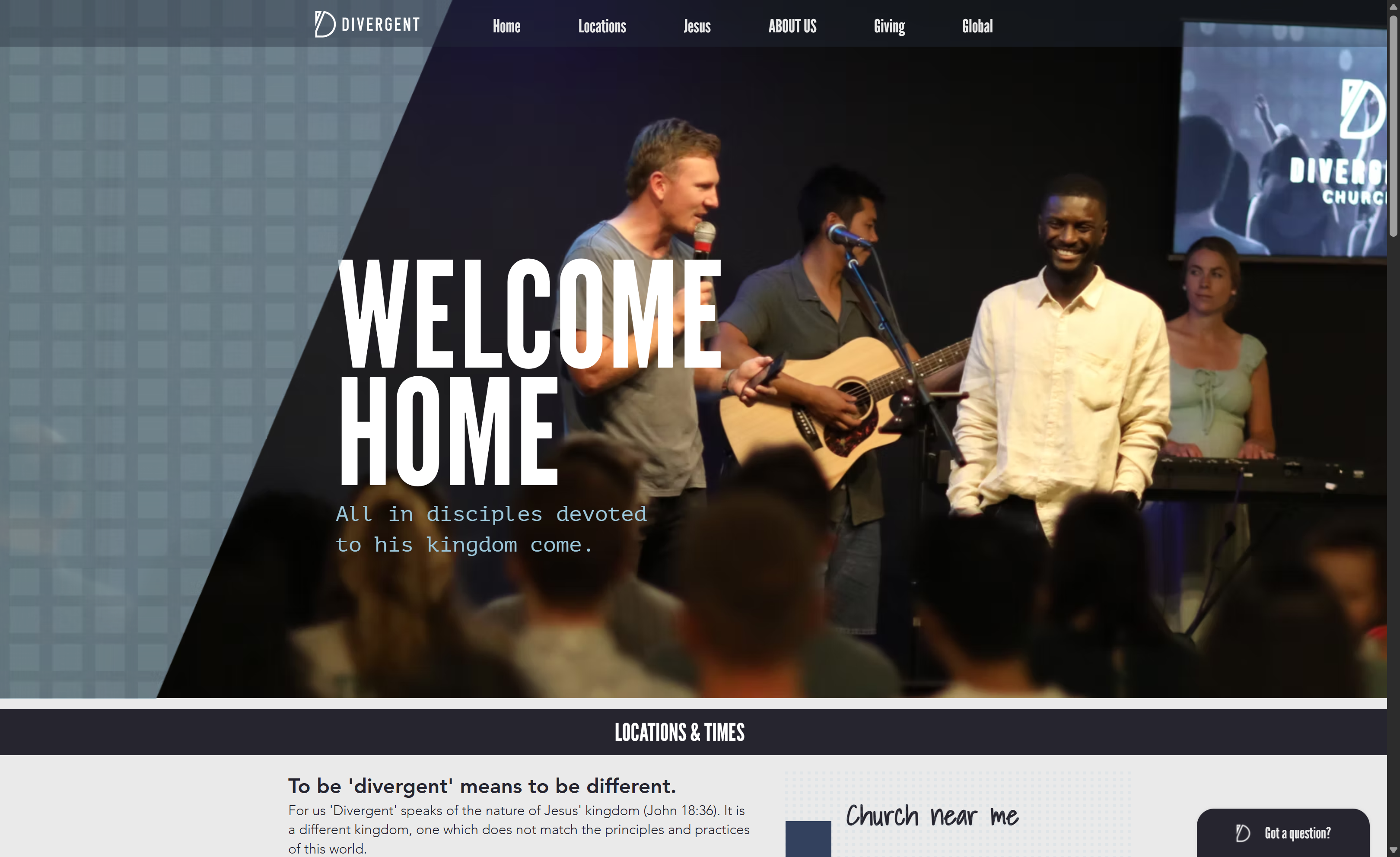
Whether you come as a believer looking for a church home or as someone asking whether any of this is true, you are welcome to sit, listen and ask.
FAQ
What is Pentecostal worship in simple terms?
It is worship that expects the Holy Spirit to be present and active in the gathering. It involves singing, spoken prayer, testimony, the preaching of Scripture and a time of response, with the whole congregation taking part. The body is included as well as the mind, so you may see raised hands, clapping and movement.
Why do Pentecostals dance or move during worship?
They follow biblical examples such as David dancing before the Lord in 2 Samuel 6:14, and the Psalms that call God’s people to clap, shout and lift their hands. Movement is an expression of devotion, not a performance. Practice varies, and nobody is required to move.
Is charismatic worship the same as Pentecostal worship?
Not exactly. Charismatic usually describes Christians who practise the gifts of the Spirit in a variety of church traditions, while Pentecostal refers to churches within the historical Pentecostal movement. The worship can look similar, and both expect the Spirit to give gifts to the church.
What does speaking in tongues mean?
It is prayer or praise in a language the speaker has not learned, understood in Pentecostal teaching as a gift of the Holy Spirit, first seen at Pentecost in Acts 2. Many Pentecostals regard it as the first sign of being baptised in the Holy Spirit. It is not forced on visitors.
Do I have to join in when I visit?
No. You can sit quietly and take everything in. Most Pentecostal churches are used to visitors who are curious or unsure, and you are welcome to speak to someone afterwards.
Sources
Recommended
Comments