
Start with the Cross: A Christian Answer to the Problem of Evil

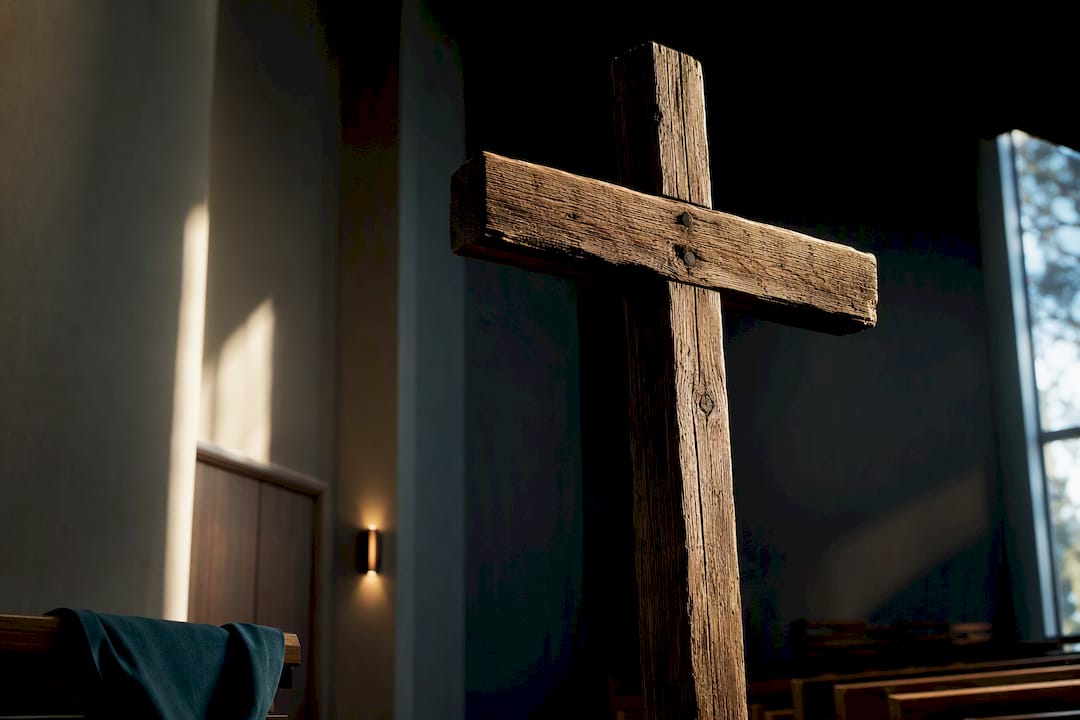
Christianity does not solve the problem of evil like a maths equation. It answers it with a person: God entering human suffering in Jesus Christ, defeating evil at the cross, and promising a restored creation where every tear is wiped away. The philosophical arguments matter, and Scripture gives real resources for the questions they raise, but the Christian claim is thicker than any single theory, resting on the cross, the empty tomb, and the honest practice of lament in the meantime.
TL;DR:
Alvin Plantinga’s free-will defence shows that God’s existence is not logically incompatible with some genuine free choices leading to evil, addressing the logical problem of evil.
William Rowe’s evidential argument suggests that specific instances of pointless and intense suffering reduce the likelihood of God’s existence, emphasizing probabilistic challenges.
Christian responses pair multiple theodicies, such as free will, soul-making, and the cross, to handle different types of evil, especially horrendous and animal suffering.
Scripture addresses suffering as a lived experience, with Job’s dialogues, lament Psalms, and Jesus’ own suffering emphasizing honesty, divine presence, and ultimate future restoration.
Pastoral care prioritizes lament, presence, and practical support over quick explanations, recognizing that different moments require different responses rather than uniform answers.
Table of Contents
What is the problem of evil in Christian theology?
The problem of evil asks a blunt question: if God is all-powerful and perfectly good, why does evil exist at all? Philosophers have sharpened this into distinct categories, and knowing them helps you see exactly what a Christian response needs to address.
Moral evil is suffering caused by the choices of moral agents. Murder, betrayal, cruelty, the quiet unkindness of a friend who abandons you when you need them most. It flows from human will.
Natural evil covers suffering that arises from the physical world itself. Earthquakes, cancer, drought, a child born with a condition nobody chose. No human hand pulls the trigger.
Theologians and philosophers also draw a technical distinction that shapes almost every serious book on the subject:
A theodicy attempts to explain why God permits evil, offering a positive account of God’s reasons.
A defence, by contrast, only tries to show that God’s existence is logically compatible with evil’s existence, without claiming to know God’s actual reasons.
That difference matters more than it first appears. A defence can succeed simply by showing a scenario is possible; a theodicy has to convince you it is probable or true. Alvin Plantinga’s famous argument, discussed below, is technically a defence, not a full theodicy, and that distinction is precisely why it does the philosophical job it does.
Two more terms worth knowing before you go further: horrendous evils (a term from philosopher Marilyn McCord Adams) describes suffering so extreme it seems to threaten the very meaning of the sufferer’s life, genocide, prolonged torture, the abuse of a child. Gratuitous suffering refers to pain that appears to serve no purpose whatsoever, no lesson learned, no character built, nothing redeemed. These two ideas sit at the centre of the hardest objections you’ll meet, and any honest Christian response has to face them rather than talk around them.

What are the logical, evidential, and epistemic versions of the argument?
Not every version of the problem of evil makes the same claim, and lumping them together is where a lot of casual debate goes wrong. Three distinct formulations dominate the philosophical conversation.
The logical problem of evil argues that God’s existence is strictly incompatible with the existence of any evil at all. If God is omnipotent, omniscient, and perfectly good, the argument runs, evil simply could not exist. This was once the dominant sceptical argument, but most philosophers, theist and atheist alike, now consider it largely defused. The reason is Alvin Plantinga’s free-will defence, which shows it is logically possible for God to create a world with genuinely free creatures and for some of those creatures to choose evil, meaning God and evil are not strictly contradictory after all, as the Stanford Encyclopedia of Philosophy’s entry on theodicies explains.
The evidential (or probabilistic) problem of evil, most associated with philosopher William Rowe, makes a weaker but more stubborn claim. Rowe does not argue evil makes God’s existence impossible. He argues that specific instances of intense, apparently pointless suffering make God’s existence less probable than it would otherwise be. Rowe’s classic case involves a fawn dying slowly and agonisingly in a forest fire, with no discernible good coming from its suffering. The Stanford Encyclopedia of Philosophy’s entry on evil sets out how this evidential framing shifted the whole debate from “is theism contradictory?” to “is theism still credible given this evidence?”
The epistemic dimension asks a quieter but no less serious question: even where a philosophical answer exists, does the sheer weight and randomness of suffering erode a reasonable person’s confidence that God is good? This is less an argument to be refuted and more a pressure to be lived with, and it is the version most people actually feel at 3am beside a hospital bed.
Understanding which version you are wrestling with changes what kind of answer will actually help. A logical challenge needs a defence. An evidential challenge needs something closer to a cumulative case. An epistemic ache needs presence, not proofs.
What are the main Christian theodicies?
Christian thinkers have not offered one theodicy. They have offered several, each illuminating a different facet of the problem, and most serious theologians now argue you need more than one held together.
The free-will theodicy, developed most rigorously by Alvin Plantinga, argues that a world containing free creatures who can genuinely choose good or evil is more valuable than a world of programmed automatons who never sin because they cannot. Moral evil, on this view, is the price of a good God giving real freedom to real creatures. It explains moral evil convincingly. It struggles far more with natural evil, earthquakes and cancer don’t choose anything, which is why most theologians pair it with other accounts rather than leaning on it alone.
Soul-making theodicy, associated with theologian John Hick, reframes the world not as a paradise gone wrong but as a “vale of soul-making,” a training ground where struggle, resistance, and even suffering forge character, courage, and compassion that could not otherwise exist. Critics point out that this account sits uneasily beside horrendous evils. A child’s cancer rarely “builds character.” It just devastates a family. Hick’s model works better as a partial account of ordinary hardship than as a full answer to atrocity.
Greater-good and hybrid theodicies don’t try to find one master explanation. Instead, they argue that different instances of suffering may serve different purposes, some building character, some flowing from misused freedom, some simply beyond present human comprehension, and that a plausible response draws on whichever explanation fits the case. The Stanford Encyclopedia’s survey of theodicies notes that most contemporary theists now favour these multipronged approaches over any single grand theory, precisely because no one theory covers every case of suffering in the world.
The privation view, rooted in Augustine of Hippo, argues that evil has no independent existence of its own. It is not a “thing” God created alongside goodness; it is a privation, a corruption or absence of the good that should be present, the way rust is not a substance but a corrosion of iron, or blindness is not a “thing” but the absence of sight. This metaphysical framing doesn’t explain why God permits corruption to spread, but it does block the idea that evil is some rival power co-equal with God, which matters for how Christians understand God’s ultimate sovereignty over a broken world.
The eschatological and cross-centred answer is where Christian theology stops competing with philosophy on its own terms and offers something philosophy alone cannot. Rather than a tidy explanation, Christianity offers an event: God, in Jesus, entering the worst of human suffering, mockery, torture, abandonment, death, and absorbing it rather than merely explaining it. Isaiah 53 prophesies a suffering servant “despised and rejected,” and the Gospel accounts of the crucifixion show that prophecy fulfilled in agonising detail. The Gospel Coalition’s treatment of this “thick” answer argues that the incarnation and atonement, followed by the promised restoration in Revelation 21:1-4, together form the most distinctively Christian resource in this whole debate, because no other worldview claims its God bled.
Pro Tip: Don’t try to answer every instance of suffering with the same theodicy. A grieving friend rarely needs a lecture on free will; they need Job’s friends to sit in silence before they open their mouths (Job 2:13). Match the explanation to the moment, and know when the moment calls for presence rather than argument.
How does Scripture actually address suffering?
The Bible does not treat suffering as an abstract puzzle to be solved in a seminar room. It treats it as lived experience, and it gives its characters permission to be furious, confused, and grief-stricken with God before it gives them resolution.
Job remains the Bible’s most sustained engagement with the problem. Job loses his children, his wealth, and his health, and for thirty-seven chapters he argues with God, refusing easy answers from his well-meaning friends. God’s eventual response (Job 38 to 41) does not explain why Job suffered. It reorients Job toward the vastness of divine wisdom and the limits of human perspective, which is a strange kind of answer, but it is the one the book actually gives, and generations of readers have found it strangely satisfying rather than evasive.
The Psalms of lament (roughly a third of the Psalter) give Israel, and the church after it, an entire liturgical vocabulary for grief. Psalm 22, Psalm 88, Psalm 13, these are prayers that begin in despair and don’t always resolve into tidy praise by the final verse.
Jesus’ own suffering is the theological hinge. He wept at Lazarus’s tomb (John 11:35), cried out in Gethsemane, and quoted Psalm 22’s cry of abandonment from the cross itself, “My God, my God, why have you forsaken me?” This is not a distant deity issuing explanations from a safe height. It is God experiencing exactly the abandonment humans fear most.
Paul’s letters offer two crucial motifs. In Romans 8:28, Paul insists God works all things together for good for those who love him, a promise about ultimate direction, not a claim that every individual event is itself good. A few verses earlier, Paul describes creation itself “groaning” under corruption while awaiting redemption (Romans 8:22), which acknowledges rather than minimises the world’s brokenness.
Revelation’s closing vision promises a day when God “will wipe every tear from their eyes,” when death, mourning, crying, and pain will be no more (Revelation 21:1-4). This is not wishful thinking bolted onto the end of the story; it is the narrative’s destination, the point every earlier chapter has been travelling toward.
A caution belongs here too. Christians have sometimes weaponised these texts, telling a suffering person their pain is punishment, or that enough faith would have prevented it. That reading collapses under the weight of Job itself, where God explicitly rebukes Job’s friends for assuming his suffering proved his guilt (Job 42:7). Popular apologetic resources rightly warn that simplistic explanations, God is testing you, God is punishing you, tend to wound rather than heal, and a “thick” biblical reading resists that shortcut deliberately.
How should a church respond pastorally to suffering?
Good theology answers questions. Good pastoral care sits with people before they’re ready for answers, and knowing the difference is one of the most practical skills a Christian community can develop.
Practise lament before you reach for explanation. The Psalms model this directly: name the pain honestly to God, resist the urge to resolve it prematurely, and let grief have its own voice in worship, not just private prayer.
Avoid platitudes that sound spiritual but land as dismissal. “Everything happens for a reason” and “God needed another angel” comfort the speaker far more than the sufferer. Pastoral resources consistently note that refusing cheap explanations and simply staying present strengthens trust far more than any tidy answer ever could.
Offer practical accompaniment, not just prayer. Meals delivered, childcare arranged, a phone call at the right hour, these carry theology in action even when no one says a word about theology.
Know when to signpost professional support. Grief, trauma, and depression sometimes need a counsellor or a doctor alongside a pastor, and recognising that boundary is wisdom, not a failure of faith.
Pro Tip: If you don’t know what to say to someone suffering, say that. “I don’t have an answer, but I’m not going anywhere” is more biblically honest than any borrowed platitude, and it echoes exactly what Job’s friends got right before they opened their mouths.
Small groups built around honest conversation, rather than performative certainty, tend to be where this actually happens. Divergent Church’s six week plan to turn doubt into stronger faith exists for precisely this reason, giving people structured space to ask hard questions without being rushed toward resolution. For congregations building longer-term capacity, practical guidance on church and mental health sets out how communities can support people through crisis rather than merely react to it.
Do horrendous evils and animal suffering break the Christian answer?
The hardest objections deserve a straight answer, not a dodge, and this is where a lot of popular apologetics gets uncomfortably thin.
Horrendous evils, genocide, the prolonged torture of a child, suffering so extreme it seems to poison the very meaning of a life, press every theodicy to its limit. Free will explains why humans can choose atrocity; it does not make that atrocity feel less devastating or more bearable to its victims. Soul-making theodicy falters almost completely here, since nobody’s soul is “made” better by genocide.
The most defensible Christian replies don’t pretend this is easy:
The greater-good appeal argues some goods (courage, solidarity, moral transformation) can only emerge through struggle against genuine evil, though most theologians admit this explanation feels thin against the very worst cases.
The limits of human perspective, echoing God’s response to Job, acknowledges that finite creatures may simply lack the vantage point to see how present suffering connects to ultimate purposes.
The uniqueness of the cross offers something the other replies cannot: not an explanation of horrendous evil, but a claim that God has personally absorbed it. Jesus experienced torture, mockery, and abandonment, which doesn’t answer why, but it answers whether God is absent, and for many sufferers, that question matters more.
Animal suffering raises its own puzzle, since animals lack the moral agency that free-will theodicy depends on and gain nothing resembling soul-making from a predator’s attack. Some theologians locate animal suffering within a fallen created order awaiting the restoration Paul describes in Romans 8, others simply admit this remains one of the least resolved corners of the whole debate.
Honesty matters more than tidiness here. A Christian response that claims to fully resolve horrendous evil is overselling itself, and mystery, held alongside hope rather than instead of it, remains a theologically respectable place to stand.
Where do scholars still disagree on the problem of evil?
If you want to move past introductory treatments, the live debate sits between two figures and a growing consensus about method.
Alvin Plantinga’s free-will defence is widely credited with defusing the strict logical problem of evil, since it only needs to establish possibility, not actual explanation, and most philosophers, including many atheist ones, now concede the logical argument largely fails because of it.
William Rowe’s evidential argument picks up where Plantinga’s defence leaves off, arguing that specific, apparently gratuitous suffering still counts as genuine evidence against theism, even if it doesn’t prove theism false outright. This shifted the debate onto probabilistic, sometimes explicitly Bayesian, terrain, weighing how likely God’s existence remains given particular horrors, rather than asking a yes-or-no logical question.
Hybrid theodicies have become the dominant scholarly approach precisely because Rowe’s evidential challenge is harder to answer with a single theory. The Stanford Encyclopedia’s survey concludes that combining free will, soul-making, and eschatological hope gives a more resilient answer than betting everything on one account.
For readers wanting to go deeper, the Stanford Encyclopedia of Philosophy’s entries on theodicies and on evil offer the most rigorous academic starting point, while C. S. Lewis’s The Problem of Pain remains the most read accessible bridge between philosophy and pastoral theology, decades after it was written.
How does Divergent Church support people wrestling with suffering?
A Christian church exists as a Scripture-centred, cross-focused community precisely because questions about suffering deserve more than a Sunday soundbite. Such communities are not simply gatherings to attend; they are shaped around honest wrestling, shared life, and mission in local contexts.
If you’re carrying a question about suffering that feels too heavy for small talk, you don’t need to sort it out alone first. Our faith and doubt resource gives structured space to bring hard questions into community rather than carry them in isolation, and our approach to welcoming doubt and curiosity means you won’t be rushed toward a tidy answer you don’t yet believe. If you’d like to gather people for a study series or a pastoral conversation group, our Seminar Room is available from $50 per hour, a practical space for exactly this kind of honest, unhurried conversation.
A thick answer beats a thin one
Most popular treatments of this topic pick a lane. They either go full philosophy, Plantinga, possible worlds, modal logic, and leave the grieving reader cold, or they go full pastoral care and quietly avoid the evidential argument’s actual teeth. Both moves are a mistake. Rowe’s fawn burning in a forest fire is a real philosophical problem, and no amount of lament liturgy makes it disappear. But Plantinga’s defence, on its own, has never comforted anyone at a funeral either.
What the evidence and reasoning in this article actually support is a layered answer: hold the free-will defence for moral evil, hold soul-making loosely for ordinary hardship, admit mystery for horrendous evils and animal suffering, and let the cross carry the weight none of the philosophical categories can. That is not evasion. It is proportion. The conventional advice, pick one theodicy and defend it to the end, underestimates how differently these arguments actually function. Read the philosophy if the intellectual challenge is what’s keeping you up. Sit in a lament psalm if the loss is what’s keeping you up. Most people need both at different hours of the same week.
— Josh
Sources
The philosophical backbone of this article draws on the Stanford Encyclopedia of Philosophy’s entries on theodicies and on evil, the two most rigorous academic starting points for Plantinga’s defence and Rowe’s evidential argument respectively. On the pastoral and biblical side, The Gospel Coalition’s article on Christianity’s thick answer and D. A. Carson’s sermon on suffering shaped the cross-centred framing throughout, alongside The Bible Well’s pastoral treatment of suffering. If loss feels immediate right now rather than academic, Divergent Church’s page on facing life’s crossroads was written for exactly that moment.
FAQ
What is the problem of evil in Christian theology?
It’s the challenge of reconciling an all-powerful, perfectly good God with the existence of evil and suffering, split into moral evil (caused by human choice) and natural evil (disasters, disease, and the like).
Did Alvin Plantinga solve the problem of evil?
Plantinga’s free-will defence is widely credited with defusing the strict logical version of the problem by showing God and evil are not strictly contradictory, though most scholars agree it doesn’t fully answer Rowe’s evidential argument, which deals with probability rather than logical possibility.
What is William Rowe’s evidential argument?
Rowe argued that specific instances of intense, seemingly pointless suffering, like a fawn dying slowly in a forest fire, make God’s existence less probable, even if they don’t make it logically impossible, as detailed in the Stanford Encyclopedia’s entry on evil.
How does the cross answer the problem of evil?
The cross doesn’t explain every instance of suffering, but it shows God personally entering human suffering in Jesus and defeating evil through the resurrection, which Christian theologians present as the central and distinctively Christian resource in this entire debate.
What does the Bible say about suffering and lament?
Scripture gives suffering an honest voice, particularly through Job’s questioning of God and the Psalms of lament, and points toward final restoration in Revelation 21, where God promises to wipe away every tear.
Recommended
Comments