
The role of elders in church: a biblical guide


Elders are biblically appointed, spiritually mature leaders whose core work is to shepherd, oversee, and teach God’s people under Christ the Chief Shepherd. The role of elders in church is not administrative convenience — it is a sacred calling woven through the New Testament from Acts to the Pastoral Epistles. Three principal duties are at the heart of it: pastoral shepherding of individual members (1 Peter 5:1–4), corporate oversight and governance of the congregation (1 Timothy 3), and teaching that includes doctrinal protection to guard the flock from error (Titus 1:9). At Divergentchurch in Canberra, these same biblical patterns shape how leadership is practised in the rhythms of everyday city life.
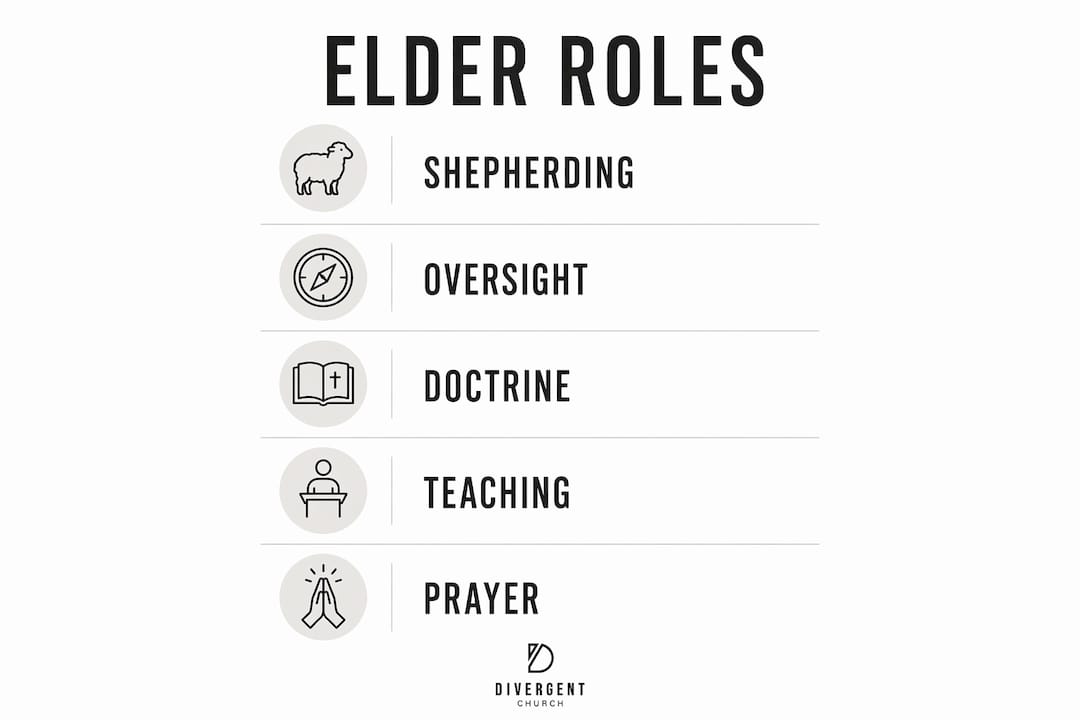
Shepherding — caring for souls, visiting the sick, and walking with people through crisis and growth
Oversight — guiding the direction, finances, and health of the congregation
Teaching — preaching, instructing, and protecting the doctrinal integrity of the church
Table of Contents
What do the terms ‘elder’, ‘overseer’, and ‘pastor’ actually mean?
The New Testament uses three Greek words for what is, in practice, one office. Presbuteros (elder) signals spiritual maturity and standing. Episkopos (overseer or bishop) describes the function of watchful governance. Poimēn (pastor or shepherd) captures the relational, caring dimension of the work. Acts 20, Titus 1, and 1 Peter 5 show these terms overlapping freely, applied to the same people in the same local churches.
This matters because it prevents the common mistake of treating “pastor” as a separate, superior office above “elders.” Paul calls the Ephesian presbuteroi to come to him in Acts 20, then tells them to poimainein (shepherd) the flock and to act as episkopoi (overseers). Same people, three lenses on the same calling.
The New Testament pattern is also consistently plural. Every reference to local church leadership in the Pastoral Epistles and Acts points to a team of elders rather than a single leader. Plurality of elders brings built-in accountability, distributes the weight of pastoral care, and prevents the concentration of authority in one person’s hands. For a church of any size, that plurality is a structural safeguard, not a luxury.
Presbuteros = elder (maturity and standing)
Episkopos = overseer/bishop (watchful governance)
Poimēn = pastor/shepherd (relational care)
All three describe one office, exercised by a team
What does the Bible say about the role of elders?
Scripture does not leave eldership vague. Five passages together form the full picture, each contributing a distinct emphasis.
1 Timothy 3:1–7 sets out the character qualifications. An elder must be above reproach, the husband of one wife, self-controlled, hospitable, able to teach, and not a recent convert. The passage is less a job description than a portrait of a formed person.
Titus 1:5–9 mirrors 1 Timothy 3 and adds the explicit duty of holding firm to sound doctrine so that elders can both encourage believers and refute those who contradict the faith. Paul’s instruction to Titus to “appoint elders in every town” also establishes that eldership is the intended structure for every local congregation, not just large or mature ones.
Acts 20:17–38 is perhaps the richest single passage on elder ministry. Paul summons the Ephesian elders and charges them to shepherd the church of God, to be on guard against false teachers, and to remember that the Holy Spirit has made them overseers. The passage holds together all three Greek terms in one address.
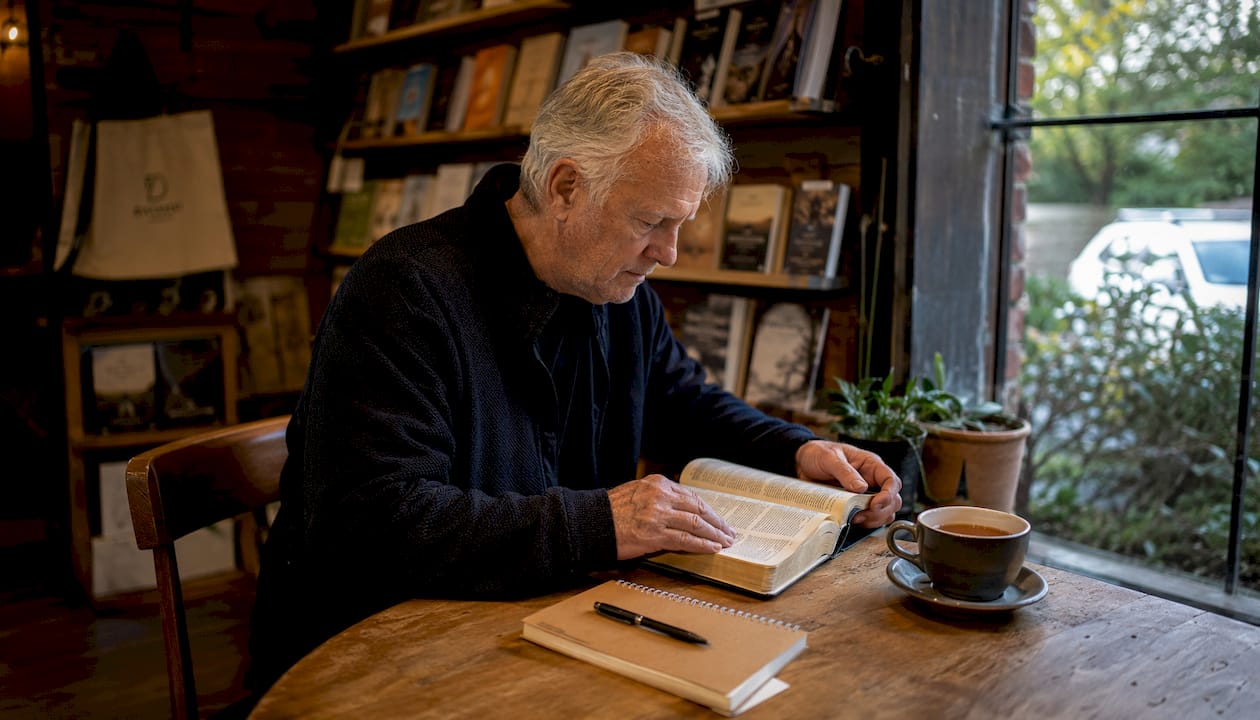
1 Peter 5:1–4 frames eldership as undershepherd ministry: elders serve under Christ, the Chief Shepherd, who will appear and reward faithful service. Peter’s appeal is elder-to-elder, grounding authority in shared experience of suffering and shared hope. Elders protect the flock by guarding against false teaching — and that protective role is pastoral love, not policing.
Hebrews 13:7, 17 rounds out the picture from the congregation’s side. Members are called to remember their leaders, imitate their faith, and submit to their oversight — because elders “keep watch over your souls as those who will give an account.”
What are the core responsibilities of church elders?
The duties of elders flow directly from the passages above. Here is how they look in practice.
Shepherding and pastoral care. Elders visit the sick, walk with people through grief and crisis, and pray over those who are suffering (James 5:14). This is life-on-life ministry, not office-hours availability.
Oversight and governance. Elders guide the direction, finances, and structural health of the congregation. This includes approving budgets, overseeing staff, and making decisions that affect the whole body.
Teaching and preaching. Whether from the pulpit or in smaller settings, elders are responsible for feeding the congregation with sound biblical teaching. 1 Timothy 5:17 distinguishes elders who direct the affairs of the church from those who labour especially in preaching and teaching — both are valid expressions of the same office.
Protecting doctrinal purity. Elders are the first line of defence against teaching that distorts the gospel. This means evaluating resources, vetting speakers, and being willing to name error clearly and lovingly.
Prayer and intercession. Acts 6:2–4 shows the apostles prioritising prayer and the ministry of the Word above administrative tasks. Elders inherit that priority; a prayerless elder team is a weakened one.
Church discipline and restoration. When a member falls into serious sin, elders lead the process of loving correction and restoration (Matthew 18:15–20). The goal is always the person’s return to health and the protection of the congregation. For a fuller treatment of this process, see biblical church discipline.
Appointing and equipping leaders. Elders identify, train, and install future elders, deacons, and ministry leaders (Ephesians 4:11–16; 2 Timothy 2:2). Eldership that does not reproduce itself eventually collapses.
Pro Tip: Structure your elder team’s meeting agenda around four responsibility areas: oversight, shepherding, doctrinal protection, and prayer. Structuring agendas this way keeps the team balanced and prevents governance from crowding out pastoral care.
Who is qualified to serve as a church elder?
The overarching standard in both 1 Timothy 3 and Titus 1 is that an elder must be above reproach — a person whose life does not give legitimate grounds for accusation. Every other qualification flows from that centre.
Above reproach — no pattern of conduct that dishonours the gospel
Faithful in marriage — a person of sexual integrity and covenant faithfulness
Sober-minded and self-controlled — emotionally stable, not given to extremes
Hospitable — genuinely open-handed with home and resources
Able to teach — capable of explaining and applying Scripture clearly
Not a recent convert — spiritually formed enough to bear the weight of leadership
Well-regarded by outsiders — a reputation that does not undermine the church’s witness
Manages household well — demonstrates relational wisdom in the closest context
The term presbuteros (elder) points to spiritual maturity, not chronological age. Character and teaching ability are the real criteria; an arbitrary age floor misses the point. A 30-year-old who has walked faithfully through suffering, led a household well, and taught Scripture with clarity may be far more qualified than a 60-year-old who has never been tested.
Different Christian traditions read the gender-related passages in 1 Timothy and Titus differently, shaped by their hermeneutical frameworks and ecclesial histories. Those conversations deserve pastoral care and contextual sensitivity rather than dismissal. What every tradition agrees on is that eldership is a calling to serve, not to accumulate status.
How are elders chosen, installed, and held accountable?
The process varies across denominations and church constitutions, but a common biblical pattern runs through most healthy churches.
Identification and vetting. The existing elder team (or congregation) identifies candidates who display the 1 Timothy 3 / Titus 1 character profile. This usually involves a period of observation, reference conversations, and doctrinal assessment.
Congregational affirmation. Many churches present candidates to the congregation for affirmation before installation. This is not a popularity vote; it is the body bearing witness that they recognise the Spirit’s work in this person.
Installation and ordination. Elders are formally set apart through prayer and the laying on of hands (1 Timothy 4:14; 5:22). The form varies — some traditions use formal ordination services; others use a simpler commissioning — but the act of public installation matters.
Ongoing accountability. Healthy eldership is accountable eldership. Mechanisms include the plurality of elders itself (no single person holds unchecked authority), regular peer review within the team, congregational reporting, a written church constitution or elders’ charter, and connection to a regional network or denomination. For guidance on types of church leadership structures, including elder-led models, that resource unpacks the options clearly.
Churches without elders are not disqualified from faithfulness, but Scripture consistently points toward establishing a plurality of qualified elders as a long-term goal for stability. Even a small congregation or church plant should be moving in that direction.
Pro Tip: Make sure your church constitution includes a clear, written process for receiving and resolving complaints about elders. Accountability structures that only exist in theory offer little protection when a real conflict arises.
What does eldership look like week to week?
Prospective elders sometimes underestimate the time involved. The work is not confined to Sunday mornings.
A realistic weekly picture for an active elder includes time for personal Scripture study and prayer (the foundation everything else rests on), preparation for any teaching responsibilities, attendance at elder team meetings, and pastoral conversations with members. Seasonal peaks — leadership transitions, significant pastoral crises, annual planning cycles — can substantially increase that load.
Weekly study and prayer — personal preparation that feeds both teaching and pastoral care
Elder team meetings — typically fortnightly or monthly, covering governance, pastoral matters, and prayer
Pastoral visitations — hospital visits, home visits, and intentional check-ins with members
Teaching roster — sermon preparation or small-group teaching, depending on the elder’s gifting
Mentoring emerging leaders — investing in the next generation of elders and ministry leaders (see discipleship questions for practical tools)
Coordination with staff and deacons — ensuring the whole ministry team is aligned
One of the practical gifts of plurality is workload distribution. 1 Timothy 5:17 acknowledges that some elders will focus more heavily on preaching and teaching while others carry more of the governance and pastoral care load. A lead elder or convener can coordinate the team without replacing the shared authority of the whole.
Statistic callout: Elders who prioritise prayer and the ministry of the Word — following the apostolic pattern in Acts 6:2–4 — tend to lead congregations that are spiritually healthier and more resilient through difficulty.
What should church members expect from their elders?
Members are not passive recipients of elder ministry. The relationship is mutual, and understanding what to expect on both sides makes it healthier.
What members can rightly expect from elders:
Faithful, clear biblical teaching that feeds the congregation week by week
Genuine pastoral care — not just crisis response, but intentional, ongoing attention to spiritual growth
Wise, prayerful decision-making that puts the congregation’s wellbeing above personal preference
Confidentiality in pastoral conversations, handled with integrity
Availability for serious pastoral needs, even when it is inconvenient
When concerns arise, the biblical pattern is to begin with a direct, private conversation (Matthew 18:15). If that does not resolve the matter, the next step is to bring it to the elder team through whatever process the church constitution defines. Approach that process with a restoration mindset, not a complaint mindset. The goal is always the health of the whole body.
Members also carry responsibilities in this relationship. Hebrews 13:17 calls the congregation to submit to their leaders and make their work a joy rather than a burden. That means praying for elders, participating honestly in church life, and engaging restoration processes with humility when they are necessary. For practical guidance on cultivating church relationships that support this kind of mutual trust, that resource is worth your time.
How Divergentchurch practises eldership in Canberra
At Divergentchurch, eldership is not a title on a church programme — it is a lived commitment to forming disciples and bearing one another’s burdens in the rhythms of Canberra’s city life. The church’s approach is shaped by Scripture, centred on Jesus, and expressed through everyday relationships and mission.
Scripture-shaped leadership — elders at Divergentchurch are accountable to the biblical pattern, holding to sound doctrine while remaining pastorally sensitive to the questions people in Canberra’s universities, workplaces, and neighbourhoods are actually asking
Plurality in practice — leadership is shared rather than concentrated, with elders working together to cover pastoral care, teaching, and governance
Discipleship as the measure — success is not attendance numbers but whether people are growing as disciples of Jesus; elders invest directly in discipleship pathways and life communities
Local and missional — elders participate in Life Communities, the spaces where real pastoral care and life-on-life discipleship happen week to week
If you want to understand how Divergentchurch’s vision for leadership connects to its broader mission, the vision and values page gives you the theological grounding behind it.
Key takeaways
Elders are biblically appointed, spiritually mature leaders whose work of shepherding, oversight, and teaching forms the backbone of a healthy local church.
Point | Details |
One office, three terms | ‘Elder’, ‘overseer’, and ‘pastor’ describe the same role; no term outranks another. |
Plurality is the norm | The New Testament consistently points to a team of elders, not a single leader, for accountability and shared care. |
Character before credentials | The 1 Timothy 3 / Titus 1 checklist centres on spiritual maturity and reputation, not age or status. |
Core duties | Shepherding, oversight, teaching (which includes doctrinal protection), prayer, discipline, and equipping leaders cover the full scope. |
Divergentchurch in Canberra | Divergentchurch practises Scripture-shaped, plural eldership through Life Communities and discipleship pathways — next steps are open to anyone wanting to explore leadership. |
Why eldership is more than a church governance structure
There is a temptation in every generation to reduce eldership to a management layer — a board that approves budgets and resolves complaints. That reading misses what Scripture is actually describing. Elders are undershepherds. Their authority does not come from a vote or a constitution; it comes from faithfulness to the Word and the Spirit’s work in their lives. The moment an elder team starts functioning like a corporate board, something essential has been lost.
What strikes me most about the biblical picture is the weight of accountability it places on elders themselves. Hebrews 13:17 says they will give an account for how they led. That is not a threat — it is a clarifying lens. Every pastoral decision, every difficult conversation, every hour of prayer and preparation is done before an audience of One. That accountability should produce humility, not anxiety.
The other thing worth naming is this: eldership is not the destination of Christian maturity — it is one expression of it. The best elders are people who are still being formed, still learning to shepherd from a posture of service rather than authority. Life-on-life discipleship is not a programme elders run for others; it is the water they swim in themselves. A church where elders are visibly growing as disciples is a church where the whole congregation feels permission to do the same.
Divergentchurch equips leaders who are ready to serve
If you have been reading this and sensing a call to serve your church more deeply, Divergentchurch has built pathways specifically for that. The Discipleship Hub is the central space for leadership formation and biblical equipping — whether you are exploring what eldership might look like for you, or you are already serving and want to go deeper. For those ready to engage a structured leadership formation process, Lead Like Jesus offers a practical, Christ-centred framework for anyone stepping into church leadership.
Divergentchurch’s Life Communities are also where much of the real pastoral work happens week to week — small, relational gatherings where elders and emerging leaders practise the kind of shepherding this article describes. If you are in Canberra or Queanbeyan and want to take a concrete next step, visit the next steps page and connect with the team.
Useful sources and further reading
The following resources shaped this article and are worth exploring if you want to go deeper.
Source | What it offers |
Desiring God — What Is the Role of an Elder? | Clear, accessible overview of elder duties and the interchangeability of NT terms |
The Gospel Coalition (Canada) — Six Responsibilities for Elders | Practical breakdown of elder responsibilities with agenda-structuring guidance |
Ligonier Ministries — Why the Church Needs Elders | Theological case for eldership with focus on doctrinal protection as pastoral love |
GotQuestions — Duties of an Elder | Concise, Scripture-referenced summary of elder duties for quick reference |
Renew — What Does the Bible Say About Elders? | Covers role specialisation within elder teams and the path toward plurality |
9Marks — Elders: Job Description | Practical framing of eldership as shepherding rather than administration |
Logos Grow — Church Leadership: Elders and Deacons | Emphasises life-on-life discipleship and the accountability elders carry |
Practical study guide on community living principles useful for elder-led small groups |
Primary Scripture passages for eldership:
1 Timothy 3:1–7 — character qualifications
Titus 1:5–9 — qualifications and doctrinal duty
Acts 20:17–38 — the full charge to elders (shepherding, oversight, guarding)
1 Peter 5:1–4 — undershepherd ministry under Christ the Chief Shepherd
Hebrews 13:7, 17 — the congregation’s call to honour and submit to elders
James 5:14 — elders praying over the sick
1 Timothy 5:17 — honouring elders who lead and teach well
For Divergentchurch resources on leadership and discipleship, the role of pastor in church guide and the broader church leadership explainer are natural next reads.
This article is general biblical and theological information. For decisions about church governance, elder appointment, or specific pastoral situations in your congregation, consult your church’s leadership, constitution, and denominational guidelines.
Recommended
Comments