
Role of faith in daily life: how it shapes choices and habits

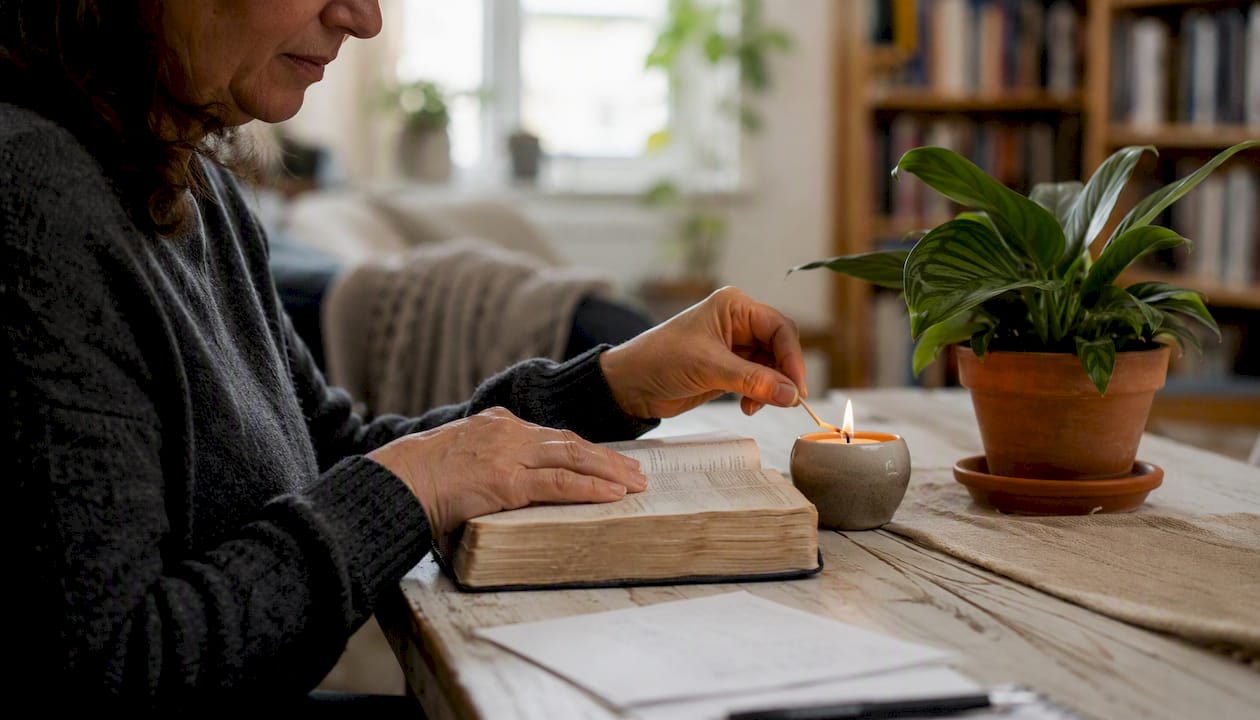
Faith shapes daily life by giving people a trusted lens for decisions, a steadying identity, and the resilience to keep going when things get hard. According to the 2021 National Church Life Survey, many churchgoers say their Christian faith directly influences their daily decisions and actions, and most say it’s central to who they are. That’s not a Sunday phenomenon. It shows up in the ordinary friction of a Tuesday afternoon.
Faith does a handful of specific jobs in an ordinary week:
Trust and commitment – it helps you keep promises when circumstances make them costly.
Moral orientation – it gives you a reference point for hard calls, not just easy ones.
Resilience – it supplies a reason to keep going through setbacks.
Identity – it anchors who you are beneath your job title or relationship status.
Community – it connects you to people who carry the weight with you.
The sections below walk through each of these in practice, with real habits you can start this week.
Key Takeaways
Faith functions daily through trust, moral orientation, resilience, identity and community, and it grows through small repeated practices rather than occasional intense effort.
Point | Details |
Faith shapes decisions | Most churchgoers say faith directly influences daily decisions, per the NCLS. |
Identity is central | Most say faith is an important part of who they are, not just what they believe. |
Small habits win | Attaching micro-practices to existing routines outlasts occasional big spiritual pushes. |
Service reflects belief | Highly religious people volunteer more and tend to report greater life satisfaction, per Pew. |
Obstacles are common | Compartmentalisation and exhaustion are normal; the fix is shrinking the practice, not quitting it. |
Table of Contents
What role does faith play in daily life?
Faith operates less like a belief you hold and more like a compass you check. It doesn’t remove decisions from your plate. It reframes how you weigh them. When a believer chooses honesty over a shortcut at work, or patience over a sharp reply to a difficult family member, faith is doing quiet, structural work behind the scenes.
Here are the core roles faith plays, and the mechanism behind each one.
Orienting values. Faith gives you a fixed point to measure choices against, rather than reinventing your ethics every time a hard decision shows up. The Internet Encyclopedia of Philosophy describes faith as a “trusting commitment” that sustains long-term goals even when the evidence in front of you is mixed or the outcome is uncertain. That’s why a person of faith can hold a difficult job or a strained relationship steady over years, not just weeks.
Supplying trust and resilience. When life throws a redundancy, a diagnosis, or a broken relationship at you, faith doesn’t erase the pain, but it gives you somewhere to place it. Pope Francis described faith as a gift that grants “internal strength” and must be renewed daily rather than treated as a one-off decision made years ago, in his general audience address on faith. That daily renewal is the difference between faith as a memory and faith as a resource you actually draw on.
Shaping identity. The NCLS finding that 95% of churchgoers see faith as central to their identity matters practically because identity is what holds under pressure. If your sense of self depends on performance at work or approval from others, both are unreliable foundations. A faith-anchored identity gives you something steadier to stand on when either wobbles. Divergentchurch’s piece on why Christian beliefs matter for identity and hope unpacks this further.
Motivating service. Pew Research found highly religious people are more likely to volunteer and stay engaged with family life, and that people who see certain behaviours as essential to their faith are more likely to actually practise them. Belief that shows up as action tends to be belief that lasts.
Framing vocation. Faith reframes work itself, not just what you do after hours. A job becomes a place you’re sent to, not just a place you clock into. This shift alone changes how people handle difficult colleagues, boring tasks, and Monday mornings.
Pro Tip: Pick one role from this list that feels weakest right now, then attach a single five-minute practice to an existing daily habit, like praying while the kettle boils. Small and repeatable beats ambitious and abandoned.
Everyday examples: what living faith looks like
Faith rarely announces itself. It shows up in small, observable choices that most people would walk past without noticing.
At home, a parent chooses to apologise to their child after losing patience, rather than letting pride win. This illustrates moral integrity: faith making the harder, more honest choice available.
At work, an employee flags an error in their own report instead of hoping nobody notices. This is trust in action, specifically trust that honesty matters more than short-term comfort.
In parenting, a mother prays over a decision about her child’s schooling instead of deciding on anxiety alone. That’s faith functioning as decision-making trust, not certainty, but a willingness to move forward despite not knowing everything.
With finances, a family sets aside a portion for giving before covering discretionary spending. This is generosity as identity, not generosity as leftover.
In a crisis, someone facing a health scare keeps a short prayer rhythm rather than abandoning it. This shows resilience, faith carried into the hardest weeks rather than reserved for easy ones.
A practical church resource on everyday faith frames this well:
Everyday faith means recognising God’s presence in ordinary routines and practising trust, kindness and integrity across work, home and relationships, not saving faith for Sunday and switching it off on Monday.
Each of these moments connects to a practice you can build deliberately, which is exactly what the next section covers.
Practical habits that integrate faith into an ordinary day
Living faith daily doesn’t require a dramatic overhaul of your calendar. It requires attaching small, repeatable practices to routines you already have.
Morning prayer rhythm (2 to 5 minutes): pray during the first coffee, before checking your phone.
Scripture micro-reading (5 to 10 minutes): read one short passage on the commute or over breakfast.
Sabbath micro-habit: protect one meal a week, phone away, as a small rest ritual rather than waiting for a full day off.
Hospitality: invite one person over for a meal each month, deliberately, not just when it’s convenient.
Service action: commit to one recurring act of service, whether that’s volunteering through church or checking on a struggling neighbour.
Practical guides on living out faith day to day consistently point to the same principle: durable change comes from modest, repeatable practices attached to existing routines, not from ambitious spiritual projects that collapse after a fortnight. Divergentchurch’s own list of ten faith habits to start today works from the same logic.
Pro Tip: Choose the smallest version of a new habit you can imagine, one verse, one minute of prayer, one act of kindness, and do that consistently for two weeks before adding anything else.
Common obstacles when faith feels hard to live out
Most people don’t abandon faith outright. It just quietly gets compartmentalised.
Sunday box thinking: faith stays in church and never enters Monday. Fix: attach one micro-practice to a weekday routine.
Perfectionism: waiting for the “right” spiritual state before starting. Fix: start smaller than feels meaningful.
Exhaustion: no energy left for spiritual practice. Fix: shrink the practice, not abandon it.
Doubt: uncertainty makes practice feel hypocritical. Fix: bring doubt into prayer rather than treating it as disqualifying.
Cultural pressure: secular environments make faith feel awkward to name. Fix: express faith through consistent character rather than constant explanation.
If doubt or exhaustion tips into persistent anxiety or hopelessness, that’s a signal to seek support beyond self-help, whether that’s a pastoral conversation or professional care such as Christian counselling.
Why this matters: evidence and pastoral insight
The scale of the NCLS finding is worth sitting with: a very large majority of Australian churchgoers say their faith directly shapes daily decisions, and most say it’s central to their identity, according to the National Church Life Survey. That’s not a fringe experience. It’s the norm among practising believers.
Pope Francis frames this same reality pastorally:
Faith is a gift that grants internal strength, a way of seeing life that must be renewed daily rather than treated as settled once and for all.
The Vatican’s teaching in Lumen fidei adds that faith reorders life by making Christ’s vision the lens for ethical and relational choices, not an occasional filter applied only to big decisions. Together, the NCLS data, papal teaching, and Pew’s findings on religiosity and volunteering point to the same conclusion: faith that shapes identity also shapes behaviour.
A simple 4-week plan to start living faith more intentionally
Start small, track it loosely, and adjust weekly.
Week 1, trust: five minutes of morning prayer daily. End of week, ask: did this change how I started my day?
Week 2, identity: read one short scripture passage daily (5 to 10 minutes), noting one phrase that stood out.
Week 3, service: commit one deliberate act of service or hospitality. Reflect on what it cost and what it gave back.
Week 4, community: attend or reach out to a small group or Life Community once this week.
Keep a simple note on your phone. One line a day is enough to notice the pattern forming.
For anyone wanting a next step beyond personal practice, Divergentchurch’s Follow Jesus pathway offers a starting point for discipleship, and the Lead Like Jesus program is worth exploring if vocation and leadership are where you feel faith needs to show up most. If it’s community and accountability you’re after, Life Communities exists precisely for that.
What the evidence actually tells us about living faith daily
The conventional advice on faith and daily life tends to stop at inspiration: pray more, trust more, believe harder. What the NCLS and Pew data actually support is narrower and more useful: faith sustained daily comes from small, attached habits, not renewed willpower. That’s a very different prescription.
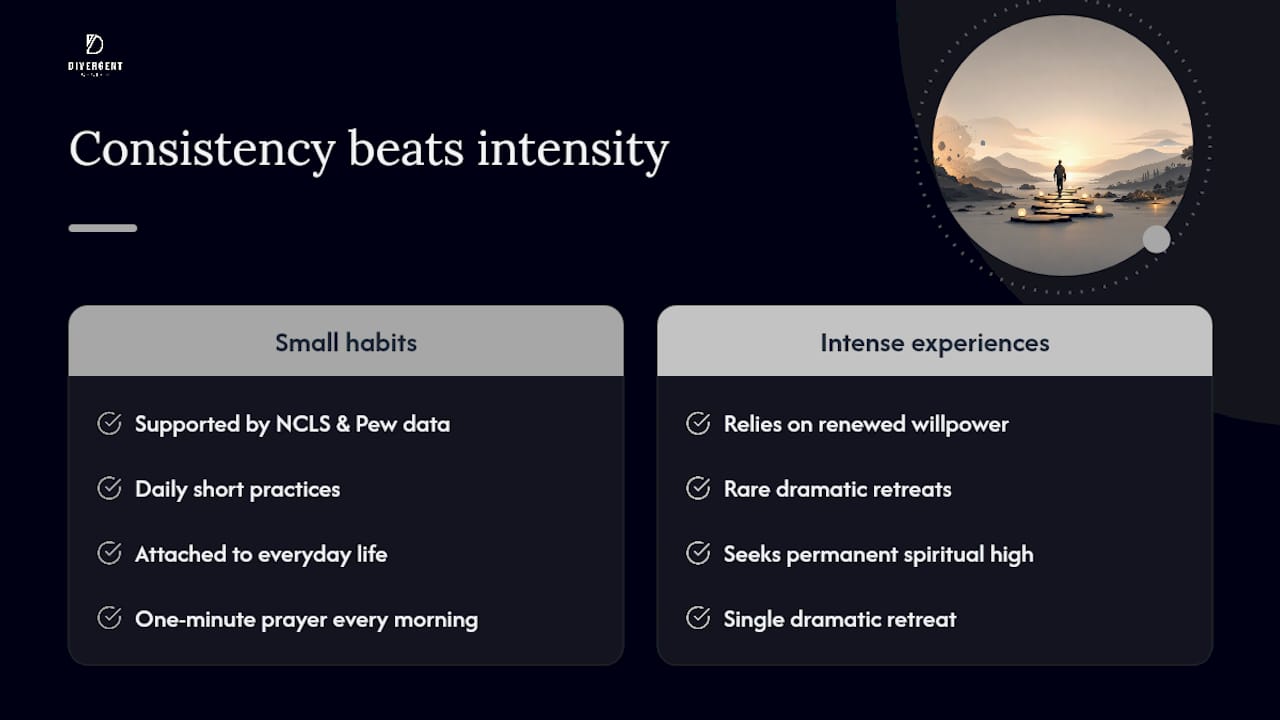
Where most guidance falls short is treating faith as an internal state to maintain rather than a set of practices to repeat. Pope Francis’s insistence that faith must be renewed daily gets missed by people looking for a permanent spiritual high. There isn’t one. There’s Tuesday, and what you do with the five minutes you have before the day takes over.
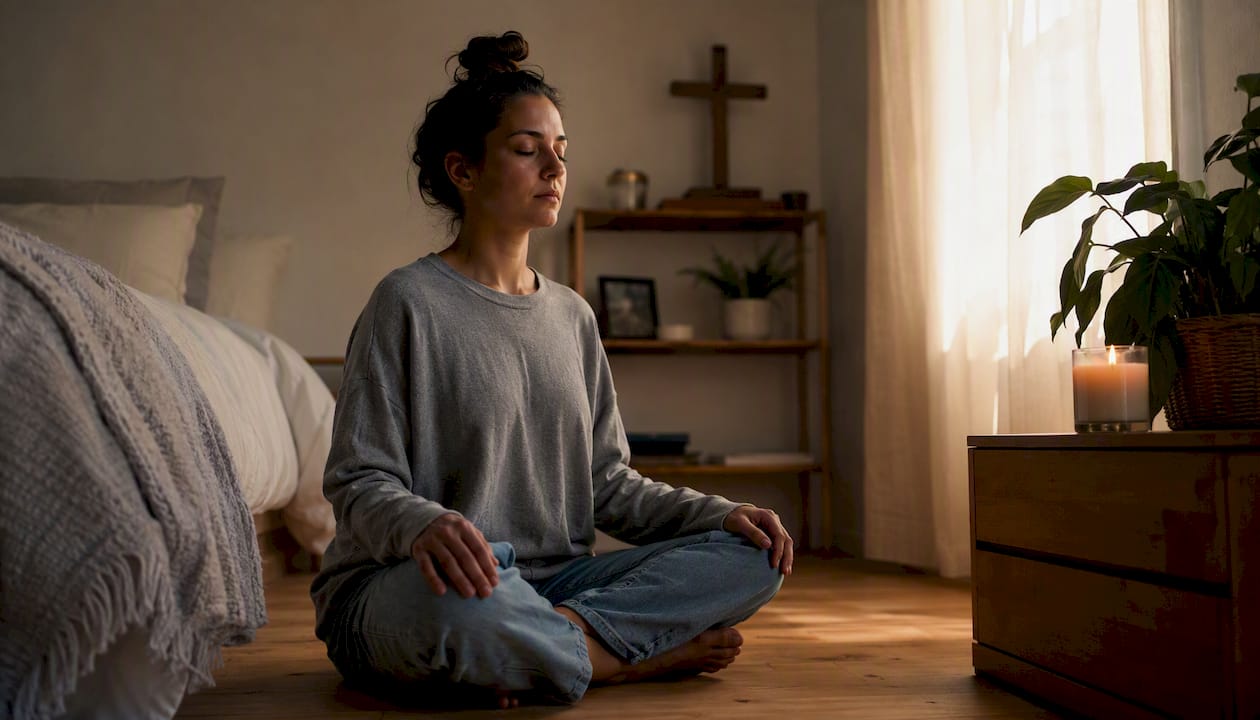
If you take one thing from this, prioritise consistency over intensity. A one-minute prayer every morning for a month will change more than a single dramatic spiritual retreat that isn’t followed by anything. Faith lived daily is built the same way any habit is: small, repeated, and attached to a life you already have.
Frequently asked questions
What is the role of faith in daily life? Faith functions as a decision-making compass, a source of resilience under pressure, and an anchor for identity that holds steady when circumstances change.
How does faith impact mental health? Pew Research links higher religiosity to greater life satisfaction and family engagement, though faith works alongside, not instead of, professional mental health support when anxiety or distress becomes persistent.
How can I live a faith-filled life without a major lifestyle change? Attach one small practice, prayer, scripture, or a single act of service, to a routine you already have, then let consistency do the work over weeks rather than days.
What if I have doubts about my faith? Doubt is common and doesn’t disqualify practice; bring it directly into prayer and conversation with a pastor or trusted community rather than treating it as a reason to stop.
How does faith shape moral decisions? Faith gives a fixed reference point for ethical choices, so decisions are weighed against consistent values rather than reinvented under pressure each time.
Sources
Recommended
Comments