
Steps to join a church in Canberra and find community
- Josh

- May 15
- 10 min read
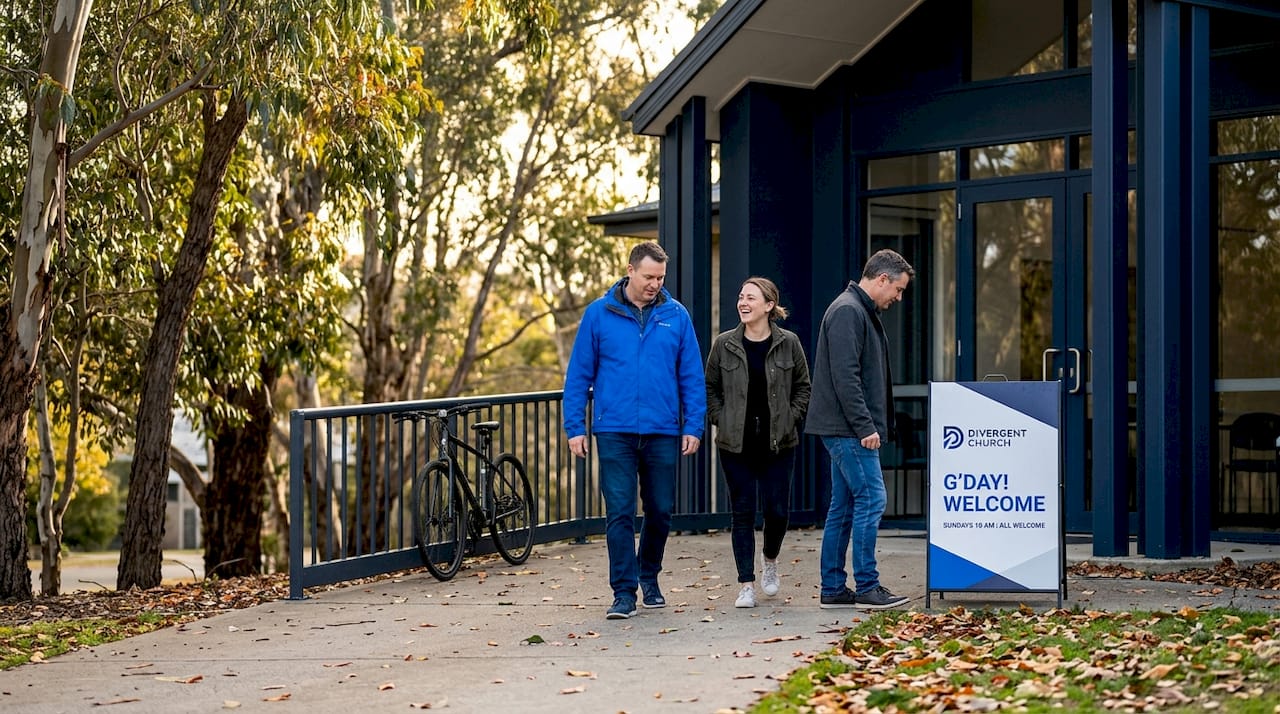
You are searching for something real. Not just a Sunday programme to attend, but a community where you are genuinely known, where your questions are welcomed, and where your faith can take root and grow. Canberra is a city full of people in exactly that place — students, public servants, young families, and newcomers who feel the pull toward spiritual community but are unsure where to begin. Joining a church can feel like stepping into unfamiliar territory. This guide walks you through every stage of that journey with clarity, honesty, and deep respect for where you are right now.
Table of Contents
Key Takeaways
Point | Details |
Consider your needs | Reflect on what you’re seeking spiritually and personally in a church before committing. |
Follow the steps | The general process includes visiting, learning, and formalising your commitment through classes and practice. |
Understand requirements | Baptism and classes are standard requirements, varying by tradition, so clarify early. |
Engage for deeper belonging | Joining groups and serving are key to authentic community, not just completing steps. |
Process takes time | Expect church membership to take a few weeks and don’t rush finding your place. |
What to consider before joining a church
Now that you know the value of thoughtful connection, let’s outline what matters most before you step into a church. Joining is a significant decision, and it deserves more than a quick Google search on a Sunday morning. Taking time to reflect before you commit will save you confusion later and help you land somewhere that genuinely fits.
Start by asking yourself some honest questions. What do you actually believe, or want to explore? Are you looking for a high-energy contemporary gathering or a more contemplative, liturgical experience? Do you need a church close to your suburb, or near your university? Are you hoping to find a group of people your own age, or is a multigenerational community more important to you? There are no wrong answers. But knowing your own preferences helps you evaluate options wisely.
Here are some priorities worth thinking through before your first visit:
Theological conviction. What does the church believe about Scripture, Jesus, salvation, and the Holy Spirit?
Community culture. Does the church feel warm and genuine, or transactional and impersonal?
Practical life. Does the location, service time, and style fit your actual weekly rhythms?
Membership expectations. Are there commitments involved, and are they clearly communicated?
Missional focus. Is the church engaged with the city around it, or primarily inward-facing?
One thing to be aware of is that membership processes vary by denomination: Protestants typically focus on classes, interviews, or baptism, while Catholics and Orthodox follow a sacramental catechumenate process. This means the timeframe and requirements can look very different depending on where you visit.
“Do not be conformed to this world, but be transformed by the renewing of your mind.” — Romans 12:2
Don’t rush this stage. Visit two or three churches, attend a few services at each, and pay attention to how you feel. Are people introducing themselves? Does the teaching challenge and encourage you? Is there an authentic hunger for God in the room?
Pro Tip: Look for churches that communicate clearly about membership on their website or in a printed welcome resource. Healthy churches have nothing to hide about their expectations and invite questions openly.
If you are in the early stages of finding a new church home, lean into the exploration. Every visit is data. And the investment of a few extra Sundays before committing is absolutely worth it. For those thinking specifically about building community in Canberra churches, it also helps to ask what small groups, mid-week gatherings, or service opportunities are available beyond the Sunday gathering.

Essential steps to join a church in Canberra
With your motivations and criteria clarified, here’s what the joining journey looks like in practice. Whether you are exploring a non-denominational church, a Baptist congregation, a Catholic parish, or an Orthodox community, there is a general shape to the process that most churches follow.
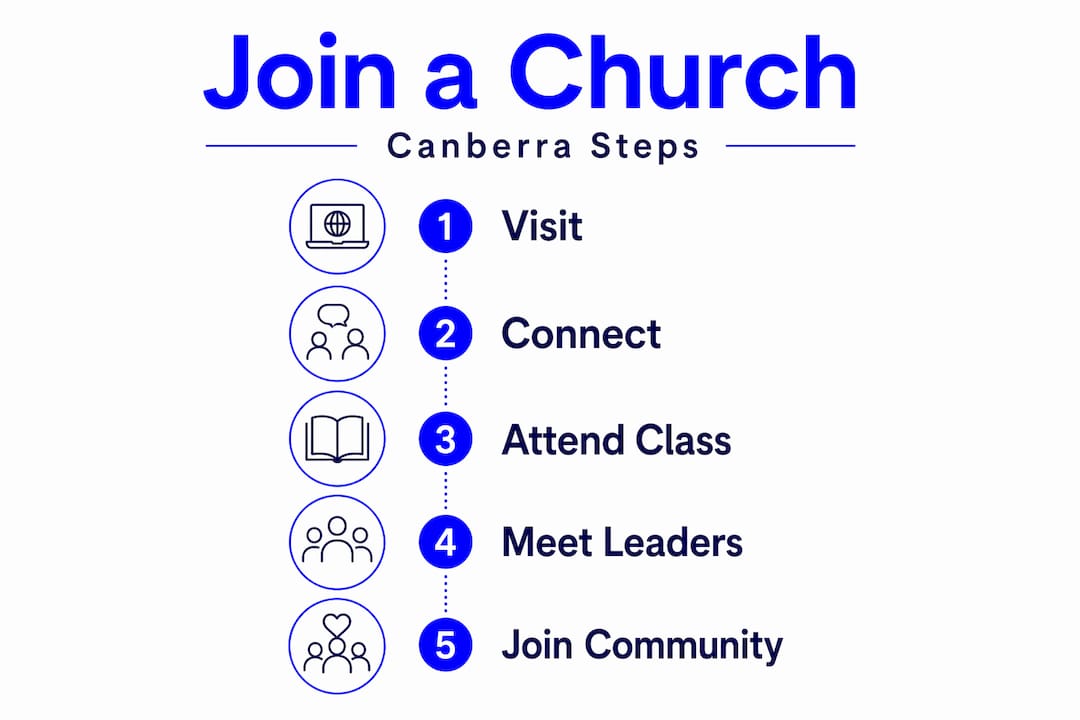
The general process for a Protestant or evangelical church typically involves attending services, taking membership classes, meeting with leaders, affirming a faith statement, and making a public commitment. For Catholic and Orthodox communities, the path is longer and more sacramentally focused, but the relational investment is equally rich.
Here is a practical sequence for most Canberra churches:
Attend services regularly. Commit to several consecutive Sundays before making any decisions. Observe how the community worships, how the pastor teaches, and how people interact with one another.
Introduce yourself to a leader or pastoral team member. A simple conversation after a service can open the door and signal that you are interested in going deeper.
Attend a membership or foundations class. Most churches offer a structured course. Membership classes explain beliefs, values, and expectations, while personal interviews assess fit and allow you to share your testimony.
Meet with a pastor or elder for a one-on-one conversation. This is where your story, your questions, and your faith are welcomed into a real relationship.
Affirm the church’s statement of faith. You do not need to have every theological question resolved, but a genuine alignment with the core beliefs matters.
Make a formal commitment. This might happen publicly during a service or through signing a membership covenant, depending on the church’s culture.
Here is a simplified comparison of how these steps vary across traditions common in Canberra:
Tradition | Key steps | Approximate timeframe |
Non-denominational / evangelical | Attend, class, interview, affirmation | 4 to 8 weeks |
Baptist | Attend, baptism, membership class, public commitment | 6 to 12 weeks |
Catholic | OCIA inquiry, catechumenate, sacraments at Easter Vigil | 12 months or more |
Orthodox | Attend, meet priest, catechumenate, baptism/chrismation | 6 to 18 months |
Anglican / Presbyterian | Attend, confirmation or reception class, membership | 6 to 10 weeks |
Understanding church beliefs and affiliations matters at this stage because doctrinal conviction shapes what membership actually means in any given community. It is not just administrative paperwork. It is a covenant of belonging.
Pro Tip: Don’t hesitate to ask questions throughout the process. Healthy churches genuinely welcome them. Questions about theology, lifestyle expectations, financial giving, and leadership accountability are all fair to raise. A church that resists transparency about these things is worth examining carefully.
For those navigating church as a young adult in Canberra, the membership process is also a great way to discern whether a community invests in your generation. Ask whether there are mentors, peer gatherings, or pathways for volunteering in church that match your season of life.
Understanding baptism and membership requirements
Step two leads to a key aspect: understanding the meaning and necessity of baptism and related commitments. Baptism is not a bureaucratic tick-box. In the Christian tradition, it is a profound act of public identification with the death and resurrection of Jesus. Understanding how different churches treat this sacrament will help you navigate membership requirements with clarity and confidence.
For most Baptist and evangelical churches, baptism is required for membership as the biblical entry rite, typically by full immersion following a personal confession of faith. If you were baptised as an infant in another tradition, these churches may ask you to consider believer’s baptism. It is worth having that conversation honestly with pastoral leadership.
For Catholics, the path follows the Order of Christian Initiation, known as OCIA (formerly RCIA): a multi-stage process moving through inquiry, the catechumenate, a period of purification, and finally the reception of sacraments at the Easter Vigil. This process is rich in community, teaching, and spiritual formation.
For those considering Orthodox Christianity, the process involves attending services, meeting with a priest, entering into catechumenate instruction, and eventually receiving Baptism and Chrismation. The Orthodox path is deeply immersive and takes seriously the formation of the whole person in the life of the Church.
Here is a brief comparison of baptismal requirements across traditions:
Tradition | Baptism type | When it occurs | Prior baptism |
Evangelical / Baptist | Believers’ baptism by immersion | Before or at membership | May require rebaptism |
Anglican / Presbyterian | Infant or believers’ baptism | Varies | Often recognised |
Catholic | Infant or adult via OCIA | Part of sacramental initiation | Recognised in some cases |
Orthodox | Adult immersion via catechumenate | At reception | Rarely recognised |
Some important nuances worth knowing:
Transferring members from another denomination may be welcomed via a letter of transfer or brief interview rather than rebaptism, depending on the receiving church.
Recognition of prior baptism is common in many Anglican, Lutheran, and Presbyterian communities, provided the baptism was performed in the name of the Trinity.
Unbaptised enquirers are typically welcomed warmly into the learning process before any formal commitment is required.
If you want to understand why baptism matters beyond the denominational mechanics, that question is worth sitting with prayerfully. It is one of the most formative steps in a believer’s public journey.
Common challenges and how to make your church home
Understanding the path and requirements, it’s also worth knowing the common sticking points and how to thrive in your new church home. Many people get this far and then stall, not because the process is too hard, but because the emotional and social dimensions catch them off guard.
Feeling nervous about fitting in is completely normal. In fact, it is one of the most universal experiences of anyone entering a new faith community. You are not alone in wondering whether people will notice you, whether you’ll know the songs, or whether anyone will sit with you at morning tea. Most people in a church remember their first few awkward visits.
Membership classes typically run for 4 to 12 weeks, so if the process feels slow, that is expected. Growth in community rarely happens overnight. The seeds planted during those early months often bear fruit years later.
Here are some practical ways to move from visitor to genuine member:
Join a small group early. The Sunday gathering is a gathering, not a community. Real relationships form around tables, in living rooms, and on bushwalks. Seek out a mid-week group as soon as you can.
Serve somewhere. Whether it is welcoming newcomers, helping with setup, or joining a ministry team, service connects you to people quickly and gives you a sense of belonging and purpose.
Be honest about where you are. You do not need to have it all together. Churches grow stronger when people bring their real selves, not a polished performance.
Ask for help. If you feel lost or unsure, tell someone. Pastoral leaders want to know, and most churches have intentional pathways to help you find your footing.
Pro Tip: Connect with a small group within your first month. Research on church belonging consistently shows that people who form close friendships within a faith community are far more likely to remain engaged and growing over time.
For those wanting to take the next step, exploring how to build church community in Canberra gives you a framework for going deeper. And when you feel ready to move forward formally, looking at next steps to get involved is a practical starting point.
Why community matters more than process: a Canberra view
Here is something we believe with genuine conviction: formal membership is a starting point, not a destination. The paperwork, the class, the baptism, the affirmation of faith — all of that matters. But none of it is the goal. The goal is belonging. Transformation. A life genuinely shaped by Jesus and lived alongside people who are committed to the same.
Canberra is a transient city. People arrive for university, for government roles, for a posting that lasts two or three years. This means that many people in Canberra’s churches have navigated exactly what you are navigating right now. They know what it is like to be new. They know the particular loneliness of a city where professional networks run deep but personal ones take time.
This is why we believe that authentic participation matters more than ticking every box perfectly. The person who attends consistently, shows up for others in hard moments, asks honest questions in a small group, and serves quietly without recognition — that person is living the heart of what church membership is actually about.
We have seen many people treat joining a church like enrolling in a course. They complete the requirements and then wonder why they still feel like an outsider. In contrast, those who commit to community as young adults and invest relationally, even imperfectly, tend to find something genuinely life-giving. The kingdom of God is not built through efficient processes. It is built through faithful presence.
So yes, follow the steps. But hold them lightly enough to remain open to the slower, richer work of genuine belonging.
Find your place at Divergent Church Canberra
If this article has stirred something in you — a sense that you are ready to take a real step toward Christian community in Canberra — we would love to be part of that journey with you.
At Divergent Church, we are not simply a Sunday gathering. We are a community shaped by Scripture, centred on Jesus, and expressed through everyday life, relationships, and mission in this city. Whether you are brand new to faith or returning after a long absence, there are clear next steps to help you begin. You can explore your faith and grow as a disciple through our discipleship hub, and find the kind of genuine, face-to-face belonging that only happens in life communities. Come as you are. There is a place for you here.
Frequently asked questions
Do you need to be baptised to join any church in Canberra?
For most Protestant and evangelical churches, baptism is expected for full membership, but some traditions recognise a prior baptism from another denomination after a conversation with leaders.
How long does it usually take to join a church?
Membership processes typically last between 4 and 12 weeks for most Protestant churches, though Catholic and Orthodox journeys may take considerably longer due to their sacramental formation requirements.
Can I visit before making any commitments?
Absolutely — it is genuinely encouraged to attend services and group activities several times before beginning any formal process, and most churches welcome curious visitors without any pressure.
What if I’ve already been baptised in another denomination?
Previously baptised members may transfer via a letter of transfer or interview without rebaptism in many traditions, though some churches with specific convictions about believer’s baptism may have different expectations.
Is joining a group or serving important?
Serving and joining a small group are among the most powerful ways to connect beyond Sunday attendance, helping you build real relationships and grow in faith alongside others.
Recommended
Comments