
Types of Christian communities: a Canberra newcomer's guide

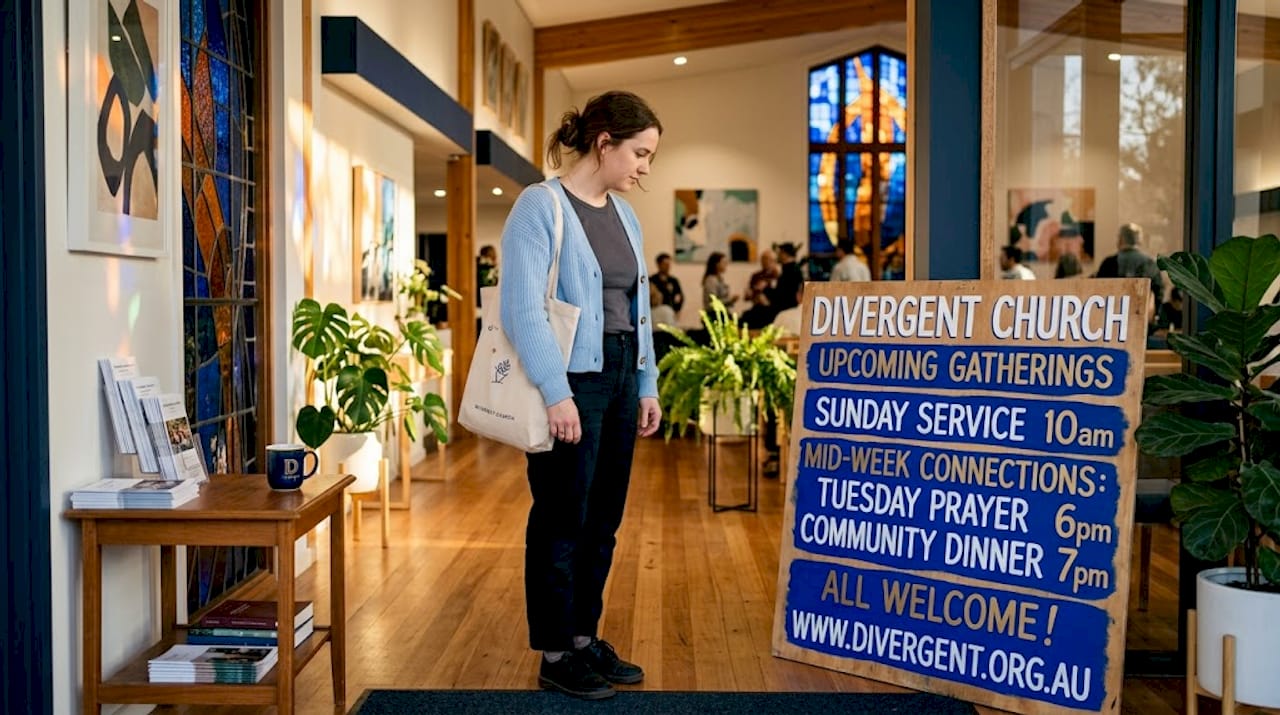
Walking into a new city and trying to find your people within the Christian faith can feel genuinely disorienting. The types of Christian communities available in Canberra span centuries of tradition, wildly different worship cultures, and governance structures that shape everything from how decisions get made to how warmly a stranger is welcomed on a Sunday morning. Whether you are a student arriving at ANU, a young professional new to the city, or someone quietly curious about faith, understanding the landscape before you visit makes all the difference between finding a spiritual home and drifting away after one awkward Sunday.
Table of Contents
Major branches of Christian communities and their characteristics
Comparison of Christian community types: focus, governance, and relationships
Which Christian community type is right for you in Canberra?
Rethinking Christian community: the Canberra small-group momentum model
Find your authentic Christian community at Divergent Church Canberra
Key Takeaways
Point | Details |
Branches overview | Christian communities fall mainly into Catholic, Orthodox, and Protestant branches with distinct governance and worship styles. |
Relational focus | Authentic discipleship grows best in small groups and regular midweek gatherings rather than only Sunday worship. |
Choosing criteria | Look beyond worship style to leadership structure, relational opportunities, and welcoming pathways when selecting a community. |
Canberra approach | The Canberra model emphasises micro-communities and repeated attendance to build lasting faith and belonging. |
Practical entry | Engaging in small groups and community events over weeks is key to genuinely integrating into a Christian community. |
Criteria for choosing a Christian community in Canberra
Before you explore specific community types, it pays to know what you are actually looking for. The following criteria help you evaluate any community you visit, regardless of tradition or denomination.
Relational connection beyond Sundays. The quality of a community is rarely visible on a Sunday morning, where production and polish can mask a lack of genuine relationship. Newcomers should look for clear pathways into smaller, relational spaces, because authentic community often forms midweek rather than in a weekly service.
Governance and leadership clarity. Who leads, and how are decisions made? Some communities are bishop-led, others are elder-led or congregationally governed. This affects teaching authority, accountability, and culture in ways that matter over time.
Worship style versus doctrinal substance. It is tempting to choose based on music preference. But the real question is whether the community is rooted in Scripture and takes discipleship seriously. Worship style is a surface layer; doctrine and formation run much deeper.
Size and gathering frequency. A congregation of 800 and a congregation of 80 produce very different experiences of belonging. Large communities offer more programmes; smaller ones offer more proximity. Neither is wrong, but knowing your preference saves time.
Small group and discipleship opportunities. If a church has no structured midweek gatherings, that tells you something. Building community in Canberra requires repeated, intentional contact. Look for life communities, home groups, or Bible study formats that run consistently.
Welcoming practices and accessibility. A community that is genuinely welcoming makes it easy for you to ask questions, sit with uncertainty, and come back again without pressure. This matters especially for seekers and those exploring faith for the first time. Consider also how attending church as a young adult in Canberra can feel different from the church culture you may have grown up with.
Major branches of Christian communities and their characteristics
Understanding the major branches gives you a theological map. Christian community types do not exist in a vacuum. They emerge from distinct historical and doctrinal roots, and those roots shape the culture you will encounter at any gathering.
The three main branches of Christianity are Catholic, Orthodox, and Protestant, each carrying distinct governance, worship, and sacramental emphases. Within those branches, hundreds of denominations have developed.
Catholic. Centralised authority under the Pope, seven sacraments, and a liturgical worship form that has remained largely consistent for over a millennium. Community life is shaped by parish structures, the Eucharist as the centre of worship, and a strong tradition of social and charitable engagement.
Orthodox. The Eastern Orthodox tradition is one of the oldest expressions of Christianity, emphasising apostolic succession, iconography, and a deeply sacramental theology. Orthodox communities tend to be smaller, tightly knit, and rooted in a distinct cultural heritage, often Greek, Russian, or Coptic. Liturgy is not merely a format but a participation in timeless worship.
Protestant. The broadest category by far, Protestantism encompasses Baptist, Pentecostal, Presbyterian, Lutheran, Methodist, and many other denominations. The common thread is the Reformation conviction that Scripture holds primary authority. Worship style, governance, and community culture vary enormously. Visiting a Reformed Presbyterian community and visiting a Pentecostal church can feel like encountering two entirely different religions, even though both sit under the Protestant banner.
Anglicanism. Worth treating separately because Anglicanism blends liturgical worship with episcopal leadership, while rejecting papal authority and allowing married clergy and varying doctrinal positions. In Canberra, Anglican churches range from highly traditional to theologically progressive, making discernment especially important.
Understanding these definitions of Christian communities at a foundational level means you walk into any gathering with clear eyes. And if you are exploring discipleship questions across Christian traditions, these distinctions become even more important.
Types of Christian community life in Canberra
Beyond denomination, the form of community life you engage with matters just as much. Different Christian groups in Canberra express their faith through different rhythms, and those rhythms shape your experience of belonging.
Sunday worship services. The most visible and accessible entry point. Open to all, centred on Scripture, teaching, and collective worship. A good Sunday service introduces you to the community’s theological DNA. But one Sunday tells you very little about the relational warmth underneath.
Small groups and life communities. These midweek gatherings are where genuine discipleship tends to happen. Many Christians experience authentic community mainly through recurring small-group practices rather than Sunday services alone. A life community offers proximity, vulnerability, and repeated presence. These are the seeds planted in the ordinary soil of a Tuesday evening.
University Christian communities. Canberra’s student population is significant, and most major campuses have active Christian groups running Bible studies, social events, and discipleship programmes. These are often the first point of Christian fellowship for students arriving from other cities or countries.
Community meals, prayer gatherings, and outreach events. These are the low-barrier entry points. No prior knowledge required, no performance expected. Divergent Church routes newcomers into midweek groups to foster discipleship momentum by creating smaller, relational contexts. A shared meal carries an invitation that a Sunday service sometimes cannot.
Volunteer opportunities. Serving alongside others is one of the fastest ways to move from visitor to member. Church events that build connection and volunteering at Canberra churches create shared purpose, which is one of the most reliable foundations for lasting friendship and faith.
Pro Tip: If you visit a church and there is no clear pathway from Sunday into a small group, ask someone directly. A community that values discipleship will have an answer ready.
Comparison of Christian community types: focus, governance, and relationships
Understanding the different Christian fellowship varieties is one thing. Seeing them side by side makes the distinctions practical and easier to act on.
Community type | Governance model | Typical size | Relational depth | Discipleship focus |
Catholic parish | Episcopal (bishop-led) | Large | Moderate | Sacramental formation |
Orthodox community | Episcopal, patriarch-led | Small to medium | High | Liturgical and sacramental |
Anglican church | Episcopal, decentralised | Varies | Varies | Scripture and liturgy |
Baptist/Evangelical | Congregational or elder-led | Small to large | High in small groups | Scripture and mission |
Pentecostal/Charismatic | Pastor-led, varied | Medium to large | High in cell groups | Spirit-led discipleship |
Missional micro-community | Flat, relational | Very small | Very high | Everyday kingdom living |
Christian community types differ significantly by governance model, which shapes leadership authority, decision-making culture, and how relationships form at every level of community life.
Size matters more than most people expect. In a congregation of several hundred, anonymity is easy to maintain, and anonymity is the enemy of genuine discipleship. Relational momentum builds best in micro-communities with repeated presence rather than in large, anonymous Sunday gatherings.
The governance model also affects what questions you can ask and how freely you can ask them. An elder-led community where leadership is known and accessible tends to feel safer for someone in the early stages of faith exploration. Explore what authentic church community looks like in practice, and consider how strong community building in Canberra can take shape across different community models.
Pro Tip: When visiting, notice who greets you and whether anyone follows up during the week. Follow-up is the single clearest signal that a community is genuinely relational, not just welcoming in the moment.
Which Christian community type is right for you in Canberra?
This is the question that actually matters. Knowing what is out there is only useful if it helps you take a step. Here is how to personalise the decision.
Assess your season of life first. A student needs proximity to campus and peers. A newcomer to Canberra needs pathways into immediate relationship. A seeker needs room to ask questions without pressure. Different community types serve these needs differently, and there is no one-size answer.
Choose a worship style you can grow in, not just enjoy. There is a difference between music that moves you emotionally and a community that will stretch and form you over years. Let worship style draw you in, but let doctrine and discipleship keep you.
Prioritise access to small groups. If attending both Sunday gatherings and small midweek groups over several weeks is encouraged and made easy, you have found a community serious about integration and growth. That pattern is the single best indicator of a healthy, formative community.
Evaluate relational warmth beyond Sunday. Does someone contact you during the week? Are you introduced to others? Is there a shared meal somewhere in the calendar? These small signals reveal a community’s actual culture.
Be patient. Authentic community is not instant. It is built over weeks of showing up, asking questions, and choosing to go back even when it feels unfamiliar. Allow yourself several weeks before forming a final impression.
Serve somewhere early. Belonging rarely comes from observation alone. Find a way to contribute, and let that act of service open doors to friendship. Use discipleship questions to reflect on your journey, and revisit our guide on building community in Canberra to keep your process grounded.
Rethinking Christian community: the Canberra small-group momentum model
Here is something worth saying plainly, because most people discover it too late: one Sunday per week will not build the kind of faith community most people are actually hungry for.
We hold this view not as a criticism of Sunday worship, which is a genuine and important expression of the Church gathered. But the expectation that a weekly service alone will produce deep friendship, honest faith, and spiritual formation is an expectation built more on cultural habit than on anything Scripture actually promises. The early Church in Acts did not meet once a week in an auditorium. They broke bread daily, prayed in homes, and shared their lives in ways that created undeniable community.
The specific challenge in Canberra is its transience. This is a city of arrivals and departures. Students come for three years and leave. Public servants rotate through. Diplomats arrive for postings. That rhythm can make genuine belonging feel almost structurally impossible. But we have seen something different happen when people commit to repeated presence in a small group over six to eight weeks. Repeated attendance in smaller micro-communities removes anonymity and fosters honest faith questions and friendships, which are the real engine of discipleship momentum in this city.

The small-group model is not a supplement to community. It is the backbone of it. Acquaintances become trusted friends. Questions that felt embarrassing to voice in a Sunday service get asked freely around a dinner table. Faith stops being a solo interior experience and becomes something lived, tested, and celebrated together. These are not ideals. They are what we watch happen in our community season after season in Canberra.
If you are only attending Sundays, you are only seeing the surface of what Christian community can be. Give a small group twelve weeks and you will understand what we mean.
Find your authentic Christian community at Divergent Church Canberra
Divergent Church exists precisely for the person described in this article. Whether you have just arrived in Canberra, are navigating faith questions for the first time, or have been searching for community that goes deeper than a Sunday programme, we want to make it genuinely easy to find your footing.
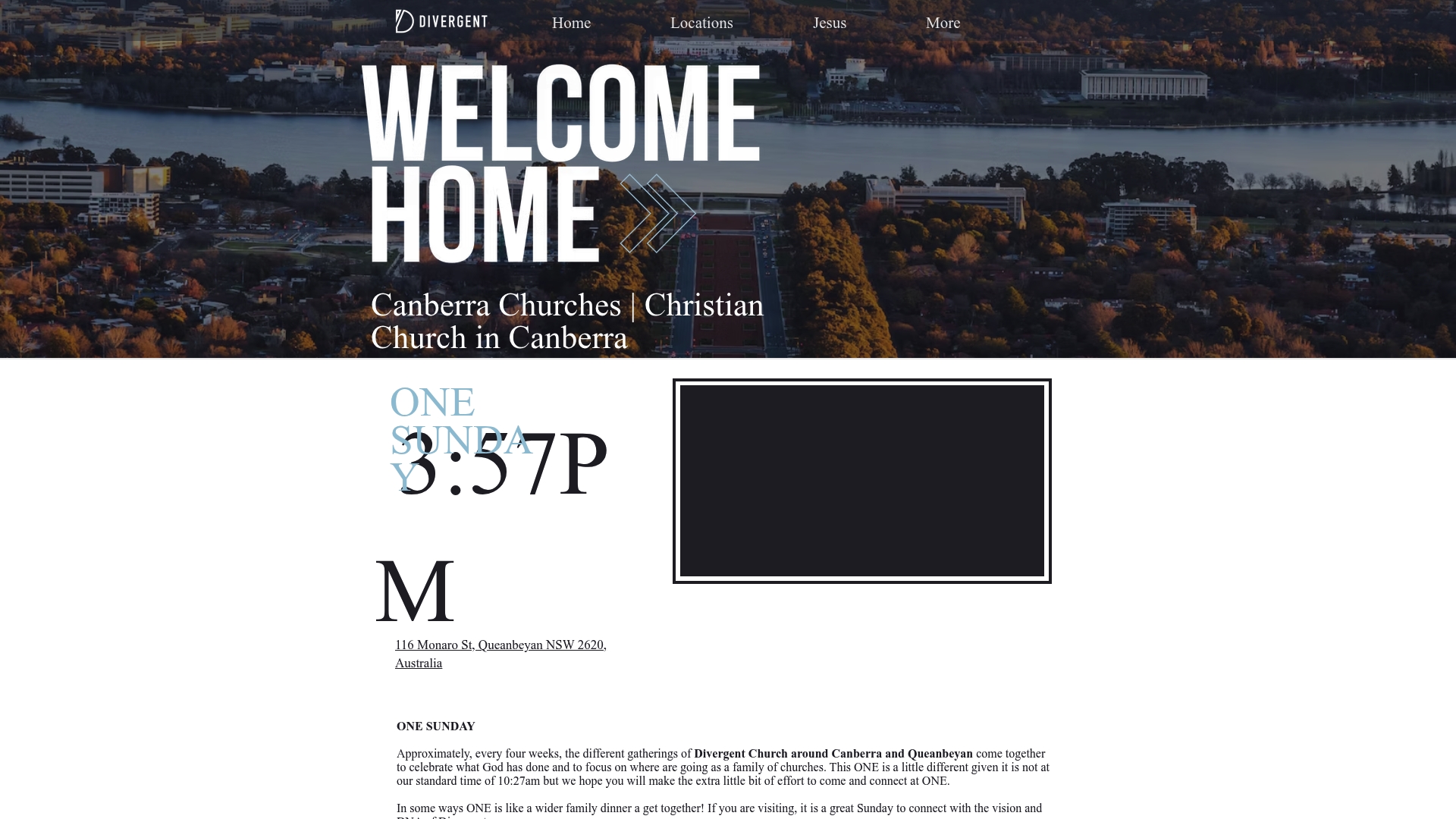
Our Discipleship Hub provides structured pathways for growth at every stage, from curiosity to deep commitment. Our life communities are the heart of our relational structure: small, midweek gatherings designed to form real friendships and real disciples. And if you want a low-pressure first step, our Engage Sundays offer a relaxed, informal setting where you are welcomed without expectation and introduced to who we are. Come as you are. Stay because it matters.
Frequently asked questions
What are the main branches of Christian communities?
The three main branches are Catholic, Orthodox, and Protestant, each with distinct governance, worship styles, and doctrines. Anglicanism occupies a unique middle position, blending elements of both Catholic and Protestant traditions.
How important are small groups in Christian community life?
Many Christians experience community mainly through recurring small-group practices rather than Sunday services alone, making them vital for genuine friendship and discipleship formation.
What should I look for when choosing a Christian community in Canberra?
Look for accessible small groups, relational connection opportunities, leadership clarity, worship style fit, and a genuinely welcoming atmosphere. Newcomers should seek clear pathways into smaller, relational spaces, as authentic community often forms midweek rather than on Sundays alone.
Can I explore different Christian communities without commitment?
Yes. Many churches in Canberra offer low-barrier events and welcome visitors without prior registration or expectations. Church events in Canberra are intentionally designed with no prerequisite knowledge or performance expected of newcomers.
Recommended
Comments