
The role of pastor in church: a biblical guide

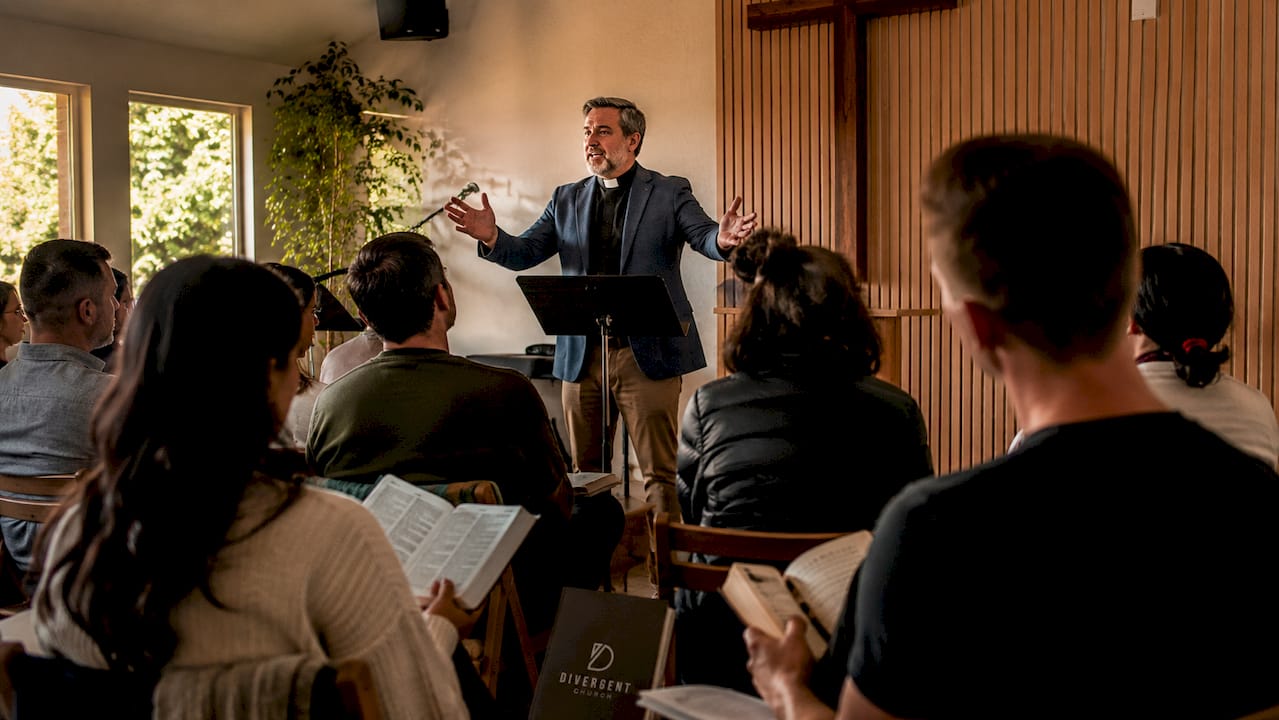
A pastor is defined as a shepherd called by God to lead, feed, protect, equip, and deploy the congregation according to biblical authority. The role of pastor in church is not a service profession or a community management position. It is a sacred office, accountable first to God and then to the people entrusted to that care. Understanding what a pastor is actually called to do, and what falls outside that calling, shapes the health of every church community. At Divergentchurch in Canberra, this biblical clarity forms the foundation of how leadership is understood and practised.
What are the core biblical responsibilities of a pastor?
Pastoral responsibilities are biblically categorised into five functions: leading, feeding, protecting, equipping, and deploying the congregation. Every other task a pastor performs is secondary to these five. That distinction matters enormously, because the moment a pastor becomes the church’s administrator, event coordinator, and counsellor for every personal crisis, the core work suffers.
Here is what each function looks like in practice:
Leading means setting direction under Christ’s authority. A pastor casts vision, makes hard calls, and models the life the congregation is invited to live.
Feeding means teaching sound doctrine through preaching, Bible study, and spiritual formation. The congregation grows when it is consistently nourished by Scripture.
Protecting means guarding the flock from false teaching and harmful influences. This requires courage, because naming error is rarely popular.
Equipping means preparing members to do the work of ministry themselves, not doing it all on the pastor’s behalf. Ephesians 4:12 frames this clearly.
Deploying means sending equipped members into mission, whether in the workplace, the neighbourhood, or across cultures.
A pastor’s accountability to God means these five functions take priority over congregational preferences. A pastor who preaches only what people want to hear has abandoned the feeding and protecting roles entirely.
Pro Tip: Write your five core functions on a card and review it weekly. When a new request arrives, ask whether it belongs to one of these five. If it does not, delegate it or decline it gracefully.
How does pastoral leadership differ across church structures?
The office of pastor carries different titles and structures depending on the church tradition. Biblical titles for pastors, including elder, overseer, and shepherd, reflect roles defined by Christ and imply mature, wise, and protective leadership regardless of denomination.

In Presbyterian and Anglican traditions, ordered ministry distributes authority across a plurality of elders and ordained clergy. No single person carries the full weight of pastoral care alone. In non-denominational churches, the senior pastor often holds far broader authority, which creates both freedom and significant risk.
The table below compares two common leadership structures:
Feature | Single-leader model | Team-based model |
Decision making | Centralised with one pastor | Shared across elders or leadership team |
Accountability | Often informal or external | Built into regular team meetings |
Burnout risk | High | Reduced through shared load |
Congregational participation | Limited | Actively encouraged |
Pastoral care coverage | One person’s capacity | Distributed across trained leaders |
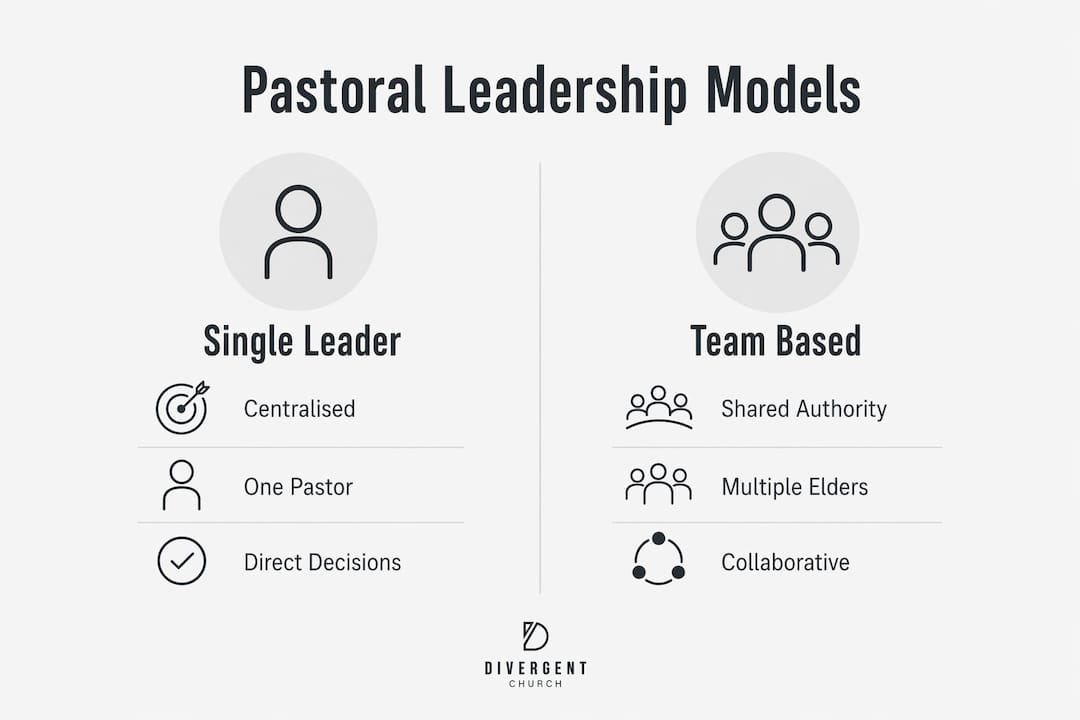
Team ministry reduces single-leader stress and produces better church health over time. This is not simply a management preference. It reflects the biblical pattern of shared eldership seen throughout the New Testament. Understanding how a pastor’s leadership style shapes the whole community helps congregations make wiser choices about the structures they build.
What challenges do pastors face, and how can they build sustainable ministry?
Pastoral burnout is one of the most serious threats to church health today. It does not usually arrive suddenly. It builds slowly as a pastor absorbs more and more tasks that fall outside the five core functions.
The pattern known as “Pastor Fetch” describes this burnout cycle precisely. A congregation member has a need. The pastor personally handles it. Another need arises. The pastor handles that too. Over months and years, the pastor becomes the single point of contact for every pastoral, administrative, and relational demand in the church. The five core functions get squeezed out by an endless list of urgent but secondary tasks.
Sustainable ministry requires deliberate choices. These are the most effective ones:
Define the role clearly in writing. A pastor who cannot say what they are not responsible for will eventually be responsible for everything.
Build a leadership pipeline. Real-world responsibility in a safe environment develops effective church leaders faster than any training programme alone.
Empower lay leaders. True leadership empowers laypeople to discover their callings rather than creating dependency on the pastor.
Protect the congregation from unrealistic expectations. A pastor called to please God, not the congregation, will sometimes make unpopular decisions. That is not a failure of leadership. It is the definition of it.
Understanding a pastor’s team personality and leadership style is a practical starting point for building a team that shares the load well. When leaders know how they each process decisions and relate to others, the whole team functions with less friction.
Pro Tip: Protect at least one leadership team meeting per month for vision and trust-building only. No administrative updates, no problem-solving. Senior leadership teams that focus on vision and trust produce more resilient, creative church cultures.
How does effective pastoral leadership shape church health?
A healthy church community reflects the character of its pastoral leadership over time. This is not about personality or platform presence. Lasting pastoral influence depends on deep spiritual roots, perseverance, and gospel reliance rather than charisma alone. That insight from Senior Pastor Eric Geiger cuts against the celebrity pastor culture that has caused so much damage in recent decades.
The qualities that build genuine church health look like this:
Maturity over momentum. A pastor who has walked through suffering, doubt, and failure leads with a depth that no amount of gifting can manufacture.
Servant authority. The biblical overseer leads by example, not by control. Congregations follow leaders they trust, and trust is built through consistent, humble service.
Shared ministry culture. When a pastor actively creates space for members to lead, teach, and serve, the church stops depending on one person and starts functioning as a body.
Gospel-centred identity. Pastoral care is empowered by resting in Christ’s ongoing shepherding work, not by the pastor’s own effort or reputation.
A healthy church community does not happen by accident. It grows from a pastor who tends the soil of their own soul first, then tends the congregation with that same care. When you are looking for a church, the qualities you see in its pastoral leadership will tell you more about the community’s health than any programme or facility.
Key takeaways
The role of pastor in church is defined by five biblical functions: leading, feeding, protecting, equipping, and deploying, and sustainable ministry depends on team-based leadership and clear role boundaries.
Point | Details |
Five core functions | A pastor’s primary duties are leading, feeding, protecting, equipping, and deploying the congregation. |
Accountability to God | Pastors answer to God first, which means unpopular decisions are sometimes the most faithful ones. |
Burnout prevention | Team-based leadership and clear role definitions protect pastors from the “Pastor Fetch” cycle. |
Leadership pipeline | Empowering lay leaders through real-world responsibility builds a resilient, self-sustaining church. |
Character over charisma | Lasting pastoral influence grows from deep spiritual roots, not platform presence or personality. |
What I’ve learnt about pastoral leadership after years in ministry
The most common mistake I see in church leadership is the assumption that a gifted communicator automatically makes a healthy pastor. Preaching ability matters. But the pastor who cannot say no, who absorbs every congregational need personally, and who measures their worth by how busy they are, will eventually collapse. And when a pastor collapses, the congregation feels it for years.
What I have come to believe is that the healthiest pastoral leadership is almost invisible in the best sense. The congregation is growing, members are finding their callings, and the church is serving its city. But no single person is the bottleneck. That kind of ministry does not happen by accident. It requires a pastor who has done the hard inner work, who leads from a place of gospel security rather than approval-seeking, and who genuinely wants to give ministry away.
At Divergentchurch, we have seen what happens when a community is shaped by that kind of leadership. People stop being spectators and start being participants. The church becomes something expressed through everyday life, not just consumed on a Sunday. That is the vision worth building toward, and it starts with a pastor who understands their role clearly enough to stay in it.
— Josh
Divergentchurch resources for pastors and church leaders
Divergentchurch has built practical resources for anyone wanting to grow in faith and leadership within a genuine community.
The Discipleship Hub brings together tools and pathways for equipping leaders at every stage of ministry. Whether you are a pastor wanting to build a stronger team or a congregation member ready to step into greater responsibility, the hub gives you a clear next step. The Lead Like Jesus programme builds servant leadership from the ground up, grounded in the same biblical model this article describes. If you are in Canberra and looking for a community where these values are lived out, not just taught, Divergentchurch is worth exploring.
FAQ
What is the primary role of a pastor in church?
A pastor’s primary role is to lead, feed, protect, equip, and deploy the congregation according to biblical teaching. All other tasks are secondary and should be delegated where possible.
How does a pastor differ from a church elder or deacon?
A pastor typically holds the preaching and shepherding function, while elders share in governance and oversight, and deacons focus on practical service. Many traditions use these roles together to distribute pastoral care across a team.
What causes pastoral burnout, and how can it be prevented?
Burnout most often comes from pastors absorbing every congregational need personally, a pattern sometimes called “Pastor Fetch.” Prevention requires clear role definitions, a strong leadership team, and deliberate delegation of non-core tasks.
Should a pastor always do what the congregation wants?
A pastor is accountable to God first, which means faithful leadership sometimes requires unpopular decisions. People-pleasing at the expense of biblical integrity undermines the very purpose of the pastoral office.
How can a congregation support their pastor well?
Congregations support their pastor best by understanding the five core biblical functions, taking personal responsibility for their own spiritual growth, and stepping into lay leadership roles rather than expecting the pastor to meet every need.
Recommended
Comments