
Types of church leadership: a guide for congregations


Church leadership is defined as the set of roles, governance structures, and relational styles through which a congregation is guided, taught, and sent into mission. Understanding the types of church leadership matters because the model a church adopts shapes everything: how decisions are made, how members are cared for, and how deeply a community grows in faith. Biblical offices like elders and deacons form the scriptural foundation, while governance models and leadership styles layer on top to create the full picture. Getting this right is not a bureaucratic exercise. It is a kingdom question.
1. What are the types of church leadership?
The types of church leadership fall into three distinct categories: biblical offices, governance models, and leadership styles. Each category operates at a different level. Biblical offices define who leads. Governance models define how authority flows. Leadership styles define the way leaders relate to those they serve. A church that understands all three is far better positioned to build a healthy, committed community.
These categories are not mutually exclusive. A congregation might hold to a Presbyterian governance model while its senior pastor leads with a servant style. Recognising this layered reality helps leaders and congregation members ask better questions about their own community.

2. Primary biblical leadership roles in churches
Biblical church leadership centres on two foundational offices: elders and deacons. These roles appear throughout the New Testament and remain the most widely recognised ministry positions across Christian traditions.
Elders (overseers) carry responsibility for spiritual oversight, teaching, and governance. Paul’s instructions in 1 Timothy 3 and Titus 1 outline the character qualifications for this role, emphasising integrity, faithfulness, and self-control above all else. Elders are shepherds, not executives.
Deacons serve the practical needs of the congregation so that elders can focus on prayer and the Word. Acts 6 shows this division of labour in the early Jerusalem church, where seven men were appointed to manage food distribution. The deacon role is not lesser. It is a distinct calling that keeps the community functioning with dignity and care.
Pastors hold a shepherding and vision-casting function that often overlaps with the elder role in smaller churches. In larger congregations, the pastoral team may include associate pastors, youth pastors, and worship leaders, each carrying a slice of the overall types of ministry roles within the body.
Elders: spiritual oversight, teaching, governance
Deacons: practical service, congregational care
Pastors: shepherding, vision, discipleship
Worship leaders: leading the community in corporate prayer and praise
Youth and children’s ministers: forming the next generation in faith
Pro Tip: If your church is clarifying its leadership structure, start with 1 Timothy 3 and Acts 14:23. These passages give you the biblical blueprint before you reach for any organisational chart.
3. Which church governance models shape how congregations are led?
Church governance is the formal system that determines where authority sits and how decisions are made. Three models dominate Christian history: Episcopal, Presbyterian, and Congregational. Each derives from biblical tradition and carries distinct strengths.
Governance model | Authority structure | Decision-making | Common denominations |
Episcopal | Bishop-led hierarchy | Top-down, bishop holds final authority | Anglican, Catholic, Methodist |
Presbyterian | Elder-led representative body | Shared among elected elders and councils | Presbyterian, Reformed |
Congregational | Local church autonomy | Democratic, congregation votes | Baptist, Pentecostal, independent |
Episcopal governance places authority in a bishop who oversees multiple congregations. This model provides clear accountability upward and consistent doctrine across a denomination. The risk is that local congregations can feel distant from decision-making.
Presbyterian governance distributes authority among a body of elected elders, often called a session or presbytery. Accountability structures in Presbyterian governance help prevent unchallenged authority and promote healthy leadership dynamics. This model suits churches that value both order and shared responsibility.
Congregational governance gives the local church full autonomy. Members vote on major decisions, and no external body holds authority over the congregation. This model prizes freedom and local ownership, though it can struggle when strong consensus is hard to reach.
No single model is universally correct. The right choice depends on a church’s theological tradition, size, and the level of accountability its leaders and congregation members want built into the system.
4. What are the main leadership styles observed in churches?
Leadership style describes how a leader relates to and influences those they serve. Three styles appear most frequently in church contexts: servant, transformational, and transactional.
Servant leadership is the most commonly observed style among church leaders, followed by transformational and transactional styles. This finding comes from a 2026 study of 384 church members and reflects the deep biblical roots of the servant model.
Servant leadership places the needs of others first. It is biblically mandated, grounded in Jesus washing his disciples’ feet in John 13 and his teaching in Mark 10:45 that “the Son of Man came not to be served but to serve.” Humility is not a personality trait in this model. It is a theological commitment.
Transformational leadership focuses on inspiring long-term change through vision and renewal. Transformational leadership aligns with honouring human dignity and encouraging growth, though it is less focused on the day-to-day relational exchanges that build commitment. This style works well for casting a compelling vision for a new season of ministry.
Transactional leadership operates through clear expectations, accountability, and motivation tied to outcomes. While it sounds corporate, transactional elements appear in healthy churches whenever leaders set clear goals, give feedback, and celebrate progress.
Servant leadership: Pros include deep trust, strong community bonds, and biblical alignment. The risk is that leaders may neglect necessary authority and direction.
Transformational leadership: Pros include inspiring vision and mobilising people toward change. The risk is that inspiration without structure can leave people energised but directionless.
Transactional leadership: Pros include clarity, accountability, and measurable progress. The risk is that it can feel transactional in the negative sense if relationships are not prioritised.
Pro Tip: The most effective church leaders blend styles. Use servant leadership as your posture, transformational leadership for vision seasons, and transactional elements to keep teams accountable and growing.
5. How do different leadership types impact community engagement and faith growth?
Leadership type has a direct effect on how committed congregation members feel and how deeply they grow in faith. Servant and transactional leadership styles show a significant positive relationship with overall church commitment. That finding is significant. It means the way a leader serves and holds people accountable matters more to congregational health than the size of their vision alone.
Transformational leadership, though inspiring, shows a statistically insignificant relationship with church commitment in studies. This does not mean vision is unimportant. It means vision without relational depth and accountability does not, on its own, build committed communities.
Leadership factor | Impact on community engagement | Impact on faith growth |
Servant leadership | High: builds trust and belonging | High: models Christ-like discipleship |
Transactional leadership | Moderate to high: clarity drives participation | Moderate: accountability supports growth |
Transformational leadership | Moderate: inspires but needs relational grounding | Moderate: vision motivates but must be embodied |
Character-based qualifications | High: integrity builds credibility | High: faithfulness models the life of faith |
Biblical leadership qualifications emphasise character traits such as integrity, faithfulness, and accountability over charisma or skills. A leader with a compelling vision but poor character will eventually erode the community’s trust. A leader with quiet integrity and genuine care will build something that lasts. The research and the Scripture point in the same direction.
The governance model also shapes engagement. Congregational models give members a direct voice, which tends to increase ownership and participation. Episcopal and Presbyterian models offer accountability and doctrinal consistency, which can deepen trust in the institution over time. Churches that see real community impact often combine clear governance with leaders who genuinely serve.
6. What leadership approaches best fit different church contexts?
No single leadership type fits every church. Context matters enormously. A church plant in a university suburb like Canberra faces different challenges than a multigenerational congregation in a regional town. The right approach blends biblical foundations with honest assessment of your community’s needs.
Servant leadership is the safest biblical default for any context. It is not passive. It is the posture from which all other styles should operate. Christian leadership focuses on character formation over innate traits, built through community and accountability in the church. This means leadership is developed, not simply discovered.
Choose Episcopal or Presbyterian governance if your church values accountability structures and connection to a wider denominational body.
Choose Congregational governance if your church prizes local autonomy and wants members deeply involved in major decisions.
Blend servant and transactional styles for day-to-day ministry leadership, and draw on transformational elements when casting vision for a new season.
Invest in developing new leaders at every level of the congregation, not just at the top.
Effective church leadership involves a multiplication mindset, raising up new leaders to prevent dependency on a single person. Leaders who fail to develop others risk creating dependency and jeopardising the ministry’s sustainability during leadership transitions. This is not a management principle. It is a discipleship imperative.
Pro Tip: Audit your leadership pipeline annually. If every key ministry depends on one person, you have a succession risk and a discipleship gap. Multiply leaders before you need to.
Key takeaways
The most effective church leadership combines servant posture, clear governance, and a multiplication mindset to build communities that are both committed and spiritually growing.
Point | Details |
Three leadership categories | Biblical offices, governance models, and leadership styles each shape a different dimension of church life. |
Servant leadership is foundational | Research and Scripture both confirm servant leadership as the most prevalent and impactful style for building church commitment. |
Governance model shapes accountability | Episcopal and Presbyterian models build accountability structures; Congregational models build local ownership and participation. |
Character over charisma | Biblical qualifications in 1 Timothy 3 prioritise integrity and faithfulness above skills or personality. |
Multiply leaders intentionally | A multiplication mindset prevents dependency and sustains ministry through leadership transitions. |
Why servant leadership is the non-negotiable foundation
I have watched churches with brilliant visionaries fall apart within two years of a leadership transition. The vision was compelling. The governance was clear. But the leader had never invested in raising up others, and when they left, the community had no roots of its own.
What I have come to believe, after years of observing and participating in church community life, is that servant leadership is not one style among many. It is the soil in which every other style must grow. You can be transformational without being a servant, but the vision will eventually serve the leader more than the congregation. You can be transactional without being a servant, but the accountability will feel like management rather than discipleship.
The churches I have seen thrive are led by people who genuinely believe their role is to make others flourish. They are not the most gifted speakers or the most charismatic personalities. They are the ones who show up, who develop others, and who hold authority lightly. That combination of humility and intentional multiplication is what builds a community that can outlast any single leader. If you are in a leadership role, the question worth sitting with is not “What is my leadership style?” It is “Who am I developing, and what will remain when I am gone?”
— Josh
Growing as a leader with Divergentchurch
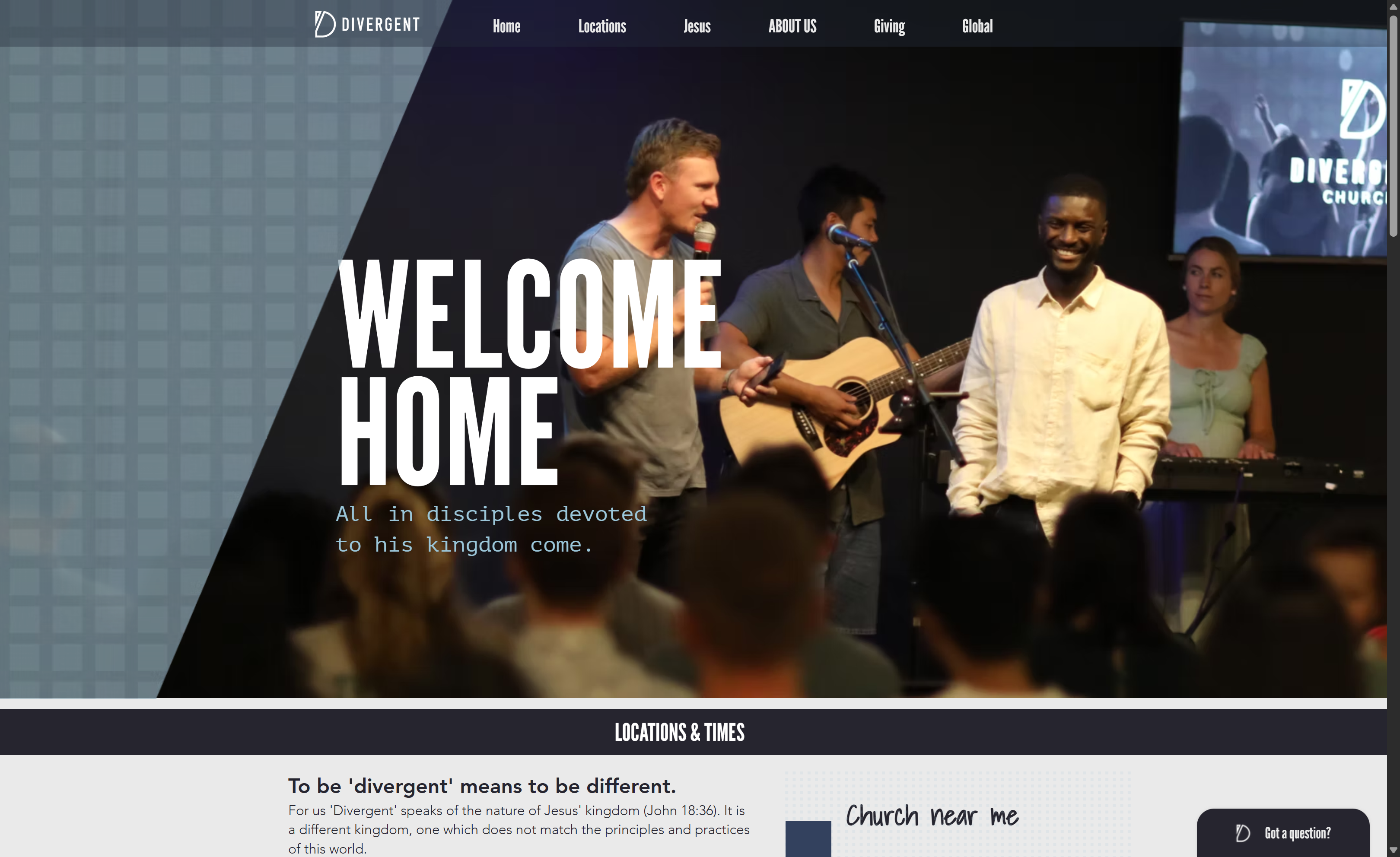
Divergentchurch exists in Canberra as a community shaped by Scripture, centred on Jesus, and expressed through everyday relationships and mission. Leadership development is not a programme here. It is woven into how we do life together.
Whether you are a seasoned elder or someone just beginning to sense a call to serve, the Discipleship Hub offers practical resources for growing in faith and leadership. You will find tools for personal formation, community engagement, and understanding your role within the body of Christ. If you want to go deeper in your leadership formation, the Lead Like Jesus resource is a grounded, biblically anchored starting point for anyone serious about leading well.
FAQ
What is church leadership?
Church leadership is the set of roles, governance structures, and relational styles through which a congregation is guided spiritually and practically. It includes biblical offices like elders and deacons, governance models like Episcopal or Congregational, and leadership styles like servant or transformational.
What are the main types of Christian leadership styles?
The three main church leadership styles are servant, transformational, and transactional. Servant leadership is the most commonly observed among church leaders and shows the strongest positive link with church commitment.
Which church governance model is most common?
Congregational governance is the most widely practised model globally, particularly among Baptist, Pentecostal, and independent churches. Episcopal and Presbyterian models are common in Anglican, Catholic, Reformed, and Presbyterian traditions.
How does leadership style affect congregation commitment?
Servant and transactional leadership styles show a significant positive relationship with church commitment, according to a 2026 study of 384 church members. Transformational leadership inspires vision but shows a weaker direct link to commitment on its own.
What biblical qualifications apply to church leaders?
The New Testament, particularly 1 Timothy 3 and Titus 1, sets out qualifications centred on character: integrity, faithfulness, self-control, and accountability. These qualities matter more than skills or charisma in building a trustworthy and lasting leadership foundation.
Recommended
Comments