
Types of church roles: a 2026 guide to ministry positions


Types of church roles are the diverse leadership and service positions within Christian communities that support worship, governance, care, and outreach. These roles span ordained clergy, paid staff, and everyday volunteers. Understanding them helps you discern where your gifts fit and how you can contribute meaningfully to the body of Christ. From the Senior Pastor to the person setting up chairs before Sunday, every position carries kingdom weight. This guide covers the full range of church leadership positions, organised by function, so you can find your place with clarity and confidence.
1. What are the main types of church roles?
Church roles are organised broadly into six functional categories: leadership and governance, preaching and teaching, worship, care and mercy, operations, and outreach and missions. This framework appears consistently across denominations and helps congregations assign responsibility without overlap. Most churches, regardless of size, draw from these same categories to build their teams.
Common church positions number around 15 in most North American congregations, covering pastoral, administrative, financial, and facilities functions. That number reflects the minimum needed to run a healthy, growing church. Smaller congregations often combine roles, while larger ones specialise further.

2. Key pastoral and clergy roles in church leadership
The Senior or Lead Pastor is the primary spiritual leader of a congregation. This person carries responsibility for preaching, vision, and the overall spiritual health of the church. In hierarchical governance models, the Senior Pastor often acts as the final decision-maker on doctrine and direction.
The Associate or Executive Pastor supports the Lead Pastor by managing day-to-day ministry operations. This role bridges vision and execution, coordinating staff and overseeing ministry departments. In larger churches, an Executive Pastor effectively functions as a chief operating officer for the ministry.
Elders provide governance and spiritual oversight, though their authority varies significantly by denomination. In elder-led churches, the elder board holds final authority above the pastor. In congregational models, elders advise rather than govern. Church governance directly shapes what the title “Elder” means in practice, so understanding your church’s structure matters before accepting any leadership role.
Deacons serve the practical and mercy needs of the congregation. Rooted in Acts 6, the deacon role was created to free pastors for prayer and the Word while ensuring the community’s physical needs were met. Deacons today may oversee benevolence funds, hospital visits, or community service programmes.
Key responsibilities across pastoral roles include:
Senior Pastor: Preaching, vision casting, staff leadership, and doctrinal accountability
Associate Pastor: Staff coordination, ministry oversight, and pastoral care support
Elders: Governance, spiritual oversight, and congregational accountability
Deacons: Practical service, mercy ministry, and congregational care
Pro Tip: Before accepting any pastoral or elder role, ask your church leadership to explain the governance model clearly. The same title carries very different authority in hierarchical, elder-led, and congregational structures.
3. Specialised ministry roles: youth, children, worship, and missions
Specialised ministry positions target specific groups or functions within the congregation. These roles require both theological grounding and practical skill in their area of focus. They are often the first paid staff positions added after the Lead Pastor in a growing church.
The Youth Pastor supports the spiritual growth of teenagers and young adults. This role involves teaching, mentoring, and creating safe community spaces where adolescents can wrestle with faith honestly. A Youth Pastor also works closely with parents and families as partners in discipleship.
The Children’s Ministry Director designs and runs programmes for children from infancy through primary school. Safe ministry training, volunteer recruitment, and age-appropriate teaching are central to this role. A well-run children’s ministry often determines whether young families stay connected to a church long-term.
The Worship Leader shapes the congregation’s corporate experience of God through music and liturgy. This is not simply a performance role. A Worship Leader selects songs theologically, leads rehearsals, and helps the congregation engage with Scripture through sung prayer.
The Missions Pastor or Coordinator connects the church to local and global outreach. This role manages partnerships with missionaries, organises short-term teams, and keeps the congregation’s vision oriented toward the world beyond its walls.
Key features of each specialised role:
Youth Pastor: Adolescent discipleship, family engagement, and safe community building
Children’s Ministry Director: Programme design, volunteer management, and safe ministry compliance
Worship Leader: Musical direction, theological song selection, and congregational engagement
Missions Coordinator: Missionary partnerships, outreach events, and global awareness
4. Administrative and operational roles essential to church function
Administrative and operational roles are the unseen infrastructure of a healthy church. Without them, even the most gifted preacher cannot sustain a growing congregation. These positions manage the logistics that allow ministry to happen consistently and safely.
The Church Administrator or Operations Director oversees scheduling, facilities bookings, staff coordination, and compliance. This person ensures that Sunday runs smoothly and that the organisation meets its legal and financial obligations throughout the week. In many churches, this role is the most undervalued and the most critical.
Financial roles such as Treasurer and Bookkeeper maintain the integrity of church funds. A Treasurer provides oversight and accountability to the elder board or congregation, while a Bookkeeper handles day-to-day transactions and reporting. Transparent financial management builds congregational trust and protects leadership.
The Communications Director manages the church’s public presence, including social media, website content, and internal announcements. Clear communication shapes how both members and newcomers understand what the church is doing and why. Poor communication is one of the most common reasons people disengage from church life.
The Facilities or Property Manager maintains buildings, equipment, and safety standards. This role ensures that the physical space reflects the care and order the church values spiritually. Operational roles like these enable effective ministry by removing friction from every other team’s work.
Key operational responsibilities include:
Church Administrator: Scheduling, compliance, staff coordination, and logistics
Treasurer/Bookkeeper: Financial oversight, reporting, and fund integrity
Communications Director: Social media, website, internal messaging, and public presence
Facilities Manager: Building maintenance, safety compliance, and equipment upkeep
Pro Tip: Volunteers with professional backgrounds in accounting, project management, or communications can step directly into these roles. You do not need a theology degree to serve in operational ministry.
5. Volunteer and lay leadership roles and how to discern your fit
Every believer is called to serve. This is not a peripheral idea in Christian theology. It is the direct teaching of 1 Corinthians 12, where Paul describes the church as a body with many members, each with a distinct and necessary function. Lay ministry often forms the operational backbone of churches, covering volunteer administration, technical support, and facilities.
The distinction between ordained staff and lay volunteers is one of formal recognition, not spiritual importance. Ordained roles involve a discernment process, theological education, and community assessment over time. Volunteer roles are accessible immediately and are often where lasting character is built. Reliability in smaller tasks frequently precedes leadership opportunities for volunteers.
Discerning your fit begins with understanding your spiritual gifts. Romans 12 and 1 Corinthians 12 both offer frameworks for identifying gifts such as teaching, administration, mercy, giving, and leadership. Aligning your service with your gifts produces both effectiveness and joy.
Common volunteer roles in church include:
Welcome and hospitality team: Greeting, ushering, and creating a warm first impression
Small group leader: Facilitating community, prayer, and Bible study in homes
Audio/visual technician: Managing sound, lighting, and live-stream production
Kids’ church volunteer: Supporting children’s ministry teaching and activities
Pastoral care visitor: Visiting the sick, elderly, or isolated members of the congregation
Setup and pack-down crew: Preparing and restoring the physical space for gatherings
The table below shows how formal and volunteer roles differ in key areas:
Feature | Formal/ordained roles | Volunteer/lay roles |
Selection process | Discernment, theological training, community assessment | Expression of interest, gifts assessment, short orientation |
Time commitment | Full-time or part-time paid position | Flexible, often a few hours per week |
Accountability | Elder board, denomination, or governance body | Ministry team leader or pastor |
Entry point | Years of preparation and character formation | Immediate, with mentorship provided |
Key takeaways
Church roles are most effective when matched to a person’s spiritual gifts, character, and calling rather than to ambition or availability alone.
Point | Details |
Roles span six categories | Leadership, teaching, worship, care, operations, and outreach cover the full range of church ministry. |
Governance shapes authority | The same title carries different weight depending on whether a church is hierarchical, elder-led, or congregational. |
Volunteers are essential | Lay ministry forms the operational backbone of most churches, not a secondary tier of service. |
Gifts precede titles | Aligning service with spiritual gifts produces effectiveness and sustains long-term commitment. |
Discernment takes time | Formal pastoral roles require years of character formation, not just theological knowledge. |
Why every church role is a kingdom role
Honestly, the most transformative shift I have seen in people’s approach to church service is when they stop asking “What role can I get?” and start asking “Where does God want to place me?” Those are very different questions, and they produce very different outcomes.
I have watched people burn out in high-profile ministry positions because they pursued the title rather than the calling. And I have watched others flourish in roles that looked invisible to everyone else, setting up chairs, running sound, visiting the elderly, because they understood that servant leadership is the heartbeat of Christian ministry, not a stepping stone to something more important.
The pathway to formal pastoral leadership is genuinely long. Ordination processes focus on character and teaching ability assessed by the community over years, not on a résumé or a degree alone. That is not a barrier. It is a gift. It means the church takes seriously what it means to entrust spiritual care to someone.
My honest encouragement is this: start where you are. Say yes to the small thing. Let your reliability speak before your ambition does. The roles that shape you most deeply are rarely the ones with the biggest titles. They are the ones where you learn to serve without recognition, and discover that is exactly where God does His best work in you.
— Josh
Finding your place at Divergentchurch
Divergentchurch exists to form disciples and cultivate genuine community in Canberra. Whether you are exploring what it means to lead, or simply wondering where you might serve, there are real pathways here for you.
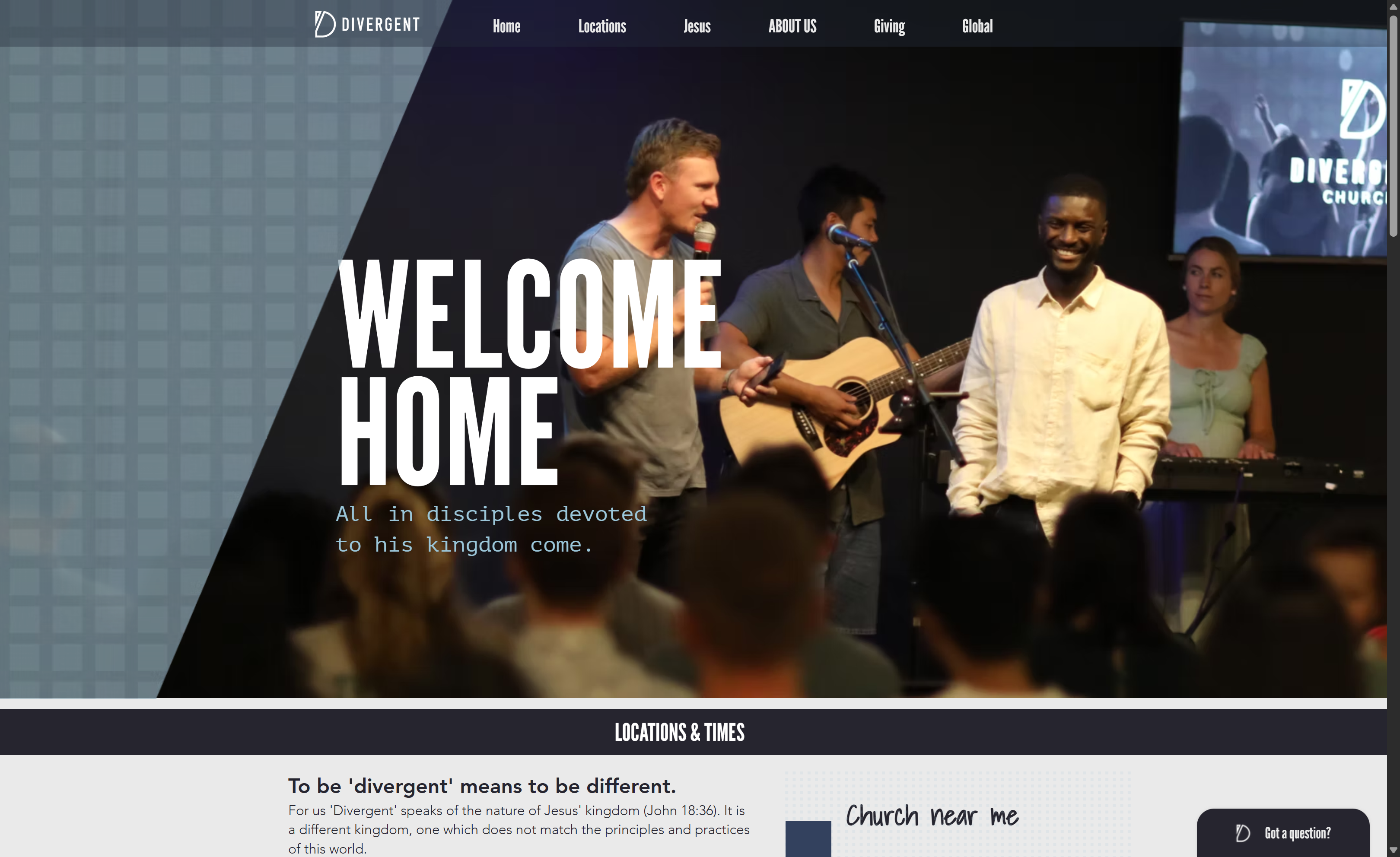
The Discipleship Hub is the best starting point for anyone wanting to grow in faith and understand their gifts before stepping into a specific role. For those ready to connect with others and serve together, Life Communities offer small groups where relationships form and ministry begins in everyday life. Divergentchurch is not simply a Sunday gathering. It is a community shaped by Scripture and expressed through the city of Canberra, and there is a place in it for you.
FAQ
What are the main types of church roles?
Church roles fall into six broad categories: leadership and governance, preaching and teaching, worship, care and mercy, operations, and outreach and missions. Most congregations draw from all six to build a functioning ministry team.
What is the difference between a pastor and an elder?
A pastor typically leads preaching and congregational care, while elders provide governance and spiritual oversight. In elder-led churches, the elder board holds authority above the pastor, though this varies by denomination and governance model.
Do I need formal training to serve in a church role?
Volunteer and lay roles require no formal theological training, only a willingness to serve and a commitment to growth. Formal pastoral and ordained roles involve a discernment process, theological education, and community assessment that typically spans several years.
How do I know which church role suits me?
Start by identifying your spiritual gifts using frameworks from Romans 12 or 1 Corinthians 12, then look for roles that align with those gifts. Talking with your pastor or a mentor about your passions and strengths is the most reliable first step.
Can volunteers move into paid church staff positions?
Reliability and character in volunteer roles frequently open doors to paid ministry positions. Churches typically observe how volunteers serve before extending formal leadership opportunities, making faithful service in smaller roles the most direct pathway to staff positions.
Recommended
Comments