
What is Christian fellowship: meaning and why it matters

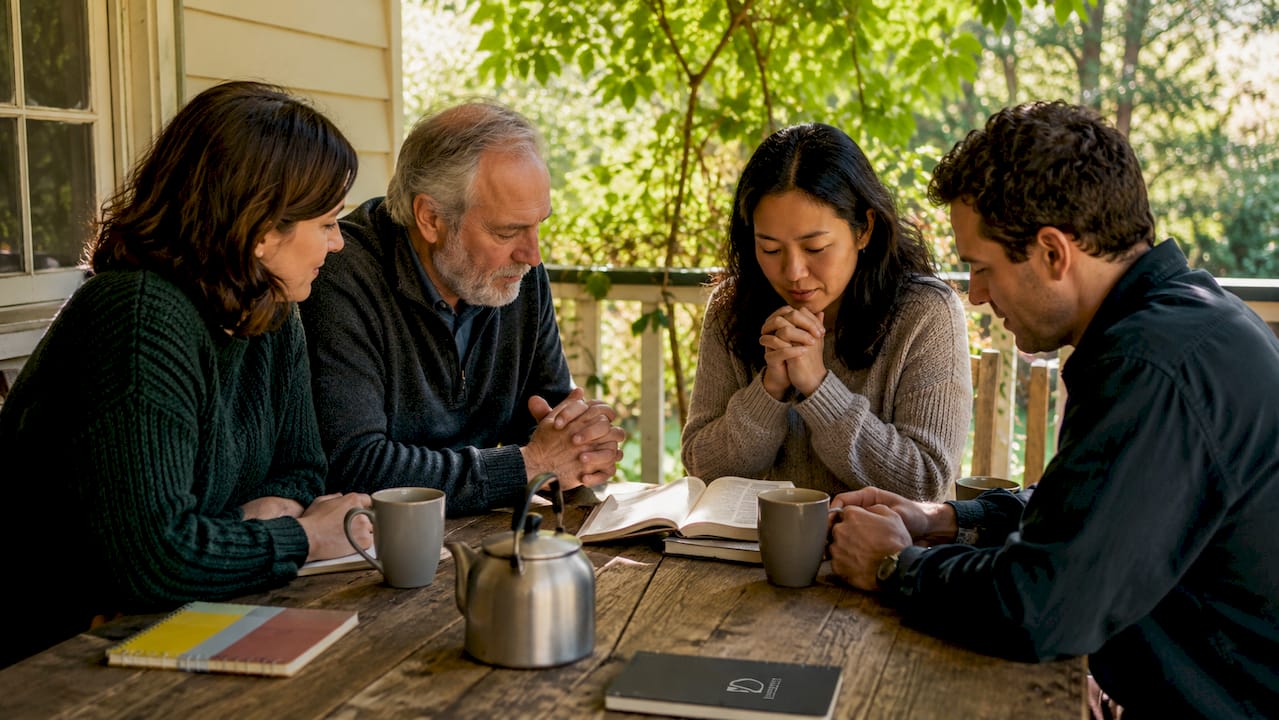
Christian fellowship is defined as the mutual bond and active partnership among believers, centred on Jesus Christ and expressed through shared life, mission, and worship. The Greek term behind this concept is koinonia, meaning communion, partnership, and joint participation in God’s work. Far from being an optional add-on to Christian life, koinonia is a spiritual necessity that shapes how believers grow, serve, and endure together. At Divergentchurch in Canberra, this understanding of fellowship forms the heartbeat of everything the community does, from Sunday gatherings to everyday relationships across the city.
What is Christian fellowship, and where does it come from?
Christian fellowship is grounded in Scripture, not invented by church culture. The New Testament uses koinonia to describe something far richer than shared coffee after a service. It speaks of believers participating together in the life of God, carrying one another’s burdens, and cooperating in the advance of His kingdom.
The clearest early picture appears in Acts 2:42, where the first church devoted itself to four things:
The apostles’ teaching — Scripture as the shared foundation of life together
Fellowship (koinonia) — active, mutual participation in God’s purposes
Breaking of bread — shared meals and the Lord’s Supper as acts of unity
Prayer — communal dependence on God
This early church model was not a programme. It was a way of life. The believers in Acts sold possessions, met daily, and shared everything. That level of commitment reflects what koinonia actually demands.
Hebrews 10:24–25 adds another layer. Scripture urges believers not to neglect meeting together but to “stir up one another to love and good works.” The word “stir up” is provocative in the best sense. It means fellowship is meant to be active, not passive. You are not just present. You are participating in the spiritual growth of others.
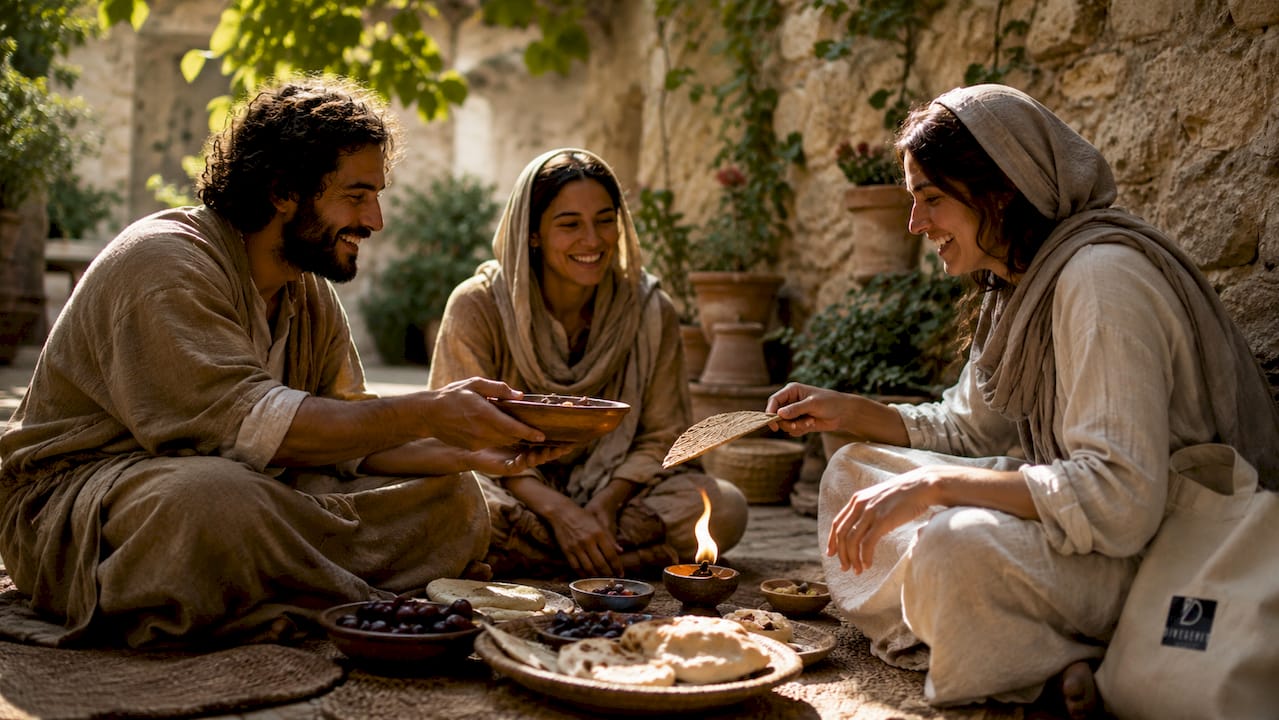
Fellowship also carries a missional dimension. When Paul writes of his partnership with the Philippians in the gospel (Philippians 1:5), he uses koinonia to describe a shared investment in something beyond themselves. Biblical koinonia requires a mission focus on God’s kingdom. Without that, a gathering is simply a social club with a Christian label.
What are the main benefits of Christian fellowship?
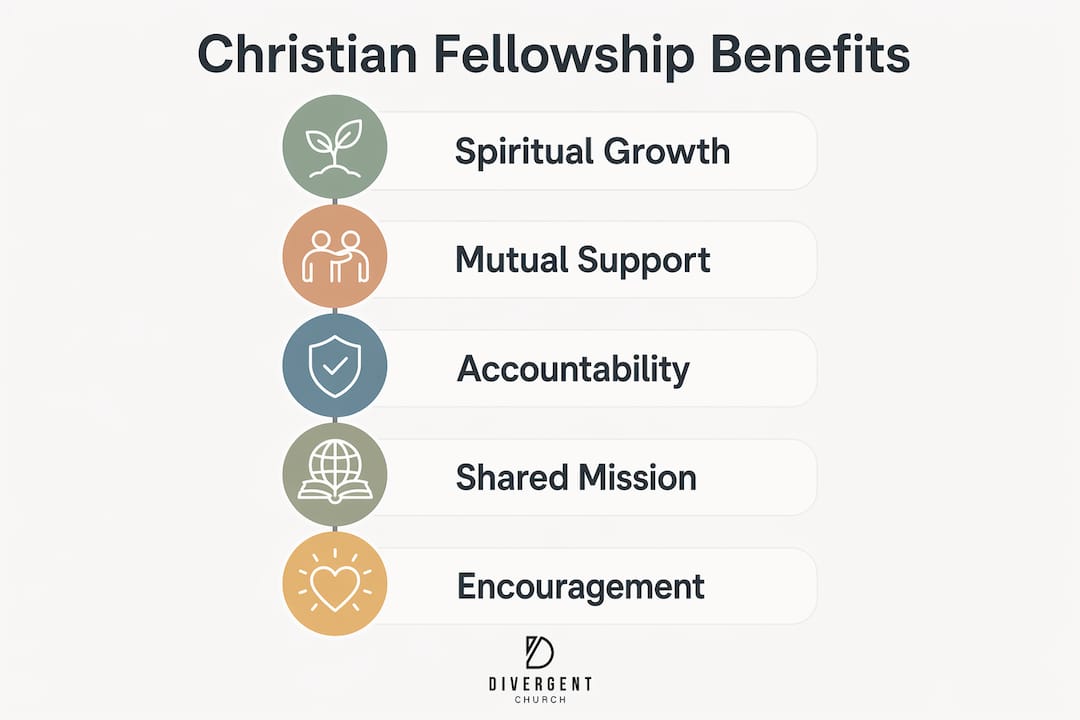
The benefits of genuine fellowship reach far deeper than most people expect. They are not merely emotional or social. They are spiritual and formative.
Strengthened faith. Hearing how God has worked in another person’s life builds your own confidence in Him. Shared testimonies are a form of corporate worship.
Spiritual accountability. Fellowship creates relationships where others can speak truth into your life. Community nurtures humility and helps believers recognise blind spots they cannot see alone.
Emotional healing. A safe, grace-filled community provides space for grief, struggle, and restoration. Many people find healing not through formal counselling alone, but through faithful, consistent community support that walks with them over time.
Encouragement as a means of grace. Words of Scripture spoken at the right moment carry genuine spiritual weight. Fellowship is one of the primary ways God delivers grace to His people.
Experiencing God’s presence collectively. Jesus promised that where two or three gather in His name, He is present (Matthew 18:20). Corporate worship and prayer open dimensions of encounter that solitary faith rarely reaches.
A sense of belonging. Isolation is one of the most corrosive forces in modern life. Fellowship answers the deep human need to be known, accepted, and part of something larger than yourself.
Pro Tip: If you are new to a church community, commit to one smaller group before trying to connect with the whole congregation. Depth comes from consistent, smaller gatherings, not large crowds.
The ten to eighteen benefits noted across Christian scholarship consistently point to the same conclusion: fellowship is not a supplement to faith. It is one of the primary environments in which faith grows.
How does true fellowship differ from casual social gatherings?
This is where many people get confused, and the confusion matters. Not every gathering of Christians qualifies as biblical fellowship.
True fellowship requires spiritual investment and a shared mission. A social hobby group built around common interests can be enjoyable and even healthy. But it is not koinonia. The difference lies in what the gathering is oriented toward.
Feature | Social gathering | Biblical fellowship |
Primary purpose | Shared interest or enjoyment | Shared mission in God’s kingdom |
Depth of interaction | Surface-level conversation | Vulnerability and mutual accountability |
Use of Scripture | Absent or incidental | Central to encouragement and exhortation |
Orientation | Inward (the group itself) | Outward (God’s purposes and others) |
Outcome | Enjoyment and connection | Spiritual growth and grace |
The cultural tendency toward isolationism and superficial digital connections makes this distinction more urgent than ever. Social media offers the appearance of community without its substance. You can have hundreds of online “friends” and still be profoundly alone. Face-to-face, vulnerable fellowship is countercultural. That is precisely why it is so vital.
Relying only on Sunday services also misses the mark. Sunday attendance alone typically misses the relational accountability and word-centred encouragement that define biblical fellowship. A healthy church community looks quite different from a weekly attendance habit. You can read more about what that looks like at Divergentchurch’s guide on genuine spiritual connection.
Pro Tip: Ask yourself after any church gathering: “Did I speak a word of Scripture or genuine encouragement to someone today?” If the answer is consistently no, you may be attending without truly fellowshipping.
How to build Christian fellowship in your own life
Authentic fellowship does not happen by accident. It requires intentional choices, repeated over time.
Join a Bible study or small group. Smaller gatherings create the relational safety needed for real conversation. They are where vulnerability and communal life beyond formal meetings actually take root.
Commit to prayer with others. Praying together is one of the most intimate acts of fellowship. It requires honesty about need and trust in God’s provision.
Serve alongside others. Shared service builds bonds that shared seating never does. Working together toward a kingdom purpose creates the kind of joint participation in mission that koinonia describes.
Speak Scripture into people’s lives. Fellowship involves speaking helping words that keep hearts tender before God. This is not preaching at people. It is the gentle, timely word that reminds a struggling friend of what is true.
Resist the pull of isolation. When life gets busy or painful, the temptation is to withdraw. Biblical fellowship calls you back. Choosing to show up, even when it costs something, is itself an act of faith.
Pursue relational depth beyond Sunday. Invite people into your week, not just your pew. Meals, walks, and ordinary life shared together are the soil in which genuine community grows.
For those new to Canberra or seeking a starting point, Divergentchurch has practical guidance on finding Christian community in the city that can help you take the first step.
Key takeaways
Christian fellowship is defined by koinonia: active, mutual participation in God’s purposes, not mere social attendance.
Point | Details |
Rooted in koinonia | Fellowship means joint participation in God’s work, not just shared social time. |
Biblical foundation | Acts 2:42 and Hebrews 10:24–25 establish fellowship as a core Christian practice. |
Spiritual benefits | Fellowship builds faith, accountability, healing, and a genuine sense of belonging. |
Distinct from socialising | True fellowship requires vulnerability, Scripture, and a shared kingdom mission. |
Requires intentionality | Authentic community grows through small groups, shared service, and consistent presence. |
Fellowship changed how I understand faith itself
By Josh
I used to think fellowship was the part of church life you could skip if you were busy. Sunday service felt like the real thing. Everything else felt optional. I was wrong, and it took a season of genuine isolation to show me how wrong.
What I have come to see is that many Christians underestimate how much they need other believers to truly know and enjoy Jesus. There are dimensions of who God is that you simply cannot access alone. You need someone else’s testimony to see what you have been blind to. You need someone else’s prayer to break through what your own words cannot reach.
The hardest part of fellowship is not finding it. It is choosing vulnerability when every instinct says to stay guarded. The moment you share something real, something unpolished, something that costs you, is the moment fellowship actually begins. Before that, you are just attending.
What I have also noticed is that people who drift from faith almost always drift from community first. Isolation is not just a symptom of spiritual struggle. It is often the cause. The writer of Hebrews knew this. That is why the instruction is not “try to meet together” but “do not neglect” it. The language is urgent because the stakes are real.
If you are searching for deeper connection in your faith, do not wait for the perfect community to appear. Step into an imperfect one and invest. That is where the seeds of genuine fellowship are planted, and where they grow.
— Josh
Grow in fellowship at Divergentchurch
Divergentchurch exists to help people in Canberra find exactly this kind of community. The church is not simply a Sunday gathering. It is a community shaped by Scripture, centred on Jesus, and expressed through everyday life and relationships across the city.
The Discipleship Hub is a central resource for anyone ready to grow in faith and engage more deeply in Christian community. For those seeking smaller, relational gatherings built around accountability and shared life, Life Communities offers small groups designed for exactly that purpose. Whether you are new to faith or simply new to Canberra, there is a place for you here.
FAQ
What does koinonia mean in Christian fellowship?
Koinonia is the Greek word translated as “fellowship” in the New Testament. It means communion, partnership, and joint participation in God’s work and purposes.
Why is Christian fellowship important for spiritual growth?
Fellowship builds faith through shared testimonies, provides accountability against spiritual drift, and delivers grace through Scripture-centred encouragement. Hebrews 10:24–25 describes it as essential, not optional.
What is the difference between church fellowship and social gatherings?
Church fellowship is oriented toward God’s kingdom, involves vulnerability and mutual accountability, and uses Scripture as its foundation. Social gatherings may be enjoyable but lack the spiritual investment that defines biblical koinonia.
What are some examples of Christian fellowship activities?
Bible study groups, shared prayer, serving together in mission, shared meals, and small accountability groups are all examples of Christian fellowship in practice. Each creates the relational depth that koinonia requires.
Can you experience Christian fellowship online?
Online connection can supplement fellowship but does not replace it. Face-to-face, vulnerable community is the biblical standard, and digital interaction alone typically lacks the depth and accountability that genuine fellowship demands.
Recommended
Comments