
Workflow for church service: a practical guide

How does a church service workflow actually unfold?
A church service workflow is the organised sequence and execution plan guiding how each part of a Christian worship service unfolds, from the first welcome to the final sending. A standard Sunday service typically runs 60–90 minutes, moving through a spiritually intentional arc.
The order of worship follows four movements: Gathering, Proclamation, Response, and Sending. Each carries theological weight, not just logistical function.
Welcome and call to worship — God calls the congregation into his presence
Praise and sung worship — the community responds with adoration
Prayer of confession and assurance — honest acknowledgement and grace received
Scripture reading and sermon — the Word proclaimed and applied
Response — affirmation of faith, offering, or communion
Sending — the benediction commissions disciples into the week
Worship planners at Divergentchurch treat this arc the way a director plots dramatic action, shaping emotional and spiritual progression so the congregation moves from gathering distance to intimate encounter with God. Ushers, sound technicians, worship leaders, and pastors each hold defined responsibilities within that movement, making coordination as much a spiritual act as a practical one.
Table of Contents
What is the difference between a run sheet and an order of worship?
These two documents serve distinct purposes, and confusing them is one of the most common planning mistakes.
The order of worship is the congregation’s spiritual roadmap. It names each element, reflects the theological intention behind it, and is often printed in a bulletin. Terms like salutation, invocation, and benediction carry deep scriptural meaning, inviting worshippers into active, prayerful participation rather than passive attendance.
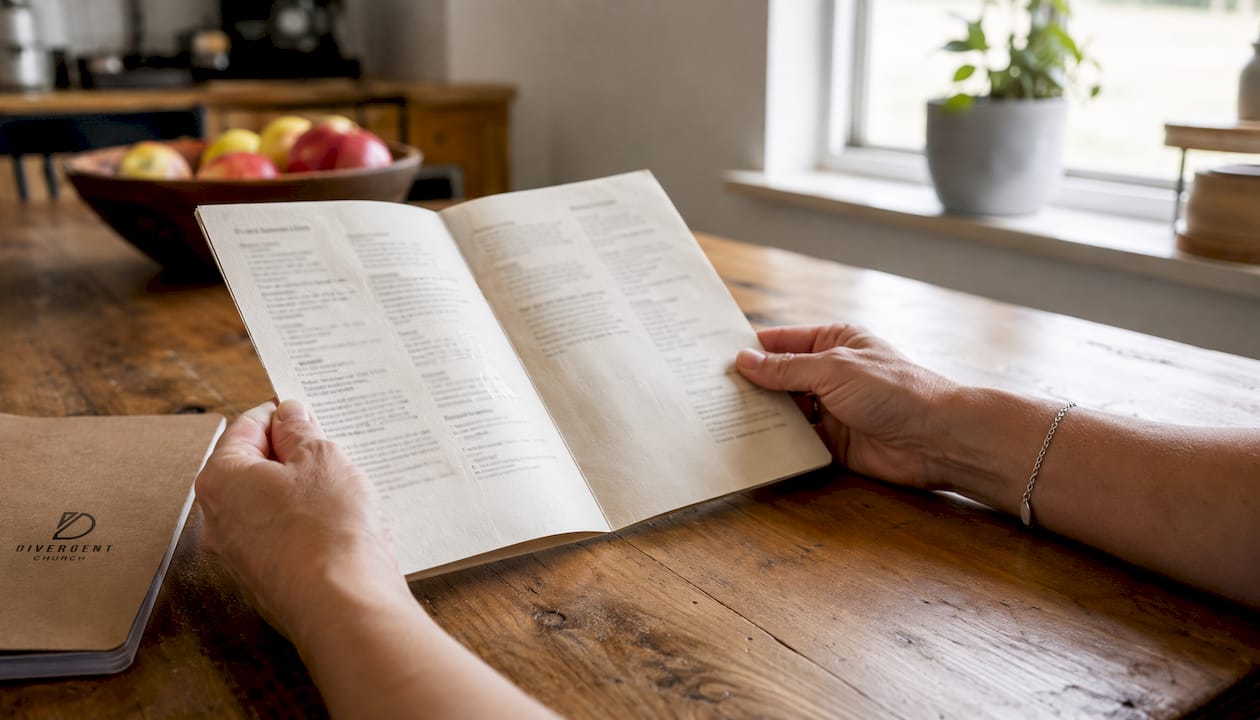
The run sheet is the internal operational document. It provides a minute-by-minute breakdown specifying song order, precise technical cues for audio, lighting, and media transitions, and the name of every person on stage. The congregation never sees it; the team lives by it.
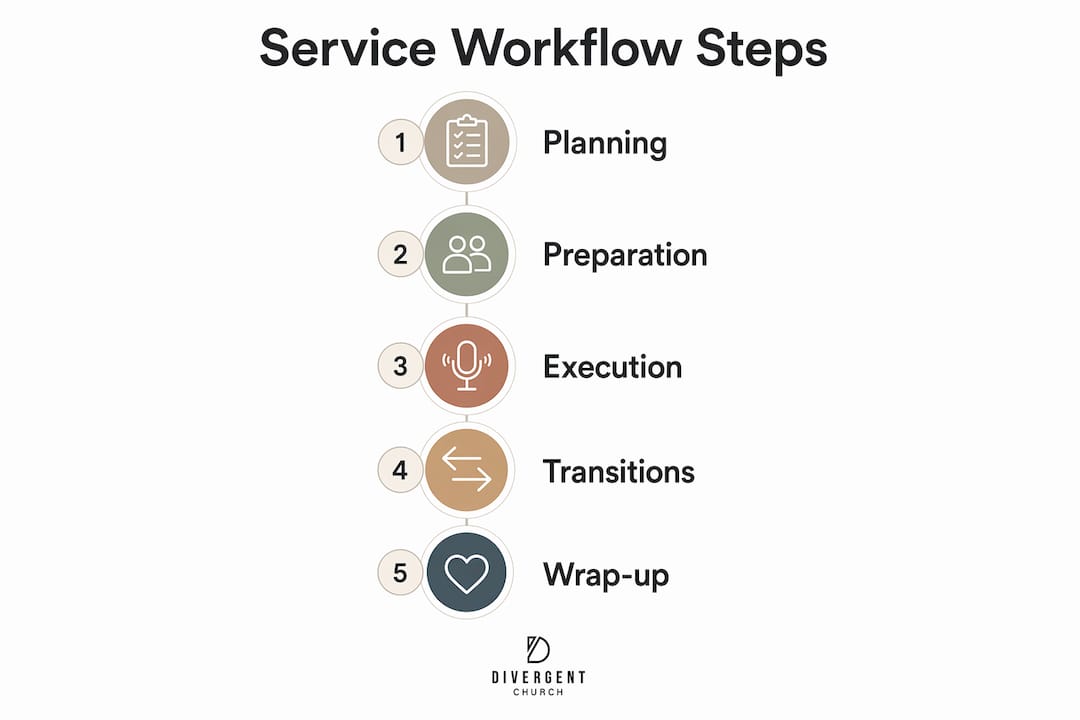
Transitions are where most service workflows break down. Scripting transitions as deliberate elements, whether a musical bridge, a spoken word, or a moment of silence, prevents disconnection between segments. Musical planning must also consider tempo and key relationships between songs so movement from one to the next feels like a single breath, not a gear change.
Phased preparation makes all of this possible. A healthy planning rhythm looks like this: rough framework locked six weeks out, final song selection confirmed two weeks out, and clear communication to all volunteers three days before. Late changes create volunteer anxiety and erode trust. Centralised tools that attach charts, stage plots, and song demos mean every team member accesses the same resources, removing the errors that informal communication breeds. For practical tips on musical flow and pacing, Divergentchurch has gathered guidance specifically for leaders and volunteers.
How should announcements fit into the service?
Announcements belong in the Gathering movement, placed after the welcome and before the call to worship. This positioning settles newcomers, orients the congregation, and then releases attention fully toward God. Keep them brief, personally delivered, and connected to community life rather than read from a screen. Announcements that reflect genuine kingdom activity, a mission trip, a baptism, a new Life Community, carry spiritual weight when framed as stories of what God is doing rather than administrative notices.
Welcoming newcomers well within the service
Hospitality is theology made visible. Ushers are the first embodiment of the church’s welcome, so their warmth and attentiveness matter before a single word is spoken from the front. Clear signage, a simple printed order of service, and a genuine greeting at the door reduce the anxiety a first-time visitor carries in. During the service itself, brief explanations of unfamiliar elements, spoken naturally by the worship leader, help newcomers participate rather than observe. Divergentchurch invites everyone to explore how to participate in the life of the community beyond Sunday.
Key takeaways
A well-planned church service workflow holds spiritual intention and operational precision together, ensuring every element from welcome to sending serves the congregation’s encounter with God.
Point | Details |
Service duration and arc | A typical Sunday service runs 60–90 minutes across four movements: Gathering, Proclamation, Response, and Sending. |
Two distinct documents | The order of worship is the congregation’s spiritual guide; the run sheet is the team’s minute-by-minute operational tool. |
Transitions need scripting | Most workflow failures happen at transitions; treating them as deliberate elements prevents disconnection and timing issues. |
Phased planning protects volunteers | Lock the framework six weeks out, finalise songs two weeks out, and communicate clearly three days before the service. |
Hospitality begins before the sermon | Ushers, signage, and a printed order of service reduce newcomer anxiety and invite genuine participation from the first moment. |
Recommended
Comments