
Examples of church missions: 10 inspiring ideas for 2026


Church mission is defined as the active, obedient response of God’s people to the Gospel, expressed through evangelism, service, and community transformation. The best examples of church missions show that this work is not limited to overseas trips or large organisations. As Rev. Ian M. Thomas explains, mission includes prayer, hospitality, financial support, and daily witness. From medical outreaches in Mozambique to grassroots parish missions in Argentina, the scope of what churches can do is far wider than most leaders realise. This article gives you ten concrete, practical examples to inspire your next step.
1. What are the different types of church missions?
Effective church missions align with three core pillars: evangelism and discipleship, church planting, and church strengthening. Each pillar serves a different need, and the strongest mission programmes weave all three together over time.
The main categories include:
Evangelism and discipleship: Sharing the Gospel directly and forming new believers into committed disciples.
Community service and humanitarian aid: Meeting physical needs through food, medical care, and housing support.
Church planting: Establishing new congregations in areas with little or no Christian witness.
Church strengthening: Supporting existing local churches with training, resources, and relational networks.
Sustainable development: Economic empowerment, agricultural training, and education that build long-term community capacity.
Short-term mission trips generate enthusiasm and mobilise volunteers quickly. Long-term missions, however, build the relational trust that produces lasting change. The wisest church leaders treat short-term trips as seeds planted into longer commitments, not as complete projects in themselves.
Pro Tip: Before planning any mission activity, identify which of the three pillars it serves. A trip that tries to do everything at once often does nothing well.
2. Large-scale international medical missions
Large-scale medical outreaches are among the most visible church mission activities in the world today. The Abesewa 2026 Medical Missions Outreach, run by the Church of Pentecost in Ghana, deployed 120 volunteer doctors alongside evangelism teams. That scale of volunteer mobilisation shows what a well-organised denomination can achieve when medical care and Gospel proclamation work together.
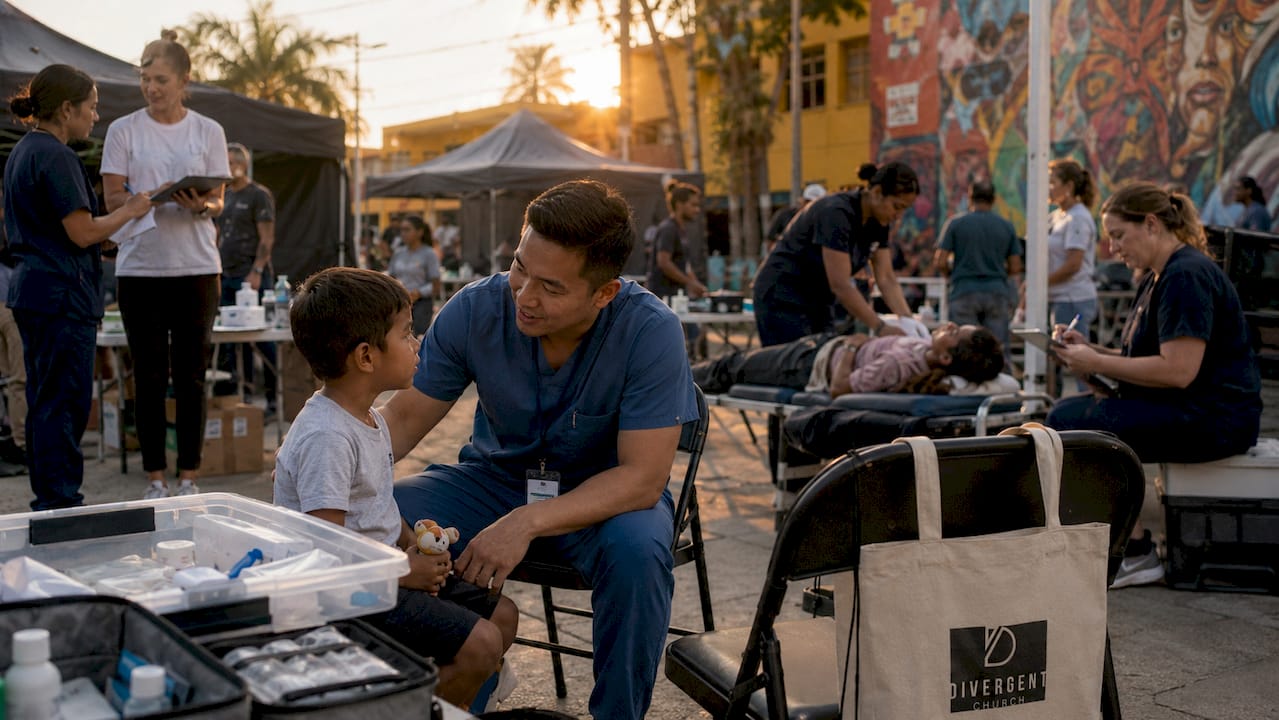
The Mozambique Mission 2026, titled “Serving to Save,” reached a similarly impressive scope. The team served 1,272 families, distributed more than 17,000 clothing items, and provided 3,300kg of staple food in Chimoio. Health screenings and vocational training ran alongside the food and clothing distribution. This is what holistic mission looks like in practice: meeting the whole person, not just one dimension of their need.
Both missions demonstrate that international church outreach programmes require multi-disciplinary teams. Doctors, logistics coordinators, kitchen staff, and evangelists all contribute equally to the outcome.
3. Volunteer mobilisation through Send Relief
Send Relief’s Serve Tour is one of the clearest examples of how churches can mobilise volunteers at scale for global impact. In 2025, Send Relief engaged over 4,000 volunteers who collectively served 28,500 people across multiple countries. The tour combined vision clinics, construction projects, and feeding programmes, generating more than 800,000 Gospel conversations worldwide. Nearly 430 people made professions of faith directly connected to those service encounters.
What makes this model worth studying is the integration of practical service with intentional evangelism. Volunteers did not choose between serving and sharing. They did both simultaneously. Church leaders planning mission trips can adopt this integrated approach regardless of team size. Even a group of ten people can run a vision clinic, a feeding programme, and an evangelism conversation in the same community on the same day.
4. Grassroots parish missions and house-to-house outreach
The “Listen, My People” parish mission in Argentina demonstrates what sustained, grassroots community engagement produces. Around 500 missionaries visited approximately 1,900 homes in a single week, following a year of logistical and spiritual preparation. The mission did not end when the week concluded. Teams built meeting houses specifically to consolidate the relationships formed during outreach, turning a one-week event into an ongoing community renewal process.
Local mission activities like this one reflect what Divergentchurch practises in Canberra: the role of the church in society extends far beyond Sunday gatherings. Daily witness, hospitality, and prayer in neighbourhoods are legitimate and powerful mission acts. Churches do not need a passport to do meaningful mission work.
Effective local outreach strategies include:
Regular house visits and neighbourhood walks with intentional conversation.
Small group meetings in homes that welcome people who would never enter a church building.
Hospitality events such as shared meals, community barbecues, and school holiday programmes.
Prayer walking as a spiritual discipline that also builds familiarity with local needs.
Pro Tip: Year-long preparation before a one-week outreach event dramatically increases the depth of community relationships formed. Do not skip the slow work of presence.
5. Sustainable missions and economic empowerment
Sustainable mission work builds local capacity rather than creating dependency on outside resources. The Sisters of Mercy project in Kenya illustrates this principle clearly. Their 290 members in SILC financial groups use table-banking to generate income, fund community needs, and sustain church growth without ongoing external funding. SILC stands for Savings and Internal Lending Communities, a micro-finance model that keeps economic power within the local group.
Agricultural evangelism missions in Tanzania and Nigeria follow a similar logic. Missionaries teach farming techniques alongside Gospel proclamation, and the resulting churches are self-sustaining from the outset. In Tanzania, the Mwakalundi Baptist Church began when 80 people were baptised under a tree. Documenting that milestone gave the new congregation an organisational identity and a foundation for growth. That single act of record-keeping matters more than it might appear.
Approach | Outcome |
SILC table-banking groups | Local economic self-sufficiency without external aid dependency |
Agricultural evangelism | New churches formed around shared skills and Gospel proclamation |
Milestone documentation | Organisational identity that supports long-term church development |
Local leadership training | Ongoing growth led by community members, not outside missionaries |
The pattern across all these examples is the same: building local leadership produces churches that grow independently. Missions that transfer skills and relationships outperform missions that transfer only resources.
6. Short-term mission trips: planning and logistics
Short-term mission trips are the entry point for most volunteers, and they require more preparation than many churches expect. The San Antonio mission trip 2026 set a fundraising goal of $250 per participant for a three-day outreach. That figure covers transport, lodging, and ministry supplies. It is a realistic baseline for weekend trips in a domestic context.
Practical planning steps for any mission trip include:
Define the mission pillar. Decide whether the trip focuses on evangelism, service, or church strengthening before recruiting volunteers.
Assign team roles early. Medical, kitchen, logistics, and evangelism roles need to be filled before departure, not on arrival.
Set a realistic fundraising timeline. Three to six months is the minimum for a weekend trip. Longer trips require twelve months or more.
Engage the host community first. Contact local church leaders or community organisations before finalising any programme. Culturally adaptive strategies outperform standard templates every time.
Debrief thoroughly on return. A structured debrief converts short-term experience into long-term commitment and avoids the “mission trip high” that fades within weeks.
The Mozambique Mission 2026 depended on behind-the-scenes logistics teams as much as its medical and evangelistic staff. Kitchen crews, supply coordinators, and transport managers made the frontline work possible. Church leaders planning trips should recruit for these roles with the same intentionality they bring to recruiting preachers and doctors.
Pro Tip: Recruit your logistics team before your evangelism team. A mission without food, transport, and supplies collapses quickly, regardless of how gifted the speakers are.
7. Church planting as a mission strategy
Church planting is one of the most direct expressions of mission work, and it produces the most durable long-term fruit. A planted church continues to evangelise, disciple, and serve its community long after the planting team has moved on. This is why church multiplication is increasingly recognised as a core mission strategy rather than a specialist activity reserved for denominations with large budgets.
The Mwakalundi Baptist Church in Tanzania began under a tree with 80 baptisms. That gathering became a congregation with a name, a membership roll, and a pastoral structure. The planting team’s decision to document the baptism milestone gave the new church an identity it could build on. Small acts of organisational intentionality produce large long-term results.
Divergentchurch in Canberra approaches disciple-making as the foundation of any planting effort. Disciples who are formed well become the leaders of new communities. The sequence matters: formation before multiplication.
8. Local hospitality and daily witness as mission
Hospitality is one of the most underrated church outreach programmes available to any congregation. Opening a home, sharing a meal, or welcoming a stranger into a small group costs very little and builds the kind of relational trust that formal programmes rarely achieve. Community engagement tactics that centre on genuine relationship rather than programme delivery consistently produce deeper and more lasting connections.
Churches in university cities like Canberra have a particular opportunity here. Students, new arrivals, and transient workers are often isolated and actively looking for community. A church that practises genuine hospitality does not need a large outreach budget. It needs members who are willing to open their lives to people outside their existing social circle.
This is the kind of mission Divergentchurch is built around: presence in the rhythms of the city, expressed through everyday relationships. It is not spectacular. It is faithful. And faithfulness, sustained over years, produces the most profound community transformation.
9. Prayer and intercession as a mission foundation
Prayer is not a preliminary to mission. It is mission. Rev. Ian M. Thomas identifies intercession as one of the core expressions of obedient Gospel response, equal in value to overseas travel or community service. Churches that treat prayer as the foundation of their outreach programmes, rather than a warm-up activity, consistently report deeper community impact and greater volunteer resilience.
Prayer walking, in particular, connects intercession with physical presence in a neighbourhood. A team that walks a suburb weekly, praying for the people they see, develops a level of local knowledge and spiritual attentiveness that no programme can replicate. This practice also builds community partnerships naturally, as regular presence in a neighbourhood opens doors to conversation and relationship.
10. Evangelism and discipleship as integrated mission
Evangelism without discipleship produces converts who do not grow. Discipleship without evangelism produces communities that do not expand. The most effective church mission strategies hold both together from the outset. Send Relief’s Serve Tour is a strong example: every service project was paired with intentional Gospel conversation, and nearly 430 professions of faith resulted from that integration.
Divergentchurch’s approach to missional church reflects this same conviction. Mission is not a department of the church. It is the shape of the whole community’s life. Every member is a missionary in their workplace, neighbourhood, and social network. The formal mission trip is one expression of that reality, not the whole of it.
Key takeaways
The most effective church missions integrate evangelism, practical service, and sustainable local leadership rather than treating any one of these as sufficient on its own.
Point | Details |
Three mission pillars | Evangelism, church planting, and church strengthening work best when combined. |
Scale requires logistics | Behind-the-scenes teams are as critical as frontline evangelists and medical staff. |
Sustainability over dependency | Skill transfer and local leadership produce churches that grow without ongoing outside support. |
Local mission is real mission | Hospitality, prayer, and daily witness in your own city are legitimate and powerful mission acts. |
Preparation determines outcomes | Year-long community engagement before a one-week outreach produces far deeper results than spontaneous trips. |
What I have learned about church missions after years of watching them up close
The most common mistake I see church leaders make is treating a mission trip as a completed project. The team goes, serves, returns, and moves on to the next event. The community they served is left with a memory of visitors, not a relationship with a church. That pattern, repeated across thousands of well-intentioned trips every year, explains why so much mission activity produces so little lasting change.
What actually works is slower and less photogenic. It is the church that sends the same team to the same community for five consecutive years. It is the leader who learns the local language, not because it is required, but because it signals genuine respect. It is the volunteer who takes the kitchen role instead of the speaking role, because they understand that logistics are not less spiritual than preaching.
Cultural adaptability is not a soft skill. It is the difference between a mission that serves the missionaries and a mission that serves the community. Unique-solution strategies tailored to each community’s context consistently outperform standard templates. I have seen this play out in contexts as different as suburban Canberra and rural Tanzania.
The other thing I would say to church leaders is this: do not overlook the people in your own congregation who will never go on a trip but who pray faithfully, give generously, and open their homes to strangers. They are missionaries. They deserve to be named and honoured as such. Mission is not a specialist activity. It is the whole church’s calling, expressed in a thousand different ways.
— Josh
Divergentchurch and the call to live sent
Divergentchurch exists in Canberra not simply as a Sunday gathering but as a community shaped by mission in everyday life. If you are a church leader or individual looking for a community that takes mission seriously, the Discipleship Hub is a practical starting point. It connects you with resources, programmes, and people who are actively living out the kinds of mission examples described in this article.
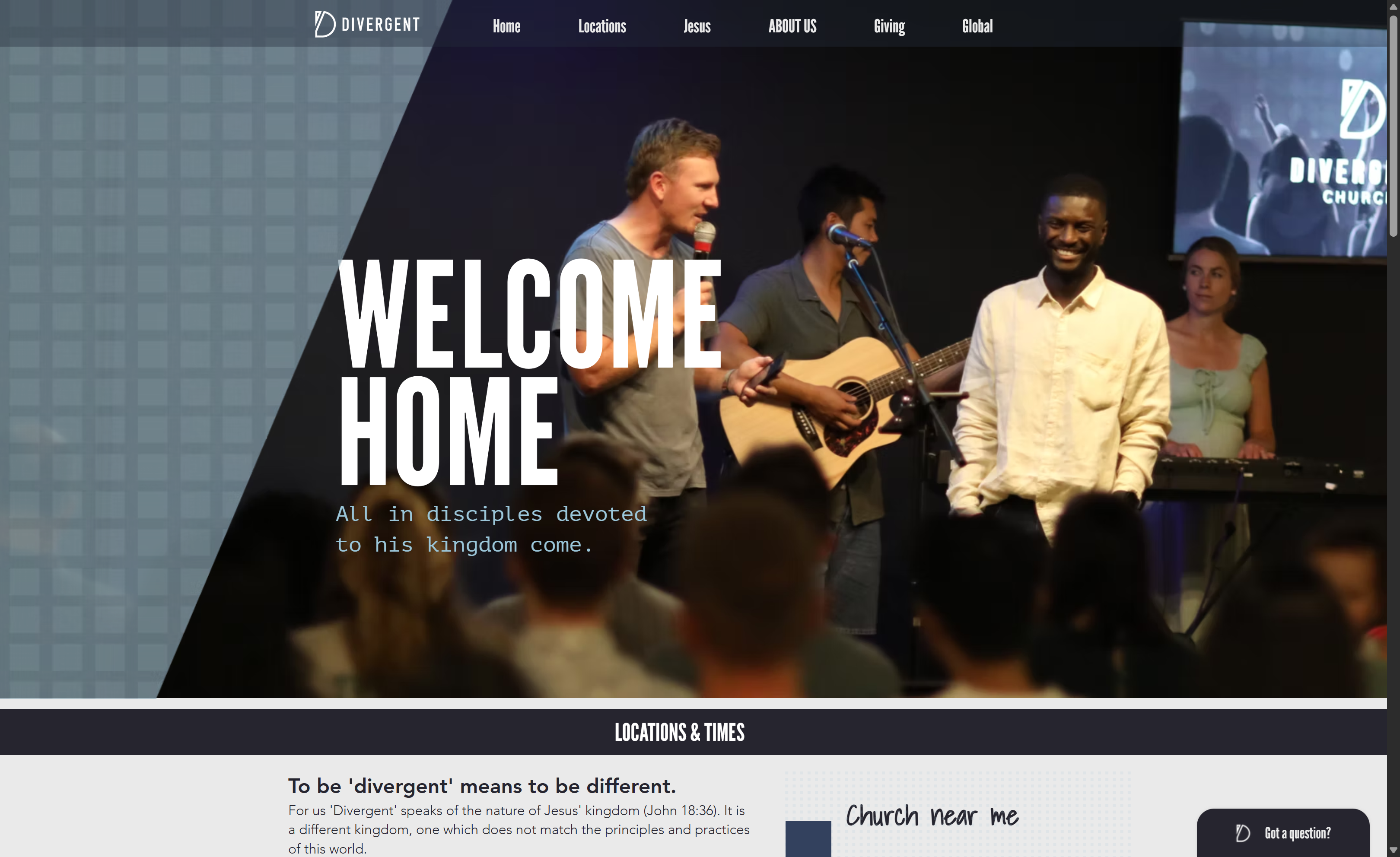
You can also explore Life Communities at Divergentchurch, small groups that practise local hospitality, prayer, and daily witness in Canberra’s neighbourhoods and universities. Mission does not begin when you board a plane. It begins in the relationships you already have, in the city where you already live. Divergentchurch’s mission page outlines how to get involved at whatever level suits your current season of life.
FAQ
What are the main types of church missions?
Church missions fall into three main categories: evangelism and discipleship, church planting, and church strengthening. Most effective mission programmes combine all three rather than focusing on one alone.
How much does a short-term mission trip cost?
Costs vary widely depending on destination and duration. A domestic weekend trip, such as the San Antonio mission trip 2026, set a fundraising goal of $250 per participant for three days, covering transport, lodging, and ministry supplies.
What makes a church mission sustainable?
Sustainable missions transfer skills and build local leadership rather than delivering ongoing aid. Models like SILC table-banking groups in Kenya and agricultural evangelism in Tanzania produce churches that grow independently after the mission team departs.
Can local church activities count as mission?
Yes. Mission includes prayer, hospitality, financial support, and daily witness in your own community. House visits, neighbourhood prayer walking, and shared meals are all legitimate and effective church outreach programmes.
How many volunteers do large international missions typically involve?
Large missions vary considerably in scale. Send Relief’s Serve Tour engaged over 4,000 volunteers in 2025, while the Abesewa Medical Missions Outreach in Ghana deployed 120 volunteer doctors alongside evangelism teams.
Recommended
Comments