
Explaining church leadership: roles, models, and impact

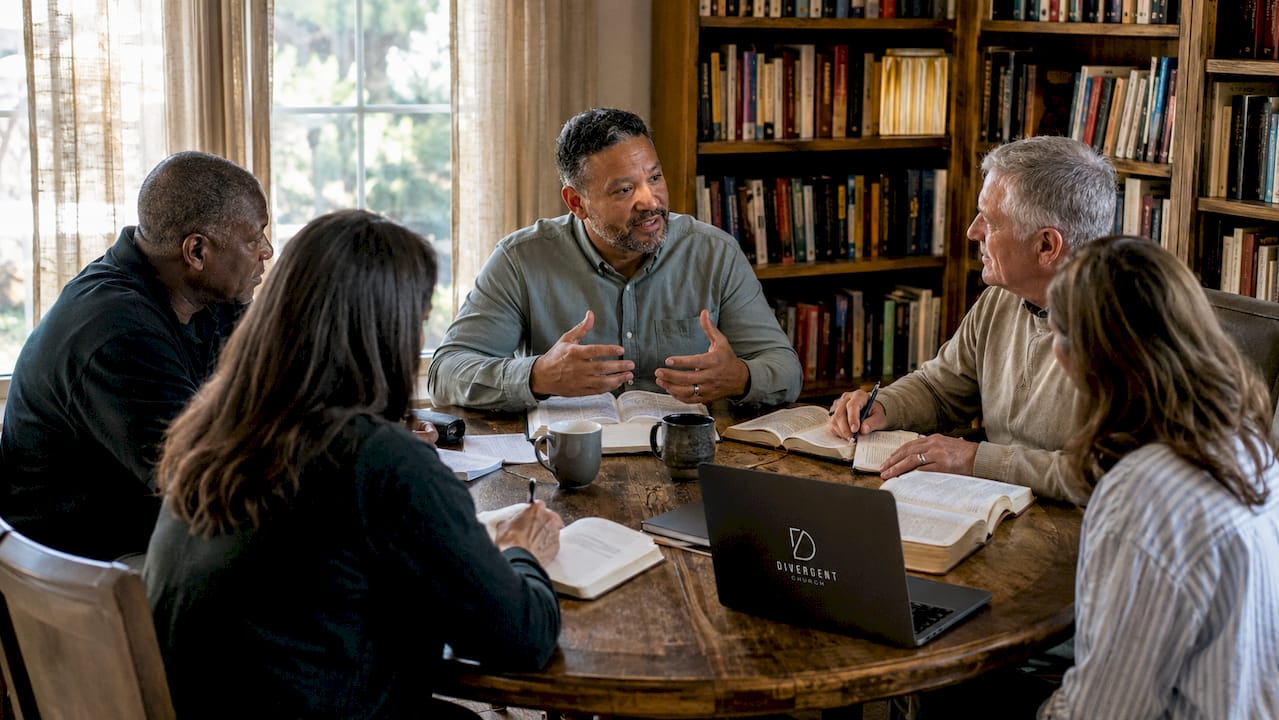
Church leadership is the structured guidance of a congregation through biblically defined roles, governance models, and accountability relationships. It is not simply about who stands at the front on a Sunday. At its core, church leadership shapes how a community worships, makes decisions, cares for its members, and pursues its mission in the world. Explaining church leadership well means tracing it back to Scripture, where roles like elders and deacons are defined not by talent or charisma but by character, calling, and community trust. Divergentchurch in Canberra holds this conviction deeply, building its community around servant leadership that is relational, accountable, and rooted in the life of Jesus.
What are the main models of church governance?
Church governance is the formal term for how authority is structured and exercised within a church. Three primary models shape most Christian traditions: episcopal, presbyterian, and congregational.
The episcopal model places authority in a hierarchy of bishops. A bishop oversees multiple congregations, and decisions flow downward through ordained clergy. The Anglican, Catholic, and Methodist traditions broadly follow this pattern. It offers clear lines of authority and historical continuity, but critics note it can distance ordinary members from meaningful participation.
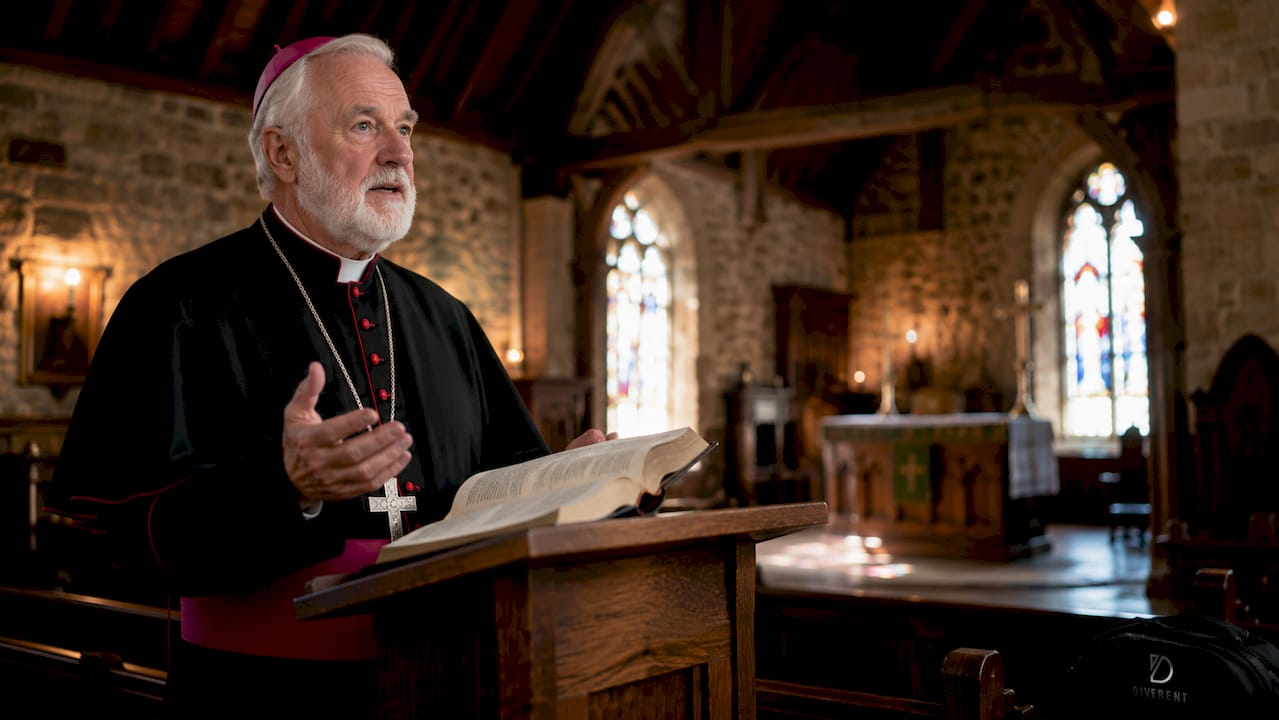
The presbyterian model distributes authority among a council of elders, called a presbytery. No single person holds supreme power. Instead, a representative body of ordained elders governs the church, with accountability flowing both upward to regional bodies and downward to local congregations. Presbyterian and Reformed churches follow this pattern.
The congregational model places final authority with the gathered membership. Each local church is self-governing. Baptists and many independent evangelical churches use this approach. It prizes local autonomy and member participation, though it can struggle with consistency and conflict resolution when consensus breaks down.
Governance model | Authority held by | Decision-making style | Key strength |
Episcopal | Bishops and ordained clergy | Top-down hierarchical | Clear authority and continuity |
Presbyterian | Council of elders | Representative body | Accountability and balance |
Congregational | Local membership | Majority or consensus | Member participation and autonomy |
The Bible emphasises values over fixed structures. Humility, accountability, and a servant heart are the non-negotiable constants across all three models. The model a church chooses shapes its culture, but it does not replace the need for godly character in those who lead.
What are the key leadership roles within churches?
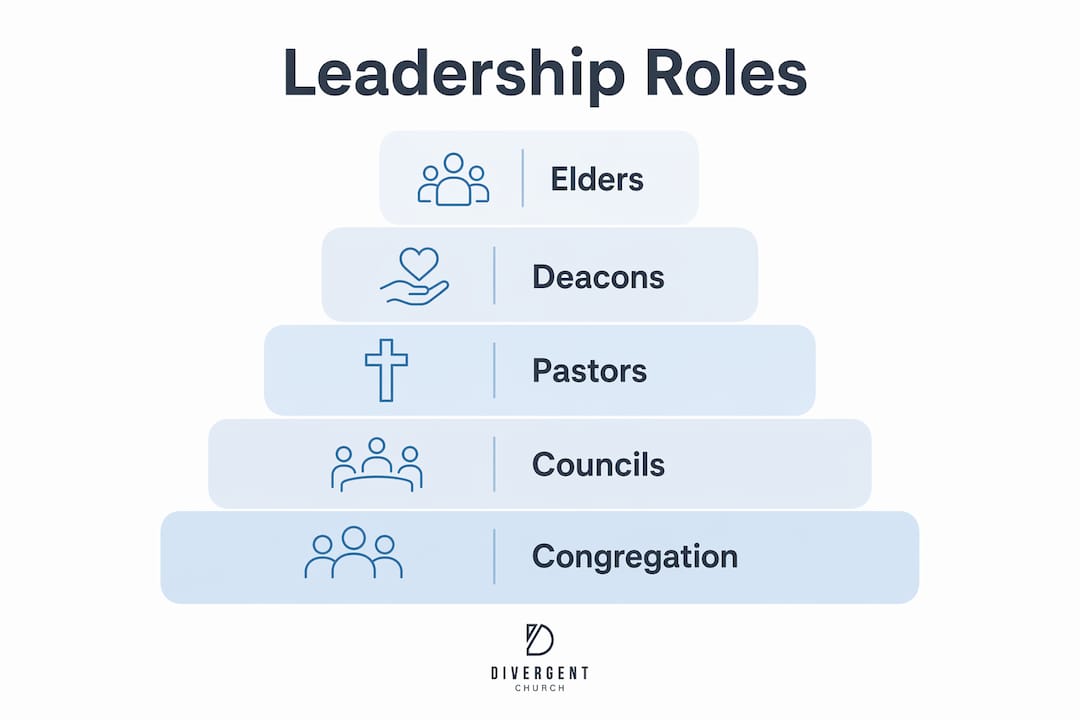
The two foundational offices in most Protestant churches are elder and deacon. These are not honorary titles. They carry distinct functions, scriptural qualifications, and real responsibility.
Elders: spiritual oversight and teaching
Elders, also called overseers or pastors, carry responsibility for the spiritual health of the congregation. Elders oversee spiritual care and teaching, while deacons handle practical needs to free the ministry of the Word. This division of labour appears clearly in Acts 6, where the apostles appointed servants to manage food distribution so they could devote themselves to prayer and preaching. The elder’s role is to shepherd, teach, guard sound doctrine, and model Christlike character before the congregation.
Deacons: practical service and community care
Deacons serve the practical needs of the church. They coordinate care for the vulnerable, manage resources, and support the administrative life of the community. The Greek word diakonos simply means servant. Biblical qualifications for deacons, found in 1 Timothy 3, emphasise integrity, self-control, and genuine faith. Their service is not lesser than the elder’s. It is equally sacred, freeing the whole body to flourish.
The difference between gifts and authority
Leadership gifts differ from leadership authority. A person may have natural leadership ability, vision, or charisma without holding a biblical office. Confusing the two distorts church structures by elevating talent over character. The biblical offices of elder and deacon are not awarded for performance. They are entrusted to those who meet scriptural character qualifications and are recognised by the community.
The key qualifications for both roles include:
Above reproach: a life that does not give legitimate grounds for accusation
Faithful in relationships: managing their own household well
Not a new believer: spiritual maturity tested over time
Hospitable and teachable: genuinely open to others and to correction
Free from love of money: serving from conviction, not personal gain
Pro Tip: When a church is assessing candidates for elder or deacon, the most revealing question is not “What has this person achieved?” but “How does this person behave when no one is watching?” Character under pressure is the truest qualification.
How does church leadership balance authority and accountability?
Authority without accountability produces harm. Leadership without accountability is a primary cause of congregational conflict and failure. The Bible stresses humility, integrity, and relational accountability over rigid organisational charts. This is why the plurality of elders, rather than a single authoritative leader, is the pattern most consistent with the New Testament.
Healthy churches build accountability into their structure through four practical commitments:
Plural eldership: No single person holds unchecked authority. A team of elders shares spiritual oversight, bringing different perspectives and mutual correction.
Congregational participation: The gathered community is not passive. Members test teaching, affirm leaders, and participate in significant decisions. Elder-led congregationalism balances spiritual leadership with congregational participation and accountability.
Transparent governance documents: Clear governance documents like bylaws clarify roles and protect churches from conflict and inconsistency. They empower leaders and create a healthy ministry environment.
Relational culture: Accountability is not only structural. It is relational. Leaders who are known, loved, and questioned by their community are far less likely to drift into pride or isolation.
“Elders need real power to act as shepherds, not just rubber stamps.” — Dr Jim Sebt on healthy church leadership balance
The risk of the “lone wolf” leader, one person who holds vision, authority, and final say without genuine peer accountability, is well documented in church history. The remedy is not bureaucracy. It is a culture where leaders actively invite scrutiny and where the congregation is encouraged to ask hard questions.
What is the practical impact of leadership on faith and community?
Church leadership structure directly shapes whether a congregation grows, stagnates, or fractures. Clear governance provides stability and trust. When members understand who makes decisions, how those decisions are made, and how leaders are held accountable, they can invest in the community with confidence.
Leadership also sets the tone for discipleship. A church led by servants produces servants. When elders model prayer, generosity, and honest self-examination, those values seed themselves through the congregation. Divergentchurch in Canberra reflects this conviction by building community not just around Sunday gatherings but through everyday relationships, workplaces, and neighbourhoods across the city.
Effective churches use a five-function leadership framework that balances mentoring, administration, relational care, and oversight. This distribution of roles prevents burnout and closes service gaps that rigid title-based structures often miss. When one person carries all five functions alone, the result is exhaustion and blind spots. When a team shares them, the church becomes more resilient and more human.
Role clarity also matters for outreach. A church where leaders are stretched thin, unclear about their responsibilities, or in conflict with one another cannot sustain meaningful mission. Reviewing bylaws is a practical first step for any church wanting to avert governance crises before they arise. Legal authority in incorporated churches often resides with boards rather than general membership, and that gap between assumption and reality has derailed more than a few well-intentioned communities.
Pro Tip: If your church has never reviewed its governance documents as a leadership team, schedule a half-day to read them together. You will almost certainly find gaps between what the documents say and how decisions are actually made. Closing that gap is one of the most protective things a leadership team can do.
You can also explore the role of church in society to understand how leadership structures connect to a church’s broader presence in the community.
Key takeaways
Healthy church leadership requires biblically grounded roles, accountable governance structures, and a servant culture that shapes every level of community life.
Point | Details |
Three governance models | Episcopal, presbyterian, and congregational models each distribute authority differently. |
Biblical role distinction | Elders provide spiritual oversight; deacons serve practical needs. Both require character, not just competence. |
Gifts versus authority | Leadership gifts are not the same as the biblical office of elder or deacon. |
Accountability is structural and relational | Plural eldership and transparent bylaws protect against unchecked authority. |
Leadership shapes mission | Clear governance builds trust, prevents burnout, and sustains outreach and discipleship. |
Why I think we misread church leadership more than we admit
The most common mistake I see is treating church leadership as a management problem. Churches adopt corporate structures, write job descriptions, and measure success by attendance metrics. None of that is wrong in itself. But it misses the point entirely if the people in those roles are not genuinely formed by Scripture and accountable to one another.
The distinction between lead pastor and executive pastor is a good example. The lead pastor carries spiritual vision; the executive pastor manages administration and operations. That division enhances both spiritual depth and organisational health. But I have watched churches where the executive pastor holds all the real power and the lead pastor is a figurehead, and churches where the lead pastor operates without any meaningful check from elders. Both are failures of the same kind: authority without accountability.
What actually works, in my observation, is a culture where leaders are willing to be known. Not just known for their gifts or their vision, but known in their weakness, their doubt, and their need for correction. That kind of leadership is rare. It requires genuine humility, not performed humility. And it is the only kind that produces the trust a congregation needs to follow well.
The ethical principles that shape healthy organisations apply directly here. Integrity, transparency, and accountability are not soft values. They are the load-bearing walls of any community that wants to last.
— Josh
Divergentchurch: growing leaders and disciples in Canberra
Divergentchurch in Canberra exists to form disciples of Jesus and build authentic community across the city. If you are exploring what it means to lead well within a church context, or simply want to grow in faith alongside others, there are real pathways here for you.
The Discipleship Hub offers resources and programmes designed to support spiritual maturity and leadership growth at every stage. For those called to lead, the Lead Like Jesus programme grounds leadership formation in servant-hearted, biblically faithful principles. Divergentchurch also runs Life Communities, small groups where faith is lived out in relationship, not just on Sundays. These are the spaces where leadership is tested, shaped, and sustained.
FAQ
What is church leadership?
Church leadership is the structured guidance of a congregation through biblically defined roles, governance models, and accountability relationships. It encompasses spiritual oversight, practical service, and community discernment.
What are the main types of church leaders?
The two primary biblical offices are elder and deacon. Elders provide spiritual oversight and teaching; deacons serve practical needs. Many churches also distinguish between lead pastors and executive pastors for organisational clarity.
What is the difference between church governance and church leadership?
Church governance refers to the formal structure of authority and decision-making within a church. Church leadership refers to the people and roles that operate within that structure. Both are necessary and interdependent.
Why does accountability matter in church leadership?
Leadership without accountability is a primary cause of congregational conflict and failure. Plural eldership, transparent governance documents, and a culture of relational honesty are the most effective safeguards.
How does church leadership affect community engagement?
Clear leadership structures build trust, prevent burnout, and create the stability needed for sustained discipleship and outreach. When roles are defined and leaders are accountable, the whole community can invest with confidence.
Recommended
Comments