
Faith practices for daily life: 10 habits to start today


The most effective faith practices for daily life are short, repeatable, and woven into what you already do. Start with this micro routine today: spend a brief moment in prayer on waking (“Lord, this day is yours”), read one verse at lunch (try Psalm 23:1 or Luke 6:31), and close with a short gratitude pause at night naming specific things. The total time commitment is minimal. Resources like Guideposts and the Spiritual Habits Project, along with Divergentchurch’s own discipleship community, confirm that these small anchors, done consistently, form the bedrock of a living faith.
Here is a quick-start checklist you can try today:
30 seconds on waking — one sentence of prayer, spoken aloud or silently
One verse at lunch — read it, sit with it for 60 seconds, ask what it means for your afternoon
60-second gratitude at night — name three specific gifts from the day
One micro act of service — a kind text, holding a door, a word of encouragement
One community touchpoint — a prayer text to a friend, or checking in with your small group
Each item takes between 30 seconds and 10 minutes. None of them require a quiet room or a perfect morning.
Table of Contents
What are the core spiritual practices for everyday life?
Daily spiritual practices are best understood as rhythms rather than requirements — they create space for the Spirit to work, not a scorecard to earn favour. The seven core categories below cover the full range of what practitioners across traditions have found most formative.
Prayer — keeps the heart oriented toward God throughout the day
Scripture reading and reflection — grounds thinking in truth and shapes the imagination
Worship and gratitude — reorients attention from scarcity to abundance
Fellowship and community — sustains faith through shared life and accountability
Service and generosity — turns love outward and reshapes daily priorities
Silence, meditation and fasting — creates space to listen and reduces noise
Sabbath rhythms — builds rest and renewal into the week
Practice | What it shapes | Typical time | First step |
Prayer | Intimacy and trust with God | brief to moderate time | One sentence on waking |
Scripture reading | Mind and imagination | brief to moderate time | One verse at lunch |
Worship and gratitude | Attention and joy | short intervals | Name gifts at night |
Fellowship | Resilience and belonging | weekly time | Join or text a small group |
Service | Love and outward focus | daily time | One kind act each day |
Silence and fasting | Listening and surrender | short time | Two-minute guided silence |
Sabbath | Rest and trust | weekly rest period | Protect one morning offline |
Pew Research Center surveys show that prayer, attending services, private devotion, and fasting are among the most widely adopted spiritual practices across religious communities, which means you are joining a vast, living tradition when you begin even one of these habits.
How do you make prayer a natural part of your day?
Conversational prayer, what some practitioners call “peacetime praying,” is the most reliable daily shape for a sustained prayer life. It does not require a kneeling bench or a scheduled hour. It requires only the intention to speak honestly with God in the middle of ordinary life.
Anchor your prayer to moments that already exist in your day:
On waking — before checking your phone, say one sentence: “Lord, this day is yours.”
During your commute — pray for the people you will see that day by name.
At meals — a brief blessing that is genuinely thankful, not merely habitual.
At transitions — walking through a doorway, starting a new task, finishing a meeting.
Before sleep — hand the unresolved things of the day back to God.
Sample micro-prayers by time:
30 seconds: “Father, I need you today. Help me see what you see.”
2 minutes: Name three people you will encounter and ask for wisdom in those conversations.
5 minutes: Pray through Philippians 4:6 — “in every situation, by prayer and petition, with thanksgiving, present your requests to God” — and do exactly that.
For workplace or school settings, silent breath prayers work well. Inhale slowly and think “Lord,” exhale and think “I trust you.” Nobody around you needs to know. Brief intercession for a colleague or classmate, offered silently in the moment you notice their stress, is prayer as much as any formal devotion.

Which Scripture reading methods actually stick?
One verse or a small passage daily is enough to build real momentum. The goal is not volume; it is contact with the living Word. Consistency over a single verse beats an ambitious chapter-a-day plan that collapses by February.
Four methods worth trying:
Lectio Divina (three steps): Read a short passage slowly. Sit with the word or phrase that stands out. Ask God what he is saying to you through it. Write one sentence in response.
One-verse lunch method: Open your Bible app at lunch, read one verse, and spend 60 seconds asking: “What does this tell me about God? What does it ask of me this afternoon?”
Topical devotions: Follow a structured reading plan (the YouVersion Bible App offers hundreds of free plans) tied to a season of life — grief, new job, parenting, singleness.
Verse memorisation microhabit: Write one verse on a sticky note and place it where you will see it ten times a day. By Friday, you will know it.
Good starting passages: Psalm 23, Luke 6, Proverbs 3:5–6, Romans 8. These are rich, short, and immediately applicable to ordinary life.
Journal prompts (one line each):
What stood out to me in this passage?
One way I can live this out before tonight.
For a 2-minute slot, read and sit. For a 10-minute slot, read, journal, and pray the passage back to God.
How can worship and gratitude become part of your daily routine?
Worship and gratitude do not need a stage or a Sunday gathering to be real. They can be short, frequent acts embedded in the texture of a normal day, and they work precisely because they reorient attention away from what is lacking toward what is given.
Practical ways to weave praise into ordinary moments:
Breath praise during a commute — hum or quietly sing a line from a worship song you know. The act of praise shifts the interior atmosphere of the day.
Gratitude at the sink — washing dishes or folding laundry can become a moment of intentional thanksgiving, converting repetitive tasks into embodied prayer.
60-second praise when you finish work — before you close your laptop or leave the building, name one thing God did in your day that you almost missed.
The simple daily gratitude exercise: each night, name three specific things — not generic (“I’m grateful for my family”) but particular (“I’m grateful for the conversation with Maya at 2pm”). Specificity trains attention. Over weeks, you begin noticing gifts in real time rather than only in retrospect.
Why does community matter so much for daily faith?
Sustained spiritual growth rarely happens in isolation. Community is not optional for the long haul. The two most accessible entry points are a life community (a small group that meets weekly) and a single prayer partner you check in with regularly.
Embodied practices and community repetition make habits stick in ways that solo effort cannot. When others around you are practising the same rhythms, the practices become part of a shared identity, not just a private discipline.
Practical steps for building community into your faith life:
Join a small group — aim for a group of 6–12 people meeting weekly for 60–90 minutes. A simple agenda: open with a check-in question, read a passage together, share one application, pray for each other.
Start a prayer partnership — one person, one weekly text or call, five minutes. Ask: “What are you praying for this week? What can I believe with you for?”
Share a verse for the week — send a group text on Monday morning with the verse you are sitting with. It costs 30 seconds and creates a week-long thread of shared attention.
Divergentchurch’s life communities in Canberra and Port Macquarie are built around exactly this kind of relational, Scripture-shaped rhythm. They are the natural home for these practices to take root.
How can service and generosity become daily habits?
Service is a daily discipline that reshapes love. When you orient even small moments outward, the self-absorption that quietly suffocates faith begins to loosen. You do not need large resources or a formal programme to begin.
Micro-service examples you can do today:
Send a text to someone you have been meaning to encourage — specific, not generic.
Pick up litter on your walk to work.
Leave a handwritten note for a neighbour or colleague.
Let someone go ahead of you in a queue without making it a performance.
For a more intentional rhythm, consider one small act of service daily and one slightly larger act weekly — volunteering at a local initiative, helping a neighbour with a practical task, or participating in church missions that connect your everyday generosity to something bigger.
On financial generosity: start with a percentage of income you can give without anxiety, however small. The habit of giving matters more than the amount at the beginning. Generosity, practised regularly, does something to the giver that no amount of reading about it can replicate.

How do you practise silence, meditation and fasting safely?
Brief silence and simple fasting alternatives create space for listening — and that space is where much of the Spirit’s work happens. Neither practice requires an advanced spiritual life to begin.
A short guided silence (2–5 minutes):
Sit comfortably. Close your eyes.
Take three slow breaths and release the agenda of the next hour.
Bring one word or phrase to mind — “peace,” “I am with you,” “be still.”
Sit with it. When your mind wanders (it will), return to the word without judgment.
Close by saying: “Lord, I am listening. Speak what you will.”
Micro fasting options:
Skip one meal and use that time for prayer or Scripture.
Fast from social media for an evening — notice what the silence reveals.
A digital fast for a morning, keeping the first two hours of the day free from screens.
Pro Tip: If you have a medical condition, are pregnant, or are recovering from disordered eating, skip food fasting entirely and choose a digital or media fast instead. Always seek pastoral or medical advice before undertaking extended fasting. The goal is space for God, not physical strain.
How do you build a sustainable faith rhythm without legalism?
Sustainability comes from tiny, repeatable practices done over a long time, not from intensive routines that burn bright for a week and then collapse. Short daily routines of 5–10 minutes done consistently outperform longer sessions done infrequently. That is not a compromise; it is wisdom.
Habit-stacking is the most practical tool here. Attach a spiritual micro-practice to a habit you already do reliably:
Say a breath prayer when you put the kettle on.
Read one verse after you eat lunch.
Pray for one person when you open your phone in the morning.
Give thanks when you lock the front door at night.
The habit-stacking technique works because it borrows the momentum of an existing behaviour rather than demanding willpower from scratch.
Pro Tip: Grace over streaks, always. Missing a day is not failure; it is Tuesday. The pastoral wisdom here is that disciplines are a trellis — they support the vine, they do not produce the fruit. When you miss a day, simply begin again the next morning without shame. Restart without a ceremony. That is what grace looks like in practice.
Divergentchurch’s approach to setting spiritual goals reflects this same principle: seasonal adaptation matters more than rigid adherence.
Three sample daily rhythms you can copy right now
Rhythm | Total time | Best for |
10-minute solo | 10 min | Busy individuals, beginners |
30-minute focused | 30 min | Those wanting more depth |
Family routine | 10 min | Households with children |
10-minute solo rhythm
Anchor your morning in ten minutes and carry it all day.
Wake (30 sec) — one sentence of prayer before your phone.
Read (3 min) — one passage or three verses. Psalm 46, Luke 5, or wherever you are in a reading plan.
Journal (2 min) — one sentence: what stood out, one way to live it today.
Pray (4 min) — thank God for three specifics, pray for two people by name, ask for one thing you need.
Commit (30 sec) — “Lord, this day is yours.”
30-minute focused rhythm
A fuller morning that includes intercession and a short devotion.
Silence (3 min) — use the guided script from the silence section above.
Scripture (10 min) — read a passage, use lectio divina, write two journal lines.
Devotion (5 min) — a short reading from a devotional resource.
Intercession (7 min) — pray through a list: family, friends, workplace, world.
Worship (5 min) — one worship song, sung or listened to with full attention.
Family routine
Bless your household in fifteen minutes without making it a performance.
Morning blessing (2 min) — one parent speaks a short blessing over the family before school or work: “May you know you are loved and not alone today.”
Mealtime practice (5 min) — one person shares a “high and low” from their day; close with a one-sentence prayer of thanks.
Evening prayer together (5 min) — each person names one thing they are grateful for and one thing they need. Pray it together simply.
What do you do when life gets in the way of your faith routine?
Common barriers are real, and they deserve honest responses rather than guilt.
Too busy: Micro habits are the answer. If you cannot find 10 minutes, find 90 seconds. One verse and one sentence of prayer is a complete practice for a hard day. A Christian morning routine does not need to be long; it needs to begin before the distractions do.
Guilt and shame: Guilt says “I failed again.” Grace says “begin again.” The disciplines are not a performance; they are a relationship. Reframe the missed day as an invitation, not an indictment.
Inconsistency: Habit-stacking removes the need for motivation. Attach the practice to something you already do. Motivation fluctuates; anchored habits do not depend on it.
Spiritual dryness: Dryness is not absence. Keep showing up with honesty. “Lord, I feel nothing today, but I am here” is a legitimate and courageous prayer.
Burnout from over-discipline: If your practices feel like a burden rather than a gift, rest is the spiritual practice you need. Sabbath exists for this reason.
When to seek community or pastoral care: if guilt has become chronic, if spiritual dryness has lasted months, or if you are carrying something too heavy to hold alone, reach out to a pastor or trusted community member. That is not weakness; it is wisdom. Divergentchurch’s pastoral leadership is available for exactly these conversations.
How Divergentchurch in Canberra can support your daily practices
Divergentchurch runs life communities and a Discipleship Hub in Canberra and Port Macquarie that are designed to help you practise these rhythms in real relationship. These are not programmes you attend; they are communities you belong to.
Practical next steps:
Join a life community — weekly gatherings of 6–12 people built around Scripture, prayer, and shared life. Expect 60–90 minutes, a warm welcome, and no pressure to have it all together.
Visit the Discipleship Hub — structured pathways for growing in faith, including teaching, mentoring, and practical formation resources.
Connect online — if you are not yet in Canberra or Port Macquarie, Divergentchurch’s online community and resources are accessible wherever you are.
Take a next step — the Next Steps page outlines exactly what to expect and how to get started.
Key takeaways
Sustainable faith practices for daily life are built from tiny, repeatable habits done consistently, not from long routines attempted occasionally.
Point | Details |
Start with micro habits | 30 seconds of prayer and one verse daily outperforms an hour-long routine that lapses after a week. |
Use habit-stacking | Attach a spiritual practice to something you already do reliably — the kettle, lunch, locking the door. |
Community sustains growth | A weekly life community or single prayer partner makes practices stick in ways solo effort cannot. |
Grace over streaks | Missing a day is not failure; simply begin again the next morning without shame or ceremony. |
Divergentchurch supports you | Life communities and the Discipleship Hub in Canberra offer real relationship for practising these rhythms. |
A pastor’s perspective: small seeds, long seasons
The thing I have noticed about people who sustain a rich faith life over decades is not that they are more disciplined than everyone else. It is that they stopped waiting until they had more time, a better morning, or a quieter season. They began with what they had — a 30-second prayer in a car park, a verse on a sticky note above the kitchen sink, a weekly text to one friend asking “how are you really?” — and those small seeds grew into something they could not have planned.
There is a temptation, especially for people who are serious about faith, to believe that a practice only counts if it is long, structured, and uninterrupted. That belief has quietly killed more devotional lives than busyness ever has. The kingdom of God, Jesus said, is like a mustard seed — the smallest of all seeds, planted in ordinary ground, growing into something that shelters others (Matthew 13:31–32). Your 90-second morning prayer is a mustard seed. Do not despise it.
Here is a seven-day invite: for the next seven days, try just one practice from this article. One verse at lunch. One gratitude pause at night. One breath prayer when the kettle boils. Tell one person what you are doing and ask them to check in with you on day seven. That accountability is itself a community practice. At the end of the week, notice what shifted — not in your circumstances, but in your attention.
Divergentchurch is ready to walk this with you
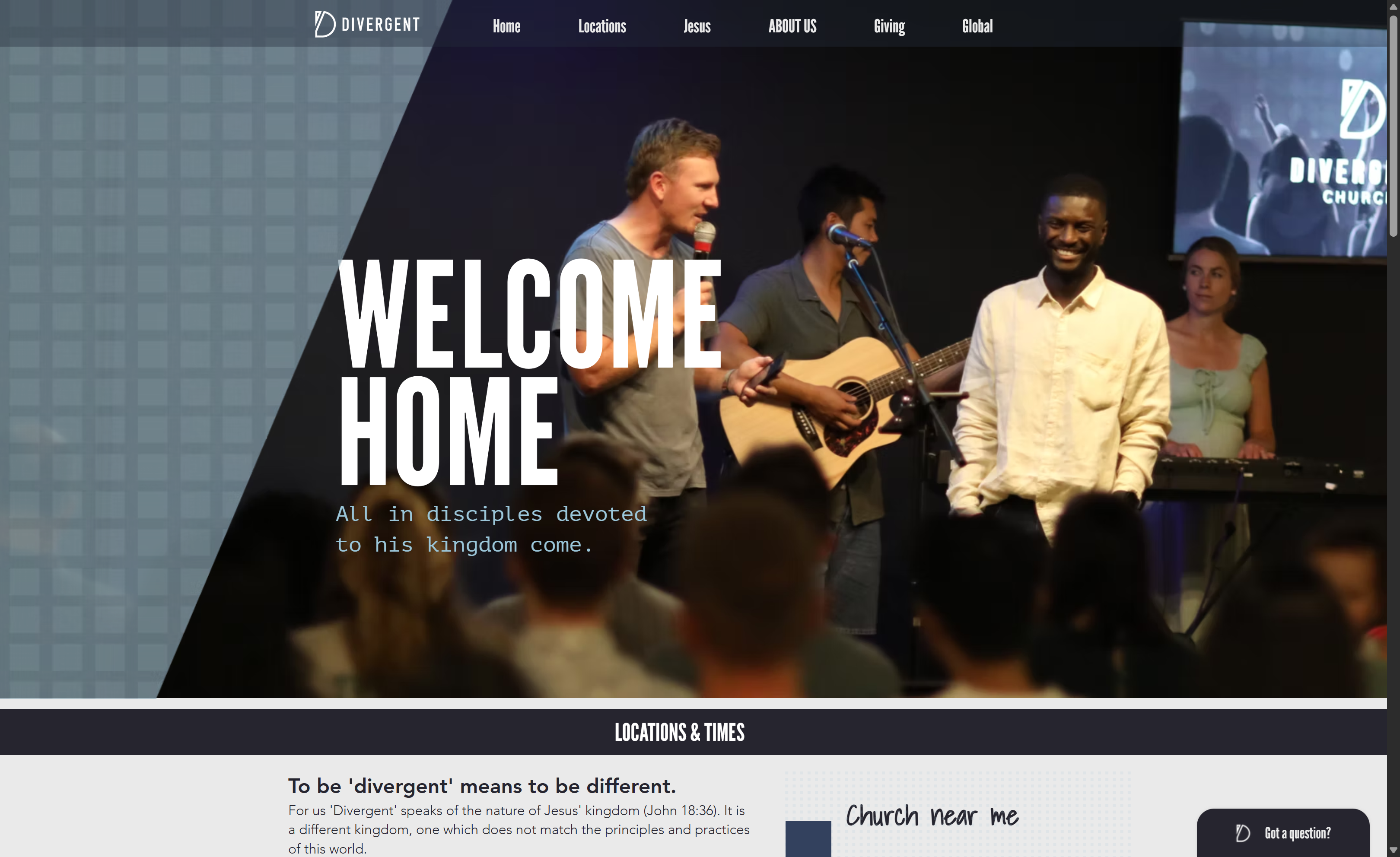
If you are ready to move from solo practice to shared rhythm, Divergentchurch’s Discipleship Hub is the natural next step. It is where the habits described in this article find a community to grow in — people who are asking the same questions, practising the same rhythms, and committed to the same Jesus. Life communities meet weekly in Canberra and Port Macquarie, and the welcome is genuine. No performance required, no spiritual CV needed. Visit the Next Steps page to find out what joining looks like and take your first step this week.
Useful sources and further reading
Spiritual disciplines strengthen faith (Cru) — a clear overview of core disciplines framed as rhythms rather than requirements; good for grounding the basics.
Make prayer part of your daily routine (Guideposts) — practical, warm guidance on conversational prayer and anchor-point praying throughout the day.
Spiritual and religious practices (Pew Research Center) — survey data on how widely these practices are adopted across communities; useful for context.
The complete guide to spiritual disciplines (Spiritual Habits Project) — detailed, practical resource on micro-habits, fasting alternatives, and guided silence scripts.
What are spiritual practices? (LICC) — excellent on embodied practices and how community repetition makes habits formative.
Divergentchurch Life Communities — local next step for readers in Canberra and Port Macquarie wanting to practise these rhythms in community.
Recommended
Comments