
How to find Christian community in Canberra

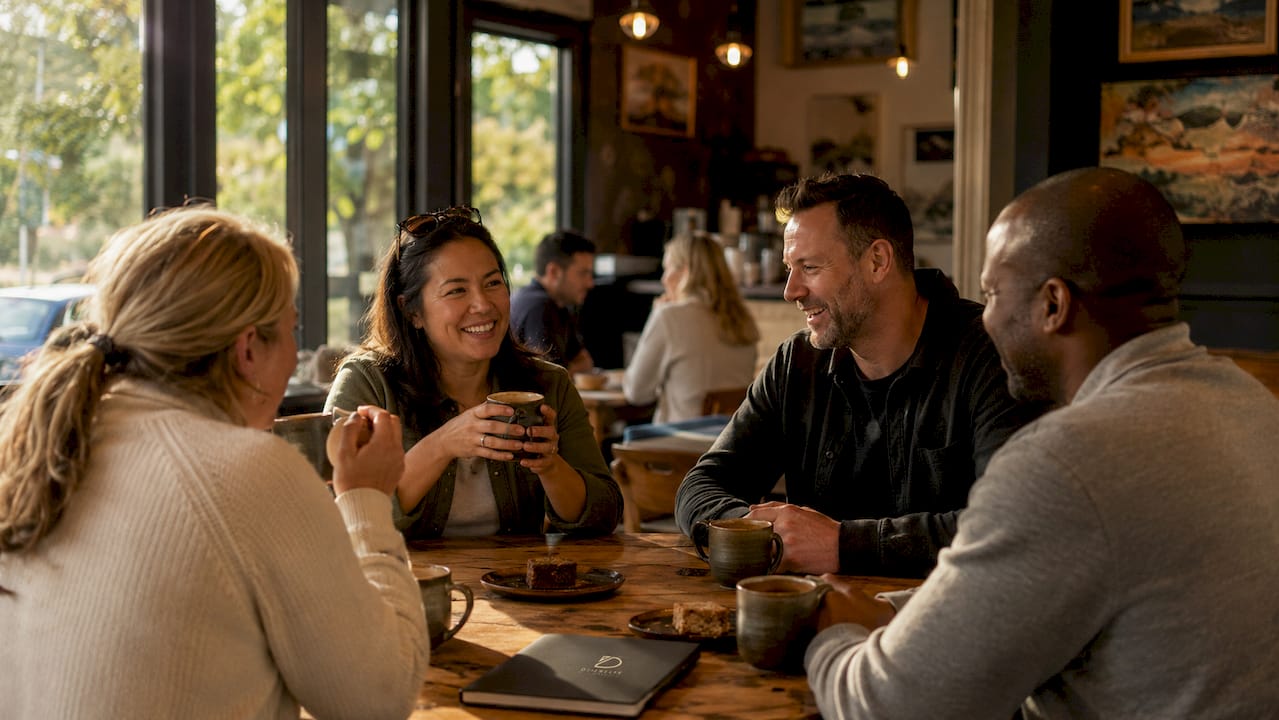
Finding a Christian community is defined as the intentional process of identifying a local church or fellowship group that aligns with your faith, then actively participating until genuine relationships take root. For many people arriving in Canberra, whether as students, new residents, or those returning to faith, the search can feel uncertain. The good news is that finding a church community follows a clear pattern: research, visit, commit, and serve. Divergentchurch exists precisely for this moment, offering a community shaped by Scripture and expressed through everyday Canberra life.
How to find Christian community that fits your faith
The first step in finding a Christian community is not attending a service. It is doing enough research to shortlist two or three churches worth visiting in person. Websites, social media pages, and online sermons give you a starting point, but internet research alone cannot tell you whether a community is genuinely warm or spiritually healthy. You need to be in the room.
When you shortlist churches, look for these markers of a healthy community:
A clear statement of faith. The church should publicly affirm what it believes about Scripture, Jesus, salvation, and the Holy Spirit. Vague theology often signals a community built around personality rather than truth.
Qualified and accountable leadership. Pastors and elders should meet the qualifications outlined in 1 Timothy 3 and Titus 1. Ask whether leaders are part of a wider network or denomination that provides accountability.
Expository preaching. Sermon quality and warmth of welcome are the top priorities people name when choosing a church. Look for teaching that works through Scripture passage by passage, not just topical talks built around cultural trends.
A culture of genuine welcome. Notice whether people approach you, whether the welcome feels scripted, and whether the community reflects the diversity of the city around it.
Pathways beyond Sunday. A church that offers only a weekly service is functioning as a provider, not a family. Look for small groups, mid-week Bible study, and service opportunities.
Pro Tip: Ask a trusted Christian friend in Canberra for a personal recommendation before you search online. Personal recommendations from people who know a community from the inside are far more reliable than any website impression.
Church size matters too, though not in the way most people assume. Larger churches offer more programmes and anonymity, which suits some people in a season of quiet re-engagement with faith. Smaller communities offer faster relational depth. Divergentchurch sits intentionally in the middle ground, small enough to know people by name, and present enough in Canberra’s universities, workplaces, and neighbourhoods to be genuinely missional.

Why consistent attendance is the key to belonging
Visiting a church once and deciding it is not for you is one of the most common mistakes people make when joining a Christian fellowship. Community is not experienced in a single Sunday. Research shows that four weeks of consistent attendance is the minimum needed before you can genuinely assess whether a community fits. That is because belonging is built through repeated, low-stakes interactions, not one-off visits.
Here is a practical four-week approach to moving from visitor to member:
Week one: observe. Attend the service, note the preaching style, and stay for morning tea. You are not committing to anything. You are simply gathering information.
Week two: introduce yourself. Speak to at least two people you have not met. Ask how long they have been part of the community and what they value about it.
Week three: attend a mid-week event. Join a small group, a Bible study, or a community dinner. Mid-week small groups are where real relationships form, not in the Sunday crowd.
Week four: serve once. Volunteer for a practical role, whether that is setting up chairs, welcoming newcomers, or helping with kids ministry. Serving shifts your posture from consumer to contributor.
Relationships within Christian communities often take 3–6 months to develop into genuine friendship. That timeline is not a failure. It is the normal pace of trust-building in any community. Patience here is not passive waiting. It is active, faithful showing up.
Pro Tip: If you have experienced church hurt in the past, give yourself permission to move slowly. Attend, observe, and let trust build at a pace that feels honest. The goal is not to perform belonging but to receive it.
Practical steps to build real friendships in local Christian groups
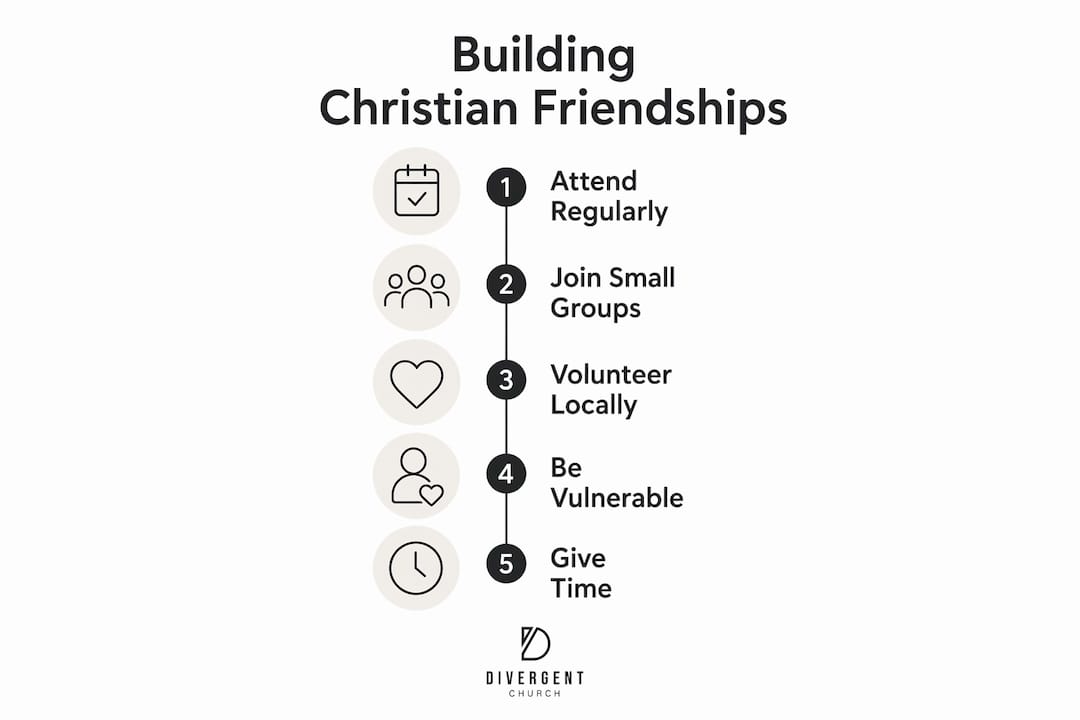
Knowing where to find local Christian groups is only half the work. The other half is initiating connection, which most people find harder than they expect. The awkwardness of introducing yourself to strangers in a church foyer is real. The solution is not to wait until it feels natural. It is to act before it does.
These steps move you from acquaintance to genuine friend:
Use the eight-second rule. The eight-second rule is a simple practice: commit just eight seconds of courage to start a conversation. Walk toward someone, introduce yourself, and ask one question. Eight seconds is all it takes to break the inertia. What follows is up to the conversation, but it cannot happen without those first eight seconds.
Ask questions that go deeper than small talk. “How long have you been here?” is fine. “What has God been teaching you lately?” is better. Spiritual questions signal that you are looking for genuine fellowship, not just social connection.
Offer prayer proactively. When someone shares a difficulty, do not just say “I’ll pray for you.” Ask if you can pray with them right now. This single habit builds trust faster than almost anything else.
Join a small group and stay. Small groups create the repeated, unplanned interactions that deepen relationships over time. Commit to the same group for at least two months before deciding whether it is working.
Volunteer alongside others. Serving in church gives you a shared purpose with other people. Shared purpose is one of the fastest routes to genuine friendship. You stop being the new person and start being a teammate.
Canberra’s transient population, driven by the Australian Public Service, universities like the Australian National University, and the defence community, means many people are in exactly the same position you are. They are new, they want connection, and they are waiting for someone to go first. Be that person.
Overcoming common obstacles when seeking Christian community
The most common reason people fail to find a genuine Christian community is not lack of options. It is waiting to feel ready. Many people tell themselves they will get more involved once they feel more settled, more spiritually mature, or more certain about their beliefs. That moment rarely arrives on its own.
“Community is a family to join, not a product to find. You do not wait until you are the perfect version of yourself before you join a family. You join, and the family shapes you.” — Perspectives Into Practice
Vulnerability is not a weakness in community. It is the currency of genuine belonging. When you share honestly about where you are in your faith, you give others permission to do the same. That mutual honesty is what separates a Christian support group from a social club.
Sunday-only attendance rarely produces the depth of connection most people are looking for. Churches without clear mid-week pathways function as service providers rather than spiritual families. If a church you are visiting has no small groups, no mid-week gatherings, and no obvious way to serve, that is a signal worth taking seriously.
The most effective mindset shift is this: be the person you wish you had when you first arrived. Offer support before you need it. Initiate before you feel confident. Give before you feel you have enough to give. Effective community is created by being the person you hope to find in others.
Key takeaways
Finding a Christian community in Canberra requires intentional research, consistent attendance over at least four weeks, and active participation in small groups and service roles to move from visitor to genuine member.
Point | Details |
Research before you visit | Shortlist two or three churches using online research, then verify fit in person. |
Attend for at least four weeks | Consistent attendance over a month is the minimum needed to assess genuine community fit. |
Join a small group early | Mid-week small groups create the repeated interactions that build lasting friendships. |
Use the eight-second rule | Commit eight seconds of courage to initiate a conversation and break the inertia of awkwardness. |
Serve alongside others | Volunteering shifts your posture from visitor to contributor and accelerates belonging. |
What I have learned about finding community in Canberra
People often come to me expecting a list of the best churches in Canberra. What they actually need is a different question entirely. The question is not “which church is the best?” It is “which community am I willing to commit to?”
I have watched people visit a dozen churches over two years and never truly belong to any of them. I have also watched people walk into a community that was far from perfect, commit to it anyway, and find the deepest friendships of their lives within twelve months. The difference was never the church. It was the decision to stay.
Formal church membership creates relational commitments that matter most during difficult seasons. It is not just a formality. It is a mutual covenant between you and a community to care for one another when things get hard. Most people join a church before they need it. The ones who wait until a crisis hits often find they have no relational roots to draw from.
Canberra is a city of transient people. That makes community harder to build, but it also makes it more precious when you find it. Seeds planted in relationships here, in a city where people come and go, can bear fruit that outlasts any single season of life.
My honest encouragement is this: pick a community, show up consistently, serve faithfully, and give it time. The belonging you are looking for is not waiting to be discovered. It is waiting to be built.
— Josh
Divergentchurch: a place to connect in Canberra
Divergentchurch is built for exactly the kind of person this article is written for. Whether you are new to Canberra, returning to faith, or simply looking for something more than a Sunday service, there are clear pathways in.
The Discipleship Hub is the starting point for spiritual growth and connection, offering resources, rhythms, and relationships designed to help you grow as a disciple of Jesus. For those ready to go deeper with a smaller group, Life Communities are mid-week small groups where real fellowship happens. These are not programmes to attend. They are communities to belong to. If you are ready to take the next step, Divergentchurch in Canberra is ready to welcome you.
FAQ
How long does it take to find a Christian community?
Most people need at least four weeks of consistent attendance before they can assess whether a church community is the right fit. Genuine friendships within that community typically take 3–6 months to develop.
What should I look for when choosing a church in Canberra?
Look for expository preaching, a clear statement of faith, accountable leadership, and clear pathways for mid-week connection such as small groups or service teams.
How do I meet other Christians in Canberra?
Joining a small group or volunteering in a church ministry are the fastest ways to connect with fellow believers. The Australian National University and local community events also host Christian groups worth exploring.
What if I have had a bad experience with church before?
Move at a pace that feels honest and give yourself permission to observe before committing. Genuine Christian communities welcome people at every stage of faith, including those carrying wounds from past church experiences.
Is online Christian community a good substitute for in-person fellowship?
Online Christian communities offer connection and encouragement, but they cannot fully replace the repeated, in-person interactions that build deep trust and genuine belonging over time.
Recommended
Comments