
Why intergenerational church matters for lifelong faith

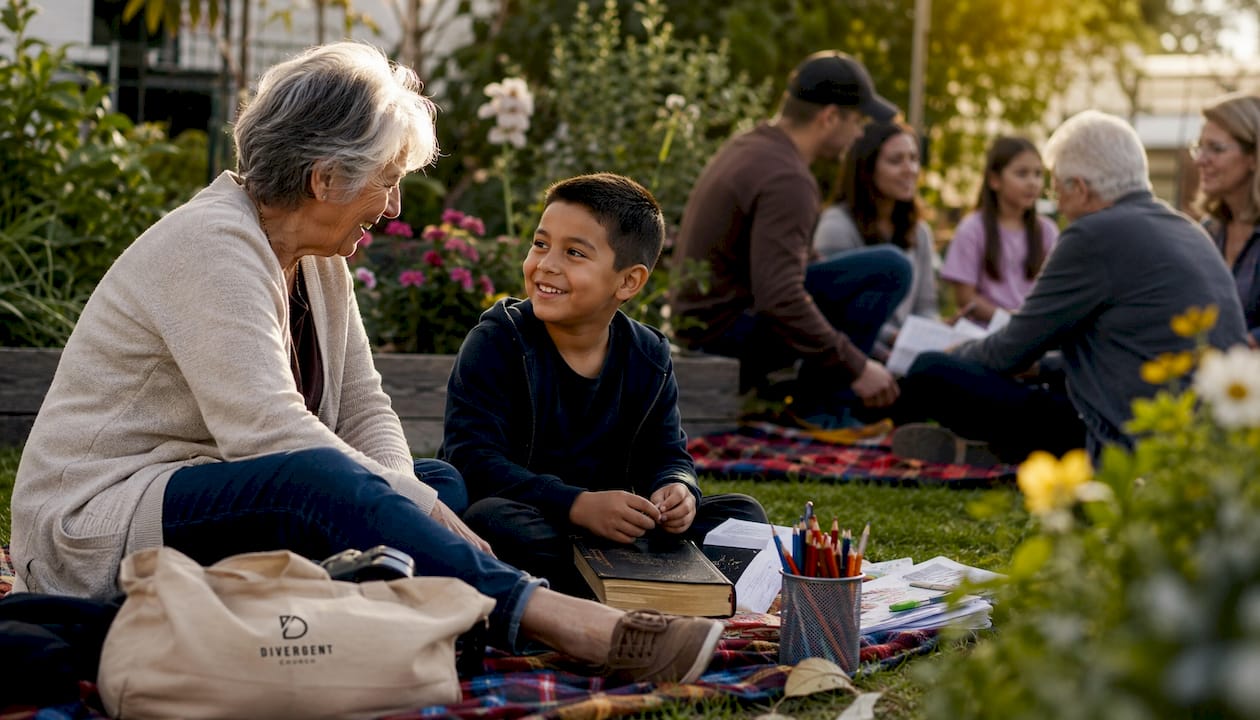
A church where an eighty-year-old and a twelve-year-old sit side by side, share stories, and pray for one another is not simply a nice idea. It is the body of Christ functioning as Scripture describes. Intergenerational ministry is the intentional, regular engagement of multiple generations in worship, learning, service, and fellowship, and it sits at the heart of what makes a church genuinely alive across time.
The importance of intergenerational church comes down to this: when generations are woven together rather than sorted into separate programmes, faith becomes something caught as much as taught. Children see what it looks like to trust God through decades of life. Older adults find renewed purpose in passing on what they know. Families discover a wider belonging that extends beyond the nuclear household. The whole community grows stronger because every part is contributing.
Here is what that looks like in practice:
Belonging that reaches beyond age group or life stage, giving every person a place in the community
Mutual support across seasons of life, from grief to celebration, from doubt to conviction
Shared gifts and wisdom, where older saints mentor younger disciples and young people bring energy and fresh perspective
Lifelong faith formation, where faith is modelled and transmitted through real relationships rather than curriculum alone
Reflection of the body of Christ, where no generation is marginalised or treated as a guest in someone else’s church
What are the concrete benefits of intergenerational ministry?
The benefits of intergenerational ministry are not abstract. They show up in measurable ways across every age group and in the overall health of a congregation.
Stronger belonging and reduced isolation. Intergenerational ministry benefits all ages: youth develop positive social attitudes and skills, while older adults gain life satisfaction and experience less isolation. These are not peripheral outcomes; they go to the core of what a church community is called to be.
Higher faith maturity in youth and young adults. Research shows that intergenerational worship involvement correlates with higher faith maturity and church engagement in younger generations. When young people are present in the full life of the church rather than siloed in a parallel programme, their faith takes deeper root.
Mutual service and shared gifts. Every generation brings something the others need. Older members carry wisdom, patience, and a long view of God’s faithfulness. Younger members bring creativity, questions, and a hunger that can reawaken a congregation’s sense of mission. Intergenerational ministry fosters belonging, mutual service, leadership development, and the passing on of faith traditions.
Character and spiritual growth for all ages. Cross-generational relationships challenge generational silos and encourage humility, mutual submission, and respect, producing spiritual maturity across the congregation. This is not growth that happens in a classroom; it happens in relationship.
Improved church retention and attendance. Churches where generations function in isolation risk becoming inward-focused and ineffective. Without meaningful contact between age groups, congregations stagnate. Intergenerational engagement gives people of every stage a reason to stay, to serve, and to invite others in.
Stronger communal faith identity. Regular intergenerational activities build trust and a shared faith identity more effectively than infrequent large events. Consistency matters more than spectacle.
Leadership development across generations. When younger members are genuinely included in the mission of the church, not just accommodated, they grow into leaders. The church that empowers youth as active contributors is investing in its own future.
What does the Bible say about intergenerational church?
Scripture does not treat intergenerational community as an optional feature of church life. It treats it as the shape of God’s people across every age.
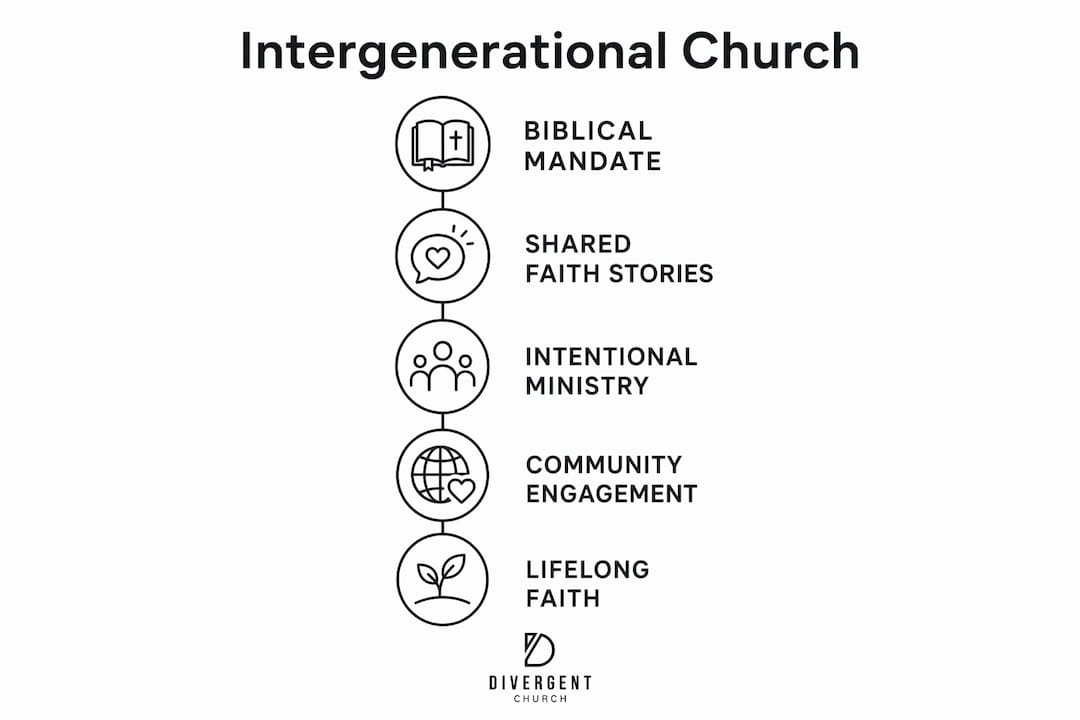
This verse is not describing a programme. It is describing a way of life, where the stories of God’s faithfulness are carried forward through relationship, conversation, and shared experience. The Hebrew word translated “commends” carries the sense of active, enthusiastic praise passed from hand to hand across time.
Paul’s instruction to Timothy captures the same vision in the New Testament: “The things you have heard me say in the presence of many witnesses entrust to reliable people who will also be qualified to teach others” (2 Timothy 2:2). This is a chain of intergenerational discipleship, not a one-off mentoring moment. Jesus himself modelled it with his disciples, investing deeply in a small, age-diverse group over years of shared life.
The New Testament vision of the church as the body of Christ (1 Corinthians 12) assumes that every part is present and contributing. No age group is optional. As one participant in a Doctorate of Ministry research project put it:
Paul’s vision of unity in Christ breaks down every barrier that divides us, including the generational ones. A church that segregates by age is, in a real sense, working against the grain of what it means to be “in Christ.” Understanding what a biblical church actually looks like makes this mandate hard to sidestep.
How does intergenerational ministry play out in Australian churches?
Australian churches face a particular challenge: a transient, age-diverse population spread across cities, suburbs, and regional communities, with strong cultural pressure toward age-segregated social life. The good news is that research and practice both point toward what works.
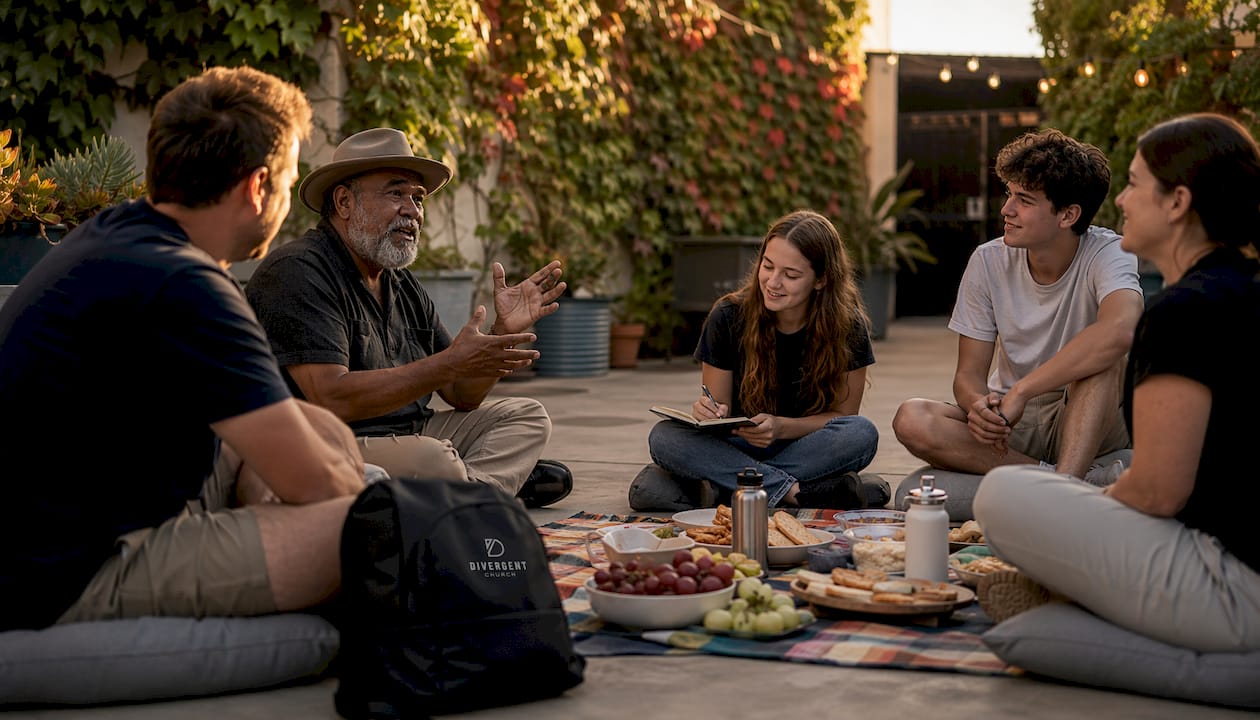
Practice | What it looks like | Why it matters |
Blended worship services | All ages present for core worship, not just a token moment | Builds shared faith identity and belonging |
Strategic mentoring | Older members intentionally paired with younger disciples | Transmits faith through real relationship |
Partnering with parents | Church equipping families, not replacing them | Parents remain the primary faith influence |
Shared serving opportunities | Cross-generational teams in outreach and service | Builds trust and mutual respect in action |
Faith-building storytelling | Testimonies shared across age groups in gathered settings | Grounds younger generations in God’s faithfulness |
The research is clear that intentional leadership and facilitation are critical. Mere co-presence does not produce integration. You cannot simply place a seventy-year-old and a teenager in the same room and expect transformation. As Sheri Y. Steinig of Generations United has noted, “Staff must be prepared to help facilitate those interactions. You just can’t throw an older person and a younger person in a room and say, ‘go for it.’”
This reframing is the hinge point for most Australian congregations. The shift from doing ministry to younger generations toward doing ministry with all generations requires a genuine culture change, not just a programme adjustment. Collaborative leadership styles help churches move away from siloed ministries toward this kind of whole-body engagement.
Pro Tip: Start with small, regular intergenerational gatherings rather than large events. Consistent, low-pressure contact builds the relational trust that makes deeper faith formation possible.
One practical challenge Australian churches often face is the mindset shift required of participants. Older adults sometimes prefer casual interaction over deeper intergenerational relationships, and younger people can feel uncertain about crossing generational lines. Trained facilitators who set a tone of respect, curiosity, and reciprocity make the difference between a programme that runs and one that genuinely transforms.
Examples of intergenerational ministry models in Australian churches
Australian churches across different traditions have found creative, grounded ways to live out intergenerational community.
Mentoring and discipleship pairs are perhaps the most transferable model. Churches pair older members with younger disciples for regular one-on-one or small-group meetings built around Scripture, prayer, and life. The Gospel Coalition’s P.A.S.S. framework (Proclaim, Associate, Show, Supplicate) gives disciple-makers a simple structure that works across age gaps and cultural contexts. Australian churches using this approach report that young people often describe their older mentor as among their closest relationships in the congregation.
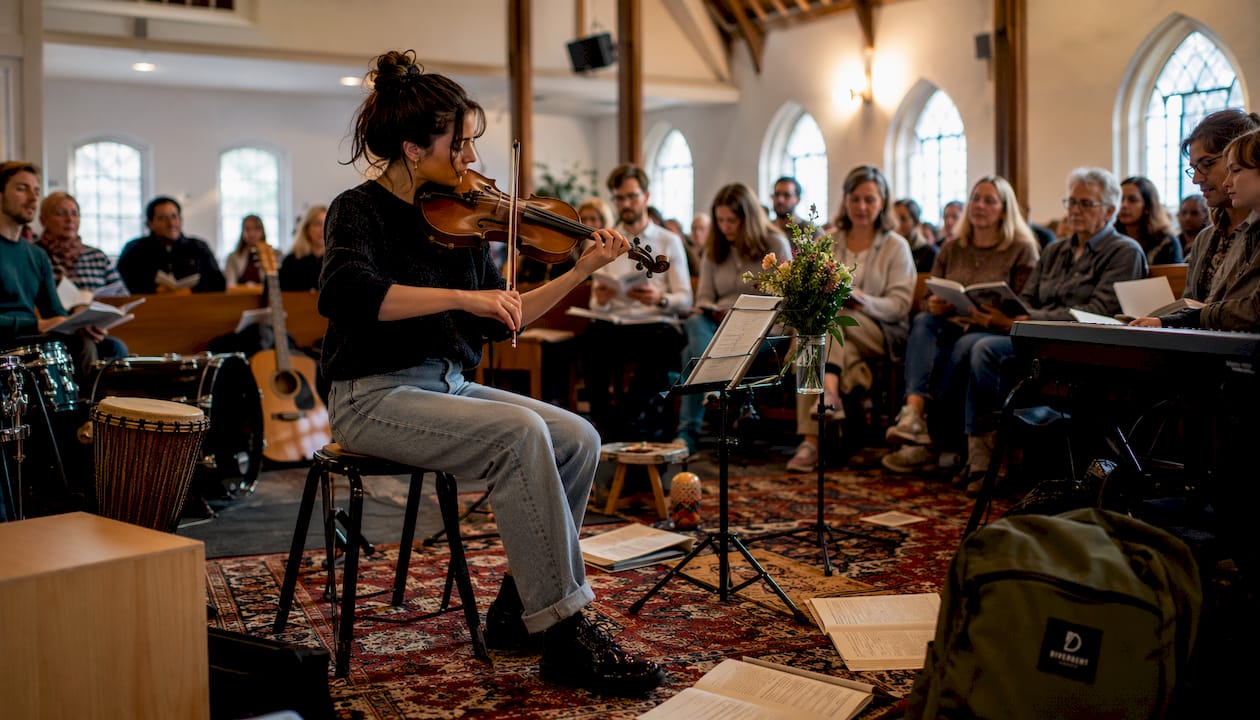
Blended worship services move beyond allowing children into the adult service for a few minutes. They design the whole gathering with all ages in mind, using testimony, visual elements, participatory prayer, and music that draws from across the generations. This is not about lowest-common-denominator worship; it is about worship that is genuinely richer because every voice is present.
Intergenerational service teams send mixed-age groups into the community together, whether through local outreach, food relief, or neighbourhood engagement. Church partnerships for mission built around shared service create the kind of side-by-side experience that forms deep bonds quickly. Serving together strips away the awkwardness of forced conversation and replaces it with shared purpose.
Life Communities and small groups structured around geography or life stage rather than age alone create natural intergenerational mixing. At Divergentchurch in Canberra, Life Communities are designed as the primary place where people do life together across differences, including generational ones. A young adult navigating university sits with a retired teacher and a young family, and all three find they need what the others carry.
Faith-story sharing in gathered worship, where older members testify to God’s faithfulness across decades, gives younger generations a living archive of what trust in Jesus looks like over a lifetime. These moments cost nothing to organise and carry extraordinary weight.
Key takeaways
Intergenerational church is not a programme to add but a way of being that shapes every part of how a congregation gathers, worships, and serves together.
Point | Details |
Biblical mandate is clear | Psalm 145:4 and 2 Timothy 2:2 both call the church to active, relational faith transmission across generations. |
Benefits reach every age | Youth gain faith maturity and social skills; older adults gain purpose and reduced isolation; the whole church grows stronger. |
Facilitation is non-negotiable | Co-presence alone does not produce integration; trained leaders must create the conditions for genuine cross-generational relationship. |
Small and regular beats large and rare | Consistent intergenerational gatherings build the relational trust that makes lasting faith formation possible. |
Culture change precedes programme change | A mindset shift, viewing intergenerational relationships as meaningful rather than scheduled, is what makes the difference. |
Why intergenerational community is worth every hard conversation
There is a temptation in church leadership to treat the generational tension as a problem to manage rather than a gift to receive. I understand why. The friction between a congregation’s older members and its younger ones can feel like it threatens unity. But the friction is often where the formation happens.
What the research and the Scripture both point toward is this: a church that sorts itself by age is a church that has quietly decided some parts of the body are optional. That is not a neutral organisational choice. It shapes what people believe about belonging, about who God’s community is for, and about whether their own stage of life has anything to offer.
The churches that are genuinely thriving across generations are not the ones that have eliminated tension. They are the ones whose leaders have decided the tension is worth sitting with, because what comes out the other side is a community that actually looks like the kingdom. Older saints who have walked with God for fifty years have something irreplaceable to give. Young people who are asking hard questions and taking risks have something irreplaceable to give. When those two things meet in the context of shared worship, shared service, and shared life, the church becomes something that neither generation could produce alone.
At Divergentchurch, this is not a distant ideal. It is the daily work of leadership committed to building a community where every generation is genuinely needed. If you want to go deeper in your own faith formation within this kind of community, the Discipleship Hub is a good place to start.
Recommended
Comments