
What is a church community and why it matters


Most people assume that showing up on a Sunday morning is what makes you part of a church community. You find a seat, sing a few songs, listen to a sermon, and drive home. But that picture, however familiar, leaves out almost everything that actually matters. A church community is something far more alive and intentional than a weekly gathering. It is a group of people bound together by shared faith, mutual care, and a common mission, people who do life together in ways that shape who they are becoming. For anyone in Canberra exploring what church might mean for their life, understanding this distinction is the place to begin.
Table of Contents
Key takeaways
Point | Details |
Beyond Sunday services | Church community is built through intentional relationships, not passive attendance. |
Spiritual growth accelerates | Time spent with others in community measurably deepens faith and discipleship. |
Small groups are central | Intimate gatherings allow for accountability, prayer, and honest conversation. |
Healthy community requires effort | Genuine belonging demands vulnerability, consistency, and reciprocal investment. |
Canberra context matters | Local church communities can provide belonging in a city known for transience and change. |
What is a church community: definition and foundations
At its core, the definition of church community points to something the Greek New Testament calls koinonia, a word often translated as fellowship but carrying a richer meaning: shared life, mutual participation, and genuine partnership in faith. It is not simply a group of individuals who attend the same building. It is a body of people who bear one another’s burdens, pray together, grow together, and live out their faith in the rhythms of ordinary life.
The elements that shape a genuine church community include:
Shared worship and prayer. Two-thirds of churchgoers pray weekly in groups outside of Sunday services, reflecting the depth of relational and spiritual engagement that marks authentic community.
Mutual support and accountability. Members care for one another practically and spiritually, not just in crisis moments but in the texture of everyday life.
Shared mission. A church community is outward-looking, oriented toward serving its city and bearing witness to the kingdom of God in concrete ways.
Small groups and gatherings. These are the primary spaces where community actually forms.
Element | What it looks like in practice |
Fellowship (koinonia) | Meals together, shared homes, honest conversation |
Prayer | Group prayer outside services, praying for one another by name |
Mutual care | Practical help during illness, grief, or transition |
Shared mission | Serving the neighbourhood, welcoming outsiders |
Discipleship | Growing in faith through study, accountability, and mentorship |
Research indicates that average Protestant churches run around seven small groups with approximately 69 adult participants. These numbers tell a quiet story: genuine community is most often cultivated in smaller, more intimate expressions of the broader church.
Why church community matters for spiritual growth
The importance of church community is not simply a pastoral preference. It is grounded in how faith actually develops in human beings. Fifty-eight per cent of Protestant churchgoers spend time with other members outside official services specifically to grow in faith, which suggests that the most formative discipleship often happens not in a pew, but over a meal or during a walk with someone who knows your story.
“Immersing yourself in others’ lives is counter-cultural. It requires consistent investment and intentional effort in a society that has largely moved toward individualism.” — Scott McConnell, Lifeway Research
That counter-cultural quality is worth sitting with. In a city like Canberra, where the population is highly mobile, professionally driven, and often transient, the pull toward isolation is real. Universities, government departments, and defence organisations cycle people in and out of the city with regularity. Church community, when it is healthy, offers something the city itself rarely provides: lasting relationships and support networks that extend beyond job contracts and lease agreements.
The benefits of a church community reach into emotional and psychological life as well. People who are deeply embedded in a church community report lower isolation, greater resilience during hardship, and a stronger sense of purpose. These are not accidental outcomes. They are the fruit of people choosing, week after week, to show up for one another.
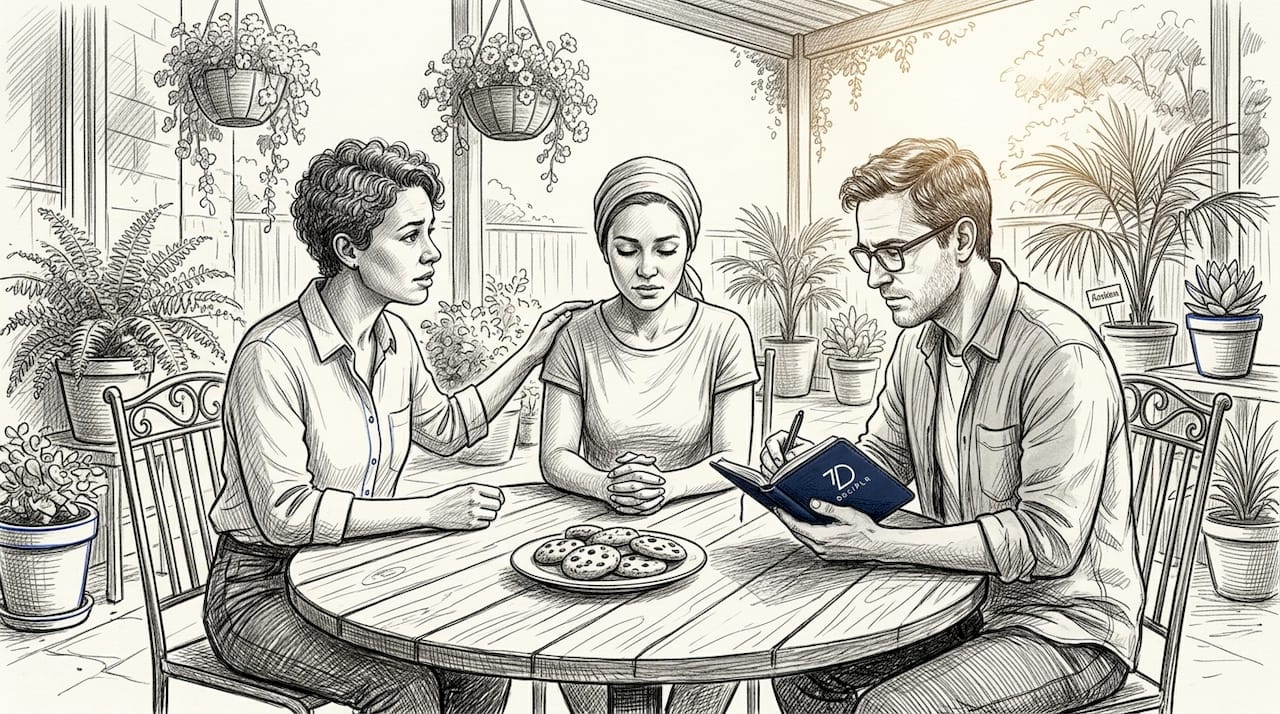
Church community gatherings provide hope, strength, and the repeated opportunity to practise loving God and others more deeply. Spiritual growth does not happen in a vacuum. It happens in relationship.
Characteristics of a healthy church community
Not every church that exists produces genuine community. What makes a strong church community is a specific set of qualities, and understanding them helps you recognise the real thing when you encounter it.
Transparency and accountability sit at the foundation. Biblical community transcends social barriers and requires accountability and transparency to produce spiritual transformation. This means people bring their actual selves, not polished versions, into relationship with one another. It means being known, not just liked.
Active participation is the engine. Small groups promote personal discovery, deeper friendships, accountability, and maximum participation far more effectively than large gatherings. A sermon can inform; a small group can transform. The difference lies in the quality of conversation that becomes possible when twenty people sit in a circle rather than eight hundred in rows.
Diversity and inclusion are marks of genuine kingdom culture. A healthy church community does not simply gather people who are alike. It crosses the social lines that ordinarily divide, bringing together students, families, professionals, and the marginalised in shared worship and service.
Trait | Weak community | Strong community |
Honesty | Surface-level conversation | Genuine, vulnerable sharing |
Involvement | Spectator posture | Active, consistent participation |
Diversity | Socially uniform | Crosses age, background, and culture |
Mission | Inward focus | Serving the neighbourhood and city |
Accountability | Absent | Mutual, gracious, and regular |
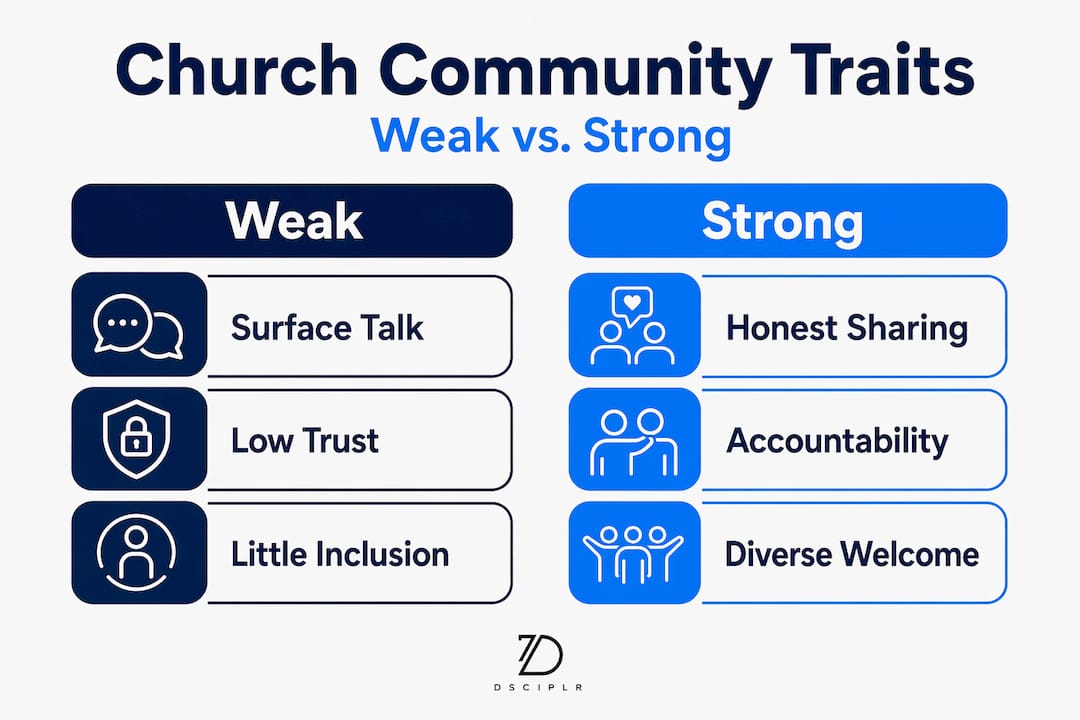
Pro Tip: If you are evaluating whether a church community is healthy, pay less attention to the quality of the Sunday programme and more attention to what happens between Sundays. That is where true community either exists or doesn’t.
How to build and engage in church community in Canberra
Practical engagement is where many people get stuck. They want to belong, but belonging feels elusive, especially for newcomers to Canberra or those returning to faith after a long absence. Here is how to move from the outside to the inside of a genuine church community.
Go beyond Sunday. True belonging in church requires reciprocal vulnerability and active participation. Attending services is a starting point, not a destination. Look for a small group, a midweek gathering, or a serving team to join as soon as you can.
Commit to consistency. Community is not formed in a single visit or a single conversation. It is seeded through repeated, ordinary presence. Show up to the same group for a term, even when it feels unfamiliar.
Pursue people, not programmes. The church events that build connection are the ones that create space for real conversation. After a gathering, invite someone for coffee. Follow up on what you heard. Let relationships grow outside the scheduled hour.
Volunteer and serve. Service is one of the fastest pathways into genuine community. Working alongside people toward a shared goal builds trust and affection more quickly than almost anything else.
Be honest about where you are. You do not need to have it all together to belong. Authentic community begins the moment you stop performing and start showing up as you actually are.
Canberra’s church communities, including Divergentchurch, have worked to create entry points that suit a transient city. Life communities, discipleship courses, and local outreach to neighbourhood needs are all designed to help people move from stranger to member faster and more naturally. If you are wondering where to meet other Christians in Canberra, starting with a local small group is almost always the right answer.
Pro Tip: If vulnerability feels like a barrier, start small. Sharing one honest thing about your week in a small group is a seed. Over months, those seeds become roots.
Common challenges and misconceptions
One of the most persistent misconceptions about church community is that it forms naturally, as a kind of byproduct of attendance. It does not. Building biblical relationships requires intentional effort that runs against the grain of an individualistic culture.
Other challenges that prevent genuine engagement include:
Conflict avoidance. Real community involves disagreement, forgiveness, and reconciliation. When churches avoid this, they stay shallow.
Fear of vulnerability. Opening up in a group of relative strangers feels risky. But it is precisely that risk that makes community real.
Cultural individualism. The expectation that faith is a private matter between you and God is widespread in Canberra’s secular, professional culture. Church community gently and persistently challenges that assumption.
Unrealistic expectations. Some people leave communities because they expected perfection. Healthy community is not the absence of failure; it is the presence of grace when failure happens.
Understanding these challenges does not make them disappear, but it does make them navigable. Community is a gift, and like most gifts of genuine worth, it asks something of you in return.
My take on why community changes everything
I’ve watched people arrive at church gatherings genuinely alone, carrying the particular Canberra loneliness of someone who moved here for work and hasn’t yet found their people. What I’ve seen, over and over, is that the ones who move toward community rather than waiting for it to come to them are the ones who are transformed.
In my experience, genuine church community does something that no amount of good teaching alone can do. It confronts you. When you are known by a group of people who hold you accountable and pray for you by name, you cannot stay comfortably the same. That is both the difficulty and the glory of it.
What I’ve learned is that the churches which produce the deepest disciples are rarely the ones with the largest stages. They are the ones where spiritual development among members happens through proximity, honesty, and the daily, unglamorous work of showing up. I think we underestimate how counter-cultural that is, and how much Canberra, of all cities, needs it.
— Josh
Find your community at Divergentchurch
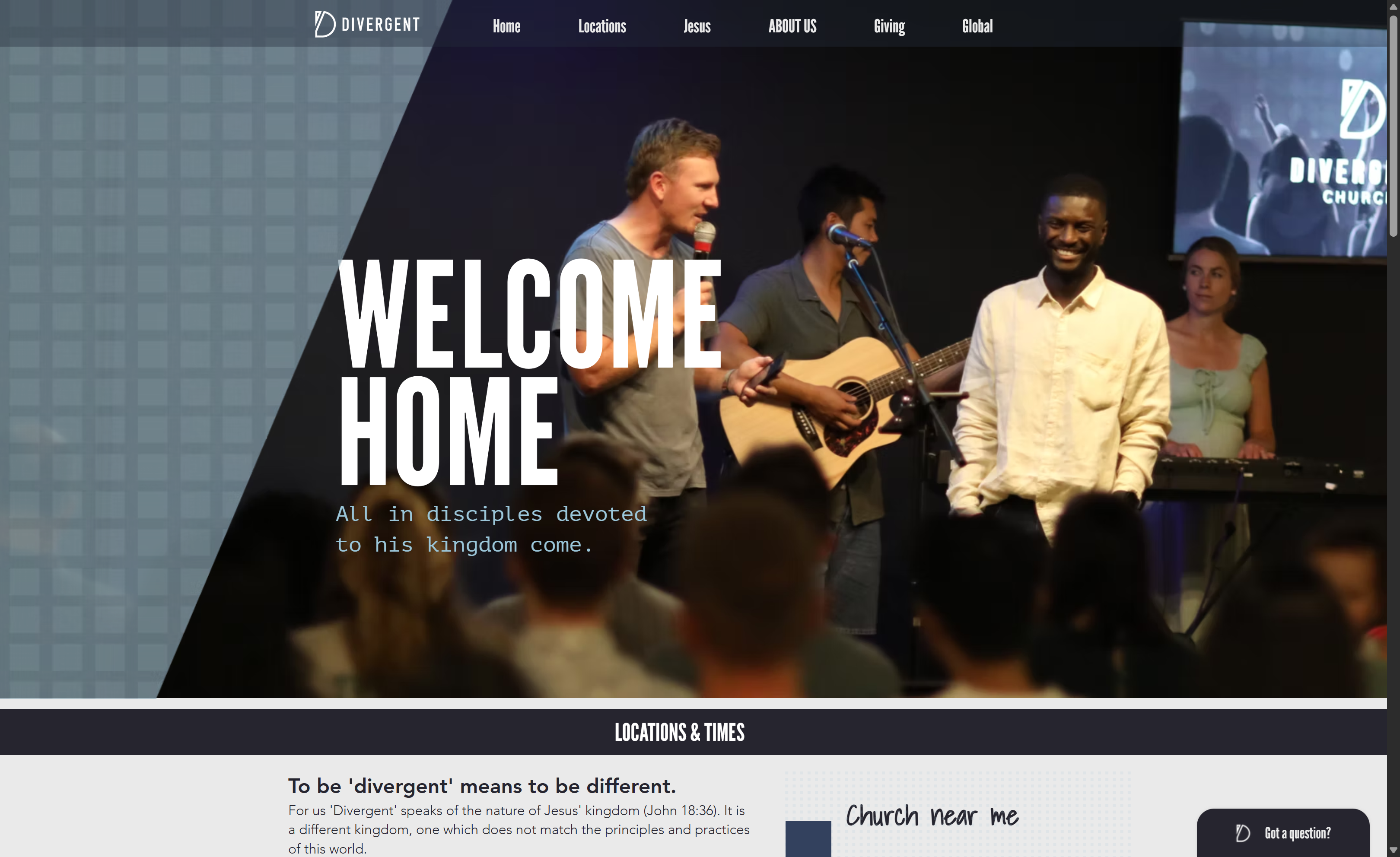
If this article has stirred something in you, whether that is a fresh curiosity about faith or a genuine longing to belong somewhere, Divergentchurch in Canberra exists for exactly that moment. We are not simply a Sunday gathering. We are a community shaped by Scripture, centred on Jesus, and expressed through everyday relationships and mission in this city.
Our Life Communities are small groups that meet throughout the week across Canberra, and they are the heartbeat of how we do community. If you want to go deeper in faith, our Discipleship Hub offers courses like Follow Jesus and Lead Like Jesus to help you grow with others. Wherever you are on your journey, there is a place for you here. Explore your next steps and take one today.
FAQ
What is a church community in simple terms?
A church community is a group of Christians who share life together through prayer, mutual support, and shared mission, extending well beyond Sunday services into everyday relationships.
How is church community different from attending church?
Attending church is a single, often passive act. Church community involves ongoing, intentional relationships with others that shape your faith, character, and daily life over time.
What are the main characteristics of a church community?
A healthy church community is marked by transparency, accountability, active participation, shared prayer, and a mission to serve others beyond its own membership.
Why is church community important for spiritual growth?
Research shows that fifty-eight per cent of churchgoers spend time with other members outside services to grow in faith, confirming that genuine discipleship is fundamentally relational.
How do I start building church community in Canberra?
Begin by joining a small group, committing to consistent attendance, and pursuing honest relationships beyond scheduled gatherings. Local churches like Divergentchurch offer structured entry points such as Life Communities and the Discipleship Hub.
Recommended
Comments