
What is a Pentecostal church? A clear guide
- Josh

- May 21
- 8 min read

If you’ve ever wondered what is a Pentecostal church, you’re not alone. Many people have heard the term but associate it only with speaking in tongues or emotionally charged services, and leave it at that. The reality is far richer. Pentecostalism is one of the fastest-growing Christian movements in the world, shaped by a distinct theology of the Holy Spirit, a passionate worship culture, and a deep commitment to community and mission. This guide unpacks the beliefs, practices, and community life that define Pentecostal churches, so you can understand what they actually stand for.
Table of Contents
Key takeaways
Point | Details |
Rooted in revival history | Pentecostalism emerged from the Azusa Street Revival in 1906 and has grown into a global movement. |
Spirit baptism is central | Pentecostals believe in a distinct experience of Holy Spirit baptism, often evidenced by speaking in tongues. |
Worship is participatory | Services are expressive and Spirit-led, creating space for prophecy, healing prayer, and testimony. |
Theology varies within the movement | Significant differences exist between Trinitarian and Oneness Pentecostals, so each church’s statement of faith matters. |
Community and mission are inseparable | Pentecostal churches prioritise discipleship, personal holiness, and active outreach as core to their identity. |
What is a Pentecostal church? Origins and history
To understand Pentecostalism, you need to go back to a small building on Azusa Street in Los Angeles in 1906. Under the leadership of William J. Seymour, a son of formerly enslaved parents, a revival broke out that would reshape global Christianity within decades. What happened there was seen by participants as a direct echo of the Day of Pentecost described in Acts 2, where the early disciples received the Holy Spirit and spoke in other tongues. That conviction became the movement’s foundation.
Pentecostalism did not emerge from a vacuum. It grew out of the 19th-century Holiness movement, which itself had roots in John Wesley’s Methodist theology of sanctification. The Holiness movement taught that Christians could experience a “second blessing” after conversion, a deeper work of the Spirit that produced purity of heart. Pentecostals took this further, identifying a third experience: baptism in the Holy Spirit with the initial physical evidence of speaking in tongues.
Key milestones in the history of Pentecostalism include:
1906: The Azusa Street Revival begins in Los Angeles, widely regarded as the birth of modern Pentecostalism
1914: The Assemblies of God is founded in the United States, becoming one of the world’s largest Pentecostal denominations
1916: The Oneness Pentecostal movement emerges, rejecting Trinitarian theology in favour of a “Jesus only” baptismal formula
1960s onwards: The Charismatic Renewal spreads Pentecostal experiences into mainline Protestant and Catholic churches
Late 20th century: Pentecostalism explodes in the Global South, particularly in sub-Saharan Africa, Latin America, and South-East Asia
Today, Pentecostalism is one of the largest Protestant movements worldwide, with hundreds of millions of adherents across thousands of denominations. It is no longer a fringe movement. It is a defining force in global Christianity.
Core beliefs and theology
The theological heart of Pentecostalism centres on the person and work of the Holy Spirit. While all orthodox Christians affirm the Spirit’s existence and role, Pentecostals hold that certain experiences of the Spirit are available to believers today in ways that many other traditions have either minimised or declared ceased.
Pentecostal statements of faith consistently include belief in the “baptism of the Holy Spirit for believers with signs following,” along with the ongoing operation of spiritual gifts. These gifts, drawn from 1 Corinthians 12 and other New Testament passages, include speaking in tongues, prophecy, healing, words of knowledge, and miracles. For Pentecostals, these are not relics of the early church. They are living realities for the church today.
Pro Tip: If you want to understand a specific Pentecostal church’s theology, go directly to their statement of faith. The diversity within Pentecostalism means you cannot assume beliefs based on the label alone.
Many Pentecostal groups teach a sequence of spiritual experience: first, conversion and new birth through faith in Christ; then growth in personal holiness; and finally, baptism in the Holy Spirit, often evidenced by speaking in tongues. This sequential view shapes how Pentecostals approach prayer, discipleship, and corporate worship.
Beyond spiritual gifts, Pentecostal church beliefs include:
Biblical authority: The Bible is the inspired Word of God and the ultimate standard for faith and practice
Salvation by grace through faith: Pentecostals affirm orthodox Protestant soteriology, centred on Christ’s atoning work
Water baptism: Practised by immersion as a public declaration of faith following conversion
The Lord’s Supper: Observed as a memorial ordinance and act of ongoing covenant
Eschatology: The imminent return of Jesus Christ shapes both mission urgency and personal holiness, with most Pentecostals holding a premillennial view
This eschatological conviction is not merely academic. It creates a sense of urgency in evangelism and a seriousness about how one lives. Seeds planted in that conviction have grown into global mission movements that continue to bear fruit today.
Pentecostal worship style and how services work
If you have ever attended a Pentecostal service, you will know that it feels different from many other church gatherings. Understanding how Pentecostal services work helps demystify what can otherwise seem unfamiliar or even unsettling to newcomers.
A typical Pentecostal service might unfold something like this:
Extended worship: Services usually open with a sustained period of congregational singing, often 30 to 45 minutes. Hands are raised, voices are loud, and the atmosphere is deliberately participatory rather than performative.
Open participation: There is usually space for Spirit-led participation, including personal testimonies, prophetic words shared with the congregation, or spontaneous prayer. This is not chaos. It is structured freedom.
Healing and prayer ministry: Many services include an altar call or designated time for prayer, where people come forward for healing, spiritual breakthrough, or simply to seek God.
Preaching: A sermon drawn from Scripture, often passionate and application-focused, forms the teaching centre of the service.
Response: Services frequently close with an invitation to respond, whether to salvation, rededication, or a specific spiritual need.
The Pentecostal worship style is not simply about emotional expression, though emotion is present and welcomed. It reflects a theological conviction: that the Holy Spirit is actively present and desires to move among God’s people in real time. Services are designed to give space for that movement, unlike strictly liturgical formats where every element is predetermined.
This stands in marked contrast to more formal traditions, such as Anglican or Lutheran services, where a fixed liturgy guides the entire gathering. Neither approach is wrong. They reflect different understandings of how the Spirit works and how worship honours God. For Pentecostals, the Spirit’s presence is not just acknowledged. It is actively sought and expected.

Pro Tip: If you are visiting a Pentecostal church for the first time, you are not obligated to participate in every element. Most congregations are genuinely welcoming to observers, and no one will pressure you to do anything unfamiliar.
Community life, mission, and church structure
What do Pentecostals believe about life together as a church? The answer goes well beyond Sunday services. Pentecostals emphasise ongoing personal holiness, discipleship, mission, and a supportive community life built on mutual respect and integrity. Church is not a weekly event. It is a way of life.
Key features of Pentecostal community life include:
Discipleship: Personal spiritual growth is taken seriously. Many churches run structured programmes for new believers and ongoing formation for mature ones.
Evangelism and mission: The imminent return of Christ drives a strong missional impulse. Pentecostal churches are often among the most active in local outreach, global mission, and church planting.
Mutual care: Members are expected to support one another practically and spiritually, creating genuine interdependence within the community.
Church governance: Church authority structures vary across denominations, but most reflect Spirit-led direction, respect for all members, and accountability without favouritism.
The power of church community in the Pentecostal context is not incidental. It is theological. The Spirit who gifts individuals also forms a body. That body is meant to function together, each member contributing to the whole.
Variations within Pentecostalism
One of the most important things to understand about Pentecostalism is that it is not a single, uniform movement. Significant theological and practical differences exist between groups, and assuming otherwise leads to real misunderstandings.
Churches differ on how much they emphasise sanctification before Spirit baptism, how spiritual gifts are exercised in services, and how much authority is given to prophetic words outside of Scripture. Theological diversity within Pentecostalism means it is always worth consulting a particular church’s statement of faith before assuming specific beliefs. The label “Pentecostal” is a starting point, not a complete description.
My honest take on Pentecostalism
I’ve spent years sitting with questions about what the church is supposed to look like, and I’ll be honest: Pentecostalism is one of the most misread movements in modern Christianity. From the outside, it can look like religious theatre. From the inside, it is often something far more serious and searching.
What I’ve found is that the best Pentecostal communities are not defined by spectacle. They are defined by an expectation that God is actually present and that his Spirit does real things in real people’s lives. That conviction, when it is genuine, produces communities of remarkable depth and generosity. I’ve seen it.
The caricature of Pentecostalism as shallow or manipulative does exist for a reason. There are expressions of it that deserve scrutiny. But the theological core, the belief that the Spirit of God is active, that spiritual gifts are real, and that the church is called to live in the power of that reality, is worth taking seriously. Understanding what it means to be a Pentecostal church requires moving past the surface and sitting with the actual convictions. When you do that, you find something genuinely worth engaging with.
— Josh
Explore faith and community at Divergentchurch
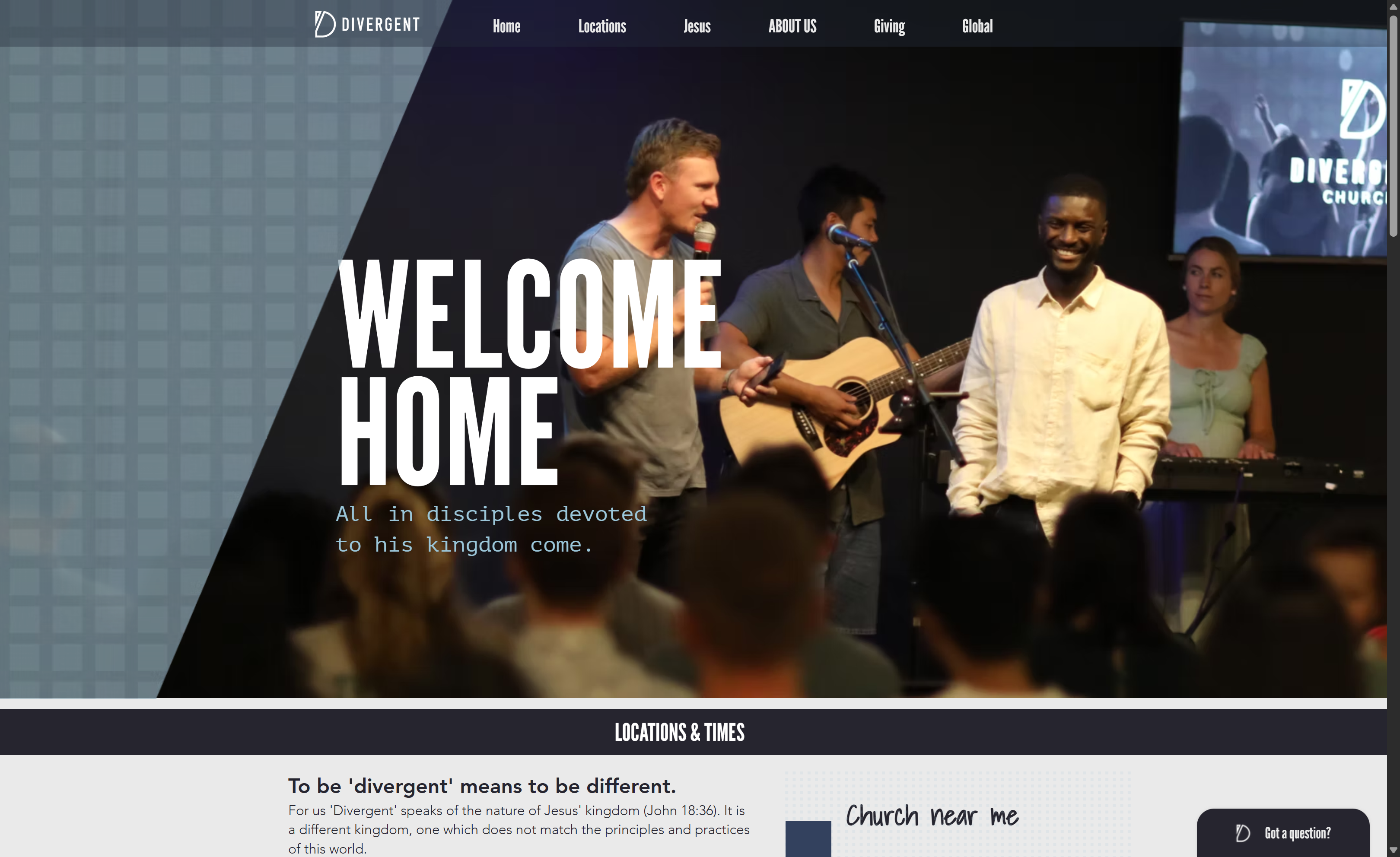
If exploring Pentecostal Christian faith has stirred something in you, or if you are simply looking for a community where Scripture is taken seriously and the Spirit is genuinely welcomed, Divergentchurch in Canberra exists for exactly that. We are not simply a Sunday gathering. We are a community shaped by Jesus, expressed through everyday relationships, and committed to growing disciples who live with purpose in the city.
Whether you are new to faith or returning after a long time away, our discipleship hub offers resources and pathways to help you grow. You can also explore our life communities to find a smaller group where genuine connection happens. If you are ready to take a next step, we would love to walk with you.
FAQ
What is a Pentecostal church in simple terms?
A Pentecostal church is a Christian congregation that emphasises the ongoing work of the Holy Spirit, including spiritual gifts such as speaking in tongues, prophecy, and healing, as normal experiences for believers today.
What do Pentecostals believe about speaking in tongues?
Most Pentecostals teach that speaking in tongues is the initial physical evidence of baptism in the Holy Spirit, though some groups treat it as one gift among many rather than a required sign. There is differing semantic but a clear expectation that God uses Tongues among the different gifts he gives.
How do Pentecostal services differ from other churches?
Pentecostal services are typically expressive and participatory, including extended worship, testimonies, healing prayer, and space for prophetic ministry, which contrasts with the fixed liturgy of more traditional denominations.
Are all Pentecostal churches the same?
No. Significant differences exist between groups, particularly between Trinitarian and Oneness Pentecostals, and churches vary in how they practise spiritual gifts and structure their services.
Is Pentecostalism a separate religion from Christianity?
No. Pentecostalism is a movement within Christianity. Pentecostals affirm the core doctrines of the Christian faith, including the authority of Scripture, salvation through Christ, and the resurrection, while placing particular emphasis on the active work of the Holy Spirit.
Recommended
Comments