
Where to meet other Christians in Canberra


Canberra has a way of feeling both full of people and quietly lonely at the same time. If you’ve recently moved here, or you’ve lived here for a while and still wonder where to meet other Christians in Canberra beyond the occasional Sunday service, you’re not alone in that feeling. The city’s transient population, shaped by universities, the public service, and the political cycle, means that community rarely forms by accident. This guide maps out the real, practical pathways to genuine Christian fellowship in Canberra — from university groups and church small groups to midweek gatherings and discipleship communities.
Table of Contents
Key takeaways
Point | Details |
Intentionality matters most | Community in Canberra rarely forms passively — you need to seek it with purpose and consistency. |
Small groups over big services | Deeper faith connections form in small groups and mid-week gatherings, not just Sunday attendance. |
Multiple entry points exist | From university groups to church life communities, there are several practical ways to connect with local Christians. |
Patience is part of the process | Meaningful friendships take time — persistence and regular participation are what build lasting bonds. |
Divergentchurch offers structured community | Divergent Church’s Life Communities and discipleship programmes provide ready pathways for newcomers. |
Where to meet other Christians in Canberra: start here
Before you search for the right group or church, take a moment to understand what you’re actually looking for. Not all Christian community looks the same, and showing up to the wrong type of gathering for your season of life can leave you feeling more disconnected, not less.
Consider these four questions honestly before you begin:
What to consider | Why it matters |
Your availability (weekday vs weekend) | Some groups meet midweek, others on Sundays — mismatched schedules kill consistency |
Preferred group size (intimate or larger) | Small groups of 6–12 people build depth; larger gatherings build breadth |
Denomination openness | Canberra has Anglican, Baptist, Pentecostal, Catholic and non-denominational communities — being open widens your options significantly |
Stage of faith | Seekers, new Christians, and mature disciples often benefit from different group formats |
Understanding where you are shapes where you should go. Someone new to faith will find a seeker-friendly environment far more nourishing than an advanced theology study group. Equally, someone hungry for spiritual depth may find purely social events unsatisfying over time.
Pro Tip: Write down three specific things you want from Christian community — spiritual growth, genuine friendships, service opportunities — and use that list to filter the groups you explore. It saves months of guessing.
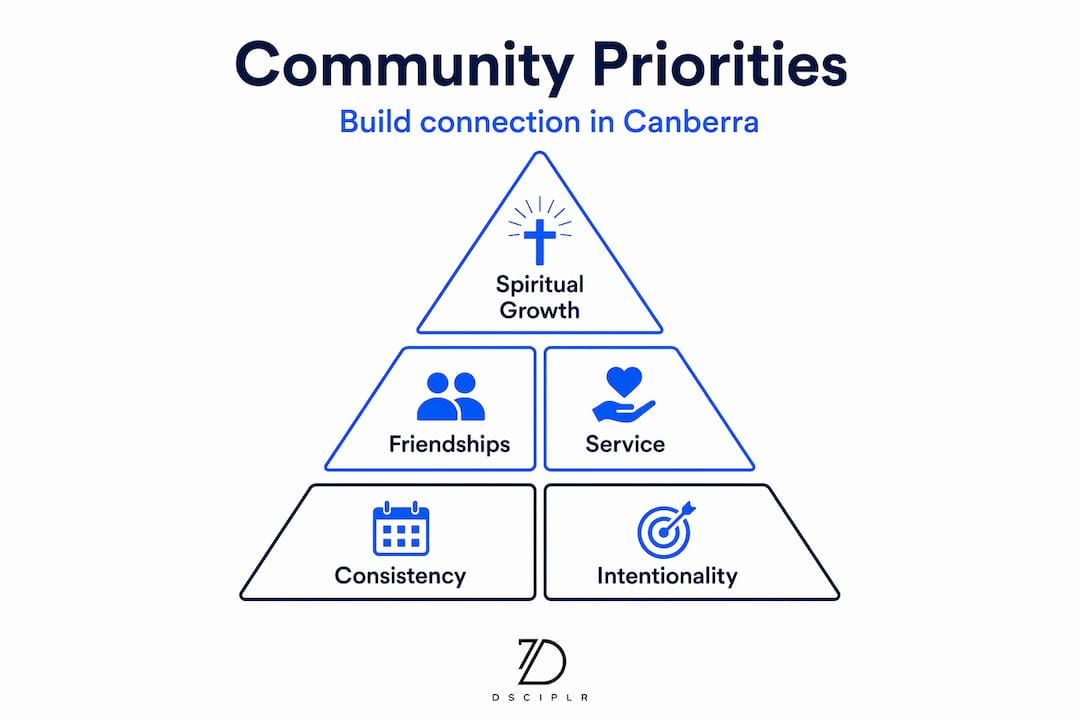
The types of Christian communities available in Canberra include men’s fellowships, young adult gatherings, Bible study groups, choir and creative arts communities, and missional small groups. Knowing that diversity exists helps you approach the search with confidence rather than the assumption that church means one thing.
Christian community groups and events in Canberra
This is where things get practical. Canberra has more active Christian community groups than most people realise, especially if you know where to look beyond the Sunday morning programme.

University-based groups
FOCUS operates at ANU, UC, and ACU offering weekly Bible talks and small groups during semester. These groups are non-denominational and explicitly welcome both committed Christians and seekers, which makes them an unusually low-barrier entry point. The Bible talks run Thursdays 1–2pm, with small groups meeting approximately one hour per week at other times. FOCUS International also runs social dinners and activities that welcome both domestic and international students, so if you’re newer to Australia, this community is particularly warm.
Church-based life communities
For those beyond university age, church small groups are the primary engine of Christian fellowship in Canberra. Divergent Church runs Life Communities that meet midweek in homes, cafés, and local spaces around the city. These aren’t programme-driven meetings built around a worksheet. They’re relational spaces where young adults build genuine friendships and explore faith together in ordinary rhythms of life.
Here are the key recurring options for connecting with Christians across Canberra:
FOCUS Bible talks at ANU (Thursdays during semester), UC and ACU campuses
Divergent Church Life Communities meeting midweek in homes and local cafés across Canberra suburbs
Sunday Engage gatherings at Divergent Church, specifically designed to welcome newcomers
Christian social meetups through platforms like Meetup, which list faith-based social gatherings in Canberra
Men’s and women’s fellowships run through various local Anglican, Baptist, and Pentecostal churches
Discipleship programmes including Lead Like Jesus and Follow Jesus through Divergent Church
Young adults’ midweek gatherings in church networks across Belconnen, Gungahlin, and Woden
It’s worth noting that Christian singles events and online platforms exist and can be social entry points, though they don’t always form the foundation of long-term faith community. Use them to meet people, but invest your relational energy in the smaller, more consistent groups.
Pro Tip: Most church and campus group leaders genuinely want to hear from newcomers before you show up. Email or message ahead of your first visit. It removes the anxiety of walking in cold and usually guarantees someone will look out for you.
How to engage with Christian communities effectively
Finding the groups is only the first step. What you do next determines whether you stay a visitor or become part of something real.
Research and choose two or three groups that align with your schedule, interests, and stage of faith. Don’t spread yourself across six groups immediately. Depth comes from focus.
Attend your first meeting with an intent to listen. Resist the temptation to present your best self or perform spiritual maturity. Be genuinely curious about the people already there. Ask about their stories.
Return consistently for at least four weeks before forming a strong opinion about whether a group fits. First impressions of community are almost always misleading. Regular attendance and volunteering are the two most reliable ways to transition from attendee to community member.
Move toward smaller groups or discipleship opportunities once you’ve found your bearings. The larger the gathering, the easier it is to remain invisible. A discipleship group or life community of eight people makes anonymity almost impossible — and that’s a gift.
Reflect and adjust after two to three months. Not every group is the right fit for every person, and recognising that sooner rather than later is wisdom, not failure. Seek the community leaders’ input — they often know of other gatherings that might suit you better.
Here’s a comparison of engagement levels to help you think about where to focus your energy:
Engagement type | Depth of connection | Commitment level | Best for |
Casual attendance (Sunday services) | Surface level | Low (weekly) | First contact and exploration |
Small groups or life communities | Meaningful relationships | Moderate (weekly midweek) | Building genuine friendships |
Formal discipleship programmes | Spiritual and personal depth | High (structured commitment) | Those seeking formation and growth |
Common pitfalls when seeking Christian community
The most common mistake people make is equating attendance with belonging. You can sit in the same seat every Sunday for six months and still feel like a stranger. Community in Canberra’s transient environment demands intentional effort beyond showing up.
Here are the pitfalls worth watching for:
Expecting instant friendship. Deeper bonds build gradually — immediate closeness is rare and rarely lasts. Give relationships the time they need.
Overlooking smaller or newer communities. The polished, well-established church with hundreds of attendees can feel safe, but it’s often the smaller communities where genuine belonging happens faster.
Trying to fit in by performing. Christian community should be a place where you can be known, not just liked. Authenticity opens the door that performance keeps shut.
Relying only on digital connection. Online Christian groups and social platforms have their place, but they can’t replace the shared table, the face-to-face prayer, and the ordinary Tuesday night conversation at someone’s kitchen table.
Giving up after one or two uncomfortable experiences. Diverse Christian small groups exist across Canberra — if one isn’t right, another likely is.
Pro Tip: Balance digital engagement with physical presence. Follow a church’s social media to stay informed about events, but treat that as a supplement to showing up in person — not a replacement for it.
Growing and sustaining your Christian community
Once you find your people, the real work begins. Sustaining Christian fellowship in Canberra requires the same intentionality that built it.
Some markers that you’ve genuinely integrated into a community:
You know people’s names, stories, and prayer needs
You’re invited to gatherings outside the official programme
You feel both the freedom to bring your struggles and the responsibility to carry someone else’s
You’re contributing, not just receiving — helping set up, leading a discussion, or mentoring someone newer than you
The trajectory of building a strong community church in Canberra points toward this kind of mutual investment. Seeds planted in small group conversations grow into friendships that carry you through seasons of doubt, loss, and transformation.
After twelve to eighteen months in a community, consider whether you’re ready to lead or co-lead a small group yourself. This is one of the most powerful ways to deepen your own faith while multiplying connection for others. New groups create new entry points for the next person arriving in Canberra feeling exactly as you once did.
My honest take on finding Christian community here
I’ve seen it play out enough times to say this plainly: the people who find genuine Christian community in Canberra are almost always the ones who chose to be a little uncomfortable early on. They walked into a midweek group not knowing anyone. They sent the email before they felt ready. They stayed when it was awkward.
What I’ve learned is that Canberra’s transient nature is not just a problem to overcome. It’s actually a gift, in a strange way. Because people are always arriving and always leaving, communities that take community seriously have developed a culture of welcome that doesn’t happen naturally in more settled cities. The best Christian groups here have practised receiving strangers so many times that they’re genuinely good at it.
In my experience, the mistake most people make is waiting for community to come to them. It won’t. But that doesn’t mean you have to manufacture it artificially. It means you have to show up, stay, and let the slow work of shared life do what it’s always done. Finding a supportive church community in Canberra is genuinely possible. The seeds take time. Trust the process.
— Josh
Divergent Church can help you find your people
If you’re asking where to meet other Christians in Canberra and you want something more than a casual meetup, Divergent Church is built for exactly this.
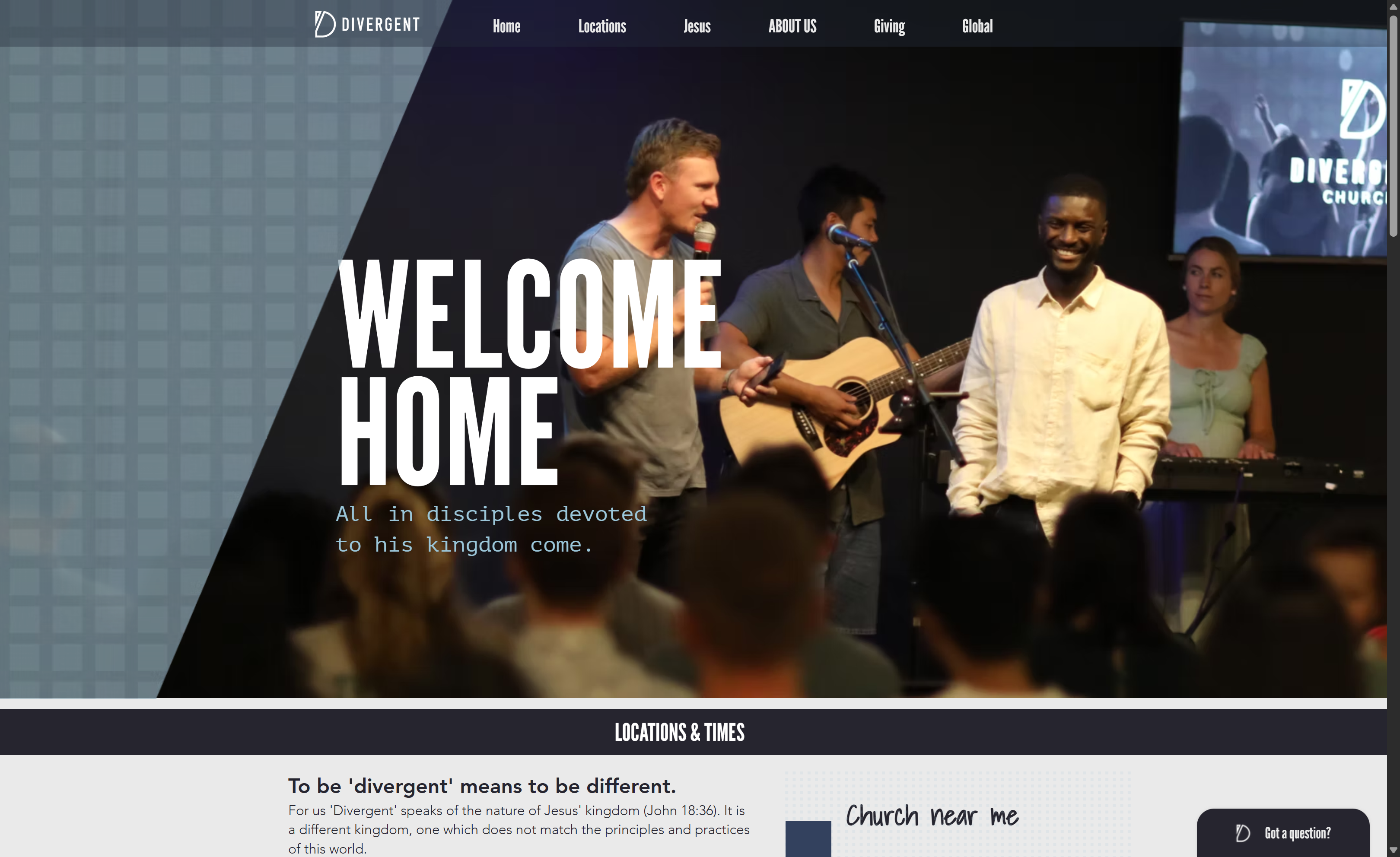
Life Communities meet in homes and cafés across Canberra’s suburbs, midweek, with a rhythm designed around real life. They’re the kind of groups where faith gets lived out in conversation over dinner, not just discussed on Sunday. If you’re ready to go deeper, the Discipleship Hub brings together structured programmes including Follow Jesus and Lead Like Jesus, each designed to help you grow in faith and purpose. And if you’re not sure where to start, Engage Sundays offer a genuinely welcoming first experience of who we are. Come as you are. There’s a place here for you.
FAQ
Where can I meet other Christians in Canberra?
You can meet other Christians through university groups like FOCUS at ANU, UC, and ACU, through church life communities such as those run by Divergent Church, and through regular Christian events and social gatherings listed on platforms like Meetup. Intentional participation in small groups is the most reliable path to genuine connection.
What are the best Christian community groups in Canberra?
FOCUS campus groups, Divergent Church Life Communities, and church-run small groups across Anglican, Baptist, and Pentecostal networks are among the most active. Smaller groups consistently produce deeper relationships than large-format Sunday services alone.
How long does it take to find Christian friends in Canberra?
Most people begin to feel genuinely connected after two to three months of consistent attendance in a small group. Deeper friendships typically take six to twelve months to form, especially in Canberra’s transient environment where community requires sustained intentionality.
Are there Christian events in Canberra for young adults?
Yes. Divergent Church runs regular midweek gatherings and discipleship programmes for young adults, and FOCUS hosts weekly Bible talks and social events during university semester. Christian social meetups also appear regularly on community platforms.
Do I need to be from a specific denomination to join these groups?
Most active groups in Canberra, including FOCUS and Divergent Church, are non-denominational or explicitly welcoming across denominational backgrounds. Being open to different expressions of Christian faith will give you far more options for finding your people.
Recommended
Comments