
Young Professionals and Christian Community in Canberra


If you are a young professional in Canberra and you want to follow Jesus, the most important step is to belong to a local church family that treats discipleship as the whole of life, not a Sunday slot. Canberra moves quickly: graduates arrive, public servants rotate, contracts end, friends relocate. We are Divergent Church, a Christian church in Canberra and Queanbeyan, and we exist for this kind of city, with its universities, workplaces, neighbourhoods and transient population. Our conviction is simple: you were not made to carry Monday to Friday alone.
TL;DR
The first years after university are a vulnerable season for Christians in Australia. Research from NCLS describes a steep fall-off in the first five years of work when young workers leave the warm nest of student groups.
Scripture does not split life into sacred and secular. Your desk, your team and your decisions are part of following Jesus.
Look for a church where people know your name, open the Bible together, pray through the working week and send one another into the city on mission.
Rest, mentors and honest friendships matter more than a packed diary.
Questions and doubts are welcome. The historic Christian faith can bear them, and Jesus is able to answer them.
Table of Contents
The season that tests faith: the first years after university
For many Canberrans the pattern is familiar. At university you had a Christian group, a regular rhythm and friends who shared your convictions. Then comes the graduate program, the move to Gungahlin or Belconnen or across the border to Queanbeyan, longer hours, and a social circle that quietly scatters.
NCLS Research, which studies Christian life in Australia, has described this exact moment. A church leader interviewed in its case study calls young workers especially vulnerable because they are not equipped for the move from the safety of campus fellowship into the workplace. The same leader reports a massive fall-off rate of Christians within five years, because when God calls someone to be an engineer or an accountant, the guidance for living that out is often missing.
That is not a verdict on young people. It is a description of a gap, and the Church is meant to fill it. The gap is rarely about doubt in the first instance. It is about isolation, exhaustion and having nobody who connects what you hear on Sunday with what happens in your Tuesday meeting.
If you are still at university or just finishing, our guide to university churches in Canberra will help you plan the transition before it happens.
Faith and work are not two separate lives
The Bible opens with God at work. He creates, shapes and calls what he has made good, and he places humanity in the garden to work it and keep it. Work is not a distraction from discipleship. It is part of the ground on which discipleship is lived.
NCLS describes a church that asks its people each year to consider three things: the work, the worker and the workplace. The questions it raises are concrete: what does it mean to be an accountant to the glory of God, or to write code to the glory of God? The same case study describes a way of working that begins by walking into the office prayerfully, treats the team well, and then shapes culture and policy so that the organisation does good in the community.
A second NCLS case study follows Jo, an ASIC investigator and former solicitor. She did not see faith and work as separate parts of her life after joining a weekly workplace Christian fellowship. She says that the divide can be crippling when people feel lost or alone on a Monday morning. Her church’s connect groups let members phone or text at lunchtime to pray through a work challenge.
That is what ordinary, relational church looks like. Not an event you attend, but people you can call.

What the research says about churches and working life
A Baylor University study guide summarising research by Mitch Neubert and Kevin Dougherty, drawn from United States data, found that fewer than half (47%) of employed adults who attend religious services monthly or more often see connections between faith and work. The same guide reports that a sense of spiritual calling is linked with higher job satisfaction and commitment, and that congregations which promote faith and work integration influence their members in these areas.

The lesson travels well beyond America. When a congregation teaches that daily work belongs to God, people see it. When it says nothing, they often assume the two are unrelated.
What to look for in a Christian community as a young professional
We would not frame this as shopping for a congregation. You are not evaluating a product. You are looking for a people to be joined to, and to serve. With that in mind, these are the marks worth looking for.
Scripture at the centre. The Bible is opened, explained and obeyed, and Jesus is proclaimed as crucified, risen and Lord. The creeds of the historic faith are not embarrassing relics but the shared confession of the Church across the centuries.
Discipleship that reaches Monday. Following Jesus is more than attending a gathering. It shapes how you treat colleagues, handle money, speak truthfully and spend your evenings.
Real relationships. You should be known by name, and know others in return. Community is built in kitchens, on walks, in shared meals and in prayer, not only in rows of chairs.
Mission as the Church’s identity. Mission is not an optional program. The Church is sent into its city, into its offices, campuses and streets.
Different ages and stages. Healthy churches are full of people from varied backgrounds and generations. In the NCLS case study, the pastor describes the healthiest churches as diverse, multi-generational and multi-skilled, with people flourishing in their different giftings. Mentors in particular make a difference to a twenty-five-year-old.
A heart for the transient. In a city where people move often, a church should be skilled at welcoming newcomers and equally skilled at sending people out well.
If you want a longer walk through the Canberra landscape, we have written about churches in Canberra for young adults and how to find Christian community in Canberra.
Making room for community in a full working week
Good intentions do not survive a demanding job by themselves. Community needs rhythms. Here is a practical pattern for a Canberra week.
Anchor one weekly gathering. Choose the gathering of the church family and be present in body, not just in the back row. Faithfulness is built by showing up repeatedly.
Join a small group or mid-week table. This is where friendship forms. Aim for a place where you can say how your week really went.
Find one older believer. Engage Work Faith, an Australian ministry for workers, encourages young workers to seek guidance from mentors and to talk about their job with their church community, so that the church knows what you actually do all day.
Do not neglect the gathered church. The same resource warns that most of your day is spent in a secular context, which is exactly why you need the church’s fellowship, teaching and prayer.
Receive rest. It also advises young workers to embrace rest and not expect to keep up the same social diary as before. Sabbath rest is a gift God gave his people, and a tired disciple makes poor witness.
Cultivate character. Engage Work Faith cites research that skills make up 16.5% of a job and character 83.5%. Whatever the exact figure, Scripture agrees that integrity, patience and honesty are not secondary at work.
Be ready to give an answer. Its call to workplace witness rests on 1 Peter 3:15-16: honour Christ as Lord in your heart, and be prepared to give a gentle, respectful reason for the hope you have.
A church that practises hospitality also helps in seasons of change. When a young couple has their first child, for example, practical help from a community matters enormously, and resources such as this overview of new mum community support benefits show how much shared care can lighten early parenthood. The Church has always been a family that carries burdens together.
The questions you are allowed to ask
Some readers are not yet sure they believe. That is welcome here. Honest questions about God, suffering, purpose, belonging and truth are not a threat to the Church. They are often where the Spirit begins his work.
We will not pretend that all views of Jesus are equally good. The historic Christian faith is that God the Son became man, died for sinners, rose bodily on the third day and will return. We hold this without apology and invite you to examine it at the foot of the cross, in the Gospels, and in conversation with people who have staked their lives on it.
Many of the Canberra-specific questions are tied to the place. Is organised religion worth my time? Does my job matter to God? Where do I belong when I may be posted elsewhere in two years? These are real questions, and a church exists to answer them with Scripture, with prayer and with friendship.
A few ways people explore faith in Christian community:
Reading the Gospels slowly, a chapter at a time, with someone who will discuss them with you.
Hearing teaching from Scripture in a gathered church, where the Word is proclaimed and not merely discussed.
Serving alongside others, because love for neighbour is learned by doing it.
Asking questions in a small group, where nobody expects polished answers.
Prayer, alone and with others, without needing the right words.
If you are looking for people who share that conviction, our posts on where to meet other Christians in Canberra and building community in Canberra are good places to begin.
What local Christian communities have tried for young professionals
The need for focused fellowship is recognised across the Canberra churches. In 2021, Catholic Voice reported that about 40 people gathered at St Christopher’s Pastoral Centre to launch Provocation, a young-adult ministry chapter across the Canberra Archdiocese. It was designed to help young professionals explore how personal faith intersects with professional life. The initiative’s coordinator described it as giving young professionals a focused conversation to hear what they need at this stage of life.
We differ from that tradition on matters of church order, but we recognise the same instinct: young working adults need to be addressed as people who are called, not just as a demographic to be managed. The conviction behind it is one we share, and it is biblical. The whole Church needs its young adults, and young adults need the whole Church.
Our perspective
We have watched this city shape people. Canberra is a place of arrivals and departures, of ambition and long hours, and many who come here carry a quiet question: does anyone here know me, and does God see me at my desk? Our answer is yes to both. We are not simply a Sunday gathering. Divergent Church is a community shaped by Scripture, centred on Jesus and expressed through everyday life, relationships and mission. Discipleship is the work of a lifetime, and it is never done alone. For a young professional, that means being invited into a family of people who will pray with you before a hard meeting, open the Word with you, ask you how your week really was, and send you back into your workplace as a witness to the King. Mission is not an add-on. It is who the Church is, sent into the universities, offices and neighbourhoods of Canberra and Queanbeyan. We hold to the historic faith of the Church: the Scriptures as God’s Word, Jesus as Lord, crucified and risen. That confession is not a burden. It is the seed from which a people grows, and we long to see seeds planted in this city bear fruit. Come with your questions. Come with your doubts. Come tired from the week. There is a place at the table. Josh
Meeting with us
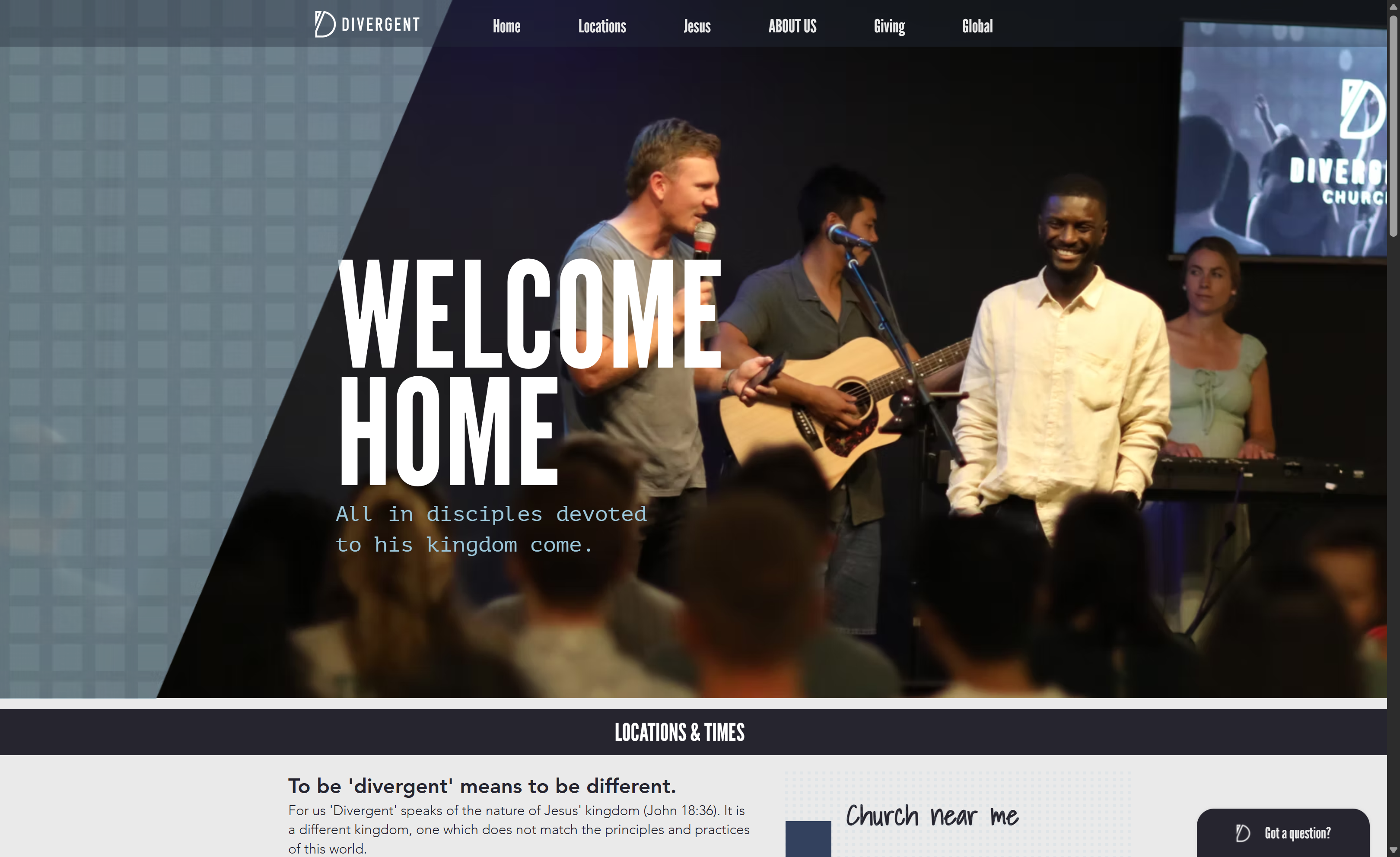
Divergent Church is a Christian church serving Canberra and Queanbeyan, offering discipleship, community groups, events and spiritual support, with online and in-person resources alongside. If you are new to the city or new to faith, start at our home page and see how we are gathering.
If you are gathering your own group of colleagues or friends, you can also book a room online: the Board Room is $25 per hour, the Seminar Room is $50 per hour and the Auditorium is $70 per hour. Prices are as published on our booking page. More about the space is on our Function & Events Centre page.
FAQ
Is there a church in Canberra suited to young professionals?
Yes. Canberra has many churches, and what matters is whether a community will know you, teach the Bible faithfully and send you out into your work. We serve Canberra and Queanbeyan with a focus on the city’s workplaces, universities and newcomers. Our guide to churches in Canberra for young adults explains more.
Can I be a Christian and still pursue a demanding career?
Yes. Scripture treats work as part of creation, and Christians are called to do it well and honestly. The NCLS research above shows churches helping people ask what it means to do their specific job to the glory of God. Ambition is tested by whether it serves others and honours Christ.
What if I am not sure I believe?
You are welcome to come and ask. Christian community is not reserved for people with settled answers, and the Gospels are open to anyone who wants to read them. We hold firmly to the historic faith, and we would count it a privilege to explore it with you.
How do I make Christian friends when I work long hours?
Choose one regular gathering and one small group, and protect them in your diary. Friendship grows through repetition more than intensity. Engage Work Faith also encourages young workers to rest, build relationships with coworkers and find a mentor.
Do I need to be a member to attend or join in?
No. Many people attend while exploring faith or attending events out of curiosity. Our giving is voluntary, and nobody is asked to pay to come.
Sources
Recommended
Comments